Fish
Fish Fire
Fire Hike
Hike Bird
Bird

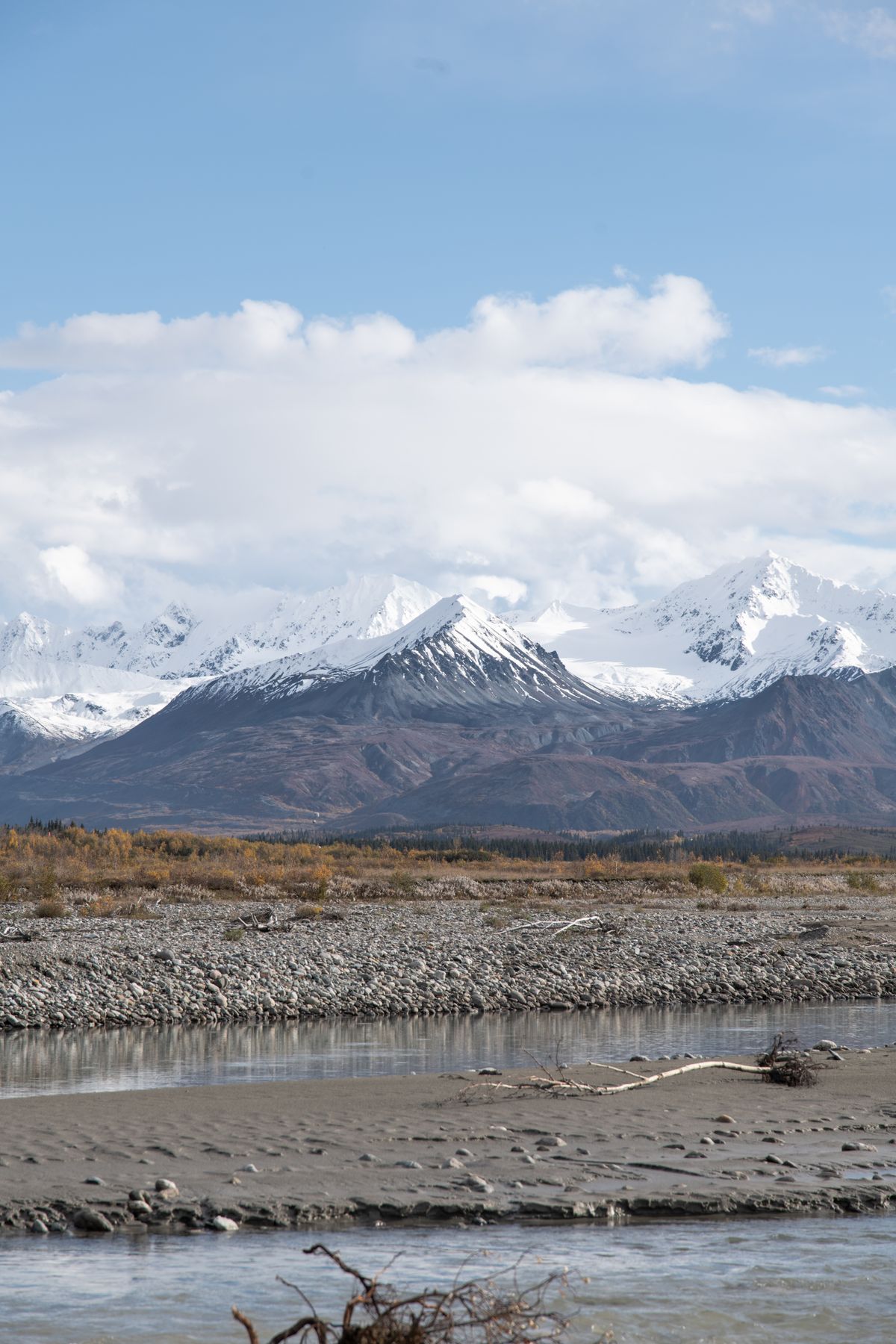
There is no road to Gates of the Arctic. There is no trail. There is no visitor center, no campground, no ranger station you can drive to, no bridge, no guardrail, no cell service, no Wi-Fi, no gift shop, no paved anything. There is a town called Bettles with a population of roughly two dozen people, a gravel airstrip, and a handful of bush pilots who will fly you into the Brooks Range in a single-engine plane on floats. When that plane lifts off the river and the engine noise fades into the silence of eight million acres of roadless wilderness above the Arctic Circle, you are as far from civilization as it is possible to be in the United States.
And there are fish in those rivers. Arctic grayling, the sail-finned, iridescent oddball of the salmonid family, hold in every clear creek and river in the park. Arctic char glow orange and red in the deeper pools. Lake trout cruise the cold, dark lakes that sit like shattered glass in the tundra. Sheefish, the inconnu, a massive predatory whitefish that fights like a tarpon, run the larger rivers during migration. Dolly Varden haunt the confluences. Even chum salmon push into some of the park's southern drainages in late summer, their bodies turning purple and green as they spawn.
None of these fish have ever been pressured. Most of them have never seen a fly. Some of them have never seen a human being. When you strip a Woolly Bugger through a pool in the North Fork of the Koyukuk and an arctic char slams it like the fly personally offended it, you are not catching a fish that has learned to be suspicious. You are catching a fish that has spent its entire life eating whatever drifts past, because nothing in its evolutionary history has taught it that a hook exists.
This is the fishing that existed everywhere before we arrived. Gates of the Arctic is what fly fishing looked like ten thousand years ago.
The Park That Isn't a Park

Gates of the Arctic National Park and Preserve covers 8.4 million acres of the central Brooks Range in northern Alaska, an area larger than Belgium. It is the second-largest national park in the United States (after Wrangell-St. Elias) and the northernmost unit in the National Park System, sitting entirely above the Arctic Circle between 67 and 69 degrees north latitude. The park was established in 1980 under the Alaska National Interest Lands Conservation Act, protecting a landscape that had been essentially unchanged since the Pleistocene.
The name comes from two peaks, Frigid Crags and Boreal Mountain, that flank the North Fork of the Koyukuk River like stone gateposts. Wilderness advocate Robert Marshall named them in the 1930s when he explored the region on foot, calling them the "Gates of the Arctic" because they marked the threshold between the boreal forest to the south and the open arctic tundra to the north. Marshall's description still holds. When you fly over those peaks in a bush plane, the landscape below shifts from spruce forest to treeless tundra in the span of a few miles, and the Brooks Range unfolds ahead of you, a chain of rugged, glacier-carved peaks stretching 700 miles from the Canadian border to the Chukchi Sea.
The National Park Service manages Gates of the Arctic with what amounts to a policy of deliberate non-development. There are no maintained facilities inside the park boundaries. No established trails. No campgrounds. No fire rings. No pit toilets. No signs. The NPS website mentions fishing almost as an afterthought, a single page noting that grayling and char are present and that an Alaska fishing license is required. That's it. There is no stocking program, no creel survey, no fish-cleaning station, no boat ramp. The park exists as wilderness, and the NPS intends to keep it that way.
For anglers, this means you are entirely self-sufficient from the moment your bush plane drops you on a gravel bar until it picks you up a week or ten days later. You bring everything, tent, food, stove, water filter, bear spray, satellite communicator, first aid, and every fly you'll need for the trip. There is no resupply. There is no emergency road access. If the weather turns and your pickup plane can't fly, you wait. People have waited three days for a pickup in bad weather. You pack food for extra days because the Brooks Range doesn't care about your schedule.
Getting In, Bush Planes and Staging Towns
The logistics of reaching Gates of the Arctic define the trip as much as the fishing does.
Bettles (population ~25) is the primary staging point for the eastern side of the park. You fly commercial from Fairbanks to Bettles on a scheduled bush flight, about 35 minutes in a small prop plane. Bettles has a lodge, a ranger station where you can attend a backcountry orientation, and several bush pilot operations that will charter flights into the park. From Bettles, your bush pilot flies you into the specific river drainage you've chosen, landing on floats on a lake or river, or on tundra tires on a gravel bar.
Coldfoot (population ~10) sits on the Dalton Highway, the only road that comes anywhere near the park. It's a truck stop, literally, a fuel station and a small inn built to service trucks running the Haul Road to Prudhoe Bay. Some charter operations fly out of Coldfoot, and it's reachable by car if you want to drive the 250 miles of mostly gravel road north from Fairbanks. A handful of outfitters use Coldfoot as a launch point for trips into the eastern park drainages.
Kotzebue on the western coast serves as a staging point for trips into the western park, particularly the upper Noatak River. Kotzebue is an Inupiaq community accessible by commercial flight from Anchorage.
The bush plane flight into the park is not a shuttle, it's an experience. You fly over the Brooks Range at low altitude, watching the landscape transition from boreal spruce forest to alpine tundra to bare rock and glacial ice. Your pilot is reading the river below for landing spots, checking wind direction, and making decisions about where to put the plane down based on water levels and gravel bar conditions that change with every rainstorm. When the plane touches down on a gravel bar and you step out into silence so complete you can hear your own heartbeat, the trip has begun.
The Rivers, Float Trips and the Art of Wilderness Fishing
The way you fish Gates of the Arctic is on a float trip. You fly in to the headwaters of a river, inflate your packraft or assemble your folding canoe, load your gear, and float downstream for seven to ten days, fishing every pool and riffle along the way, camping on gravel bars, and eventually reaching a predetermined pickup point where your bush pilot meets you.
This is the format. There is no day-trip option. There are no roadside pullouts. The rivers are the trails, the gravel bars are the campsites, and the float is the trip.
The Noatak River
The Noatak is the crown jewel, the largest undisturbed watershed in North America, flowing 425 miles from the heart of the Brooks Range to Kotzebue Sound on the Chukchi Sea. The upper Noatak, within the park, is a clear, gentle river flowing through a broad valley between treeless peaks. The water is class I, no rapids, no technical paddling, just steady current over gravel. You drift and fish.
The Noatak holds strong populations of arctic grayling throughout its upper reaches, with char in the deeper pools and lake trout in the connected lakes. The river valley is a wildlife corridor, caribou from the Western Arctic Herd cross the Noatak on their migration, grizzlies patrol the gravel bars, wolves howl from the ridgelines at night (though "night" is a relative concept when the sun doesn't set). Float trips on the upper Noatak typically run five to seven days, covering 40 to 50 miles.
The Alatna River
The Alatna flows south from the central Brooks Range, a slow, clear river through boreal forest and alpine tundra. This is the beginner's float, class I water, no whitewater, wide channels, easy paddling. The Alatna is particularly good for grayling, with fish stacked in the riffles and at the heads of pools. The river's gentle nature makes it ideal for anglers who want to spend more time casting and less time navigating technical water. Two to four day floats are common on the Alatna.
The North Fork of the Koyukuk
The Koyukuk is the river that inspired the park's name, Robert Marshall's "Gates of the Arctic" are the peaks flanking the North Fork's valley. The river flows through some of the most dramatic mountain scenery in the Brooks Range, with high-relief peaks rising directly from the valley floor. The North Fork holds grayling, char, and Dolly Varden, and the fishing is excellent in the clear side channels and tributary confluences. Five-day float trips are typical, with outstanding hiking opportunities in the upper river area.
The John River
The John River corridor is considered one of the most scenic in the entire Brooks Range. The river originates at Soakpak Mountain in the Endicott Mountains, flows through Anaktuvuk Pass, home to the Nunamiut people, and runs 136 miles south to meet the Koyukuk near Bettles. The notably narrow valley, about a mile wide, creates dramatic vistas with adjacent mountain slopes. The upper portions run class II to III when water levels allow, while the lower reaches are suitable for family floating. The John River serves as a primary migration corridor for three caribou herds, the Western Arctic, Central Arctic, and Teshekpuk, making wildlife viewing exceptional.
The Killik River
The Killik drains the western slopes of the Endicott Mountains, flowing north through open tundra before joining the Colville River system. It's one of the more remote drainages in the park, requiring a longer charter flight, and receives almost zero angling pressure. Grayling and char hold in the Killik's clear pools, and the open tundra terrain makes for spectacular camping.
The Fish, Every Species an Event
Arctic Grayling, The Star of the Show
Arctic grayling are the reason most people fly fish Gates of the Arctic, and they are everything you've heard. That dorsal fin, absurdly large, sail-shaped, iridescent purple and blue and red, makes grayling the most visually striking freshwater fish in North America. When a grayling rises to a dry fly, the fin breaks the surface first, and for a split second you see nothing but color and light before the fish's mouth engulfs the fly.
Grayling are the most widespread fish in the park, holding in every clear stream and river. They're aggressive surface feeders, willing to rise to almost any dry fly that drifts over them. In the lower 48, this willingness would make them "easy" fish. In Gates of the Arctic, it makes them generous. These grayling have never been educated by catch-and-release pressure. They eat what they see. A #12 Royal Wulff drifted through a riffle will move every grayling in the pool. A Stimulator skated across the surface draws aggressive slashing rises. An Elk Hair Caddis dead-drifted through a seam gets eaten with confidence.
The grayling in Gates of the Arctic average 10 to 14 inches, with fish over 16 inches common in the less-pressured drainages and occasional fish pushing 18 to 20 inches. These are not large fish by trout standards, but they fight with a tenacity that belies their size, fast runs, head shakes, and that sail-fin catching the current and adding resistance like a keel. On a 4-weight rod, a 16-inch grayling is a perfect fish.
Flies for grayling: Bring big, bushy dries in #10-14. Elk Hair Caddis, Stimulators, Parachute Adams, Royal Wulff, Black Gnat, Mosquito patterns (the actual mosquitoes above the Arctic Circle are legendary, your imitations are just joining the buffet), Renegade, Humpy. These fish are not selective. They have never seen a Trico spinner or a size 22 midge. They eat attractors with enthusiasm, and the bigger and bushier the fly, the easier it is for them to see it in the riffled water. A Chubby Chernobyl in #8 works as both a dry fly and a strike indicator if you want to drop a Prince Nymph or Copper John below it.
Arctic Char, Cold Water Color
Arctic char in Gates of the Arctic are the freshwater resident form, they don't run to sea like their anadromous cousins in other parts of the Arctic. They hold in deep pools, lake outlets, and the confluences where cold tributary water enters the main rivers. During spawning season (August-October), the males develop stunning orange-red bellies that make them look like they're glowing from inside. Some anglers call the spawning males "pumpkin char" for their coloration.
Char eat subsurface. Small streamers, Woolly Buggers in #6-10, Muddler Minnows, and Zonkers, stripped through the deeper water produce strikes. During any salmon spawning activity in the park's southern drainages, egg patterns work for char the same way they do everywhere in Alaska. Beadhead nymphs, Hare's Ears and Pheasant Tails in #12-16, pick up char when they're feeding on invertebrates along the bottom.
Sheefish (Inconnu), The Tarpon of the Arctic
Sheefish are the wildcard, a massive predatory whitefish that most lower-48 anglers have never heard of. They can reach 60 pounds, though fish in the 10-20 pound range are more common. They migrate upstream during ice breakup, running the larger rivers in the Koyukuk and Kobuk drainages, and they hit like freight trains.
Sheefish are aggressive predators that chase baitfish. Fish them with large streamers, Clouser Minnows in white or chartreuse, Lefty's Deceivers in silver, big Woolly Buggers stripped fast through the current. An 8-weight rod is the minimum for sheefish; a 9-weight gives you more control. When a 15-pound sheefish takes a streamer in fast current, you understand immediately why Alaskans compare them to tarpon, long, screaming runs, head shakes, and an absolute refusal to come to hand without a fight.
The best sheefish fishing in the Gates of the Arctic region is on the Kobuk River, accessible from Bettles with a day trip charter. Some outfitters based in Bettles offer dedicated sheefish trips.
Lake Trout
Alaska's largest freshwater fish inhabit the deep, cold lakes scattered across the park. Lake trout spawn in September and October over rocky lake bottoms and are most accessible in early summer when they cruise shallower water near inlet and outlet streams. Fish them with large streamers on sinking lines, Woolly Buggers, Muddler Minnows, and rabbit-strip leeches in dark colors. A 6-weight or 7-weight rod with a sink-tip line works for lake trout in the shallower lakes; the deeper lakes require full-sinking lines or simply aren't practical for fly fishing.
Northern Pike, Dolly Varden, and Chum Salmon
Northern pike lurk in the clear, vegetated lakes and slow backwater channels, eating fish, waterfowl, and whatever else fits in their mouths. Big, flashy streamers produce pike, bright colors, lots of movement, stripped fast. Dolly Varden (a char species) hold in tributary confluences and feed alongside grayling, eating the same nymphs and small streamers. Chum salmon enter some of the park's southern river systems in late summer, egg-sucking leeches, sparse marabou patterns, and chartreuse Clouser Minnows will move them.
The Fly Box for Gates of the Arctic
Pack your fly box for wilderness fish that eat with confidence, not selectivity. Leave the size 22 midges and the RS2s at home. This is attractor-pattern country.
Dry flies (the priority box):
- Elk Hair Caddis #10-14 (olive, tan, black), the workhorse
- Stimulator #8-12 (orange, yellow), high-floating, visible, irresistible
- Parachute Adams #12-16, the universal attractor
- Royal Wulff #10-14, bright, buoyant, deadly on grayling
- Chubby Chernobyl #8-10, hopper/indicator duty
- Black Gnat #12-16, classic grayling fly
- Mosquito #12-14, imitates the actual plague
- Humpy #10-14, rough-water visibility
- Renegade #12-14, old-school grayling killer
- Griffith's Gnat #14-18, for calm water and clustered midges
Nymphs (secondary):
- Prince Nymph #10-14, beadhead, all-purpose
- Copper John #12-16, fast-sinking in deeper runs
- Hare's Ear #12-16, universal nymph
- Pheasant Tail #14-18, the subtle option
- San Juan Worm #10 (red/pink), works everywhere
- Egg patterns #8-12 (peach, orange, chartreuse), for char and salmon drainages
Streamers (essential for char, sheefish, lake trout):
- Woolly Bugger #4-8 (black, olive, white), the everything fly
- Muddler Minnow #4-8, sculpin imitation for char and lake trout
- Clouser Minnow #2-6 (white/chartreuse), sheefish and chum salmon
- Lefty's Deceiver #1/0-4 (silver/white), big sheefish
- Flesh Fly #4-6 (pink/white), where salmon have spawned
Gear for the End of the Earth
Rods
Bring two rods. Losing or breaking a rod in Gates of the Arctic means you're done fishing for the remainder of a week-long trip with no way to replace it.
Primary: 9-foot 5-weight, the all-purpose rod. Handles grayling on dries, char on streamers, and has enough backbone for an unexpected sheefish encounter. Pack it in a hard case for the bush plane flight.
Secondary: 9-foot 7-weight or 8-weight, for sheefish, lake trout, pike, and chum salmon. This is the streamer rod. If you know you're floating a river with strong sheefish runs, make the 8-weight the primary.
Lines
Weight-forward floating line on the 5-weight for 90% of the fishing. A sink-tip line or sinking leader for the 7/8-weight for streamers in deep pools and lake trout. Pack a spare floating line in case of failure, there's no fly shop within 200 miles.
Leaders and Tippet
9-foot leaders tapered to 3X or 4X for most fishing. Grayling on dries don't require fine tippet, they're not leader-shy. Go heavier (2X, 1X, or even 0X) for streamers, sheefish, and pike. Bring extra spools of tippet. Bring more than you think you need.
Wading
The rivers in Gates of the Arctic are cold, 40 to 50 degrees in summer. Neoprene waders with wading boots are essential. Breathable waders work in July and August but get uncomfortable on cold September mornings. Hip waders are not enough, you'll be crossing channels and fishing from gravel bars where the water is thigh-deep. Bring wading staff, the river bottoms are cobble and the current is deceptively strong in some channels.
The Season, Midnight Sun to First Snow
The fishing season in Gates of the Arctic runs from mid-June through mid-September, a window dictated entirely by ice and weather.
Mid-June to early July: Ice-out on the rivers. The fishing turns on fast as water clears and warms into the 40s. Grayling are hungry after a long winter under ice and hit dries aggressively. The sun doesn't set, you're fishing at midnight under a sky that never goes dark, the light cycling from full daylight to a golden twilight and back without ever reaching true darkness. The mosquitoes emerge with the midnight sun. They are legendary, clouds of them, aggressive, relentless. Head nets, long sleeves, and DEET are mandatory equipment, not optional comfort items.
July: Peak summer. The tundra is green, wildflowers carpet the valley floors, and the rivers are at optimal fishing levels. This is the best month for grayling and char. Water temperatures peak in the low 50s. Caribou migration may be visible depending on the year and the drainage. Grizzly bears are active on every river, they're fishing the same water you are, eating grayling and char alongside you. Bear encounters are not a possibility in Gates of the Arctic; they are a certainty. Carry bear spray on your chest, store food in bear canisters, and make noise when you round blind bends in the river.
August: The char begin their pre-spawn color changes, turning from silver to deep orange and red. Chum salmon enter the southern drainages. The tundra starts to turn, greens shifting to gold and crimson in a fall display that happens at warp speed in the Arctic, compressing an entire autumn into three weeks. The mosquitoes diminish. Blueberries ripen on the tundra. This is many anglers' favorite month, the best combination of fishing, weather, and color.
September: The first snow can come at any time. Water temperatures drop, grayling and char concentrate in deeper pools, and the fishing shifts from surface to subsurface. The northern lights become visible as the days shorten and true darkness returns. September trips are high-risk, high-reward, the fishing can be outstanding, but weather delays are more likely, and an early winter storm can end a trip abruptly. By mid-September, ice is forming on the smaller streams.
The Wilderness Reality
Bears
Gates of the Arctic has a healthy population of grizzly bears and black bears. You will see bears. Every gravel bar has bear tracks. Every salmon stream has a bear fishing it. The bears in Gates of the Arctic are generally not habituated to humans, unlike the bears at Katmai that have learned to ignore anglers, these bears may have rarely encountered people. This makes them unpredictable. They're not aggressive, but they're not comfortable with you either.
Follow NPS bear safety protocols: carry bear spray accessible on your chest or belt, store all food and scented items in bear canisters at least 100 yards from your tent, cook and eat downwind from your sleeping area, make noise while hiking and wading, and never approach a bear. The NPS strongly recommends attending the backcountry and bear safety orientation at the ranger station in Bettles before your trip.
Self-Sufficiency
There is no rescue helicopter on standby. There is no trail to hike out on. If someone in your party is injured, your options are a satellite communicator (InReach or similar, carry one, this is not optional) and waiting for a bush plane that may or may not be able to land depending on weather and river conditions. Pack a comprehensive first aid kit. Know basic wilderness medicine. Don't go alone.
Weather
The Brooks Range generates its own weather. Clear skies can turn to rain and 40-degree temperatures in an hour. Wind can make river travel uncomfortable or dangerous. Rain can raise river levels overnight, changing the character of your float. Pack for conditions ranging from 80-degree sunshine to 35-degree rain. Layers are everything. A good rain jacket and rain pants are as important as your fly rod.
Regulations
Fishing in Gates of the Arctic requires a valid State of Alaska fishing license, available online from the Alaska Department of Fish and Game or purchased in Fairbanks, Bettles, or Coldfoot. Sport fishing is hook and line only. The use of live bait and dead minnows is prohibited. The NPS emphasizes catch-and-release, arctic fish populations in these cold waters grow slowly and reproduce slowly, and even modest harvest pressure can deplete a population that took decades to establish. Keep only what you'll eat for dinner on the gravel bar. Release everything else.
Why This Matters
Gates of the Arctic is not a fishing destination in the way that Katmai or Lake Clark are fishing destinations. You don't fly here for 30-inch rainbows or million-fish salmon runs. If you want productive Alaska salmon-and-trout fishing, go to Katmai. If you want remote coastal variety, go to Glacier Bay. If you want the Denali grayling experience with road access, go to Denali. The grayling here are small. The char are moderate. The sheefish are incredible but require targeting specific rivers at specific times.
You come here because this is what all of it used to be. Every river in the American West once had fish that rose to every cast, that had never seen a fly line, that fought without the learned caution of catch-and-release education. Those rivers are gone, pressured, regulated, managed, stocked, guided, and Instagrammed into something different from what they were. Gates of the Arctic is the last place in the United States where you can fish water that hasn't been altered by human presence.
When you cast a dry fly to a grayling in the North Fork of the Koyukuk and the fish rises through clear water to eat it without hesitation, dorsal fin breaking the surface, mouth opening, the fly disappearing in a confident sip, you are having an experience that connects directly to every angler who ever cast a line into wild water before roads and dams and hatcheries changed the equation. That experience, and the 8.4 million acres of silence that surround it, is what makes this the most important fly fishing in America.
If you're planning a Gates of the Arctic trip, the logistics deserve as much attention as the fishing. Line up a bush plane charter out of Bettles months in advance, lock in your put-in and pickup points on a specific river drainage, and pack several days of extra food in case weather grounds your pickup flight. First-timers who have never floated Arctic water often go with an experienced Alaska outfitter or air taxi out of Fairbanks to handle the charter coordination and river knowledge, a legitimate way to reach the Brooks Range for a first float into country this remote.