Fish
Fish Fire
Fire Hike
Hike Bird
Bird


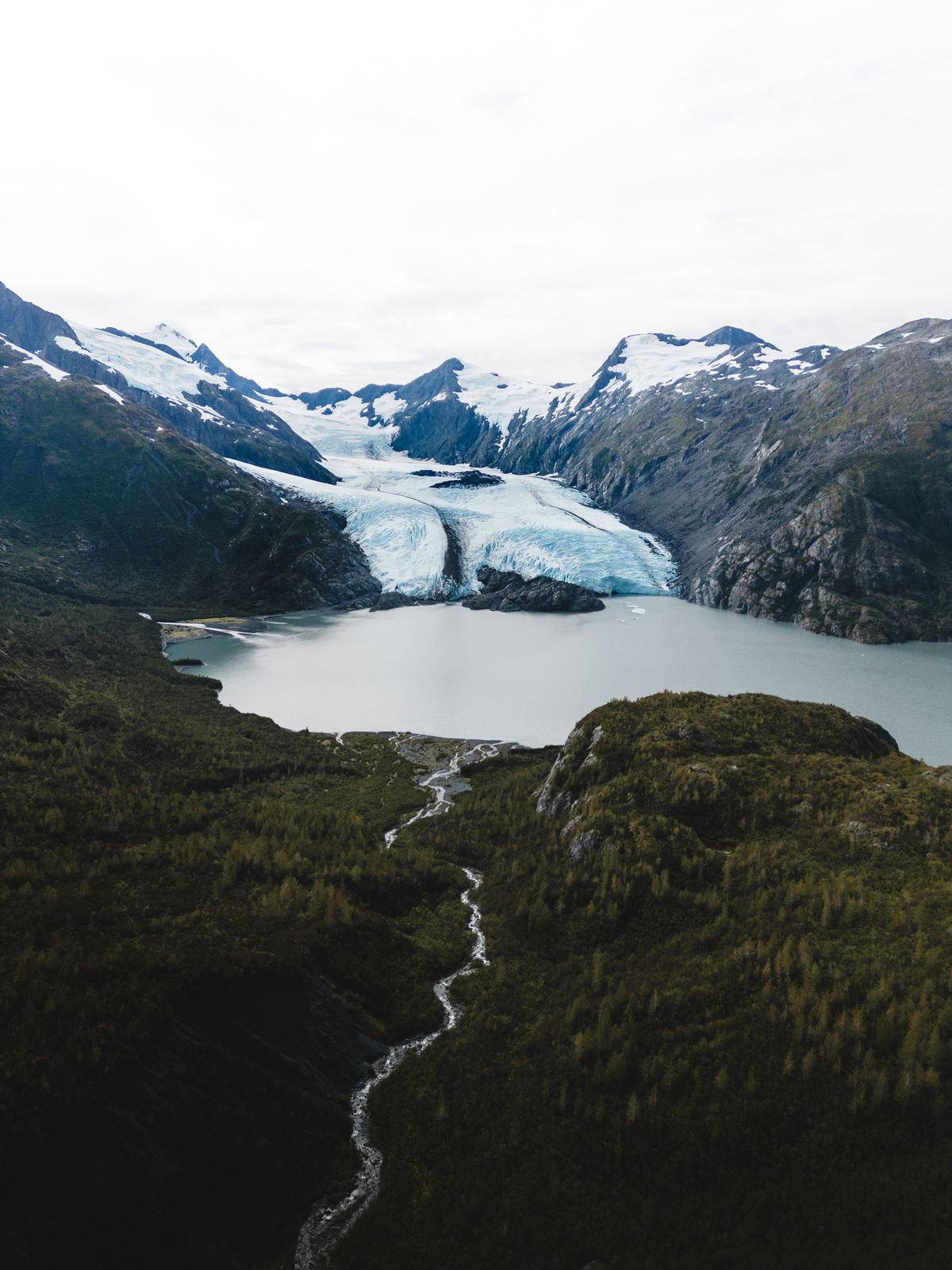
The first time you hear a glacier calve, you think it's thunder. A crack that splits the air across miles of open water, followed by a low, rolling boom as a wall of ice the size of an apartment building separates from the face of a tidewater glacier and crashes into the fjord. The splash sends a wave across the bay. Chunks of blue ice bob in the wake. A harbor seal on a nearby bergy bit doesn't flinch.
And somewhere in the back of your mind, you remember that you came here to fish.

Glacier Bay National Park and Preserve occupies 3.3 million acres of Southeast Alaska, a landscape shaped by ice, still being shaped by ice, where seven tidewater glaciers actively calve into saltwater fjords and the terrain is so recently deglaciated that some of it has only been free of ice for a few decades. Two hundred and fifty years ago, this entire bay was a single massive glacier. When Captain George Vancouver sailed past in 1794, there was no bay, just a wall of ice. By the time John Muir arrived in 1879, the glacier had retreated 48 miles, exposing a fjord system that is still being colonized by life. The forests near Gustavus are mature Sitka spruce and western hemlock. Forty miles up-bay, the shores are bare rock and pioneer plants. You can watch ecological succession happen in real time by motoring north.
This is not a fishing destination in the way that Katmai is a fishing destination. Nobody books a float plane to Glacier Bay because they heard the Dolly Varden were hot. You come to Glacier Bay because you want to watch the Margerie Glacier shed 200-foot towers of blue ice into the sea. You come because humpback whales, over 85 of them every summer, breach and bubble-net feed in Icy Strait while sea otters float on their backs cracking urchins in the kelp beds. You come because this is one of the great wilderness landscapes remaining on Earth, a place where glaciers, temperate rainforest, ocean, and wildlife collide in a way that exists nowhere else in the national park system.
The fishing is a discovery you make after you arrive. And it is far better than you'd expect.
Getting There, The Gustavus Gateway
You cannot drive to Glacier Bay. There are no roads connecting Gustavus, the tiny gateway community of roughly 450 people, to anywhere else in Alaska. You fly. Alaska Airlines runs a 25-minute jet from Juneau to Gustavus during the summer season (May through September), and several small air services operate prop planes on the route year-round. The Alaska Marine Highway ferry also serves Gustavus on a limited schedule.
Gustavus itself is a single road, a handful of lodges, a general store, a post office, and the kind of quiet that city people find either restorative or unsettling. There are no stoplights. There is no downtown. Cell service is limited. The airport is a gravel strip. The town exists because the park exists, and the people who live here year-round chose this life deliberately, commercial fishermen, artists, lodge operators, and a few who just wanted to live at the edge of the wilderness.
From Gustavus, it's 10 miles on a paved road to Bartlett Cove, the park's only developed area, a lodge, a campground, a visitor center, and the dock where tour boats and charter vessels depart into the bay. Everything beyond Bartlett Cove is accessible only by boat or floatplane.
The Bartlett River, Your Freshwater Fishery
The Bartlett River is Glacier Bay's most accessible fishing. A 6.5-mile trail from Bartlett Cove follows the river through old-growth Sitka spruce forest, crossing tidal flats and meandering through the kind of mossy, dripping coastal rainforest that defines Southeast Alaska. The river is small, intimate water by Alaska standards, flowing through forest into the tidal zone at Bartlett Cove.
This is Dolly Varden water. Sea-run Dolly Varden, technically southern Dolly Varden char, Salvelinus malma, move in and out of the Bartlett River with the tides and the seasons. In the spring, between mid-April and late May, ravenous schools of Dollies push into the estuary to intercept outmigrating salmon smolt. They cruise the tidal rips and the beach edges, slashing through schools of pink and chum fry, and a small baitfish pattern stripped through the current can produce fish after fish after fish.
The Dollies here average 12 to 18 inches, with sea-run fish occasionally pushing past 20. They're not trophy fish by Bristol Bay standards, if you want 30-inch rainbows gorging on salmon eggs, go to Katmai or Lake Clark. But what the Bartlett River Dollies lack in size, they make up for in setting. You're casting in a river where brown bears fish the same pools. Bald eagles sit in the spruce canopy overhead. The forest floor is a carpet of moss and fern. The silence, when you stop casting long enough to notice it, is profound.
Salmon in the Streams
The streams draining into Glacier Bay support runs of pink salmon, chum salmon, and coho salmon, along with resident Dolly Varden and cutthroat trout.
Pink salmon arrive in July and August, flooding the small streams in staggering numbers during even-numbered years (the dominant cycle in Southeast Alaska). Pinks are the most abundant Pacific salmon species and the most willing to eat a fly, a pink Woolly Bugger or a sparse pink streamer swung through a holding pool will draw strikes from fresh fish. They're not the most glamorous salmon, they average 3-5 pounds and deteriorate quickly once they enter freshwater, but the sheer volume of fish in these small streams creates a spectacle. The streams turn pink with spawning fish, and the Dolly Varden stack up behind the redds to gorge on drifting eggs.
Chum salmon overlap with the pinks in late summer and fall, running larger (8-15 pounds) and fighting harder. Fresh chums in the tidal zone, bright silver, not yet showing their spawning colors, are legitimate fly rod targets. A Clouser Minnow or a Chartreuse-and-white streamer stripped through the estuary on an incoming tide can intercept chums staging before their upstream push.
Coho salmon are the prize. They enter the streams in September and October, later than most anglers visit Glacier Bay, which means the coho fishing here is lightly pressured. Fresh coho are chrome-bright, aggressive, acrobatic, and average 8-12 pounds. They chase flies near the surface, slash at Muddler Minnows swung through the heads of pools, and fight with a violence that tests your 8-weight and your knots. Coho fishing in Southeast Alaska's small streams is some of the best salmon fly fishing in the world, and the Glacier Bay streams see a fraction of the pressure that the Kenai or the Russian River endure.
Cutthroat trout, coastal cutthroat, sea-run in some waters, inhabit the streams and are available through the summer. They're not large (10-14 inches typically) but they eat dry flies willingly. A Parachute Adams or an Elk Hair Caddis drifted through a small pool can produce cutthroat that rise with the delicate sipping take that makes dry-fly fishing addictive. In streams where cutthroat share water with Dolly Varden, you'll catch both species on the same flies, Pheasant Tail Nymphs and Hare's Ear Nymphs drifted under an indicator, or small Stimulators fished on top through the riffles.
Saltwater, Fishing the Fjords
The saltwater fishing in Glacier Bay is a charter operation. You're not wading a beach and casting, you're in a 24- to 32-foot cabin cruiser, motoring through fjords flanked by glaciers, jigging for halibut in 90 to 250 feet of water, or trolling for salmon along kelp beds while humpback whales surface 200 yards off the stern. The fishing is excellent. The scenery is beyond description.
Halibut, Barn Doors on the Bottom
Gustavus consistently produces some of the largest halibut caught anywhere in Alaska. Year after year, this tiny community leads all other Alaskan ports for trophy halibut, and the reason is geography: the fish feed in the shallow, nutrient-rich waters of Icy Strait and Cross Sound, where tidal currents concentrate baitfish, shrimp, and crab. Most charter captains find halibut within 15 minutes of the Gustavus dock, fishing at depths of only 90 to 180 feet, a fraction of the 300- to 600-foot depths common in other Alaska halibut fisheries.
This is not fly fishing. Halibut jigging is heavy gear, stout conventional rods, braided line, large leadhead jigs or circle hooks with herring bait, dropped to the bottom and worked with short lifts. A 50-pound halibut is a solid fish. A 100-pounder is a serious fight. Fish over 200 pounds are caught every season out of Gustavus, and the occasional 300-pound-plus barn door turns a fishing trip into a story you'll tell for decades.
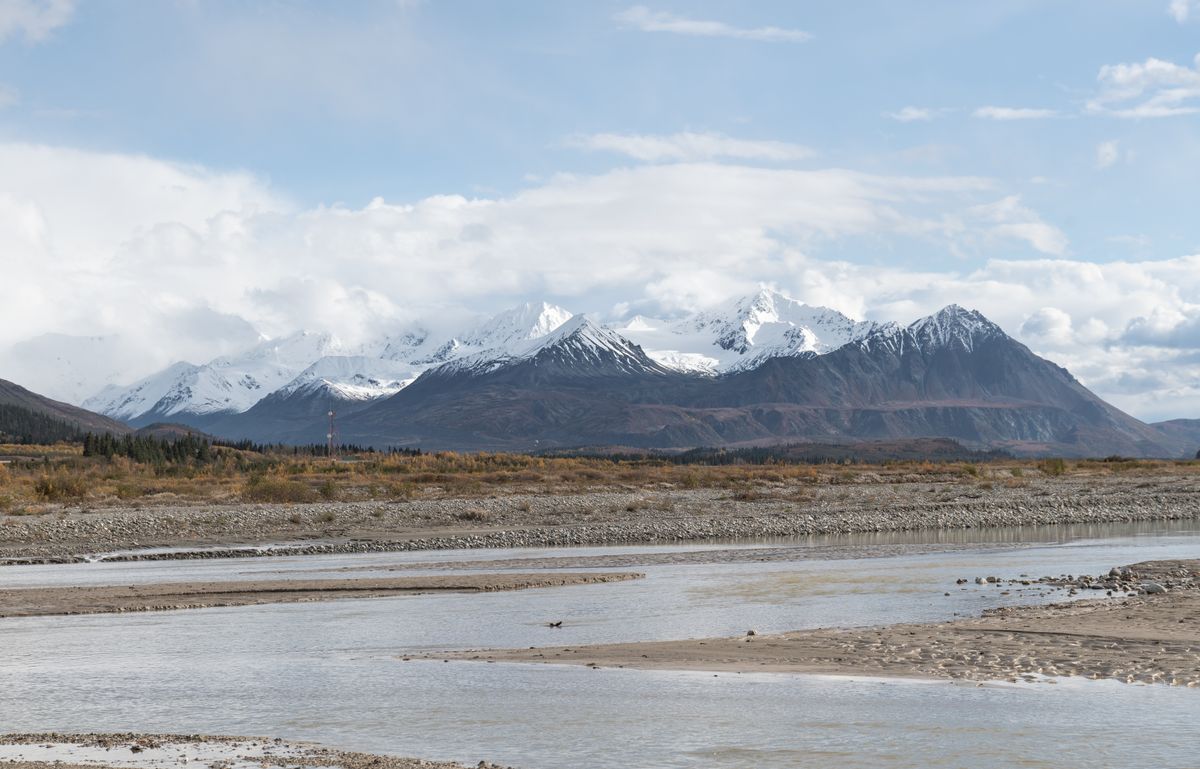
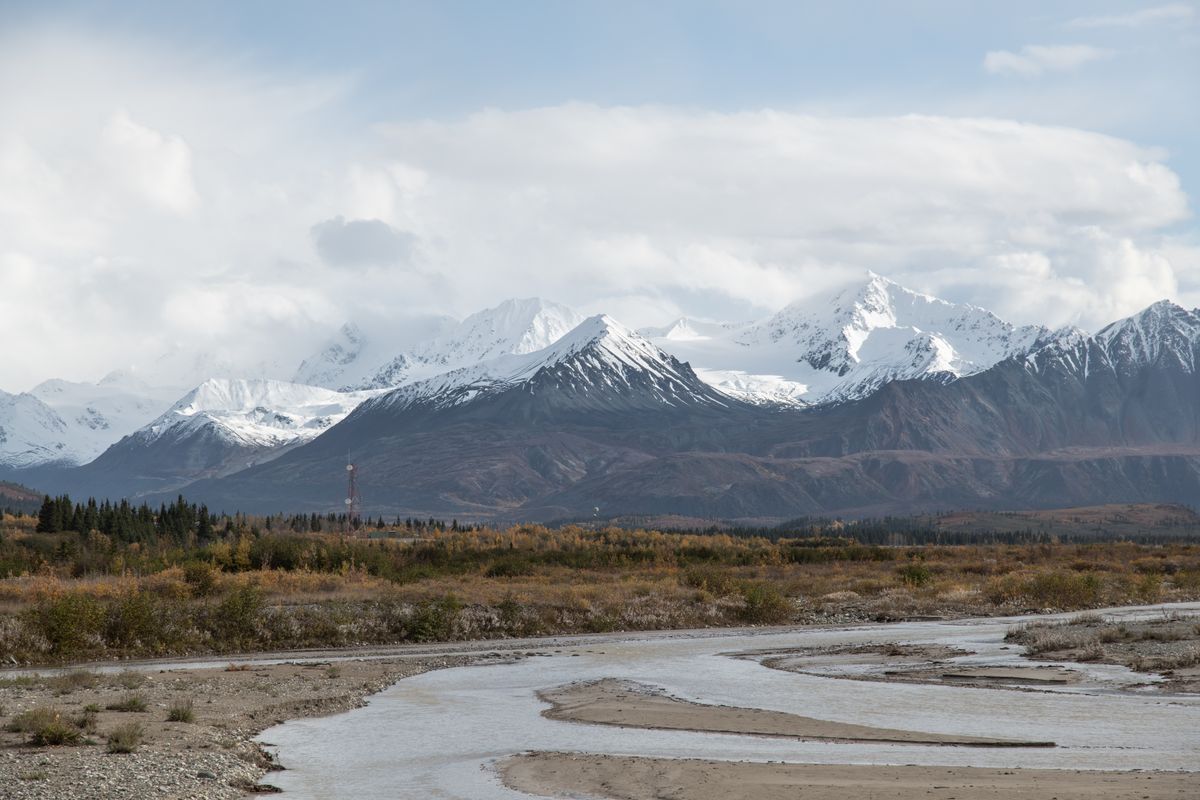
But even if you never pick up the halibut rod yourself, the charter experience is part of the Glacier Bay story. You're fishing in water where icebergs drift past from glaciers calving miles up-bay. Sea otters float in rafts of kelp nearby. Steller sea lions haul out on rocky points. And the mountains, the Fairweather Range, capped by 15,325-foot Mount Fairweather, rise directly from the water in a wall of ice and rock that dwarfs everything you've ever seen from a fishing boat.
Salmon in Saltwater
Charter boats target all five species of Pacific salmon in the waters around Glacier Bay, though king (Chinook) salmon and coho (silver) salmon are the primary targets.
King salmon are available from mid-May through July, with peak fishing in June. They average 20-40 pounds in saltwater, taken by trolling with downriggers, herring or flasher-fly combos at depth. A king salmon on the line is the most powerful fish you'll fight in Alaska waters, long, dogging runs that test 30-pound gear. Some charter captains will set up a mooching spread (slow-trolling cut herring) for a more hands-on experience than downrigger trolling.
Coho take over in August and September, and they're the more fly-friendly salmon in saltwater. On calm days in the protected waters of the Beardslee Islands, a cluster of islands near Bartlett Cove, a fly rod is a legitimate option for coho. An 8-weight with a fast-sinking shooting head and a Lefty's Deceiver or Clouser Minnow in chartreuse, pink, or purple, stripped fast through the top of the water column, can intercept coho pushing through the island channels. It's aggressive, visual fishing when conditions cooperate, you spot the school, position the boat, and strip the fly through the feeding lane.
The Fly Box, Freshwater and Saltwater Combined
Glacier Bay demands a split fly box, small-stream freshwater patterns and bigger saltwater-capable flies for the estuary and nearshore work.
For Dolly Varden (spring smolt season): Small baitfish patterns in #4-10, Clouser Minnows in olive-and-white and chartreuse-and-white, Woolly Buggers in olive and black, Egg-Sucking Leeches in black and purple, and any sparse minnow imitation in natural colors (grey, olive, light brown, white). The Dollies are chasing smolt, match the size and silhouette of a 2-inch juvenile salmon.
For Dolly Varden (salmon spawn season): Egg patterns are king. Glo Bugs in peach, Oregon cheese, and chartreuse (#8-12), Beads (8mm-10mm, peach and orange), and flesh flies in pale pink and cream (#6-10). When the salmon are on the redds, the Dollies hold downstream and eat whatever drifts to them, eggs, flesh, and the occasional San Juan Worm in pink or red.
For salmon: Woolly Buggers in pink, purple, and chartreuse (#2-6), Egg-Sucking Leeches (#2-6), Muddler Minnows (#4-8), and sparse baitfish patterns. For coho specifically, anything with flash and movement, Lefty's Deceiver variations in pink-and-white or chartreuse-and-white, stripped aggressively. Coho want the fly moving. Don't dead-drift to a coho.
For cutthroat trout: Dries and nymphs, Parachute Adams (#14-18), Elk Hair Caddis (#14-16), Stimulator (#10-14, especially useful as an attractor in fast pocket water), Pheasant Tail Nymphs (#14-18), Hare's Ear Nymphs (#12-16), Prince Nymphs (#12-16), and Copper Johns (#14-18).
For saltwater coho (fly rod): Large baitfish patterns on stainless hooks, Clouser Minnows (#1/0-2, heavy eyes, chartreuse-and-white or pink-and-white), Lefty's Deceivers (#1/0-2, same colors), and Popovics Surf Candy in herring colors. An intermediate or fast-sinking shooting head is essential, you need to get the fly down in the water column quickly.
The Gear
Freshwater rod: A 5-weight or 6-weight, 9-foot, handles everything on the Bartlett River and the smaller streams. The 5-weight is ideal for Dolly Varden and cutthroat on nymphs and small streamers. Step up to the 6-weight when the salmon arrive and you're throwing larger flies.
Salmon rod: An 8-weight for coho in the streams and the saltwater fly option around the Beardslee Islands. You want backbone for fresh coho, they run hard and the current in these streams adds to the fight.
Reel: Disc drag, sealed if possible, you're fishing in saltwater spray and rain. Bring enough backing (150 yards minimum on the 8-weight) for a hot coho run in tidal current.
Line: Weight-forward floating for freshwater nymphing and dries. A 200-grain or 250-grain sinking shooting head for the saltwater coho work and deep estuary fishing. Carry both.
Leaders: 9-foot, tapered to 3X or 4X for Dolly Varden and cutthroat. Step down to 0X or 1X for salmon, they're not leader-shy, and you need the strength. For saltwater fly work, a 6-foot straight section of 12- to 16-pound fluorocarbon is standard.
Wading gear: Breathable chest waders and studded wading boots are essential. The stream bottoms are rocky and slippery, and the water is cold, 40 to 50 degrees Fahrenheit even in midsummer. Glacier-fed water is not something you wet-wade by choice. Rain gear over the waders, because this is Southeast Alaska and it will rain. Expect rain. Plan for rain. Be pleasantly surprised on the three days per month when it doesn't rain.
The Calendar, When the Fishing Changes
Glacier Bay's fishing calendar follows the salmon, the light, and the weather, all of which shift dramatically across the short Alaska summer.
May: The season opens. Snow is still melting at elevation. Sea-run Dolly Varden are in the estuaries chasing salmon smolt, the spring Dolly fishing is some of the most consistent action of the year. Days are long (16+ hours of light by late May). Halibut charter season begins. Weather is cold and wet, 40s and 50s, rain.
June: King salmon arrive in saltwater. Charter boats shift to salmon trolling. Freshwater streams are clearing from snowmelt. Dolly Varden remain active. Cutthroat trout begin feeding on emerging insects. Humpback whales are arriving in the bay. The longest days of the year, nearly 19 hours of light on the solstice.
July: Pink salmon begin entering the streams (heavy in even years). King salmon fishing peaks in saltwater. Dolly Varden transition from smolt-chasing to salmon-egg feeding as the pinks begin spawning. This is the month when the bay is most alive, whales, puffins, sea otters, bears on the salmon streams. Weather warms to the 50s and 60s. It still rains constantly.
August: Chum and pink salmon overlap in the streams. Coho begin staging in the estuaries. Halibut fishing remains strong. The Dolly Varden fishing behind salmon redds is at its peak, egg patterns fished below spawning salmon produce steady action. Bears are on every salmon stream. The berry bushes are ripe. This is the richest month in the ecosystem.
September: Coho enter the streams. This is the best month for fly fishing if you want to catch salmon on a fly rod in freshwater, the streams hold fresh coho, and the fishing pressure is minimal because most tourists have gone home. Dolly Varden continue feeding on salmon eggs. The weather turns, shorter days, colder temperatures, more persistent rain. The whales begin their migration south. The tidewater glaciers are calving heavily after the summer melt. September in Glacier Bay is raw, wild, and magnificent.
The Glacier Experience, Why This Is Different
Every Alaskan national park has great fishing. Katmai has the biggest rainbows. Denali has the most accessible grayling. Lake Clark has the fly-out lake-and-stream variety. Wrangell-St. Elias has the sheer scale. What Glacier Bay has that none of them can match is the ocean.
This is the only major fishing destination in the Alaska national park system where you can stand at the edge of a tidewater glacier and watch house-sized chunks of 300-year-old ice crash into saltwater while a humpback whale surfaces in the middle distance. Margerie Glacier, the most active face in the park, advances 12 to 14 feet per day and calves almost continuously. The sound is extraordinary, a sharp crack like a rifle shot, then the thunderous splash, then the slow rolling wave that reaches your boat 30 seconds later. You feel it in your chest.
The Beardslee Islands, where the saltwater coho fishing happens, sit in the lower bay surrounded by forested shores and glacial peaks. On a calm morning, the water is glass. The reflections double the mountains. A pod of harbor porpoises rolls through. You strip a Clouser through the current seam at the edge of an island channel and a coho slams it with a take that nearly pulls the rod from your hand. This is not a trout stream. This is saltwater salmon fishing in a glacial fjord, and nothing in the Lower 48 prepares you for the scale of it.
And then there's the confusion with the name. Glacier National Park in Montana, the one with cutthroat trout and Going-to-the-Sun Road, is a completely different park, 1,500 miles southeast. Montana's Glacier has remnant glaciers melting away on mountaintops. Alaska's Glacier Bay has active tidewater glaciers calving into the ocean. If someone tells you they went fishing at "Glacier," ask which one. The fishing, the setting, and the experience have almost nothing in common.
Regulations and Practicalities
Fishing in Glacier Bay requires an Alaska sport fishing license, available online through the Alaska Department of Fish and Game or at vendors in Juneau before you fly to Gustavus. Non-residents 16 and older need the license. There is no separate park fishing permit.
Freshwater rules: Hook and line gear only. No bait, live or dead bait is prohibited in all freshwater within the park. Unpreserved fish eggs and roe are prohibited. Chumming is prohibited. This is effectively fly-fishing and lure-fishing only water. All harvested fish caught in the Bartlett River must be kept within six feet of the angler or on their person, this is a bear safety regulation, because a stringer of salmon left on the bank will attract a brown bear faster than you can wade back to retrieve it. Fish carcasses must be deposited in the deepest, fastest-flowing part of the stream channel, never on the bank.
Saltwater rules: Standard Alaska Department of Fish and Game regulations apply for halibut and salmon. Charter captains handle the regulatory details, bag limits, size limits, slot limits for halibut (which change annually under IPHC management). Deep water release mechanisms are required on charter vessels for rockfish to prevent barotrauma mortality.
Conservation: The charter operators and the park strongly encourage catch and release on all freshwater trout and Dolly Varden. The small streams that drain into Glacier Bay are delicate systems, they cannot sustain heavy harvest. The Dolly Varden you release today will be chasing smolt in the estuary next spring. Keep the salmon if you want (within limits). Release the char and the cutthroat.
Bear safety: You will encounter bears on the salmon streams. This is not a maybe, it is a certainty during the salmon runs. Carry bear spray. Make noise on the trail. Give bears right of way. Do not leave fish or fish carcasses on the bank. The bears at Glacier Bay are habituated to human presence but they are not tame. The park requires all food (including your catch) to be stored in bear-resistant containers at camp.
Gustavus, The Town at the End of the Road
Gustavus is the smallest gateway community in the Alaska national park system, 450 people, no chain stores, no fast food, and a personality that reflects the deliberate remoteness of the place. The lodges are the infrastructure: Glacier Bay Lodge (the park concessioner, at Bartlett Cove), Bear Track Inn, Annie Mae Lodge, and a handful of smaller operations. Most visitors stay in a lodge package that includes meals, transfers, and tours or charters.
Charter fishing out of Gustavus is the primary guided option. Several operators run half-day and full-day trips, including authorized park concessioners. A full-day halibut-and-salmon combo charter runs $350-500 per person. Multi-day fishing packages at the lodges, including accommodations, meals, and daily charters, range from $2,000 to $5,000 for three to five nights.
For freshwater fly fishing on the Bartlett River and nearby streams, you can go unguided. The Bartlett River Trail is well-maintained and marked. Wander it with a 5-weight and a box of small streamers and egg patterns, and you'll find Dolly Varden. For access to the more remote blue-ribbon streams, the ones accessible only by boat or floatplane, the charter captains can drop you at stream mouths for a day of fishing while they return to pick you up at a prearranged time.
If you'd rather fish with someone who knows the water, the handful of local guides working out of Gustavus are small in number but deeply experienced. They've fished these streams for decades and know which ones are holding fish on any given week, local knowledge that's impossible to replicate from a guidebook.
What to Expect, The Honest Assessment
The freshwater fishing at Glacier Bay is good. It is not Katmai-level great. The Dolly Varden are cooperative but modest in size. The salmon runs in the park's small streams are significant but not the million-fish spectacles of Bristol Bay. The cutthroat are willing but small. If you're coming to Alaska purely for the fishing, if the only thing you care about is bending a rod, go to Katmai for the rainbows, Lake Clark for the variety, or the Kenai Peninsula for the accessibility.
But if you want to catch a Dolly Varden while a glacier calves into the ocean behind you, if you want to jig for halibut in a fjord where humpback whales are bubble-net feeding a quarter mile away, if you want to swing a Muddler Minnow for coho in a stream where the forest has only existed for a century because the ice just left, then Glacier Bay is the only place on Earth where all of that happens in the same week.
Pack a 5-weight for the streams. Pack an 8-weight for the coho. Book a halibut charter for the day your arms need a break from casting. Bring rain gear that actually works, because Southeast Alaska will test it daily. Accept that you'll spend as much time staring at the landscape as you will fishing, and that's exactly right. The fish are real. The glaciers are the reason you're here.