Fish
Fish Fire
Fire Hike
Hike Bird
Bird

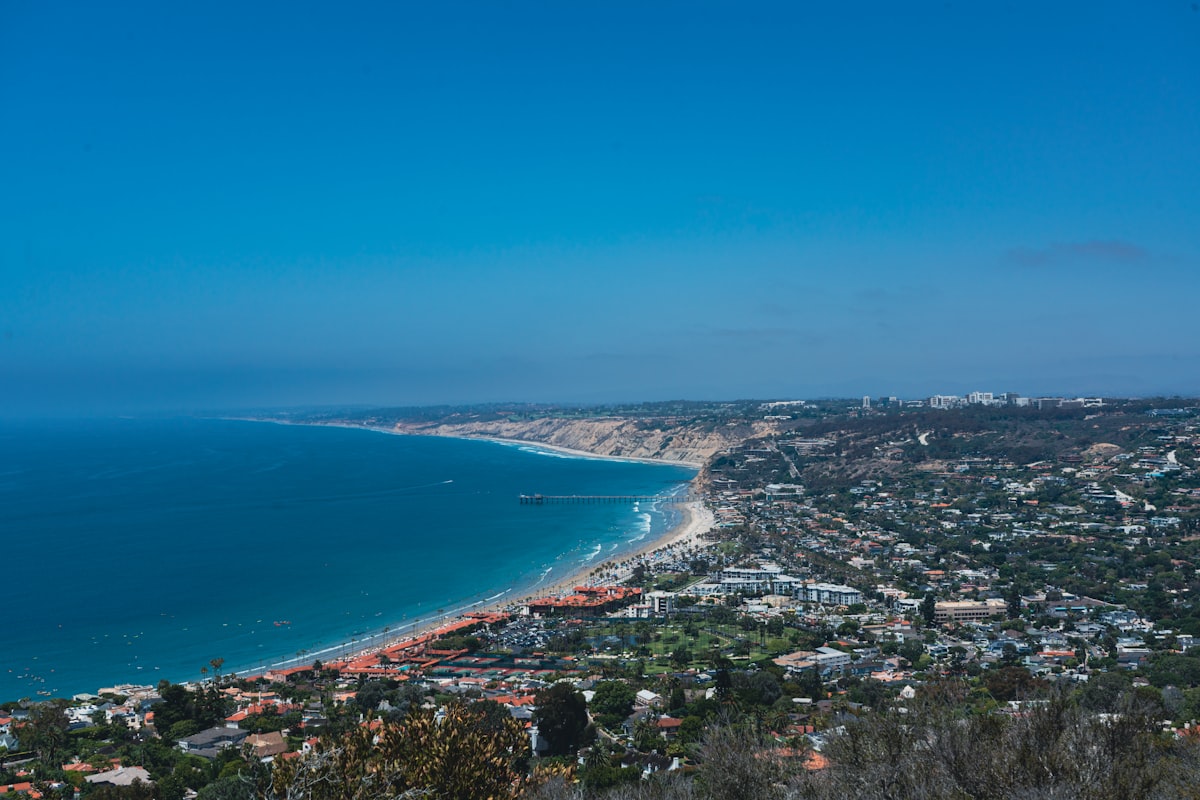

San Diego has 70 miles of coastline, seven public ocean piers, 27 miles of protected bay shoreline, surf beaches that produce year-round, and urban reservoirs that have produced some of the largest largemouth bass ever recorded, and all of it sits inside or immediately adjacent to city limits. The weather is 70 degrees and sunny most of the year. The water holds fish 365 days. Pier fishing requires no licence under California law. And spotted bay bass, a species that exists almost nowhere else on earth, is catchable from the shore of Mission Bay on light tackle, 10 minutes from the airport.
This is not a "take a charter offshore" guide. This is fishing on foot from piers, jetties, beaches, bay shores, and urban lake banks, no boat, no car required for some of the best spots.
Ocean Piers: No Licence, Year-Round Fish
California law exempts fishing from public ocean piers from the licence requirement. San Diego's seven ocean piers put you over productive saltwater without spending a dollar on paperwork.
The Best Piers
Ocean Beach Pier: The longest concrete pier on the West Coast at 1,971 feet. It bends at the end, giving you access to different depths and angles. Pacific mackerel, bonito, California halibut, barred surfperch, corbina, bat rays, leopard sharks, and the occasional yellowtail or white seabass. The pier's length reaches deeper water where the better fish hold. Bait shop at the pier entrance. Walk-on from Ocean Beach.
Crystal Pier (Pacific Beach): 872 feet long with a sandy bottom that halibut love. The number one pier in California for yellowtail during warm-water years. Kelp bass and sand bass around the pier pilings. Walk-on from Pacific Beach boardwalk.
Imperial Beach Pier: 1,491 feet long in the southernmost beach city in California. Extends into water 20 feet deep at the end. Bonito, mackerel, small barracuda, perch, and halibut. Less crowded than OB and Crystal piers.
Shelter Island Pier (San Diego Bay): A bay pier rather than an ocean pier. Spotted bay bass, sand bass, halibut, and rays from the pilings. Calm water, family-friendly. Walk-on from Shelter Island.
Embarcadero Park Pier (Downtown): Right on the downtown waterfront near the convention center. Spotted bay bass, perch, and small halibut. Walk-on from the Gaslamp Quarter.
Pier Techniques
Halibut: Live bait (smelt, sardines, or small mackerel caught on a sabiki rig) on a sliding sinker rig, cast to the sandy bottom. Halibut lie flat on the sand and ambush baitfish, the bite is a slow pull, not a strike. Wait before setting the hook. A 7-foot medium rod, 3000-size reel, 15-pound braid, 15-pound fluorocarbon leader.
Mackerel and bonito: Sabiki rigs (6-hook feathered rig) jigged vertically near the pilings for mackerel. Use live mackerel as bait for bonito, halibut, and larger species. Or cast metal jigs (Kastmaster, Krocodile) past the surf line for bonito.
Perch and corbina: Small hooks (size 6-8) baited with mussels, sand crabs, or Gulp! Sandworm, fished near the pilings or in the surf zone. Light tackle.
Ocean Beach Pier Fishing, San Diego, CA Legal Halibut from Pier, San Diego FishingMission Bay: Spotted Bay Bass from Shore
Mission Bay is a 4,235-acre man-made aquatic park with 27 miles of shoreline, and it holds the best spotted bay bass fishery in the world. Spotted bay bass are a Southern California endemic species that exists almost nowhere else. They are beautiful fish, olive green with dark spots, aggressive on light tackle, and catchable from the shore year-round.
Where in Mission Bay
Vacation Isle: Walk-on from the park area. Wade the shallow flats and cast to the channel edges and eelgrass beds. Spotted bay bass cruise the flats feeding on small crabs and shrimp.
Mission Bay Channel / Jetties: The channel entrance where Mission Bay meets the ocean. Deeper water, stronger current. Spotted bay bass, sand bass, halibut, and corvina (orangemouth corvina, another uniquely SoCal species). Walk-on from the Mission Beach Jetty.
Crown Point / Fiesta Bay: The north shore of Mission Bay. Wade the flats at low tide and cast to structure, docks, rocks, eelgrass beds. Spotted bay bass year-round.
Dock fishing: Many public docks and parks around Mission Bay allow fishing. Cast small soft plastics under the docks for spotted bay bass. Simple and productive.
Mission Bay Techniques
Spotted bay bass: A 6'6" to 7' light to medium spinning rod, 2500-size reel, 8-pound braid, 6-pound fluorocarbon leader. Small soft plastics are king: 2- to 3-inch swimbaits (Keitech Swing Impact), small paddletails, and finesse jigs in dark colors (brown, rootbeer, dark green). Cast to eelgrass beds, dock pilings, channel edges, and rocky structure. Slow retrieve with pauses. Spotted bay bass average 10 to 14 inches with occasional fish to 4 pounds.
Corvina: Larger lures, 3- to 4-inch swimbaits on a heavier jighead, cast into the channel and retrieved through the current. Corvina run 2 to 8 pounds and fight hard. Best at dawn and dusk in the channel areas.
Halibut (bay): Drop-shot rig with a small swimbait or live bait drifted along the sandy bottom in the channel areas. Patient fishing, halibut are ambush predators.
Fishing Mission Bay for Spotted Bay Bass, San DiegoSurf Fishing: The Beaches Are Your Spot
San Diego's beaches produce year-round surf fishing for barred surfperch, corbina, spotfin croaker, yellowfin croaker, and California halibut. A California fishing licence is required for surf fishing (piers are the exception).
Best beaches: Ocean Beach, Mission Beach, Pacific Beach, Coronado Beach, Imperial Beach. The trough between the beach and the first sandbar holds the fish.
Technique: A 9- to 10-foot surf rod, 4000-size reel, 15-pound braid. Carolina rig with a 1-ounce egg sinker, 24-inch fluorocarbon leader, and a size 4 hook baited with sand crabs (mole crabs), bloodworms, or Gulp! Sandworm. Cast to the trough and let it sit. Corbina and surfperch pick up the bait delicately, watch the rod tip.
Sand crabs: The best natural bait for surf fishing in San Diego. Dig them from the wet sand at the waterline as the waves recede. Free, effective, and the fish prefer them over anything from a store.
Urban Reservoirs: Trophy Largemouth
San Diego's urban reservoirs have produced some of the biggest largemouth bass in the world. Lake Miramar alone has produced at least five bass ranked in the top 25 of all time. These are city-managed reservoirs within or immediately adjacent to city limits, open seasonally for fishing.
Top Reservoirs
Lake Murray (Mission Trails Regional Park): A scenic 171-acre reservoir open December through September. Florida-strain largemouth bass (the trophy genetics), bluegill, channel catfish, black crappie, and stocked rainbow trout (November-May). Walk-on with paved paths. One of the best urban bass lakes in America.
Lake Miramar (Miramar Reservoir): Famous for producing giant largemouth bass. Stocked with rainbow trout in cooler months. Also holds bluegill, catfish, and crappie. Open to fishing seasonally, check the city's lake schedule.
Chollas Lake: A kids-only fishing lake (anglers must be 15 and under). Stocked with trout and catfish. Free entry, no licence required for kids under 16. Walk-on from the park.
Reservoir Techniques
Largemouth bass: Texas-rigged soft plastics (7- to 10-inch worms, creature baits), jigs, and swimbaits. The Florida-strain largemouths in these reservoirs grow to double digits. Fish the structure, points, submerged timber, docks, and weed edges. Early morning is prime.
Trout (November-May): PowerBait on a bottom rig or small spoons (Kastmaster 1/4-ounce) for stocked rainbows. Fish within 48 hours of stocking.
Easy Fishing: Mission Bay Non-Stop ActionFishing Licence and Regulations
Pier fishing: No licence required on public ocean piers in California. This is the law.
All other fishing (surf, bay, lakes): California sport fishing licence required for anyone 16+. Resident annual $62.90, nonresident $170.60. One-day licence $19.50.
California halibut: Minimum 22 inches, 3 per day.
Spotted bay bass: Minimum 12 inches, 5 per day (part of the bass aggregate limit).
Barred surfperch: No size limit, 10 per day.
Corbina: Minimum 21 inches, 3 per day.
Largemouth bass (reservoirs): Minimum 12 inches, 5 per day. Check individual reservoir regulations, some have special size limits.
When to Fish
San Diego's mild climate means year-round fishing. There is no bad season.
January-March: Trout stocking at urban reservoirs. Surf fishing for perch peaks in winter. Pier fishing for halibut and perch.
April-June: Spotted bay bass become most active in Mission Bay. Halibut on the piers. Corbina in the surf. Bass spawn at the reservoirs.
July-September: Bonito and yellowtail at the piers. Mission Bay spotted bay bass and corvina. Surf fishing at dawn before the crowds hit the beaches.
October-December: Excellent all-around. Reservoir bass feed aggressively before winter. Trout stocking begins. Pier fishing stays productive. Water cools slightly, corbina and perch in the surf.
Practical Details
Getting there: San Diego Trolley reaches Mission Bay (Old Town Transit Center), the downtown piers (multiple stops), and Imperial Beach (Blue Line). Bus routes reach Ocean Beach and Pacific Beach. A car is useful for the reservoirs. Biking works for the bay and beach piers.
Gear that travels: A two-piece 7-foot medium spinning rod covers pier fishing, Mission Bay spotted bay bass, and reservoir bass. For surf fishing, a longer 9- to 10-foot rod is needed. Pier bait shops at Ocean Beach rent rods and sell tackle.
Tackle shops: Squidco (Point Loma, serious tackle shop with bay and surf intel), Dana Landing Bait and Tackle (Mission Bay), Fisherman's Landing (Point Loma, mainly charter but sells pier and shore tackle too).
For a broader look at San Diego's offshore and bay fisheries, read our complete San Diego fishing guide. For a similar SoCal urban experience, see urban fishing in Los Angeles, LA River carp, pier fishing, and stocked city park lakes.
Weather: San Diego's weather is perfect for fishing year-round. Summer mornings can have marine layer fog that burns off by 10 AM, fish through it, the fish don't mind. Water temperatures range from 57°F (winter) to 72°F (late summer).
Pier Fishing in San Diego