Fish
Fish Fire
Fire Hike
Hike Bird
Bird

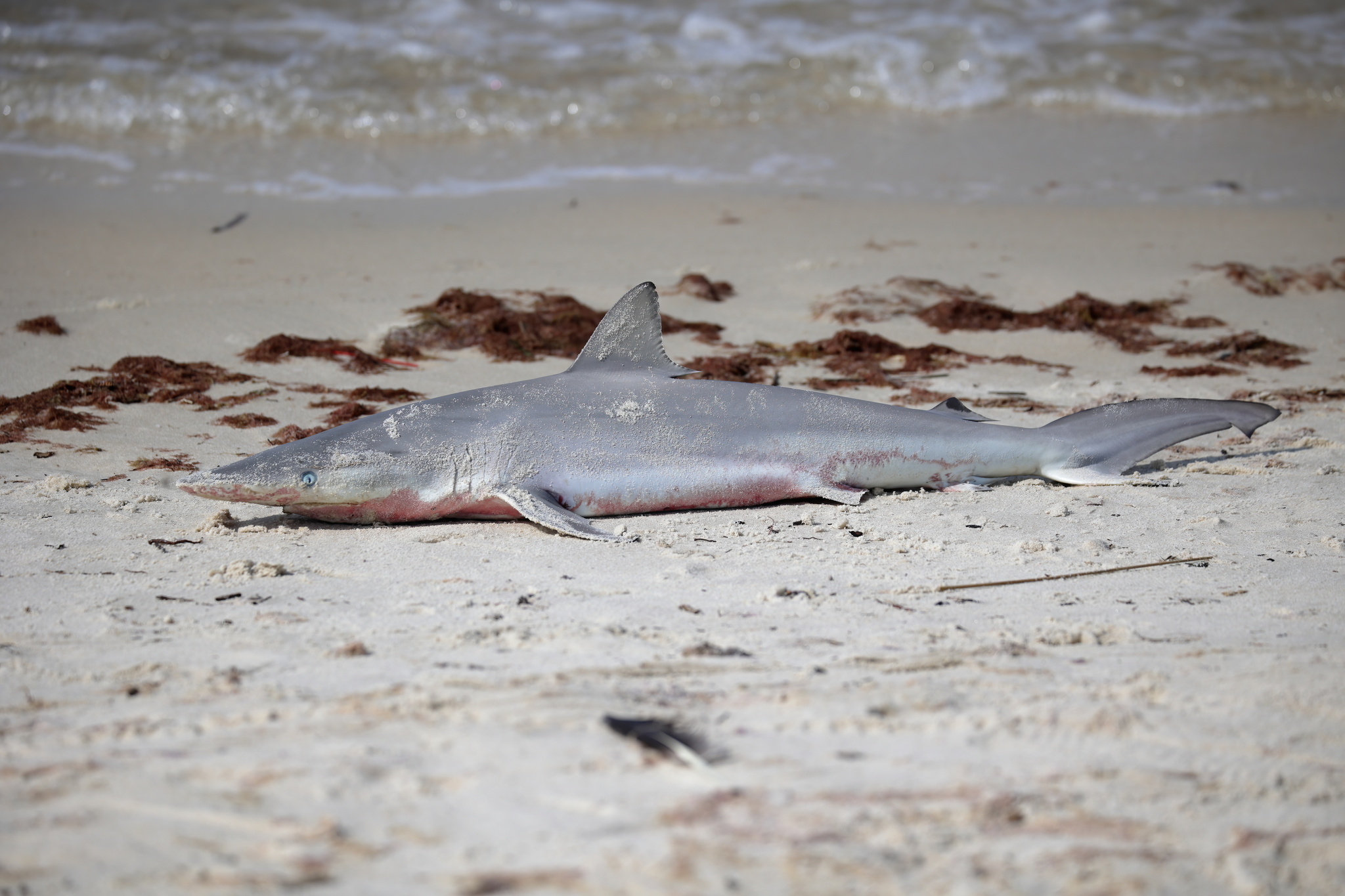

The spinner shark (Carcharhinus brevipinna) is, pound for pound, one of the most exciting sharks an angler can hook from the beach or a boat. It gets its name from its spectacular feeding and fighting behavior: it charges up through schools of baitfish, spinning as it goes, and often bursts clear of the surface, rotating in the air before crashing back down. A hooked spinner does the same thing, screaming runs punctuated by wild, spinning jumps that make it feel far bigger than its typical six-to-eight-foot size. For sheer acrobatic thrill on accessible tackle, few inshore sharks match it.
Spinner sharks are a staple of surf and inshore shark fishing across warm Atlantic, Gulf, and Caribbean waters, and their seasonal migrations bring them right into the wash along popular beaches. They are fast, streamlined, and aggressive, which makes them a reliable and rod-bending target when they are around. This guide covers how to tell a spinner from its near-twin the blacktip, where and when to find them, the tackle and rigs that survive their teeth, the baits and chum that draw them, how to handle the leaping fight, and how to release them so they swim off strong.
Understanding Spinner Shark Behavior
Spinner sharks are open-water, fast-swimming hunters that spend much of their time in the upper water column chasing schooling baitfish, menhaden, mullet, herring, sardines, and small jacks. Unlike bottom-oriented sharks, they roam and feed high in the water, which is exactly why they leap: their spinning, vertical feeding runs carry them right out of the surface. They frequent beaches, the surf zone, inlets, bays, and nearshore waters, often in large numbers, and they follow the bait. Where you find dense schools of baitfish getting hammered near the surface, spinner sharks are frequently the culprit.
Their movements are strongly seasonal and temperature-driven. In many regions spinner sharks make dramatic migrations, massing along beaches in huge aggregations as they follow bait during the spring and fall runs, the famous winter blacktip-and-spinner migration along Southeast Florida beaches is a prime example. As water warms and cools they move with the bait, so timing your fishing to the local baitfish run is the single biggest key to consistent action. Low light at dawn and dusk, moving water on the tide, and the presence of diving birds or nervous, showering baitfish all point to feeding spinners nearby.
Reading the water is more than half the game with spinner sharks. Because they hunt high in the column and travel in numbers, active fish give themselves away: birds wheeling and diving over a patch of water, bait spraying at the surface, and the occasional silver flash of a shark cartwheeling clear are all signs that a school is feeding within reach. When you see that activity, get a bait into it fast, because a feeding pod of spinners can move down a beach quickly as it chases the bait. Conversely, empty water with no bait present is rarely worth a long soak, spinners are where the food is, and finding the bait almost always means finding the sharks. On beaches, pay attention to troughs, cuts, and the deeper water just outside the first bar, where bait funnels and sharks patrol within an easy cast.
Spinner shark fishing overviewIdentifying a Spinner Shark
The spinner shark looks almost identical to the blacktip shark, and the two are frequently confused. Both are slender, streamlined, gray-bronze sharks with a pointed snout and black-tipped fins. The most reliable difference is the anal fin: the spinner shark has a black tip on its anal fin, while the blacktip shark's anal fin is plain white. Spinner sharks also tend to have that black on the anal fin plus black-tipped dorsal, pectoral, and lower tail fins, and their first dorsal fin is set a bit farther back on the body than the blacktip's. Size overlaps, but spinners often run a touch larger and more slender. When in doubt, check the anal fin, a black-tipped anal fin means spinner. Both species leap and spin, so the jumping alone will not tell them apart. It is worth learning the difference, because regulations sometimes treat the two species differently and knowing exactly what you have caught matters at the beach. On very young spinners the fin tips can be faint, so look closely and use the anal-fin mark as your tiebreaker rather than relying on overall color or the presence of black tips alone.
Tackle for Spinner Sharks
Spinner sharks reward tackle that balances casting ability with stopping power. From the beach, a long surf rod paired with a 6000-to-10000-size spinning reel or a small conventional, loaded with 40- to 65-pound braid, is a great all-around setup, enough to cast a bait out past the bar and enough backbone to handle a fast, hard-running shark. From a boat or when chunking and chumming, a medium-heavy conventional outfit in the 30- to 50-pound class covers larger fish. Because spinners run fast and jump, you want a smooth, strong drag and plenty of line capacity; a spinner's first run can be blistering.
Top your braid with a heavy monofilament shock leader to absorb the shock of runs and jumps and to protect against the shark's abrasive hide. A longer rod helps in the surf both for casting distance and for keeping line above the breakers during the fight. Set the drag firm but not locked, you want to turn the fish and slow those runs without giving it a solid wall to snap against when it launches into a spinning jump. Everything about a spinner setup should assume speed and aerial acrobatics rather than a slow grind.
Surf fishing for spinner sharks from the beachThe Right Rig and Leader
A spinner shark's teeth will slice mono instantly, so a wire or cable bite leader is essential. For typical surf-and-inshore spinners, a bite section of single-strand wire or heavy multi-strand cable, roughly 100- to 250-pound, crimped or haywire-twisted to the hook and to a heavy swivel does the job. Above the wire, run a heavy mono rubbing leader to cushion the fight and guard against abrasion when the shark rolls or the leader drags across its skin. Keep the wire only as long as needed; in clear water an overly long wire section can spook wary fish.
Use non-stainless circle hooks, commonly 8/0 to 12/0 for spinners, matched to your bait size. Circle hooks are strongly preferred and often legally required, they slide to the corner of the jaw and set as the shark turns, giving a safe, lip-hooked release and dramatically improving survival over a gut-hooked J-hook. Do not swing on the bite; when the line comes tight, let the rod load and start reeling steadily so the circle finds the jaw hinge. For surf fishing, a fish-finder rig with a sliding sinker keeps the bait on the bottom in the wash while letting a running shark move off cleanly before it feels resistance.
Circle hooks and wire leader rigBait and Chum
Because spinner sharks are baitfish specialists, the best baits are fresh, oily fish. A whole or half menhaden (bunker), mullet, ladyfish, herring, or a fresh bloody chunk of a similar oily fish is ideal, matching what these sharks naturally hunt. Fresh-dead cut bait fished on the bottom in the surf produces well, and a live bait, a lively menhaden, mullet, or blue runner, can be deadly when spinners are actively feeding high in the water. The oilier and bloodier the bait, the wider its scent plume and the better your odds of pulling a cruising spinner over.
A chum trail extends your reach dramatically. A mesh bag of ground fish, chunks, and oil worked into the current, from a boat, a pier, or staked in the beach wash, creates a scent corridor that draws fast-moving spinners from a distance and can pull a whole school into casting range. When spinners are visibly feeding on the surface, matching the bait they are eating and getting an offering into the melee is often all it takes. Keep the scent constant, watch for the fish, and be ready for an aggressive, immediate take once a spinner finds your bait.
Match your bait presentation to how the fish are feeding. When spinners are working bait high in the water, a bait fished under a float or a live bait allowed to swim near the surface can out-produce a bait pinned to the bottom, because it sits where the sharks are hunting. When there is no visible surface activity, a fresh cut bait on a bottom rig in a good trough will pick off cruising fish that follow the scent in. Either way, use a bait large enough to interest a good shark but not so large that it fouls your hookset, and keep it fresh, a spinner keying on lively, oily baitfish will often ignore a stale, washed-out chunk. If small pickers are stripping your baits, size up or switch to a tougher, bloodier bait that lasts long enough for a shark to find it.
Best baits for spinner sharksFighting a Spinner Shark
This is what makes the spinner shark famous. When a spinner eats, it typically runs hard and fast, then launches into the air, spinning and cartwheeling in a way that can throw a hook or create sudden slack. The moment you feel the weight after a circle-hook take, keep the rod loaded and let the fish run against a firm drag rather than trying to stop it dead, a spinner fought too hard on a short line will simply jump and throw the hook. Keep steady pressure, stay tight through the runs, and expect the aerial show.
During the jumps, do not panic and do not give slack. Keep the rod at a working angle, keep tension on the line, and bow slightly if a big fish is airborne to cushion the landing, then get tight again immediately. Between jumps, gain line with smooth pumps and let the drag do its work on the runs. From the beach, work the fish parallel to the shore and use the waves to help beach it; from a boat, follow the fish and keep a good angle to shorten the fight. Spinners fight hard and burn a lot of energy in those runs and jumps, so bring them in as efficiently as you can to leave them strong for release.
Expect the fight to be front-loaded. Unlike a heavy shark that grinds for an hour, a spinner tends to throw everything it has into blistering initial runs and a flurry of jumps, then tire relatively quickly if you keep steady pressure on it. The mistakes that lose spinners are almost always slack-line mistakes, a jump with a loose line, or backing off the pressure and letting the fish shake the hook. Stay tight, keep the rod loaded, use your body rather than just your arms to maintain pressure, and be ready for one last surge or leap right as the fish reaches the beach or the boat, which is often when a poorly hooked spinner comes free.
The leaping, spinning fight of a spinner sharkLanding and Safe Release
Most spinner sharks are released, and quick, careful handling is what makes the release count. Keep the shark in the water whenever possible, in the wash at the beach, or boatside, so it stays wet and oxygenated. Do not drag a shark up onto hot, dry sand for a long photo session; the time out of water and the weight of its body on land both do real harm. Always work from behind the head, well clear of the mouth, and mind the tail.
Use a long dehooker to pop the circle hook out of the jaw corner in a couple of seconds. If the hook is deep or the fish is difficult, cut the leader as close to the hook as you safely can, a non-stainless circle will corrode and fall out, which is far better for both of you than a prolonged struggle. Take any photo quickly with the shark in the water, then support and revive the fish, pointing it into moving water until it kicks away hard on its own. Know your local regulations before you fish, as many areas require circle hooks and regulate or prohibit harvest, and a fast, low-stress release keeps this spectacular fishery healthy.
How to safely handle and release a sharkPutting It All Together
Catching a spinner shark comes down to being where the bait is: fish beaches, inlets, and nearshore water during the seasonal baitfish runs, use fresh oily baits and a steady chum trail, and rig with a wire bite leader and a non-stainless circle hook. When one eats, hang on for the runs and the trademark spinning jumps, keep the line tight without trying to stop the fish cold, and then release it quickly and carefully. It is one of the most acrobatic, accessible big-fish thrills in the surf, and a fish that will have you hooked after the first airborne, spinning leap.
If you want to chase other sharks, the near-identical blacktip shark shares the same beaches and leaping habit, the lemon shark prowls the same flats with a more dogged fight, and the bull shark pushes far inshore and into brackish rivers.