Fish
Fish Fire
Fire Hike
Hike Bird
Bird

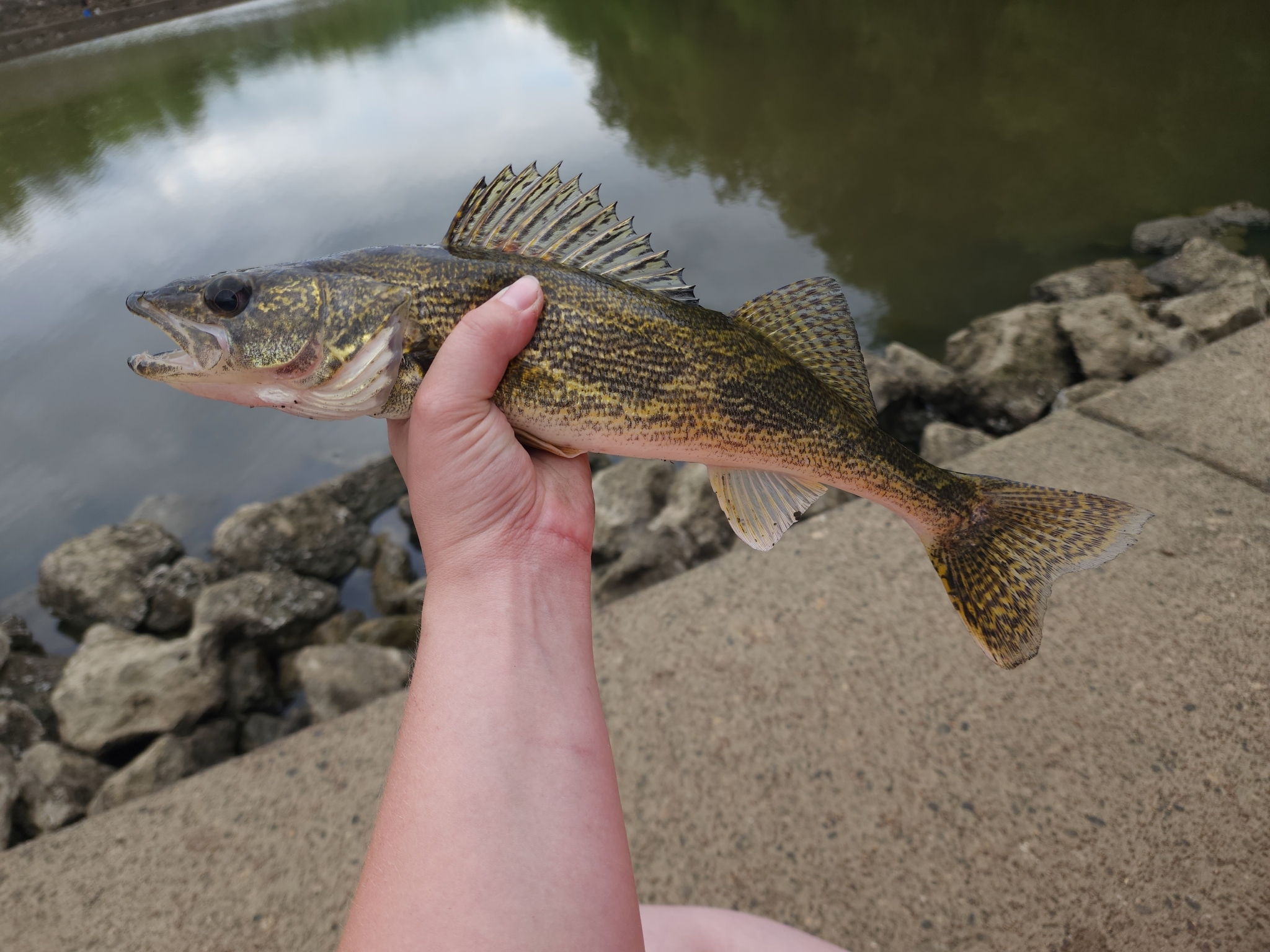

The saugeye is a fisheries manager's masterpiece and an angler's delight, a hatchery-made hybrid that thrives exactly where its parents struggle. A cross between a walleye and a sauger (usually a female walleye and a male sauger), the saugeye combines the walleye's size and fast growth with the sauger's aggression and tolerance for muddy, fertile, current-swept water, producing a hard-fighting, delicious gamefish perfectly suited to the turbid reservoirs, small impoundments, and spillway pools of the Midwest and beyond. Stocked heavily by state agencies, Ohio, Kansas, Oklahoma, Nebraska, Kentucky, and many others, the saugeye has created outstanding fisheries in lakes and rivers where walleye can't reproduce and the water is too warm or muddy for them to thrive. Fast-growing (commonly 15 to 20 inches, with trophies pushing 6 to 10 pounds and beyond), aggressive, and superb on the table, the saugeye has become one of the most popular gamefish across a huge swath of the country.
The best news for anglers is that saugeye are typically easier and more aggressive than pure walleye, striking a jig, crankbait, or blade bait with gusto and tolerating the stained water and warm reservoirs where they live. They're caught with the classic walleye/sauger toolbox, jigs, crankbaits, blade baits, and live bait, with a few saugeye-specific twists, and they offer some of the most accessible walleye-family fishing there is, including fantastic bank fishing at spillways and at night. This guide covers what a saugeye is, where to find them, and the techniques that consistently catch them.
Understanding the Saugeye
The saugeye (Sander vitreus × Sander canadensis) is a member of the perch family and a hybrid of the two most popular members of its genus. It shows intermediate features between its parents: a body that's often more blotchy and mottled than a walleye but more golden than a sauger, some dark spotting in the spiny dorsal fin (like a sauger) combined with a partial dark blotch at its base (like a walleye), and frequently a faint or partial white tip on the lower tail lobe (a walleye trait the pure sauger lacks). Saugeye are fertile but rarely reproduce successfully in the wild, so their fisheries are maintained by stocking.
The saugeye's great advantage, and the reason it's stocked so widely, is that it inherits the best of both parents. From the walleye it gets size and growth potential, reaching a satisfying size faster than a sauger. From the sauger it gets aggression, a tolerance for turbid and fertile water, and the ability to thrive in warm, muddy reservoirs and small impoundments where walleye falter. The result is a fish that grows big, bites willingly, and prospers in a huge range of waters. Like both parents, the saugeye is a low-light, bottom-oriented predator with excellent vision in dim conditions, feeding hardest in stained water, low light, and after dark. Understand that you're targeting an aggressive, adaptable, low-light predator that loves muddy water, and the saugeye's patterns fall into place.
How to Catch Saugeye: Tips and TacticsThe Jig-and-Twister: The Saugeye Classic
If there's one signature saugeye technique, it's the jig tipped with a twister-tail grub (or a minnow). A leadhead jig dressed with a curly-tail grub, often in bright chartreuse, orange, or white, worked along the bottom is the bread-and-butter saugeye method, deadly in reservoirs, rivers, and spillways alike. Cast it out and hop or drag it back along the bottom, or fish it vertically in current and deeper water, keeping it in contact with the bottom where saugeye hold. Tipping the jig with a live minnow adds scent and appeal, especially in cold water, while a plastic twister lets you cover water and fish more aggressively. Bright colors shine in the stained water saugeye love. Simple, versatile, and effective, the jig-and-twister catches saugeye everywhere they swim.
Fishing Twister Tails and Minnows for SaugeyeSpillways: The Saugeye Angler's Hotspot
One of the most exciting and accessible saugeye fisheries happens at spillways and dam tailwaters. After rains and during high water, saugeye run up to the base of dams and spillways, drawn by the current, oxygen, and concentrated baitfish, and they stack up in numbers within easy reach of bank anglers. This creates a beloved shore fishery: anglers line the spillway and cast jigs, twisters, crankbaits, and blade baits into the current and the pool below the dam, working them through the seams and slack water where saugeye hold. Fall through spring, and especially after high water, spillway fishing can be phenomenal, and it's a great way to catch saugeye without a boat. Fish the current seams, eddies, and the deeper pool, keep your presentation near the bottom, and mind the dangerous currents around any dam.
Fall Saugeye: The Jerkbait TrickCrankbaits and Jerkbaits
Saugeye readily chase and crush crankbaits and jerkbaits, making these a productive and active way to fish for them. Trolling crankbaits along reservoir flats, channel edges, points, and river ledges is an excellent way to cover water and locate scattered fish, especially in warmer months, pull shad- and minnow-imitating cranks at the depth fish are holding. Casting crankbaits and jerkbaits shines in fall and around the shallows, spillways, and riprap, where an aggressive saugeye will smash a wobbling or darting minnow imitation. The fall jerkbait bite in particular is famous among saugeye anglers, with fish crushing suspending jerkbaits worked with a twitch-pause cadence. Bright and natural shad/minnow patterns both produce.
Trolling Crankbaits for SaugeyeBlade Baits and Cold Water
When the water turns cold, blade baits (vibes) and jigging spoons become deadly saugeye producers. Worked vertically along the bottom or ripped and dropped, a blade bait's tight vibration perfectly imitates a dying, fluttering baitfish, and cold-water saugeye pile on. This is a go-to winter tactic in reservoirs and tailwaters, drop a blade bait to the bottom, rip it up sharply, and let it flutter back down on a controlled fall, staying alert for the strike as it drops. Blade baits let you fish deep and cold efficiently, cover the water column, and trigger reaction strikes when fish are lethargic. Along with the minnow-tipped jig, the blade bait is one of the two best cold-water saugeye lures, and winter is prime time for big saugeye.
Vertically Fishing Blade Baits for SaugeyeNight Fishing: Trophy Time
Big saugeye, like big walleye, are often nocturnal hunters, and night fishing is one of the best ways to catch a trophy. After dark, saugeye move shallow onto flats, points, riprap causeways, and shoreline structure to feed, coming within reach of anglers casting from boats and banks. The classic approach is casting crankbaits and jerkbaits (or working jigs) across shallow flats and along riprap and rocky shorelines at night, especially in the cooler months and around the spawn. Night fishing takes advantage of the saugeye's superb low-light vision and its tendency to feed shallow under cover of darkness. If you want to tangle with the biggest saugeye in a lake, fishing the shallows after dark is a proven strategy, dress warm, fish safely, and be ready for a jarring strike in the dark.
Night Fishing for SaugeyeWhere and When to Find Saugeye
Saugeye are stocked across the Midwest and beyond, Ohio is especially famous for them, along with Kansas, Oklahoma, Nebraska, Kentucky, Missouri, and many other states, in reservoirs, lakes, small impoundments, and rivers, particularly turbid, fertile waters where walleye struggle. Look for them:
- At spillways and dam tailwaters, especially after rain and high water (fall through spring).
- Along riprap dams, causeways, and rocky shorelines, prime feeding areas day and (especially) night.
- On points, flats, channel edges, and drop-offs in reservoirs, where fish hold and feed.
- In current seams and deeper holes in rivers, much like sauger.
Seasonally, fall through early spring is prime, with the pre-spawn (late winter/early spring) run to spillways and shallows a highlight; winter blade-bait fishing is excellent; and summer fish can be trolled up on deeper structure. Low light, stained water, and moving water are the constants that trigger the best bites.
Why Saugeye Are So Popular
The saugeye's popularity is no accident, it's a fish engineered to solve a problem, and the solution turned out to be a superb gamefish. Across the Midwest and Great Plains, countless reservoirs and small lakes are too warm, too muddy, or too fertile for walleye to reproduce or thrive, and their rivers are often turbid and current-swept. By stocking saugeye, agencies give anglers a big, aggressive, walleye-class predator in exactly these waters, often close to home, in small local impoundments that would otherwise offer only panfish and catfish. The result is a huge, accessible, hard-fighting, and delicious fishery in places where a quality walleye-family fish simply wouldn't exist otherwise. For millions of anglers, especially in states like Ohio, the saugeye is the local walleye-family fish, the one they can catch from the bank at the neighborhood lake's spillway, jig up through the ice, or troll on the reservoir. That accessibility, combined with the fish's size, aggression, and table quality, is exactly why the saugeye has earned such a devoted following.
Reading Stained and Muddy Water
Because saugeye thrive in the turbid water that walleye avoid, learning to fish stained and muddy water is a real edge. In off-color water, saugeye rely more on vibration, contrast, and scent than on sight, so adjust your approach: use bright, high-visibility colors (chartreuse, orange, firetiger) that stand out in the murk, lean on lures with strong vibration and thump (blade baits, thumping crankbaits, and paddle-tail swimbaits), and slow down to give fish time to find your offering. Scent from a live minnow tip helps in the dirtiest water. Fish tighter to structure and the bottom, since fish in murky water often hold close to hard objects they can relate to. Rising, muddy water after rain, which sends many anglers home, is often prime saugeye time, especially at spillways and inflows where the current concentrates fish and disoriented baitfish. Rather than waiting for the water to clear, learn to fish the mud, and you'll catch saugeye when others can't.
Tackle for Saugeye
Saugeye gear is versatile walleye-family tackle:
- Rod and reel: A medium or medium-light spinning outfit, 6.5 to 7 feet, with a sensitive tip to feel the bite and backbone to set the hook. A quality reel with a smooth drag.
- Line: Braid with a fluorocarbon leader for sensitivity, or light mono.
- Lures: Jigs (1/8 to 1/2 ounce) with twister-tail grubs and swimbaits, crankbaits and jerkbaits, blade baits, and jigging spoons, in both bright (chartreuse, orange) and natural shad colors.
- Bait: Minnows for tipping jigs and bottom rigs.
Prioritize sensitivity to detect the sometimes-subtle bite, and carry a mix of bright and natural colors to match the water clarity.
Are Saugeye Good to Eat?
Absolutely, saugeye are excellent eating, with the same firm, flaky, mild white flesh that makes walleye and sauger so prized. Many anglers consider them among the very best-tasting freshwater fish, superb pan-fried, in fish and chips, or baked. Because they're stocked to create harvestable fisheries and often grow abundant, saugeye are a great fish to keep for the table within the regulations, always check your local size and bag limits. Bleed and ice your catch promptly for the best quality, and enjoy a fish that's as good on the plate as it is fun to catch.
Common Saugeye Mistakes
- Fishing above the fish. Saugeye hold near the bottom. Keep your jig, blade, or crankbait in contact with or close to the bottom.
- Ignoring the spillways after rain. High water pulls saugeye to spillways and tailwaters, some of the best and most accessible fishing there is.
- Skipping low light and night. Saugeye feed hardest in dim conditions. Fish dawn, dusk, night, and stained water for the biggest fish.
- Only fishing clear water. Saugeye thrive in muddy water where walleye won't. Don't be afraid of stained, fertile reservoirs.
- Wrong colors for the clarity. In the stained water saugeye love, bright chartreuse and orange often out-fish natural colors. Match the water.
Put It All Together
Catching saugeye comes down to fishing the bottom with the right presentation in the muddy, low-light conditions they love: work a jig-and-twister (or minnow) along the bottom, rip a blade bait in cold water, cast or troll crankbaits and jerkbaits on the flats and channels, and, above all, hit the spillways and tailwaters after high water and the shallow flats and riprap after dark. Use bright colors in stained water, keep your presentation near the bottom, and target the fall-through-spring prime time. Do that, and you'll catch one of the country's best-designed gamefish, a fast-growing, aggressive, delicious hybrid that thrives right where walleye can't.
The saugeye is the hybrid of two beloved perch-family predators, and knowing them all makes you a better angler. Its parent the walleye is the celebrated fish of clear lakes and rivers, and its other parent the sauger is the current-loving river specialist. Learn the saugeye, and you've mastered the best-of-both-worlds member of the family.
Ready to catch a spillway full of saugeye? Use Guidepole to scout the reservoirs, dam tailwaters, and spillway access near you, check the current water conditions and the size and bag limits before you go, and put the jig-and-blade tactics above to work on this hard-hitting hybrid.