Fish
Fish Fire
Fire Hike
Hike Bird
Bird

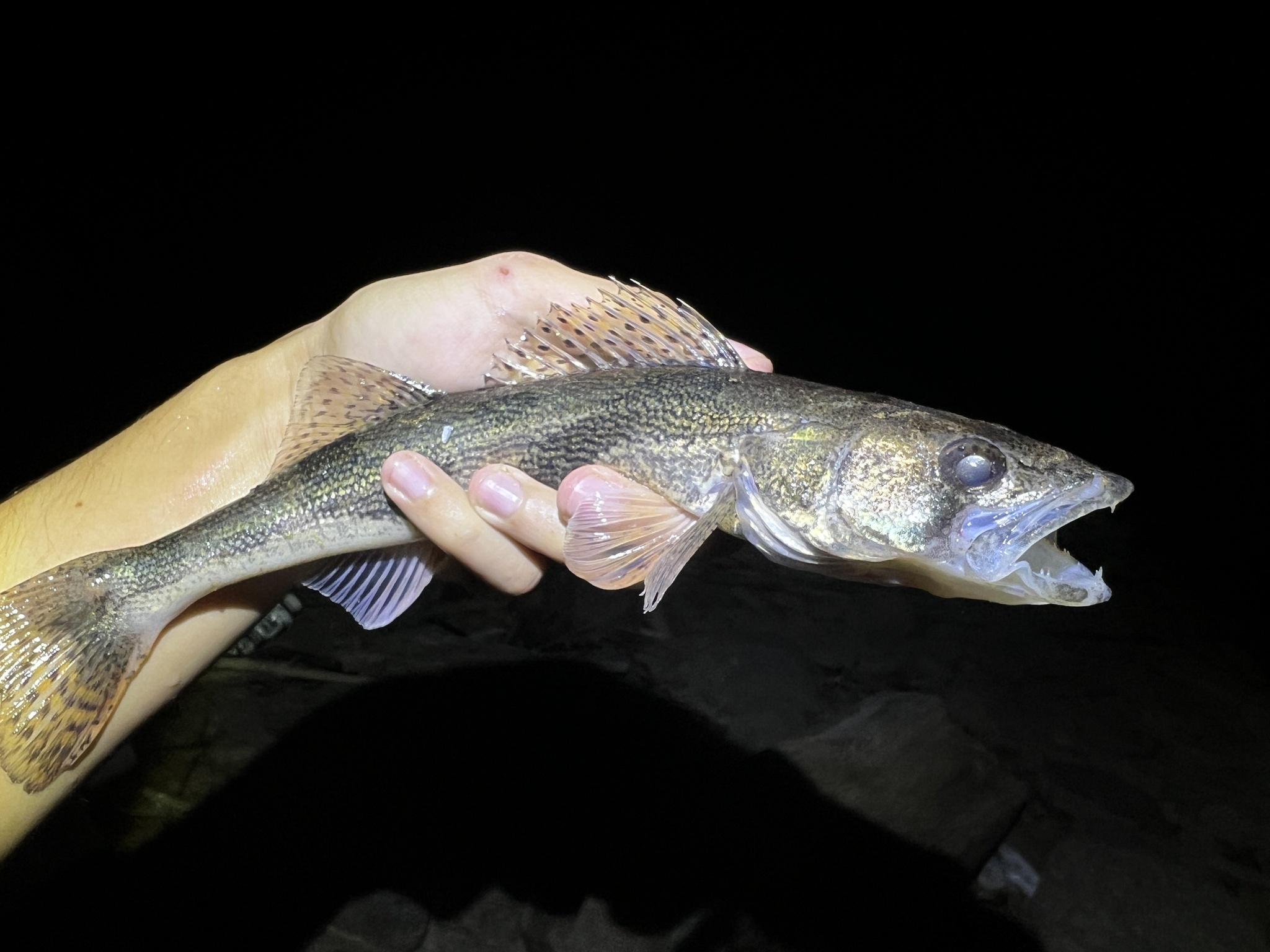

The sauger is one of North America's most underrated gamefish, the walleye's smaller, tougher, river-running cousin, beloved by those who chase them and overlooked by nearly everyone else. Where the walleye is the celebrated fish of clear lakes, the sauger is the specialist of big, turbid, current-swept rivers, thriving in muddy, fast water that other gamefish avoid. A little smaller than a walleye (a typical sauger runs 10 to 15 inches and a pound or two, with trophies in the 3- to 5-pound range), it more than makes up for its size with abundance, a willingness to bite in cold weather when little else is active, and flesh every bit as delicious as its famous relative. When sauger stack up by the thousands below a dam in winter, they offer some of the most productive cold-weather fishing in fresh water.
Catching sauger is largely a game of fishing the bottom in current with a jig, simple, effective, and deeply rewarding once you learn to read a river. They relate to the current and the bottom in predictable ways, they concentrate in known spots (especially tailraces), and they bite best when the weather is at its worst. This guide covers what a sauger is, where to find them, and the jigging-focused techniques that consistently put them in the boat.
Understanding the Sauger
The sauger (Sander canadensis) is a member of the perch family and a very close relative of the walleye, so close that the two look similar and even hybridize (the cross is called a saugeye). But the sauger has clear identifying features: rows of distinct dark spots on its spiny dorsal fin (where a walleye has a single dark blotch at the rear base), three or four dark, saddle-like blotches along a brownish, mottled body, and, importantly, no white tip on the lower lobe of the tail (which a walleye has). It's generally smaller and more slender than a walleye, and its coloration is a camouflaged brown and gold rather than the walleye's olive-gold.
Two things define the sauger: it's a river fish and a low-light predator. Sauger are far more tolerant of turbid, fast-flowing, current-heavy water than walleye, and they're at home in the big, muddy rivers of the central and eastern U.S. and Canada, the Mississippi, Missouri, Ohio, Tennessee, and Arkansas systems and their connected reservoirs and tailwaters. Like walleye, they have excellent low-light vision (thanks to a reflective eye layer), so they feed most heavily in dim conditions, murky water, low light, and after dark, hunting small fish and invertebrates along the bottom and in the current. Understand that you're targeting a current-oriented, bottom-hugging, low-light river predator, and everything about sauger technique makes sense.
How to Catch Sauger: Tips and TechniquesJigging: The Number-One Method
If you learn one sauger technique, make it jigging. A jig, a leadhead tipped with a minnow, a soft-plastic grub or swimbait, or dressed as a hair jig, bounced and worked along the bottom in current is far and away the most productive way to catch sauger. Because sauger hold tight to the bottom in flowing water, the key is to get your jig down to them and keep it in contact with the bottom, lifting and dropping it, dragging it, or letting the current sweep it through the strike zone. Use enough jig weight to hold bottom in the current (heavier than you'd think, 3/8 to 1 ounce or more in strong flow), and stay vertical or cast up-current and work the jig back along the bottom. The bite is often subtle, a tick, a tap, or just weight, so stay in contact and set on anything that feels different.
Sauger Fishing: Bottom Rig vs. JigTipping the Jig: Minnows and Plastics
Sauger respond well to a jig tipped with live bait, a minnow is the classic and often the most effective tip, adding scent and action that turns lookers into biters, especially in cold water when fish are sluggish. Thread a lively minnow on your jig and work it slowly along the bottom. Soft plastics, paddle-tail swimbaits, curly-tail grubs, and ringworms, are also deadly and let you cover water and fish more aggressively, and many anglers tip a plastic with a minnow head or use scented plastics for the best of both. In the cold water where sauger fishing shines, a slower, more deliberate presentation with a minnow-tipped jig is often the ticket, while a plastic lets you search faster when fish are active. Carry both and let the fish tell you what they want.
Sauger Jigging Techniques for Cold WaterTailraces: The Sauger Hotspot
There is no better place to catch sauger than a tailrace, the turbulent water immediately below a dam. Sauger migrate upstream and stack up in enormous numbers below dams, blocked by the barrier and drawn to the current, oxygen, and concentrated baitfish. This is especially true in fall through early spring, when sauger make their spawning-related runs and pile into tailwaters in astonishing numbers, providing some of the best and most reliable cold-weather fishing anywhere. Fish the current seams, eddies, and slack pockets beside the main flow, the scour holes and deep slots, and the edges where fast water meets slow, jigging along the bottom where the fish hold. A tailrace on a cold winter day can produce sauger after sauger. Mind the dangerous currents and fluctuating water levels around dams, wear a life jacket and give the immediate dam a wide berth, but the tailrace is the sauger angler's promised land.
Sauger Fishing a Dam TailwaterReading the River
Away from the dams, sauger relate to current and structure throughout a river system, and learning to read the water pays off. Target:
- Current seams where fast water meets slow, sauger sit in the slower water and dart out to feed.
- Scour holes and deep slots, especially below wing dams, bridge pilings, and channel bends, where fish hold out of the main current.
- Wing dams and rock structure that break the current and concentrate fish and bait.
- Channel edges and drop-offs where the river bottom changes depth.
- The deeper holes and pools in general, where sauger rest and stage.
The theme is current breaks and the bottom, sauger want to be near the flow but out of its full force, tight to the bottom, ready to ambush food the current brings. Fish these spots with your jig on the bottom, and move until you find concentrations of fish.
Sauger Fishing on a RiverOther Techniques: Blades, Bottom Rigs, and Trolling
While jigging dominates, other methods catch sauger too. Blade baits and jigging spoons worked vertically along the bottom in current are excellent, especially in cold water, imitating a dying baitfish with a tight vibration. Three-way and bottom-bouncing rigs with a live minnow or a crawler, dragged along the bottom, are a proven river tactic that keeps bait in the strike zone. And trolling crankbaits along river channels, ledges, and flats can be effective for covering water and locating scattered fish, particularly in warmer months and in reservoir sections. All of these share the same principle as jigging: get your presentation down to the bottom where the sauger live, in and around the current.
Sauger Secrets and River TacticsThe Fight and Why Anglers Love Sauger
Sauger won't blister your reel like a salmon, but hooking one in current is genuinely fun, and the appeal of sauger fishing runs deeper than the fight. A sauger uses the river's flow to its advantage, pulling and shaking with more spirit than its size suggests, and detecting and connecting on those subtle, tick-like bites down in the current is a satisfying skill that rewards feel and attention. But what really wins anglers over is the whole package: sauger bite when almost nothing else will, in the cold, gray, unglamorous conditions that keep fair-weather fishermen home; they stack up in reliable, findable concentrations; they're abundant enough to catch in numbers; and they're among the very best-eating fish that swims. For the angler who loves reading a river, feeling for a light bite in cold water, and bringing home a delicious meal, few fish are as consistently rewarding as the sauger. It's a fishery built on skill and knowledge rather than luck, which is exactly why its devotees are so loyal.
Sauger, Walleye, or Saugeye?
Because sauger, walleye, and their saugeye hybrid often share the same rivers and reservoirs, and even the same tailrace, it pays to know which you've caught, both for the satisfaction and for the regulations, which sometimes differ. Run through the key marks: distinct rows of spots on the spiny dorsal fin and saddle blotches on a mottled brown body, with no white tail tip, point to a pure sauger. A single blotch at the back of the dorsal, a more uniform olive-gold body, and a white lower tail tip point to a walleye. A saugeye typically shows a blend, some spotting in the dorsal along with a partial blotch, intermediate body coloration, and often a faint or partial white tail tip. In many mixed waters you may catch all three in a day, which is part of the fun. When in doubt about identity for regulation purposes, check your local rules, since some fisheries manage sauger, walleye, and saugeye with different limits.
Tackle for Sauger
Sauger tackle is essentially finesse river-jigging gear:
- Rod and reel: A medium or medium-light spinning outfit, 6.5 to 7.5 feet, with a sensitive tip to feel the subtle bite and enough backbone to set the hook and control a fish in current. A quality reel with a smooth drag.
- Line: Braided line (with a fluorocarbon leader) is ideal for sensitivity and bottom contact in current; light mono also works.
- Jigs and lures: A range of jig heads (1/4 to 1+ ounce for varying current), soft-plastic grubs and swimbaits, hair jigs, blade baits, and jigging spoons.
- Bait: Minnows for tipping jigs and bottom rigs.
Because feeling the light bite and holding the bottom in current are everything, prioritize sensitivity, braid and a sensitive rod make a real difference in sauger fishing.
Timing: A Cold-Weather Gem
One of the best things about sauger is when they bite: they're a cold-weather fishery that peaks when most other fishing has slowed. Key timing:
- Fall through winter and early spring is prime, as sauger run upstream and stack in tailraces and deep holes. The dead of winter can offer the year's best sauger fishing below dams.
- Low light and murky water trigger the best feeding, overcast days, dawn, dusk, and after dark, and stained or muddy water all favor the sauger's low-light hunting.
- Current conditions matter: sauger position relative to flow, and changes in dam generation and river levels shift where and how they feed.
If you want great fishing on a cold, gray winter day when the lakes are locked up and the bass are dormant, the sauger, stacked in a tailrace, is your fish.
Are Sauger Good to Eat?
Absolutely, and this is a big part of their appeal. Sauger have firm, flaky, mild white flesh that's every bit as delicious as walleye, and many anglers can't tell the two apart on the plate. They're superb pan-fried, in fish and chips, or baked, and because they're often abundant where they occur (especially in a good tailrace run), they make an excellent fish to keep for a meal within the regulations. As always, check your local size and bag limits (and any special tailrace or seasonal rules), bleed and ice your catch, and enjoy some of the finest table fare in fresh water.
Common Sauger Mistakes
- Not fishing the bottom. Sauger hold tight to the bottom in current. If your jig isn't ticking bottom, you're fishing too high.
- Too-light jigs. In river current you need enough weight to hold bottom. Size up your jig until you maintain contact.
- Ignoring the tailraces. The best sauger fishing is below dams in fall and winter. Don't overlook these concentration spots.
- Fishing the wrong conditions. Sauger feed best in low light and murky water. Bright, clear, calm conditions are the toughest.
- Setting too hard on a subtle bite (or missing it). Sauger bites are light. Stay in contact, and set on anything that feels different.
Put It All Together
Catching sauger comes down to fishing the bottom in current, especially in the cold months: jig a minnow-tipped or soft-plastic jig along the bottom in the tailraces below dams and in the current seams, scour holes, and channel edges of big rivers, using enough weight to stay in contact with the bottom. Fish the low-light, murky, cold-weather conditions the sauger loves, target the tailrace runs of fall and winter, feel for the subtle bite, and bring home a few of the best-eating fish in fresh water. Do that, and you'll discover why sauger anglers are so devoted to this tough, abundant, and delicious river gamefish.
The sauger is one of three closely related perch-family predators, and knowing all three makes you versatile. Its famous cousin the walleye is the celebrated fish of clear lakes and shares many of the same jigging tactics, and the saugeye, a walleye-sauger hybrid, combines the traits of both in a hard-fighting, fast-growing package. Learn the sauger, and you've mastered the river-running member of the clan.
Ready to fish a tailrace full of sauger? Find the dams and river access on your local water, keep an eye on the flows and dam-generation schedules, and time your trip to the cold-weather runs when the fish stack up, then jig the bottom, feel for that subtle tick, and enjoy this underrated river gem.