Fish
Fish Fire
Fire Hike
Hike Bird
Bird

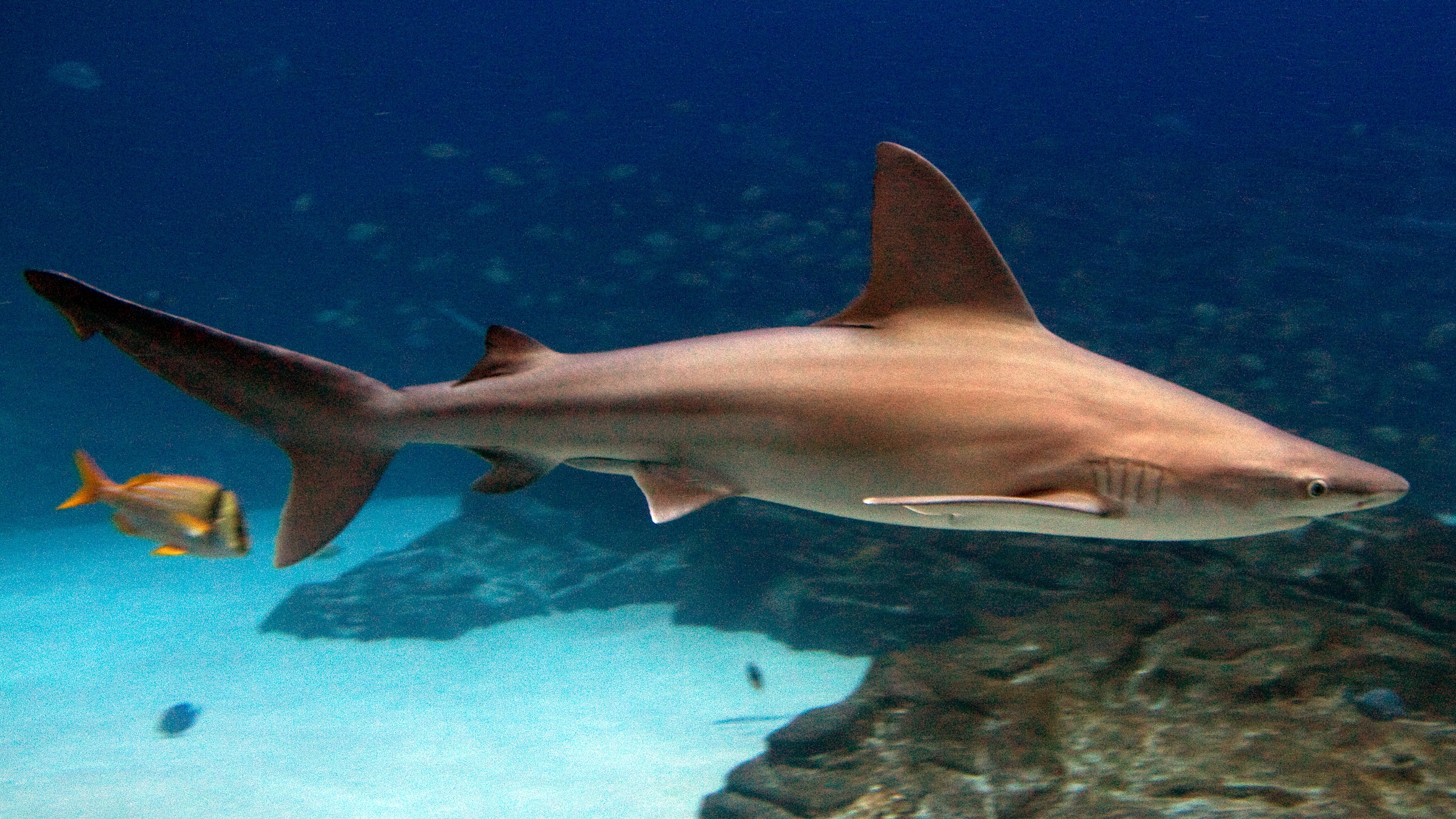

The sandbar shark (Carcharhinus plumbeus) is one of the most recognizable and hardest-pulling coastal sharks an angler can hook from a beach, pier, or boat. Named for its habit of cruising over sandy bottoms and along bars, it is a stout, heavy-bodied requiem shark famous for one standout feature: an unusually tall, triangular first dorsal fin set far forward on the body. That big sail of a fin, combined with a thick build, makes the sandbar both easy to recognize and a strong, dogged fighter that pulls far harder than its typical five-to-seven-foot size suggests.
Sandbar sharks are a mainstay of coastal shark fishing across warm Atlantic, Gulf, and other temperate-to-tropical waters. They are abundant where they occur, they take a bottom-fished bait readily, and they give a heavy, grinding fight that hooks anglers on shark fishing for life. Like several big coastal sharks, though, they are also managed carefully, heavily regulated and, in some fisheries, restricted or prohibited from harvest, so responsible catch-and-release is central to targeting them. This guide covers how to identify a sandbar, where and when to find them, the tackle and rigs the fish demands, the baits and chum that draw them, how to handle the fight, and how to release them cleanly.
Understanding Sandbar Shark Behavior
Sandbar sharks are bottom-associated coastal sharks that favor smooth, sandy, and muddy bottoms in relatively shallow water, over bars, along beaches, in bays and estuaries, around inlets, and out to moderate depths on the continental shelf. They generally avoid the surf's roughest breakers and very shallow water, holding instead in the deeper troughs, channels, and drop-offs nearby. Younger sandbars use bays and estuaries as nursery areas, so smaller fish are common inshore, while larger adults range along beaches and into deeper coastal water.
They are strongly migratory and temperature-driven, moving along the coast with the seasons and concentrating in an area during its warm-water months. Sandbars hunt largely by scent, feeding on bottom fish, smaller sharks and rays, crabs, and other available prey, which is exactly why a bloody bottom bait and a scent trail are so effective. They feed day and night, with low light and moving water on a tide improving the bite. Because they orient to structure and depth changes, the key to consistent sandbar fishing is putting a bait in the deeper water, a trough, a channel edge, a hole near a bar, where these thick-bodied sharks travel and feed.
Understanding their life history also explains why this fishery is managed so tightly. Sandbar sharks are slow-growing and late-maturing, and they were heavily targeted by commercial fisheries for their large fins and thick bodies, which drove serious population declines. That history is why so many jurisdictions now restrict or prohibit their harvest and require circle hooks. For the recreational angler, the practical takeaway is simple: plan every sandbar trip around a fast, clean release. The reward is still there, the heavy pull, the tall dorsal knifing through the wash, the grind of a thick shark that will not quit, without taking a fish that the population can ill afford to lose. Reading the water for the deeper travel lanes and timing your trips to the local warm-season run will put you on far more fish than fishing random shallow water ever will.
Sandbar shark fishing overviewIdentifying a Sandbar Shark
The sandbar shark is one of the easier large requiem sharks to identify thanks to its fin. Its first dorsal fin is strikingly tall and triangular, and it is set far forward, beginning over or ahead of the rear edge of the pectoral fins, giving the shark a distinctive high-sailed profile. The body is stout and heavy, the snout is short and rounded, and the color is bluish to brownish gray on top, fading to a pale belly. A low ridge of skin runs along the back between the two dorsal fins. The pectoral fins are long and broad.
The sandbar is most often confused with the dusky shark, which has a lower, more rearward first dorsal fin and a more slender build; the sandbar's tall, forward first dorsal is the giveaway. It also resembles the bull shark, which is even stouter with a much blunter snout. Correct identification matters, because these species are regulated differently and some are prohibited from harvest, if you are unsure whether you have a sandbar, a dusky, or another restricted species, treat it as protected and release it cleanly. The identification video below breaks down the sandbar's key features in detail. Take the time to learn these differences before you fish; a quick glance at the height and position of that first dorsal fin, checked against the snout shape and overall build, will let you name your catch confidently at the water's edge, which is exactly where it counts for both the regulations and the fish.
Sandbar shark identificationTackle for Sandbar Sharks
Sandbar sharks pull hard and thick, so you want tackle with real backbone. From the beach or a pier, a heavy surf or stand-up rod paired with a 6000-to-10000-size spinning reel or a small-to-medium conventional, loaded with 50- to 80-pound braid, is a solid all-around setup, enough to cast a bait to the trough and enough power to turn a stubborn, bulldogging shark. From a boat, a medium-heavy to heavy conventional outfit in the 30- to 50-pound class handles larger fish and lets you apply steady pressure to shorten the fight.
Top your braid with a heavy monofilament shock leader to cushion the head-shakes and protect against the shark's abrasive hide. Set the drag firm, you must be able to turn a sandbar before it reaches the far side of a channel or wraps you on structure. Because responsible release is part of this fishery, carry the right release tools too: a long dehooker, heavy cutters, and gloves. Everything about sandbar tackle should assume a heavy, grinding fight and a careful release rather than a fish coming ashore for the cooler.
Circle hooks and shark rig setupThe Right Rig and Leader
As with any shark, the leader is critical. A sandbar's teeth and rough skin will cut through mono, so run a bite section of heavy single-strand wire or multi-strand cable, commonly 150- to 300-pound, crimped or haywire-twisted to the hook and to a strong swivel, with a heavy mono rubbing leader above it to guard against abrasion when the shark rolls. A fish-finder (sliding sinker) rig is the standard delivery system: it puts a bait on the bottom in the trough and lets a running shark move off with it before feeling the weight, which is exactly how a circle hook is meant to work.
Use non-stainless circle hooks, commonly 8/0 to 14/0, matched to your bait. Circle hooks are strongly preferred and often legally required, they slide to the corner of the jaw and set there as the shark turns, producing a lip hookup that is safe to remove and far better for the shark's survival than a gut-hooked J-hook. A non-stainless hook will also rust out if it cannot be recovered. Do not swing on the bite; when the line comes tight, start reeling and lifting steadily and let the circle find the jaw hinge. Check the whole leader for nicks after every fight.
Cut bait presentation for sharksBait and Chum
Because sandbar sharks are scent-driven bottom feeders, the best baits are fresh, bloody, and oily. A fresh chunk or half of an oily fish, bunker (menhaden), mullet, bluefish, mackerel, or ladyfish, fished on the bottom is hard to beat, and a bloody fish head is a durable, scent-heavy option. Fresh-dead cut bait is ideal for a scavenging bottom feeder; the bloodier and oilier the bait, the wider its scent plume and the more likely a cruising sandbar is to find it. A live bait pinned near the bottom can also work when sandbars are actively feeding.
A chum trail dramatically increases your reach. A mesh bag of ground fish, chunks, and oil worked into the current, from a boat, a pier, or staked in the beach wash near the trough, creates a scent corridor that draws sandbars from a distance and holds them in your area. Place your baits in the deeper water where these sharks travel, keep the slick constant, and be patient: it can take time for the scent to reach a shark and for that shark to work its way up the trail. When small pickers and rays strip your baits, size up to a larger, tougher bait that survives long enough for a sandbar to find it.
Presentation and freshness matter more than most anglers think. Rig baits so the hook point stays exposed and the circle can slide to the jaw corner, and keep the bait fresh, a washed-out, waterlogged chunk that has soaked for hours puts out far less scent than a fresh one, so re-bait regularly rather than leaving a stale bait out all day. On the beach, cast to the deeper trough just outside the first bar and let the fish-finder rig hold in the current; from a boat, position so your baits sit in the channel or along the drop-off where the sharks patrol. Bring more bait and chum than you think you need, because a good sandbar bite can go through a lot of both once the sharks move in.
Fighting a sandbar shark from the beachFighting a Sandbar Shark
A hooked sandbar fights like the thick, powerful fish it is, not with blistering runs, but with heavy, dogged pulls, head-shakes, and a determined push toward deeper water or structure. When the circle hook takes hold, do not swing; let the rod load and immediately apply steady, heavy pressure to turn the fish and keep it away from anything it can wrap on. The first job is to gain control before the shark reaches the far side of a channel; after that, settle in for a grinding tug-of-war.
Gain line with smooth pump-and-reel strokes and never give slack, a rolling shark can chafe the leader or throw a poorly set hook. Sandbars are notorious for a stubborn, head-down grind where the fish simply parks itself and refuses to move; when that happens, keep steady side pressure and change your angle rather than pulling straight up, and the shark will usually break loose and start swimming again. From the beach, work the fish parallel to the shore and use the waves to help slide it into the shallows; from a boat, use the boat to keep a good angle and shorten the fight. Use your body and legs, not just your arms, so you can keep constant pressure through a long battle. Expect a strong second wind when the shark sees the beach or the boat, and be ready for it rather than caught flat-footed. Bring the fish in as efficiently as your tackle allows, because a shorter fight leaves a sandbar in far better shape for release.
Shark rigs and safe catch and releaseLanding and Safe Release
Sandbar sharks are frequently released, and careful handling is what makes the release count. Keep the shark in the water whenever possible, in the wash at the beach, or boatside, so it stays wet and oxygenated, and never drag a large shark up onto hot, dry sand for a long photo session. Work quickly, stay behind the head and clear of the mouth, and mind the powerful tail. Control the fish by the leader rather than by hauling on the shark itself.
Use a long dehooker to pop the circle hook out of the jaw corner in a couple of seconds. If the hook is deep or the fish is difficult, cut the leader as close to the hook as you safely can, a non-stainless circle will corrode and drop out, which is far better for both of you than a prolonged struggle. Take any photo quickly with the shark in the water, then support and revive it, pointing it into moving water until it kicks away hard on its own. Know your local and federal regulations before you fish: sandbar sharks are heavily managed and in some fisheries prohibited from harvest, and following those rules keeps this outstanding coastal fishery healthy.
Putting It All Together
Catching a sandbar shark comes down to fishing the deeper coastal water where they travel: put a fresh, bloody bottom bait on a wire-leader fish-finder rig in a trough, channel, or hole near a bar, build a steady chum trail, and be ready to turn a heavy, bulldogging fish the moment it eats. Bring tackle with real backbone, keep steady pressure through the grinding fight, and handle the shark carefully for a fast, clean release. It is one of the most reliable and rewarding big-shark bites available from the surf and nearshore waters, and a fish that will earn your respect the first time that tall dorsal fin turns and pulls.
If you want to chase other coastal sharks, the dusky shark is its taller-finned look-alike and a protected species, the bull shark is an even stouter inshore bruiser, and the blacktip shark is the acrobatic speedster of the same beaches.