Fish
Fish Fire
Fire Hike
Hike Bird
Bird

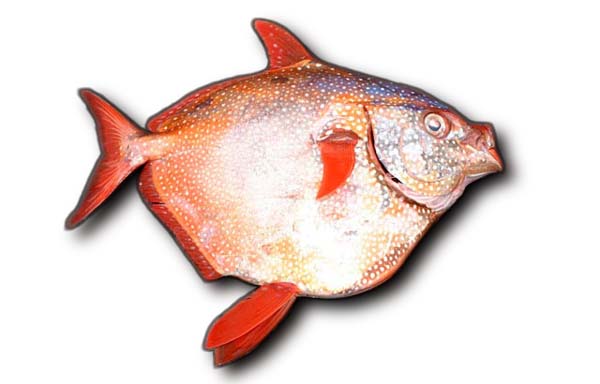

The opah, or moonfish, is one of the most spectacular and sought-after fish in the ocean, and one of the hardest to catch on purpose. Round as a dinner plate, silver-blue and dappled with white spots, trimmed in brilliant crimson fins, and equipped with a small golden-rimmed mouth, an opah looks like nothing else that swims. It's also the world's only known fully warm-blooded fish, a deep-water pelagic that most anglers will never see. So when someone lands one, it's a genuine trophy and a story for life.
Let's be honest up front: you do not reliably target opah the way you target tuna or yellowtail. They are rare, they live deep, and the overwhelming majority are caught incidentally, by commercial longliners, by daytime deep-drop swordfish anglers, and by the occasional lucky rod-and-reeler fishing deep for other species. But "incidental" doesn't mean "impossible," and understanding how and where opah are hooked genuinely improves your odds of connecting with one. This guide covers what an opah is, where and how they're caught, the deep-drop tactics that put you in the game, and what to do if you're fortunate enough to hook one.
What is an opah?
The opah (Lampris guttatus), also called moonfish or sunfish (not to be confused with the giant Mola mola), is a large, deep-bodied pelagic fish found in temperate and tropical waters worldwide. Its body is nearly circular and laterally compressed, think of a huge, thick silver discus, with a steel-blue back fading to rosy silver flanks covered in white spots, and vivid red-orange fins, jaw, and tail. Adults commonly weigh 60 to 200 pounds.
Two things make the opah biologically remarkable. First, it swims by "flapping" its large pectoral fins like wings, essentially flying through the water column, an unusual mode of propulsion for such a big fish. Second, and famously, the opah is the only fish known to be fully warm-blooded (regionally endothermic throughout its body). It generates heat by constantly beating those pectoral muscles and uses a specialized counter-current heat exchanger in its gills to keep its whole body, heart, brain, and muscle, warmer than the surrounding water. That warm core lets the opah stay fast and alert in the cold, deep water where it hunts, giving it a predatory edge over sluggish, cold-blooded prey.
A Deep Dive into Pacific OpahOpah are prized food fish, with several distinct grades of meat in one fish, the loins are a rich orange-pink, the cheeks and belly darker and fattier, all firm, flavorful, and superb raw, grilled, or seared.
Where and when opah are caught
Opah live in the open ocean, typically at depths of roughly 150 to 1,300 feet, where they hunt squid, small fish, and krill in the mid-water. They don't school tightly like tuna; they're usually solitary or in loose association with other pelagics. In U.S. waters, the most consistent opah encounters happen off Southern California and Hawaii, where the deep-water pelagic fishery overlaps their habitat.
Because they're a deep, open-ocean fish, you find opah by fishing the same deep offshore zones that hold swordfish and other deep pelagics, over deep banks, drop-offs, seamounts, and temperature breaks well offshore. They can be caught year-round, but the best opah encounters in California tend to come in the warmer months when anglers are actively deep-dropping and daytime-sword fishing offshore.
It helps to think about what an opah is doing down there. Opah follow their food, and their food, squid and small mid-water fish, concentrates around structure and productive water that pushes the deep scattering layer up against banks and ledges. That's why the deep banks and seamounts off Southern California, and the deep water around the Hawaiian Islands, produce a disproportionate share of opah: they combine the right depth with the right forage. Water temperature and clarity matter too. Many experienced deep-drop anglers key on clean, blue offshore water and productive temperature breaks, the same conditions that concentrate swordfish, and they'll return to specific deep high spots that have produced opah before. Nobody has an "opah spot" the way they have a bass spot, but the deep-water zones that reliably hold swordfish are the same zones where opah turn up, so that's where you put in your time.
Opah Fishing in San DiegoThe reality: how opah are actually hooked
Here's the straight truth about opah, because it's what separates a realistic guide from clickbait. The vast majority of rod-and-reel opah are caught in one of two ways:
- As bycatch while daytime deep-drop swordfishing. The most reliable path to a rod-and-reel opah is to fish the deep daytime swordfish technique, a heavily weighted bait dropped hundreds of feet down and fished slowly in the mid-water. Opah eat the same squid baits at the same depths, and a meaningful share of "swordfish" drops end up hooking an opah instead.
- While deep-dropping for other species. Anglers dropping baits deep for tuna, escolar, or other mid-water and bottom species occasionally hook an opah that's cruising through.
You cannot cast to an opah, troll one up reliably, or find them stacked on a spot. What you can do is put a bait at the right depth, in the right deep-water zone, and fish it patiently, which is exactly what the daytime-swordfish and deep-drop crowds do. Do that often enough in opah country and your number will eventually come up.
This is worth internalizing before you invest in the gear or the trip: opah are a "process" fish, not a "target" fish. The anglers who catch them aren't running a secret pattern, they're simply spending a lot of hours doing the daytime deep-drop for swordfish, and opah come as a welcome bonus. If you set out specifically to "catch an opah today," you're likely to be disappointed. But if you commit to the deep-drop game over a season, treat every opah as the gift it is, and stack the odds by fishing the right water with the right technique, you'll eventually be one of the lucky few holding up that unmistakable red-finned disc for a photo.
Opah Caught on a SportboatTechnique: daytime deep-drop
The daytime deep-drop is the technique most likely to put an opah on your line. It's a specialized, patient game borrowed from the daytime-swordfish playbook.
The basic setup is a stout rod, a high-capacity conventional or electric reel, and heavy braided line dropped to a bait rigged well below a heavy weight, often 5 to 10 pounds of lead on a breakaway or sliding system, to get the bait down 800 to 1,500 feet quickly and hold it in the strike zone. A whole or strip squid is the classic bait. Many anglers add a glow stick or LED to draw fish in the perpetual twilight of those depths.
Once the bait is down, you fish it slowly, holding the rod or watching the electric reel's rod tip for the subtle load of a bite in all that line. When a big fish eats, the fight is a long, heavy grind up from the depths. It's a commitment, hours of dropping and waiting for a shot, but it's the method that actually produces opah, swordfish, and other deep-water giants for rod anglers.
Bite detection is the hardest and most important skill in deep-drop fishing. With a thousand-plus feet of line out, an opah's take can look like nothing more than a slight change in the rhythm of the rod tip, a little extra weight, or the tip failing to bounce back the way it should. This is where low-stretch braid earns its keep, it transmits far more of what's happening down deep than mono ever could. Watch the tip obsessively, and when in doubt, wind down and lean into the fish to check; a slow, deliberate hook-set drives the point home at that range far better than a sharp swing, which is mostly absorbed by the stretch and belly in the line. Once you're tight, keep steady, unrelenting pressure and let the reel do the work on the long haul up.
Some anglers fish the daytime deep-drop on a drift, letting the boat move naturally across a bank so the bait covers ground, while others prefer to hold position over a specific piece of structure. Both work; the key is keeping the bait in the productive deep zone as long as possible, because opah encounters are a numbers game, the more quality time your bait spends at the right depth in the right water, the better your odds of that once-in-a-season bite.
How to Deep-Drop: Rigs and TechniqueGearing up for the deep
Deep-drop fishing for opah-class fish demands serious tackle:
- Rod: A short, powerful deep-drop or daytime-swordfish rod with a stout blank and a sensitive tip to telegraph bites through hundreds of feet of line.
- Reel: A large two-speed conventional with a huge line capacity, or, increasingly common, an electric reel that handles the tedious job of retrieving from extreme depth.
- Line: High-capacity braided main line for its thin diameter, low stretch, and depth control, finished with a heavy leader.
- Weights and rigs: Heavy sinkers (5–10 lb) on breakaway or sliding rigs to reach and hold depth, plus quality hooks matched to big squid baits.
- Lights: Deep-drop LED lights or glow sticks to attract fish in the darkness.
This isn't casual gear, and that's the point, reaching opah depths is a specialized pursuit. If you don't own a deep-drop setup, the smart move is to book a charter that specializes in daytime swordfish and deep-drop, where the boat supplies the heavy tackle and, crucially, the local knowledge of where to drop.
Fighting, landing, and handling an opah
If you're lucky enough to hook one, an opah is a heavy, dogged fighter that uses its broad, round body to resist every foot of the long haul up from deep water. There are no blistering runs like a tuna; instead it's a steady, back-breaking pull. Keep consistent pressure, use the rod and reel's power, and don't rush a green fish to the surface.
Because opah come up from deep water, they often arrive at the boat spent. Have a gaff and a plan ready, these are big, heavy, awkwardly-shaped fish, and boating one safely takes teamwork. Once aboard, an opah should be bled and iced promptly to protect its exceptional meat.
A word on the fight itself: an opah's round, plate-like body works like a sea anchor, so even a tired fish feels like dragging a manhole cover up through the water column. Resist the temptation to horse it. Steady rod pressure and a smooth, consistent retrieve, often with an electric reel doing the heavy lifting, will bring the fish up without pulling the hook or breaking off. Watch for the fish to start "kiting" sideways near the surface, using its broad flank against you; keep the line tight and lead its head toward the boat. Because opah are usually hooked as a surprise while you're fishing for something else, the biggest landing mistake is being unprepared, the moment you realize you've got an opah coming up, get the gaff, clear the deck, and assign someone to handle the fish, because you may never get a second shot at one.
How to Fillet a Whole OpahEating opah
Part of what makes an opah such a prize is the table reward. A single fish yields several distinct cuts of meat, bright orange-pink loin, darker ruby-red muscle near the backbone, and rich, fatty belly and cheeks, each with its own texture and flavor. Opah is superb as sashimi and crudo, and it grills, sears, and roasts beautifully, staying moist thanks to its fat content. For many anglers, the meal is the whole point of the effort.
Because one opah provides so much meat in so many textures, it's a fish that rewards taking the time to break it down properly rather than just running a knife down the sides. The loins, the fatty belly, the cheeks, and the darker bloodline muscle each shine with different preparations, sear the loin like a steak, cure or crudo the pale belly, and treat the cheeks as a delicacy. Handled and butchered well, a single opah can supply meals for weeks and is, for many who chase them, the finest eating fish that swims in the deep.
Opah Butchery and BreakdownThe bottom line
You can't guarantee an opah, and anyone who promises otherwise is selling something. But you can dramatically improve your odds by fishing where opah live, the deep offshore pelagic zones off Southern California and Hawaii, with the daytime deep-drop and swordfish techniques that regularly hook them. Put in the drops, be patient, and one day the electric reel will bend into something round, red-finned, and unforgettable.
The best shortcut is experience on the water. A captain who runs daytime-swordfish and deep-drop trips knows the banks, the depths, and the conditions that produce opah, and puts you on the deep-water fishery with the right heavy tackle. And if you go it alone, the fastest way to shorten the learning curve is to log the hours yourself, the anglers who catch opah are the ones who keep dropping in the right deep water, season after season, until their number finally comes up.
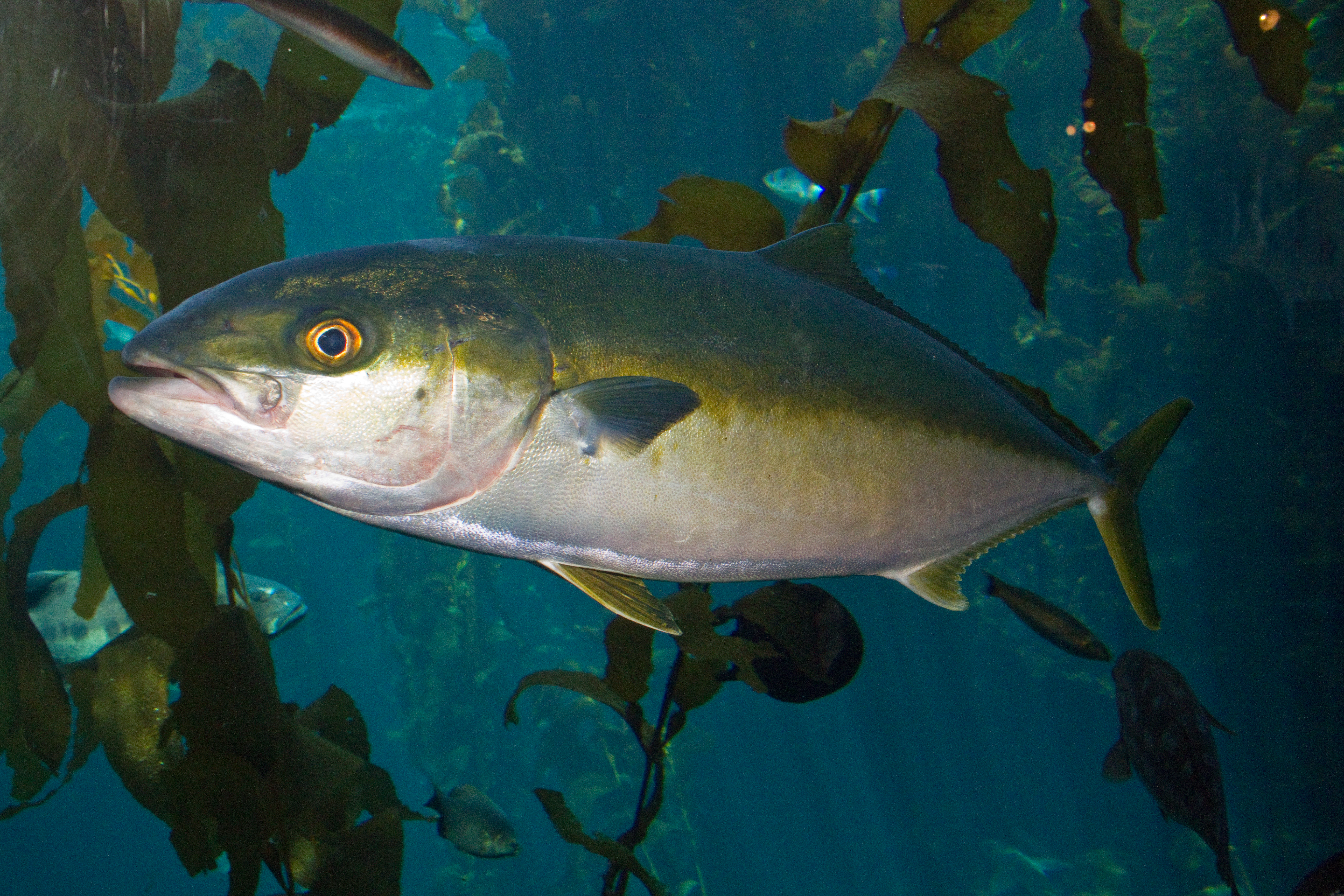
If you're fishing the offshore Pacific, keep building your skills with our guides on how to catch swordfish, how to catch bluefin tuna, and how to catch yellowtail amberjack.