Fish
Fish Fire
Fire Hike
Hike Bird
Bird

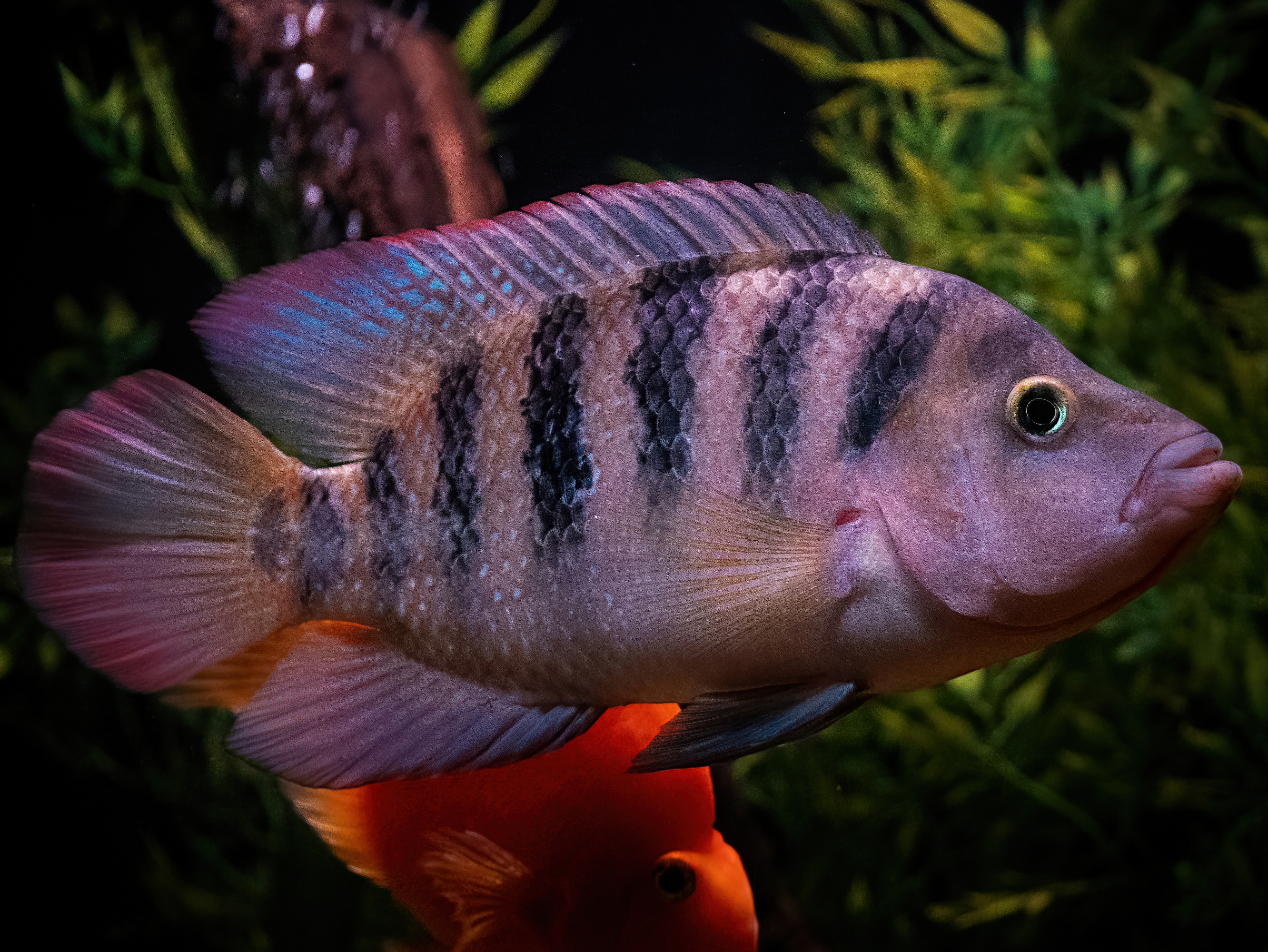

The Mayan cichlid (Mayaheros urophthalmus, formerly Cichlasoma urophthalmus) is a beautiful, hard-hitting Central American cichlid that has become one of the most abundant and popular catches in South Florida's canals, lakes, and Everglades waters. Native to Mexico, Belize, Guatemala, and the Yucatán, it escaped and naturalized across South Florida, where it's now a beloved invasive gamefish, gorgeous, aggressive, easy to catch, a scrappy fighter, and excellent eating. Sometimes called the "atomic sunfish" for its firecracker colors and fight, the Mayan cichlid eagerly attacks small lures, live baits, and flies, and it's a cornerstone of Florida's famous "exotic slam." This guide covers how to catch Mayan cichlids.
What Is a Mayan Cichlid?
The Mayan cichlid is a cichlid (family Cichlidae) native to the Atlantic slope of Central America, Mexico's Yucatán, Belize, Guatemala, and nearby waters, and introduced to and naturalized across South Florida. It has a deep, robust, laterally compressed body with a striking pattern of six or seven dark vertical bars along the sides, over a background that ranges from olive and tan to brilliant red, orange, and turquoise, especially on breeding fish. Its clinching feature is the prominent black spot ringed in iridescent blue at the base of the tail (the ocellus), plus turquoise-edged fins. Breeding Mayan cichlids turn spectacularly colorful, with fiery red throats and bodies. They're generally smaller than oscars, commonly running 6 to 10 inches and under a pound, with big ones reaching 12-plus inches and a couple of pounds.
For anglers, the great news is that Mayan cichlids are aggressive, opportunistic predators. They eat small fish, insects, crustaceans, snails, worms, and just about anything they can catch, and they readily attack small lures, live baits, and flies. They're extremely territorial, especially when guarding nests, and they hit hard and fight scrappily well above their size, boring and bulldogging with that deep body. They live in warm, still or slow water, canals, ponds, lakes, marshes, mangrove edges, and the Everglades, often around cover and vegetation, and they tolerate a wide range of conditions including brackish water. Colorful, willing, hard-fighting, abundant, and tasty, the Mayan cichlid is one of the most fun and accessible catches in South Florida.
Where and When to Catch Mayan Cichlid
Mayan cichlids are established across South Florida, the canals, lakes, ponds, marshes, rivers, mangrove edges, and Everglades waters of the southern peninsula, thriving in the warm, subtropical climate and even tolerating brackish coastal water. They can't tolerate cold, so they're confined to the warmest parts of the state, from roughly the central peninsula south through the Everglades and the Keys. Within that range, they're everywhere in accessible water: roadside and urban canals, retention ponds, lake edges, marshes, mangrove shorelines, and the vast Everglades canal system are all loaded with them, making Mayan cichlids one of the easiest exotics to find and fish from the bank. Look for them around cover and structure: vegetation edges, canal banks, culverts, laydowns, rocks, docks, mangrove roots, and any shade or cover in warm, still, or slow water.
The best fishing is generally the warm months, essentially year-round in South Florida's climate, with spring and summer especially good as Mayan cichlids spawn and become intensely aggressive and territorial. Like other cichlids, they build and guard nests in the shallows during the warm season, and guarding fish attack anything that approaches, making them very easy to catch and at their most colorful. They feed actively throughout the day in warm water, and the mild South Florida winters keep them catchable most of the year, though cold snaps slow them and can cause die-offs at the edges of their range. Bright, warm days with fish visible around cover are ideal. Because Mayan cichlids are so abundant and accessible in canals and ponds, they offer excellent, easy fishing whenever you can reach warm South Florida water.
Small Lures and Jigs
Because Mayan cichlids are aggressive predators, they readily hit small lures, making artificials a fun and highly effective way to catch them.
Mayan Cichlids on Small LuresThe best lures are small in-line spinners, beetle spins, tiny curly-tail grubs and tube jigs on light jigheads, small crankbaits, small spinnerbaits, and micro soft plastics. A beetle spin or small jig is a classic South Florida exotic-fish lure that Mayan cichlids, oscars, and others all attack readily. Cast to cover, vegetation edges, canal banks, culverts, laydowns, rocks, and mangrove roots, and retrieve the lure past the fish; Mayan cichlids will dart out and hammer it. Small soft plastics and jigs worked slowly around cover also draw strikes, and jigging a small offering vertically near cover is a proven Mayan tactic. Because they're territorial and aggressive, Mayan cichlids often hit lures out of both hunger and defense, especially near nests. Ultralight or light spinning gear makes casting small lures fun and turns even a modest Mayan into a lively fight. Working canal banks and cover with small lures is one of the most enjoyable ways to catch numbers of these colorful fish.
Live Worms, Shrimp, and Bait
For steady, simple action, and often the biggest Mayan cichlids, live bait is deadly and is how many South Florida anglers catch them.
Catching Mayan Cichlids on BaitThe go-to baits are live worms (nightcrawlers and red worms), small live shrimp, crickets, and small shiners or minnows. Fish them on a small hook (size 4 to 8) under a small bobber, set to drift the bait at the depth where the fish are holding, or on a light split-shot or bottom rig. Cast near cover, vegetation, banks, culverts, laydowns, mangrove roots, and let the bait sit or drift where Mayan cichlids can find it; they'll rarely ignore a lively worm or shrimp. A worm under a bobber along a canal bank is perhaps the simplest, most reliable Mayan setup, and it's a fantastic way to introduce kids to the fun of catching these colorful, willing fish. Because Mayan cichlids are aggressive, bites are usually fast and unmistakable. Keep the bait near cover, watch the bobber, and be ready for a scrappy fight from a fish that pulls hard.
Fly Fishing for Mayan Cichlid
Fly fishing for South Florida's exotic cichlids has exploded in popularity, and the willing, aggressive Mayan cichlid is a prime fly-rod target in the canals and ponds.
Mayan Cichlids on the FlyA light to medium fly rod (4- to 6-weight) is ideal. Mayan cichlids readily take small streamers, Woolly Buggers, Clouser Minnows, small poppers, and nymphs, often in bright or natural colors. Sight-fish the canal banks and cover, spotting the fish and casting to them, then strip the fly past the fish to draw a strike; Mayan cichlids will chase and attack a well-presented fly aggressively, and they defend nests fiercely. Topwater poppers bring exciting surface strikes around cover. Because South Florida's clear canals let you see the fish, fly fishing for Mayan cichlids is largely a visual, sight-fishing game, spot the fish, present the fly, and watch the eat. Mayan cichlids are a key part of the famous South Florida "exotic slam" that draws fly anglers from around the world. Willing, colorful, and hard-fighting on a fly rod, they're a blast on the long rod.
Finding Mayan Cichlids in Florida's Canals and Ponds
The single biggest key to catching Mayan cichlids is knowing that they're an accessible, cover-loving canal and pond fish, once you know where to look, they're easy to find and catch.
Mayan Cichlid Fishing in South FloridaSouth Florida's enormous network of canals, retention ponds, lakes, marshes, mangrove edges, and Everglades waters is full of Mayan cichlids, and much of it is bank-accessible, roadside canals, urban ponds, park lakes, mangrove shorelines, and Everglades canal pull-offs all offer great fishing without a boat. Focus on cover and structure: vegetation edges, canal banks, culverts and bridges, laydowns, rocks, docks, mangrove roots, and shade lines, where Mayan cichlids hold and ambush food. In the clear canals, you can often sight-fish, spotting the fish cruising or holding near cover and casting to them. Work along a bank methodically, hitting each piece of cover, and you'll find Mayan cichlids are abundant and willing. Their tolerance for a wide range of water (even brackish) and their love of accessible, bank-fishable cover make them one of the easiest and most fun exotic fish to target in South Florida.
Identifying Mayan Cichlids (and the Exotic-Fish Angle)
Mayan cichlids are distinctive and easy to identify, though South Florida's waters hold many introduced cichlids worth knowing apart.
Mayan Cichlid: an Invasive SpeciesThe clinching features of a Mayan cichlid are the six or seven dark vertical bars along the body and the black spot ringed in iridescent blue at the base of the tail, combined with a deep body, turquoise-edged fins, and (especially on breeding fish) brilliant red, orange, and turquoise coloration. The blue-ringed tail spot is the key difference from the oscar, whose tail spot is ringed in orange or red and which lacks the vertical bars. Mayan cichlids are also smaller and more brightly barred than oscars. They can be told from native sunfish by the deeper cichlid body, the single nostril on each side (cichlids have one, not two), the vertical bars, and the blue-ringed tail spot. The key practical point is that Mayan cichlids are a non-native, introduced species in Florida. The state generally encourages harvest of exotic species, and there are typically no bag or size limits on them, but you should never release aquarium fish into the wild and never transport live exotics to new waters. Always check current Florida regulations.
Understanding Mayan Cichlid Behavior
Everything about catching Mayan cichlids flows from the fact that they're aggressive, opportunistic, territorial, cover-loving predators, which makes them a joy to catch. They eat small fish, insects, crustaceans, snails, and worms, and they readily attack small lures, live baits, and flies, so the challenge is finding them, not coaxing a bite. They're intensely territorial, especially when guarding nests in the warm-season spawn, and will fiercely attack intruders, making bedding Mayan cichlids extremely easy to catch (and at their most colorful). They hit hard and fight scrappily, using their deep body to bore and bulldog well above their size.
Location is simple: Mayan cichlids live in warm, still or slow South Florida water, canals, ponds, lakes, marshes, mangrove edges, and the Everglades, and relate to cover and structure, where they hold and ambush. They tolerate a wide range of conditions, including brackish water, so they thrive nearly everywhere warm in South Florida, and they're abundant and bank-accessible. Fish the warm months (essentially year-round in South Florida), target cover, and present a small lure, live bait, or fly where the fish can see it, and you'll catch these willing, colorful cichlids. Sight-fishing the clear canals adds a fun visual element. Think of Mayan cichlids as an easy, aggressive, accessible gamefish, one of the best introductions to South Florida's exotic-fish scene.
Conservation and Handling
Mayan cichlids are a non-native, introduced species in Florida, so the "conservation" angle is inverted: rather than protecting them, anglers are generally encouraged to harvest them, as with Florida's other exotic species. They escaped from the aquarium trade and naturalized in South Florida; while they've become a popular gamefish, they're still non-native, and Florida typically places no bag or size limits on them and encourages their catch and keep. The most important rules are behavioral: never release aquarium fish into the wild (that's how Mayan cichlids and many other exotics got established), and never transport live exotic fish to new waters, which is illegal and spreads invasives.
Handle Mayan cichlids carefully, watching the sharp dorsal, anal, and gill-cover spines. If you're keeping them to eat (they're excellent), dispatch and ice them promptly. If you release one, do so gently in the same water. Because Mayan cichlids are cold-sensitive, hard freezes periodically cause die-offs at the edges of their Florida range, naturally limiting their spread. For anglers, the takeaway is simple: enjoy this fun, abundant introduced gamefish, keep them for the table if you like, follow current Florida regulations, and never move or release exotic fish. Doing so lets you enjoy a great fishery responsibly and even helps limit the spread of an invasive species.
Cleaning and Eating Mayan Cichlid
Mayan cichlids are excellent eating, many South Florida anglers consider them among the best-tasting freshwater fish in the region, with white, firm, mild, flaky flesh comparable to or better than many native panfish.
Cleaning and Filleting Mayan CichlidMayan cichlids are easy to clean: fillet them like a panfish or small bass, removing the skin, to get clean, mild white fillets. Though they're smaller than oscars, their deep body yields good fillets for their size. The firm, white flesh takes well to almost any preparation: frying (whole or filleted), baking, blackening, grilling, or fish tacos. Whole fried Mayan cichlid is a South Florida favorite, and their abundance means you can easily gather a meal. Because the flavor is mild and the flesh firm, they're versatile and widely enjoyed. The flesh is best from cleaner water; fish from murky or algae-heavy canals can occasionally taste "off," which careful preparation reduces. As with all fish, ice your catch promptly and cook it fresh. Since Mayan cichlids are an introduced species Florida encourages harvesting, keeping and eating them is both guilt-free and rewarding, a colorful, hard-fighting fish that's also one of the tastiest catches in South Florida. Always follow current regulations.
Bringing It All Together
The Mayan cichlid is one of South Florida's most fun and accessible catches, a gorgeous, aggressive Central American cichlid, now a naturalized gamefish, that eagerly attacks small lures, live baits, and flies, fights well above its size, and eats beautifully. Find them in the warm canals, ponds, lakes, mangrove edges, and Everglades waters of South Florida, target cover and structure, and present a small lure, a worm under a bobber, or a fly where the fish can see it. Learn to recognize the vertical bars and blue-ringed tail spot, follow Florida's exotic-species rules (harvest encouraged, never release aquarium fish), and enjoy both a scrappy fight and excellent table fare. Whether you're chasing the exotic slam, introducing a kid to fishing on a roadside canal, or just want willing, colorful action, the Mayan cichlid delivers some of the most enjoyable fishing in the Sunshine State.
For more hard-fighting exotic and warmwater fish, see our guides to the oscar, the peacock bass, and the blue tilapia.
Want to explore South Florida's best canals and Everglades waters for Mayan cichlids and the exotic slam? Map out the roadside canals, urban ponds, park lakes, and Everglades pull-offs near you, scout the bank-accessible cover along each one, and take on one of America's most unique fisheries.