Fish
Fish Fire
Fire Hike
Hike Bird
Bird

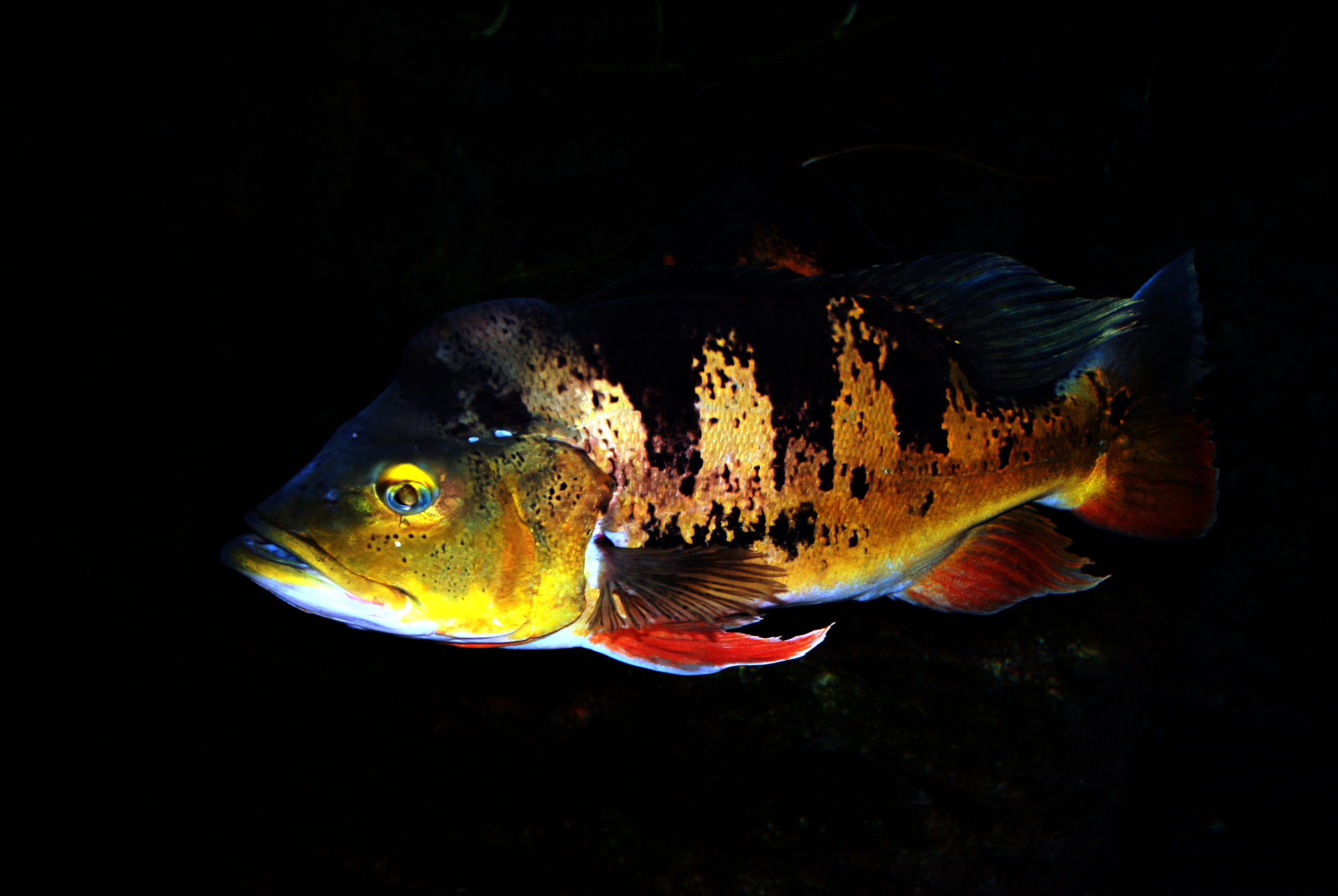

The peacock bass is, pound for pound, one of the most aggressive and exciting freshwater fish on the planet, a gorgeous, hard-charging tropical predator that attacks a topwater lure with a violence that will make your heart stop. Here's the twist: it isn't a bass at all. Peacock bass are giant tropical cichlids, native to the Amazon and now thriving in the canals of South Florida and the reservoirs of Hawaii, where anglers can catch this exotic brawler practically in the city. Whether you're casting to butterfly peacocks in a Miami canal or battling a 15-pound Amazon giant in the jungle, the peacock bass delivers blistering strikes, dogged fights, and unforgettable color. This guide covers what peacocks really are, where to find them, and every core technique, with step-by-step instruction, to catch them.
Ready for the most exciting freshwater strike there is? Peacocks share some tactics with their namesake, see our guide on how to catch largemouth bass, but they fish far more aggressively, so leave the finesse at home.
Not a Bass at All
The peacock bass (genus Cichla) is a cichlid, not a true bass, it just fills a similar predatory role and got the name from its bass-like look and fight. It's unmistakable: a golden-green to yellow body with three dark vertical bars, brilliant orange, red, and yellow fins, and, its signature, a black, gold-ringed "eyespot" (ocellus) on the tail that resembles a peacock's plumage. Breeding males develop a pronounced hump on the forehead.
Several species matter to anglers. The butterfly peacock (Cichla ocellaris) is the smaller, widespread species stocked in Florida (typically 12 to 17 inches, up to around 12 pounds) and the one most anglers catch in the U.S. The speckled or "temensis" peacock (Cichla temensis) is the Amazon giant, growing past 20 pounds and the ultimate peacock trophy. All share the same explosive attitude. Peacocks are strictly tropical, thriving in warm water and dying when it drops below roughly 60°F, which is exactly why, in the U.S., they live only in the warmest reaches of South Florida and Hawaii.
The Most Aggressive Freshwater Gamefish
Peacock bass behavior can be summed up in one word: aggressive. They are sight-hunting, ambush-and-chase predators that feed almost entirely on baitfish, and they attack prey, and lures, with a ferocity few freshwater fish match. A peacock will crush a topwater lure in an explosion of water, chase down a fast-moving bait, and, when hooked, fight with bulldogging runs and head-shakes well above its weight. They often hunt in loose packs, so where you catch one, others are usually nearby and fired up by the commotion.
This aggression is the angler's biggest asset: peacocks respond to fast, noisy, aggressive presentations far better than to slow, subtle ones. They're also intensely territorial, especially when guarding their fry (visible as a dense cloud of tiny fish), and a bait worked through that zone draws savage, protective strikes. Fish fast, fish loud, and target the aggression, and peacocks will reward you with the most exciting strikes in fresh water.
Where Peacock Bass Live
In their U.S. range, peacocks relate to warm water, structure, and baitfish:
- South Florida canals and lakes, the urban canal systems of Miami-Dade and Broward are full of butterfly peacocks, catchable from the bank or a boat right in the city.
- Structure and edges, seawalls, culverts and bridge shadows, canal bends and intersections, rock piles, dock lines, and any current or ambush point.
- Warm, clear-ish water, peacocks favor clearer water than largemouth and are very sight-oriented.
- In the Amazon, the lagoons, backwaters, sandbars, and structure of the great tropical rivers, often reached by lodge or live-aboard.
- Hawaii's reservoirs, which hold both peacock species.
Peacocks hold near cover and current breaks, and much of the fishing is visual, you sight-cast to fish you can see cruising, ambushing, or guarding fry.
The Techniques That Catch Peacock Bass
Peacocks are the ultimate reaction-strike fish. Here are the core methods, how to fish each, and when to use it.
Topwater, the signature peacock explosion
Nothing beats a peacock bass demolishing a topwater lure, it's the strike that peacock anglers live for, and often the most effective technique.
How to fish it: Tie on a loud prop bait or "chopper" (a Woodchopper or Ripper-style bait with churning propellers), a walking bait, or a popper, and work it with a fast, aggressive, noisy retrieve, for a prop bait, a hard, steady rip that throws water and makes a commotion. Cast to structure, current breaks, and cruising fish, and hold on: peacocks blast a topwater with astonishing violence, sometimes multiple times, so keep it moving and set when you feel the fish's weight. The faster and noisier, the better.
How to Catch Peacock Bass on TopwaterJerkbaits and Twitch Baits, flee and trigger
A darting jerkbait imitates a fleeing baitfish perfectly and draws vicious reaction strikes, making it one of the most reliable peacock lures.
How to fish it: Tie on a jerkbait or twitch bait (a Rapala X-Rap or a Yo-Zuri) and work it with a sharp, erratic twitch-twitch-pause so it darts and flashes like a panicked baitfish. Cast to cover, seawalls, and cruising fish, and vary the cadence, often a fast, aggressive retrieve triggers the most bites. Peacocks frequently smash it on the move or right on the pause. It's a go-to when they won't commit to topwater, and it covers water efficiently to find aggressive fish.
How to Catch Peacock Bass on a JerkbaitLive Bait, the shiner secret
When you want to be sure, or to tempt a big, wary peacock, live bait is deadly, a lively baitfish is exactly what a peacock is hunting.
How to fish it: Hook a live shiner (or other legal, lively baitfish) through the lips or back on a hook (often under a float or free-lined), and present it near structure, in canal bends, or to fish you can see. A struggling live shiner draws peacocks in and triggers their predatory instinct, and it's especially effective for the biggest, most cautious fish and on tough days. It's the "secret" many Miami-canal anglers rely on for numbers and size.
Catching Peacock Bass with Live ShinersJigs and Soft Plastics, subsurface and for giants
Jigs and soft plastics (like flukes and jerk shads) get down to peacocks holding deeper and are a mainstay for the big Amazon fish as well as pressured Florida peacocks.
How to fish it: Rig a soft-plastic fluke or jerk shad (weighted or on a jighead) or a bucktail jig, and work it with darting twitches and pauses through structure, drop-offs, and deeper water, or rip it fast for reaction strikes. In the Amazon, big soft plastics and jigs (and huge topwaters) tempt trophy temensis peacocks. The erratic, baitfish-like action of a twitched fluke is hard for an aggressive peacock to ignore, and it works when fish won't come up top.
Soft Plastic Flukes for Peacock BassFly Fishing, the peacock on the fly
Peacock bass are a spectacular fly-rod target, their aggression and love of baitfish make them eager to crush a stripped streamer, and fly fishing for urban peacocks has exploded in popularity.
How to fish it: With an 8- or 9-weight fly rod, cast a baitfish-imitating streamer (a Clouser, a Puglisi-style baitfish, or a big deceiver) to structure and cruising fish, and strip it back fast in sharp, erratic pulls to imitate a fleeing baitfish. Peacocks chase and smash it, often boat-side. Sight-fishing an "urban Amazon" canal peacock on the fly, or a jungle giant in the Amazon, is a bucket-list experience for fly anglers. Strip fast and hang on.
Fly Fishing for Peacock BassSight Fishing the Florida Canals
Much of Florida peacock fishing is visual and mobile, cruising the canals, spotting fish, and casting to them, a fun, run-and-gun style that's very accessible.
How to fish it: Move along the canals, seawalls, culverts, and shorelines (on foot or by boat) with polarized glasses, looking for cruising peacocks, ambush points, and fry-guarding fish, and cast your lure or bait to the fish you see. Peacocks are very sight-oriented and often visible in the clear-ish water, so you can pick out and target individual fish. Cover water, hit every likely ambush spot and fry ball, and enjoy one of the most accessible exotic fisheries anywhere, often within sight of downtown Miami.
How and Where to Catch Peacock Bass in FloridaWhen to Go
Peacock bass are warm-water fish, so warm weather is prime, and cold is the enemy. In Florida, peacocks fish well spring through fall, with the warm months best; they feed most actively in bright, warm, sunny conditions (the opposite of many fish), and midday sun can be excellent because peacocks are sight-hunters. The spring-summer spawn (when fish pair up, build beds, and guard fry) offers aggressive, targetable fish. A winter cold snap shuts them down and can even cause die-offs, so avoid cold fronts. In the Amazon, the season revolves around low, clear water (typically the dry season), when fish concentrate and the fishing peaks. Bright, warm, and stable is the peacock formula.
The Urban Amazon: Peacock Fishing in the City
One of the most remarkable things about peacock bass is where you can catch them: right in the middle of one of America's biggest cities. South Florida's vast network of drainage and residential canals, stocked with butterfly peacocks since the 1980s (originally to help control other invasive fish), has created a genuinely exotic fishery within sight of downtown Miami. You can catch a blazing, tropical, hard-fighting peacock bass on your lunch break, from a canal bank behind a strip mall, with an office tower in the background, anglers fittingly call it the "urban Amazon."
That accessibility is a big part of the appeal. You don't need a boat or a jungle expedition to catch a peacock; you need polarized glasses, a handful of lures, and a willingness to explore the canals. Walk or bike the banks, hit the culverts, bridges, canal intersections, and seawalls, and sight-cast to the fish you spot. It's some of the most accessible, affordable exotic fishing anywhere in the country, and a fantastic way to spend a warm Florida morning. For traveling anglers, a few hours in the Miami canals is a bucket-list add-on to any South Florida trip.
Fishing a Fry Ball
Here's a peacock-specific tactic that's almost unfair: target fish guarding their fry. When peacock bass spawn, the parents fiercely protect a tight, dark cloud of thousands of tiny fry, herding it through the shallows, and they will violently attack anything that threatens it.
If you spot a fry ball (a dense, shimmering cloud of tiny fish near the surface, often with one or two adults shadowing it), cast a lure or bait right to the edge of it and work it through. The guarding parents, often the biggest peacocks, will smash it out of pure protective aggression, not hunger, giving you a shot at trophy fish that might ignore everything else. Fish the fry ball respectfully and release the parents quickly so they can get back to guarding, but know that few sights get a peacock angler's heart pounding like a big male shadowing his fry, because a savage strike is almost guaranteed.
Gear for Peacock Bass
Peacock gear is like beefed-up bass tackle, scaled up for Amazon giants:
- Florida setup: A 7-foot medium-heavy spinning or baitcasting combo handles topwater, jerkbaits, jigs, and live bait for butterfly peacocks.
- Amazon setup: Heavier medium-heavy to heavy baitcasting gear to throw big topwaters and muscle trophy temensis peacocks away from cover.
- Fly setup: An 8- to 9-weight fly rod with a floating or intermediate line and baitfish streamers.
- Line: 15- to 30-lb braid (heavier for the Amazon), often with a mono or fluoro leader; peacocks aren't leader-shy but their strikes and cover demand strength.
- Terminal tackle and lures: Loud prop-bait topwaters, jerkbaits, soft-plastic flukes and jigs, strong hooks and split rings (peacocks destroy weak hardware), plus live shiners where used, cover every technique above.
A Prized Catch, Handled Right
In Florida, peacock bass are a carefully managed, non-native sport fishery, largely catch-and-release (butterfly peacocks help control other invasive fish and support a valuable fishery), so handle them gently, minimize air time, and release them to fight again, and always follow local size and bag regulations. In the Amazon, peacocks are both a world-class sport fish and, for local communities, food. Their aggressive strikes and hard fights make them a thrilling catch anywhere, and their beauty in the hand, those blazing fins and the peacock eyespot, is unforgettable. Wet your hands, support the fish, and get that photo quickly before the release.
Chase the Brawler
Whether it's a half-day in the Miami canals or a bucket-list trip to an Amazon lodge, few freshwater fish reward the effort like a peacock bass. In South Florida you can start entirely on your own, a handful of lures, polarized glasses, and a map of the canal system are all it takes to find fish within sight of downtown. For the Amazon, most anglers travel with a lodge or live-aboard operation that knows where the fish are holding through the shifting water levels. Either way, learn to read the water, target the aggression, and be ready for the most violent strike in fresh water.