Fish
Fish Fire
Fire Hike
Hike Bird
Bird

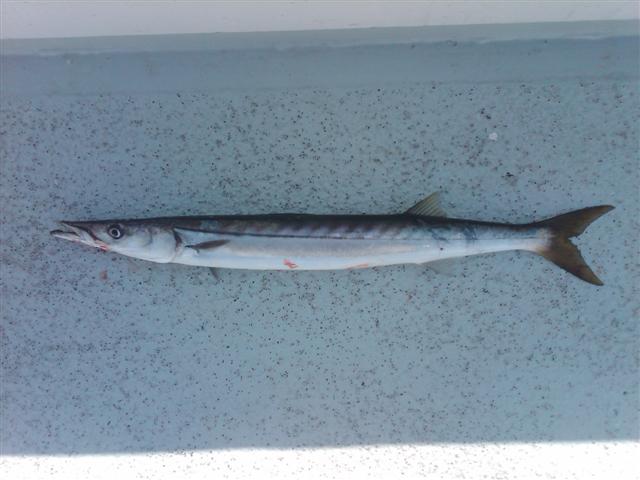

The California barracuda is one of Southern California's most fun, accessible, and underrated gamefish. Long, slender, and built like a missile, the Pacific barracuda (Sphyraena argentea) is a fast-moving schooling predator that crushes surface iron jigs, slams live baits, and gives light-tackle anglers screaming runs and slashing strikes. They show up thick in the warmer months, they're catchable from boats, kayaks, jetties, and piers, and they're a blast on the right gear. Learn how they hunt and what they'll eat, and you can have wide-open days on "'cuda."
This guide covers it all: how to identify a Pacific barracuda and separate it from its tropical cousins, where and when to find them, the techniques that produce, surface iron, live bait, and trolling, and how to deal with the one thing every barracuda angler has to respect: a mouth full of teeth.
What is a California barracuda?
The Pacific barracuda, also called the California barracuda or simply "'cuda," is a member of the barracuda family built for speed. It has a long, cylindrical, silvery body, a pointed head with a jutting underslung lower jaw, two small widely-separated dorsal fins, and a forked tail. Coloration is bright silver on the sides and belly with a darker bluish or brownish back, and the fish often shows a yellowish cast to the tail.
Pacific barracuda are smaller and more slender than the notorious great barracuda of tropical waters. A typical California 'cuda runs 2 to 8 pounds and up to about 3 feet; a "log" over 8 pounds is a nice fish. They're a schooling species that roams in packs, so where you find one you'll usually find many, and when a school is fired up, the action can be nonstop.
California regulates barracuda with a minimum size limit and a daily bag limit, and, like most SoCal species, the rules can change, so check the current California Department of Fish and Wildlife regulations before you keep any. Barracuda are also a good candidate for catch and release: they're abundant during the run, they're not everyone's favorite on the table, and their light-tackle fight makes them fun to catch and let go. If you do release, minimize handling, keep the fish in or near the water, and use a dehooker to protect both the fish and your fingers.
Unlike the great barracuda, Pacific barracuda are not associated with ciguatera and are perfectly good eating when handled well, best cooked fresh, and often smoked or grilled. That said, their flesh is soft and spoils quickly, so bleeding and icing immediately is essential.
How to Catch Barracuda at Catalina IslandWhere and when to find California barracuda
Barracuda are a warm-water visitor to Southern California, and their fishery is highly seasonal. They typically arrive as the water warms in late spring, peak through summer and into fall, and thin out as the ocean cools. In warm-water years they show earlier, stay later, and range farther north.
Because they're a roaming schooling fish that hunts baitfish near the surface, focus on:
- Kelp beds and kelp edges, Barracuda patrol the edges of kelp forests hunting bait, especially around the Channel Islands and along the coast.
- The islands, Catalina, San Clemente, and the other Channel Islands are legendary barracuda grounds, often producing wide-open bites.
- Boiler rocks, points, and structure, Any spot that concentrates baitfish will draw barracuda.
- Bait schools and working birds, Barracuda give themselves away by slashing through bait on the surface. Diving birds over nervous water are a dead giveaway.
- Bays, harbors, and around piers, Barracuda push into bays and along jetties and piers, putting them within reach of shore anglers.
Early morning is prime, and a moving tide almost always improves the bite. When you find surface activity, bait spraying, birds working, or fish slashing, get a jig or a bait into it fast, because barracuda schools move.
Stay mobile and keep your eyes up. Because barracuda roam, the most productive anglers cover water and watch for signs rather than anchoring on one spot. A patch of nervous water, a flurry of birds, or a boil of bait can appear and vanish within minutes, so run to activity, make your casts count, and be ready to reposition as the school shifts. On the party boats and sportboats, a fast bite can go wide-open in an instant, so have your iron tied on and your drag set before you ever spot fish.
Fishing Catalina Island for BarracudaTechnique 1: Surface iron
Nothing is more classic, or more fun, than catching barracuda on the "surface iron," the long, shiny metal jig that's a staple of Southern California fishing. A barracuda's slashing, chasing attack is perfectly suited to a fast-moving iron worked across the top.
Cast the surface iron out over a bait school or along a kelp edge, let it settle a moment, then work it back with a steady, fairly fast wind so it swims and flashes just under or across the surface. Barracuda will track and crush it, often with a visible boil or a jarring strike. A steady retrieve usually out-fishes an erratic one for 'cuda, they want to run down fleeing prey. Experiment with speed until you find what triggers them that day. Blue-and-white, all-white, scrambled-egg, and chrome patterns are all proven.
Surface-iron fishing rewards a specialized outfit: a longer, moderate-action jig rod loads the cast and lets you throw the heavy iron a long way to reach fish without spooking them.
The retrieve is where surface-iron fishing is won or lost. The goal is to keep the jig "swimming", waking and flashing near the surface, rather than letting it dig too deep or skip out of the water. Point the rod tip low and toward the jig, and reel at a steady clip; if the iron is breaking the surface, slow down slightly, and if it's plowing too deep, speed up. Barracuda will often follow the jig right to the boat before committing, so keep the same steady cadence all the way to the rail and be ready for a strike at your feet. When a school is boiling on bait, a well-thrown iron landed just past the activity and wound straight back through it will get bit almost every cast, this is the wide-open bite that makes California barracuda so beloved.
Two-hooked barracuda on the iron are common, and their slashing strikes mean a lot of short bites and foul-hooks; a sharp, quality treble or a single assist hook improves your hookup ratio. Keep your hooks sticky-sharp, because a barracuda's bony mouth is hard to penetrate with a dull point.
How to Catch Barracuda on the Surface IronTechnique 2: Fly-lined and slid live bait
When barracuda are keyed on live bait, or holding a bit deeper, a live sardine, anchovy, or small mackerel is deadly. Fly-line a lively bait with no weight when fish are up high and feeding on top, letting the bait swim naturally away from the boat. If the fish are holding deeper or the current is strong, pin on a small sinker to get the bait down to them.
Barracuda often engulf a bait sideways and slash at it, so a moment's patience before the hook-set pays off. Because of those teeth, many live-bait anglers use a short length of heavier fluorocarbon leader (or a light single-strand wire) to avoid being cut off, more on that below. Nose-hook or collar-hook your bait so it swims strongly, and be ready: a barracuda's take on a fly-lined bait is often savage.
A subtle but important detail with live bait is bait size and liveliness. Barracuda are keyed on small, fast baitfish, so a frisky sardine or anchovy that swims hard draws far more strikes than a tired or oversized bait. Rotate baits often, hook them gently to keep them lively, and let a healthy bait swim toward the kelp or the boil where the fish are working. When barracuda are competing in a school, a bait that panics and flees is exactly the trigger, you'll often see the water erupt behind your line before the rod loads. If you're marking fish deeper on the sounder, a small rubber-core or split shot sinks the bait into the zone; barracuda will come up for a bait, but they won't dig deep for one, so getting the depth right matters when they're not on top.
One more live-bait tip: barracuda frequently cut a fly-lined bait in half and come back for the pieces. If you feel a slash and then nothing, leave the remaining bait in the water for a few seconds, the fish will often return and eat the rest, giving you a second chance at the hook-set.
Fly-Lining Live Bait for BarracudaTechnique 3: Trolling and casting lures
Trolling is a great way to locate scattered barracuda schools and cover water. Pull tough, flashy lures, spoons, feathers, swimbaits, or diving plugs, at a moderate speed along kelp edges, around the islands, and through areas holding bait. When you get a strike or mark a school, stop and cast to them with irons or lures to stay on the fish.
For casting, hard swimbaits, spoons, and lipped plugs all draw strikes when worked with a quick, steady retrieve. As with the iron, barracuda respond to a lure that looks like a baitfish trying to escape, so keep it moving. Single-hook jigs are increasingly popular because they hook and hold barracuda well while making release safer and cleaner, a sensible choice given the teeth.
When trolling to locate fish, spread a couple of lures at different distances behind the boat and vary your speed until you get bit, then note the speed and lure that worked and repeat it. Troll along the up-current edges of kelp, around the islands, and through any area where you're marking bait. The moment you hook up or spot surface activity, it's worth stopping the boat and casting, because barracuda school tightly and you can turn a single trolled fish into a dozen casted ones. Swimbaits rigged on a single hook and worked with a steady wind are especially effective for this "run and gun" style, letting you fire casts into a boil and hook fish cleanly for quick releases.
Single-Hook Jigs for BarracudaDealing with the teeth: leaders and handling
Barracuda have a mouth full of small, needle-sharp teeth, and they will readily bite through light monofilament. Two schools of thought address this:
- Heavy fluorocarbon leader, A short section of 30–50 lb fluorocarbon resists most bite-offs while staying nearly invisible, and it keeps the presentation natural. This is the most common choice for the light-biting California 'cuda.
- Light single-strand wire, When you're getting cut off consistently, a short, light wire leader ends the problem entirely, at some cost in bites. It's a personal call based on how the fish are behaving that day.
Most California anglers start with fluorocarbon and only step up to wire when bite-offs become a real problem. Keep your leader connection clean and streamlined, a bulky knot or a swivel too close to the lure can put off wary fish. Check the last couple feet of leader after every barracuda; even a fish that doesn't cut you off leaves nicks and abrasions from those teeth and gill plates that will fail on the next strike if you don't re-tie.
Handling a live barracuda demands respect for those teeth. Never put your fingers near the mouth. Control the fish behind the head, use long-nose pliers or a dehooker to remove the hook, and if you're keeping it, dispatch and bleed it promptly. A thrashing barracuda on deck is a hazard, so get it under control quickly.
Landing, handling, and eating
Barracuda fight with fast runs and slashing head-shakes rather than deep, dogged pulls, so keep steady pressure and don't give slack, a slack line lets the fish throw the hook or saw through your leader. They're a light-tackle blast on the right gear, and part of their appeal is that you don't need heavy offshore tackle to enjoy them: a 15–30 lb outfit turns a school of barracuda into a fast-paced, fun morning. Keep the rod loaded, follow the fish with the rod tip through its runs, and lead it to the net or the rail head-first once it tires.
For the table, fresh Pacific barracuda is genuinely good, but it must be handled well. The flesh is soft and oily and degrades fast, so bleed the fish immediately, get it on ice, and cook or smoke it fresh. Grilled or smoked barracuda is excellent; fish that's been left to warm up is not. The video below covers cleaning one and the eating question.
How to Fillet a BarracudaWhere to catch them
Southern California is barracuda country, from San Diego up through Orange County, Los Angeles, and the Santa Barbara area, with the Channel Islands, especially Catalina and San Clemente, offering the most consistent wide-open action. The fish are reachable from sportboats, private boats, kayaks, and even jetties and piers when the schools push inshore. Knowing where the barracuda are schooling and when the seasonal run is on is half the battle, so watch the water temperature, keep tabs on where the bait and birds are working, and time your trips to the warm-water months when the schools move in and the bite goes wide-open along the kelp and the islands.
If you're fishing the Southern California coast and islands, keep building your skills with our guides on how to catch calico bass, how to catch yellowtail amberjack, and how to catch california sheephead.