Fish
Fish Fire
Fire Hike
Hike Bird
Bird

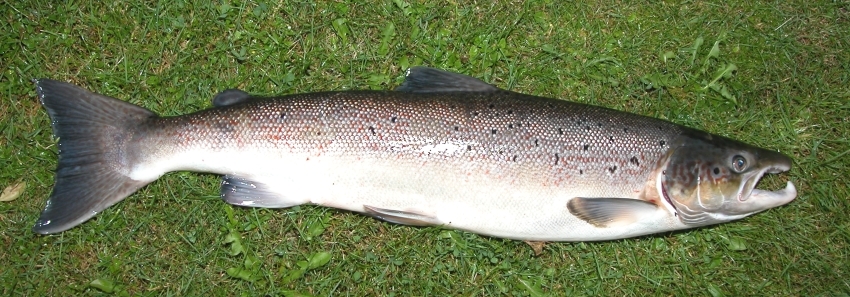

The Atlantic salmon is, to many anglers, simply "the king of gamefish", the silver, sea-run leaper that gave rise to the entire tradition of classic fly fishing, and a fish so revered it has its own centuries of literature, its own hallowed rivers, and its own devoted culture. Catching one is a pursuit as much as a technique: Atlantic salmon don't feed once they enter the river, so you're not offering food but provoking a strike from a fish driven by instinct and memory. Add that they're increasingly rare and fiercely protected, and every Atlantic salmon landed is a genuine event. This guide covers what makes salar unique, the mostly-fly techniques used to move them, and, just as importantly, how to fish for them responsibly.
Atlantic salmon are cousins of the brown trout and behave in the river much like steelhead, see our guides on how to catch brown trout and how to catch steelhead. This is specialized, tradition-bound water, and a knowledgeable local, a seasoned salmon guide or a well-run lodge, is invaluable for your first salmon; but the fundamentals below will get you started swinging a fly for a king.
The King of Gamefish
The Atlantic salmon (Salmo salar) is not a Pacific salmon at all, it belongs to the genus Salmo, making it a closer cousin of the brown trout than of the Pacific kings and coho. In the sea and fresh from it, it's a sleek chrome fish with a small pointed head, a slender "wrist" at the base of the tail, and scattered black spots (often X-shaped) mostly above the lateral line. Unlike Pacific salmon, Atlantic salmon do not necessarily die after spawning, some survive and return to spawn again, a fish called a "kelt" on its way back out.
Atlantic salmon are famous leapers (salar means "the leaper," for their ability to hurdle waterfalls on their upstream migration) and dogged, powerful fighters. Fish returning after one year at sea are called "grilse" and run 2 to 6 pounds; multi-sea-winter fish are much larger, commonly 8 to 20 pounds, with the giants exceeding 40. Native to the rivers of the North Atlantic, eastern Canada, Maine, Iceland, Scandinavia, the British Isles, and Russia, wild Atlantic salmon have vanished from much of their former range, which makes the surviving runs precious. A landlocked form thrives in lakes of the Northeast and eastern Canada as a prized sport fish.
Instinct, Not Hunger
The single most important thing to understand about Atlantic salmon is that adults do not feed once they return to fresh water. They live off stored energy through their spawning migration, so, exactly like steelhead, a river salmon that takes your fly is not eating; it's striking from aggression, territoriality, curiosity, or the deep memory of feeding as a juvenile.
This shapes everything. You're not matching a hatch or imitating prey; you're presenting an attractive, provoking object through the water where salmon rest and hold, and trying to trigger that mysterious instinctive grab. It's why the same fly might be ignored on twenty casts and crushed on the twenty-first, why salmon anglers obsess over subtle changes in fly, depth, speed, and angle, and why patience and covering water are everything. It's also why the pursuit is so revered, every take feels like a small miracle wrung from a fish that had no reason to eat.
The Techniques That Catch Atlantic Salmon
Atlantic salmon are overwhelmingly a fly-rod quarry, with spinning where permitted and trolling for landlocked fish. Here are the core methods, how to fish each, and when to use it.
The Wet-Fly Swing, the classic method
The wet-fly swing is the heart of Atlantic salmon fishing, the traditional and most productive way to move a fish, and the reason the two-handed spey rod exists.
How to fish it: Cast a classic wet fly or a tube fly (a Blue Charm, Green Highlander, or Ally's Shrimp) down and across the current, then let it swing across the pool under tension, "on the dangle," as the current sweeps it in an arc toward your bank. Take a step downstream after each swing to methodically cover the holding water. Keep the swing controlled and let the fish take and turn before you tighten, a hard, premature set pulls the fly away. A two-handed (spey) rod lets you cover big water and swing flies with ease.
How to Swing Wet Flies for SalmonDry Flies and Bombers, the surface game
Atlantic salmon will, wonderfully, rise to a dry fly, a heart-stopping way to catch them, especially in low, warm water and on certain rivers where the tradition runs deep.
How to fish it: Present a bushy dry fly or a "Bomber" (a buoyant deer-hair pattern), either dead-drifted or skated/waked across the surface (a "riffling hitch" makes a fly wake enticingly) over a lie where you know or suspect a salmon is holding. The take, a salmon slowly rising to engulf or slash at the fly on top, is one of the greatest thrills in fishing. Give the fish a moment to take it down before tightening. Dry-fly salmon fishing is addictive and effective when conditions are right.
Sight Fishing Atlantic Salmon with Dry FliesSunk Line for High and Cold Water
When the water is high, cold, or off-color, early spring and after rain, salmon hold deeper and won't move far, so you fish a sunk fly on a sink-tip or sinking line to get down to them.
How to fish it: Rig a sink-tip or full sinking line and an appropriate leader to carry a larger, often brighter fly (a bigger tube fly) down to the fish's level, and swing it slowly and deep through the holding water, giving cold, lethargic salmon an easy, close target. Matching your line, leader, and fly weight to the water conditions is a core salmon skill, floating lines and small flies in low, warm water; sunk lines and bigger flies in high, cold water. Getting the fly to the fish is half the battle in tough conditions.
Salmon Fly Leaders and Setup TipsSpinning, where it's permitted
On rivers and in seasons where it's legal (many premier salmon rivers are fly-only), spinning with spoons and spinners is an effective way to cover water and provoke a strike.
How to fish it: Cast a spoon or an inline spinner (a Blue Fox or similar) across and slightly upstream, and let it sink and swing through the holding water at a steady pace, working it just off the bottom through the lies. As with the fly, you're triggering a reaction from a non-feeding fish, so cover the pool methodically and vary your presentation. Always confirm that spinning is legal on your water and follow all gear and barbless-hook regulations, many Atlantic salmon fisheries restrict methods to protect the fish.
How to Catch Salmon with SpinnersLandlocked Salmon, Trolling and Casting
The landlocked Atlantic salmon of Northeastern and eastern Canadian lakes is a superb sport fish caught by trolling and casting, especially around ice-out and in the cool seasons.
How to fish it: In lakes, troll streamers and smelt-imitating lures (a Grey Ghost streamer or a DB Smelt) or small spoons near the surface in spring right after ice-out, when landlocks chase smelt in the shallows, dropping deeper as the water warms. Casting streamers to surface-feeding fish around inlets and in rivers is also productive. Unlike sea-run adults, landlocked salmon do feed, so imitating their smelt forage is the key. It's a wonderful, accessible way to catch an Atlantic salmon far from any ocean run.
Trolling for Landlocked SalmonReading a Salmon Pool
With non-feeding fish, knowing where salmon lie is arguably the most important skill of all, you must present to the specific spots that hold fish.
How to fish it: Learn to read a salmon pool for the classic "taking" water, the well-oxygenated, moderate-paced flow at the head and throat of a pool, the defined runs and glides of even current, the tails of pools, and the spots around submerged rocks and ledges where a traveling salmon stops to rest. Fish hold in remarkably consistent lies from year to year, so local knowledge (or a guide) is gold. Cover the known lies thoroughly and methodically, and you put your fly where the fish actually are, the foundation of all salmon fishing.
How to Read an Atlantic Salmon PoolWhen to Go
Atlantic salmon enter their rivers over an extended season that varies enormously by river, spring "springers," summer runs, and fall runs all occur, with each river having its prime weeks. In general, summer and early fall are the most popular and productive, though big spring fish are a classic prize on some rivers. Fresh-run fish, bright from the sea, are the prime targets. As with all salmon, water conditions are critical: a river with good, fresh flow, dropping and clearing after rain, at a fishable height and temperature, gets fish moving and taking, while very low warm water or high dirty water is tough. For landlocked salmon, ice-out through spring is the peak. Research your specific river's run timing and go when fresh fish are in.
Conservation: Fish Responsibly
This matters more for Atlantic salmon than almost any other fish: wild Atlantic salmon are in serious decline and have disappeared from much of their range. As a result, catch-and-release is the norm or the law on most wild salmon rivers, many are fly-only and barbless-only, and some are entirely closed to protect fragile runs. Fish these treasures with the utmost care: use barbless hooks, land fish quickly, keep them in the water, handle them minimally with wet hands, and revive them fully before release. Learn and rigorously follow every regulation on your water, support the conservation organizations working to restore these fish, and treat every wild Atlantic salmon as the rare and precious thing it is. The future of the sport depends on it.
Fighting and Landing a Fresh Salmon
When a fresh Atlantic salmon takes and turns, hold on, a sea-bright fish is astonishingly strong and famous for its leaps, and landing one requires a cool head. Let the fish run against a smooth, properly set drag rather than trying to stop it, and keep the rod at a working angle to cushion the head-shakes and jumps. When a salmon leaps, drop the rod tip slightly and stay in control so a taut line doesn't rip the hook on the fall. Use the current and the fish's own effort to tire it, gaining line when it gives you the chance and following a strong fish downstream along the bank when you must.
Because nearly all Atlantic salmon are released, land them as quickly as your tackle allows to avoid exhausting the fish, a longer, gentler fight is better for the angler's story but harder on the salmon. Have a large soft net or a plan to tail the fish in shallow water, keep it in the water throughout, remove the barbless hook quickly, and cradle it upright facing the current until it kicks away strong. A fresh salmon fought well and released healthy is the whole point.
The Gift of a Take
There's a reason Atlantic salmon inspire such devotion. You can do everything right, read the pool, choose the fly, swing it perfectly through the taking water, hour after hour, and be met with nothing, because these fish owe you no strike; they aren't even feeding. And then, without warning, the line comes tight to a fish that decided, for reasons no one fully understands, to take. That unpredictability is not a flaw of the sport but its soul: every Atlantic salmon is a gift, never a given. Approach the fishing in that spirit, patient, present, and grateful for the take when it comes, and you'll understand why anglers have crossed oceans and devoted lifetimes to the king of gamefish.
Gear for Atlantic Salmon
Atlantic salmon gear is fly-focused, scaled to the water:
- Fly rods: A single-hand 9- to 10-foot rod in 7 to 9 weight for smaller rivers and dry flies; a two-handed (spey) rod of 12 to 15 feet in 7 to 9 weight for swinging flies on big water, the classic salmon tool.
- Lines and leaders: Floating lines and sink-tips/sinking lines to match water conditions, with strong leaders (roughly 12 to 20 lb).
- Flies: Classic wet flies and tube flies, plus bombers and dry flies, in a range of sizes for different water.
- For landlocked and spinning: A medium spinning or trolling combo with streamers, smelt-imitating lures, spoons, and spinners where those methods are legal.
Meet the King
Atlantic salmon fishing is steeped in tradition and technique, and the fish hold in specific lies that local knowledge reveals, which is exactly why a good salmon guide, or a stay at a salmon lodge, is so valuable, especially for your first salmon. Someone who knows the water will read the pool, put you over fish, refine your swing, and make sure you fish legally and ethically on precious water. Even on your own, do the homework: study the river's run timing and current flows, learn its named pools and the lies within them, confirm every regulation, and cover the taking water patiently and thoroughly. Fish it with that respect and persistence, and the king will eventually reward you with the take that no one can promise.