Fish
Fish Fire
Fire Hike
Hike Bird
Bird


The question comes up every smoke season and it has a precise answer.
Yes, an N95 works for wildfire smoke. It works because of what smoke is made of and how the respirator is built. And it works only if it seals to your face, which is where nearly all the real-world failure happens.
What you are trying to filter
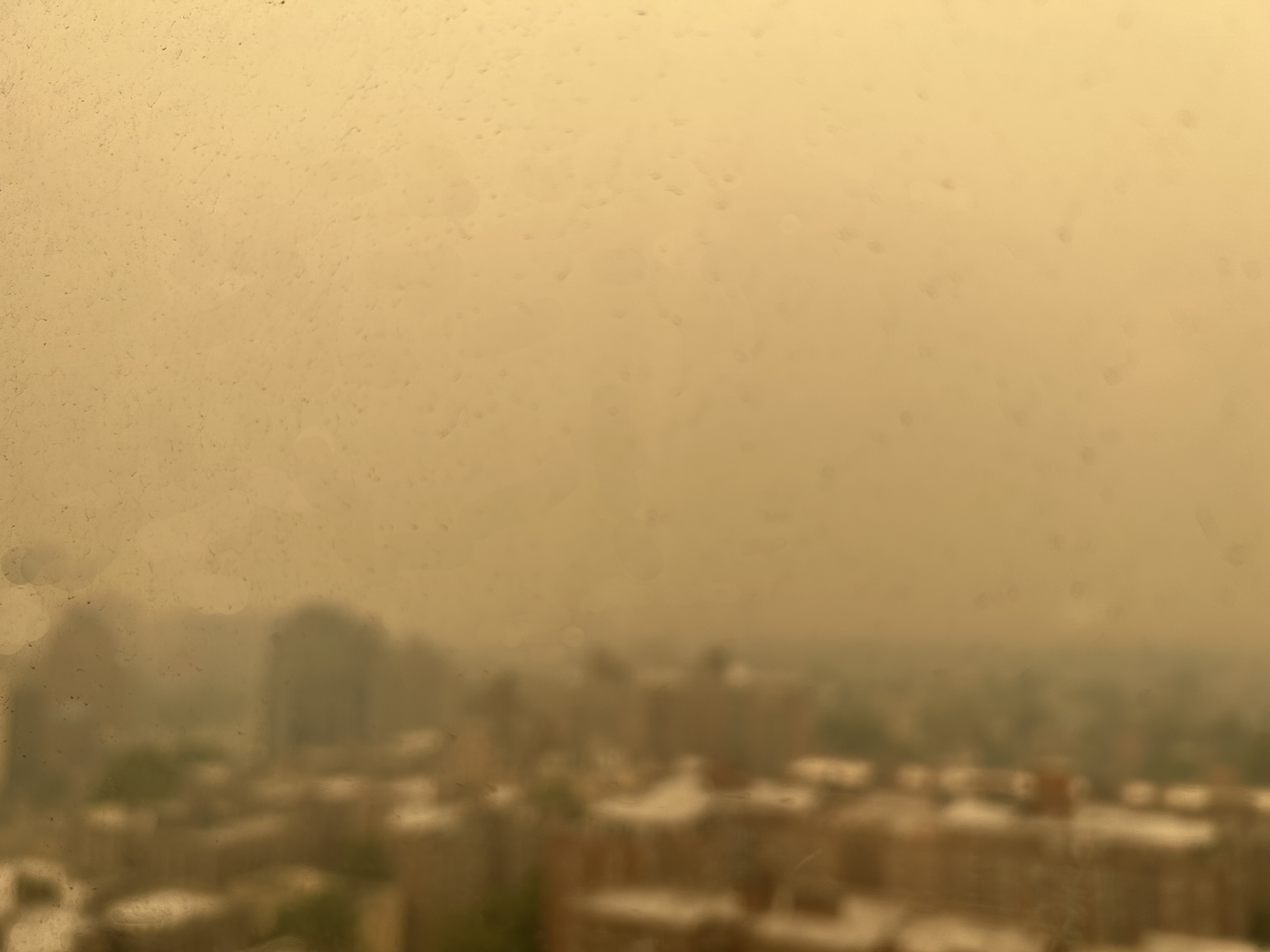
Wildfire smoke is a mixture, and the component that matters most for health is PM2.5: particulate matter with a diameter of 2.5 micrometers or less. Particles that small penetrate deep into the lungs and can enter the bloodstream, and they are associated with reduced lung function, worsening of asthma and COPD, and cardiovascular effects including heart attack and stroke, which is why the health warnings during smoke events emphasize heart conditions as much as lung conditions.
Smoke also contains gases: carbon monoxide, volatile organic compounds, formaldehyde and others. This matters for masks because a particulate respirator does not filter gases at all, so an N95 is not doing anything about the carbon monoxide, and near an active fire that distinction becomes important. For smoke drifting a hundred miles from a fire, the health concern is overwhelmingly PM2.5, and that is the fraction an N95 handles.
What N95 actually means
The designation is precise. N means not resistant to oil, and 95 means the filter media captures at least 95 percent of airborne particles in the most-penetrating size range, which is around 0.3 micrometers.
That last point defeats intuition and is worth understanding, because people assume a filter is a sieve and that smaller particles pass more easily. They do not. Very small particles move erratically through Brownian motion and collide with fibers rather than traveling straight through, while larger particles are intercepted or cannot follow the airflow around a fiber. The hardest particles to catch are the ones in the middle, around 0.3 micrometers, and that is deliberately what the standard tests.
So an N95 is at least 95 percent efficient at its worst size, and better than that above and below it, including for the PM2.5 in smoke. N99 and N100 exist and filter more, and P100 cartridge respirators filter more again, which is what people wearing half-face elastomeric respirators are using.
N95 Respirator: How to Put One On and Use ItFit is the whole game
Here is the thing that determines whether any of the above matters. Air takes the path of least resistance, so if there is a gap between the respirator and your face, unfiltered air flows through the gap rather than through the filter media, because the gap is easier, and a 95 percent filter with a poor seal can perform dramatically worse than its rating. What produces a seal:
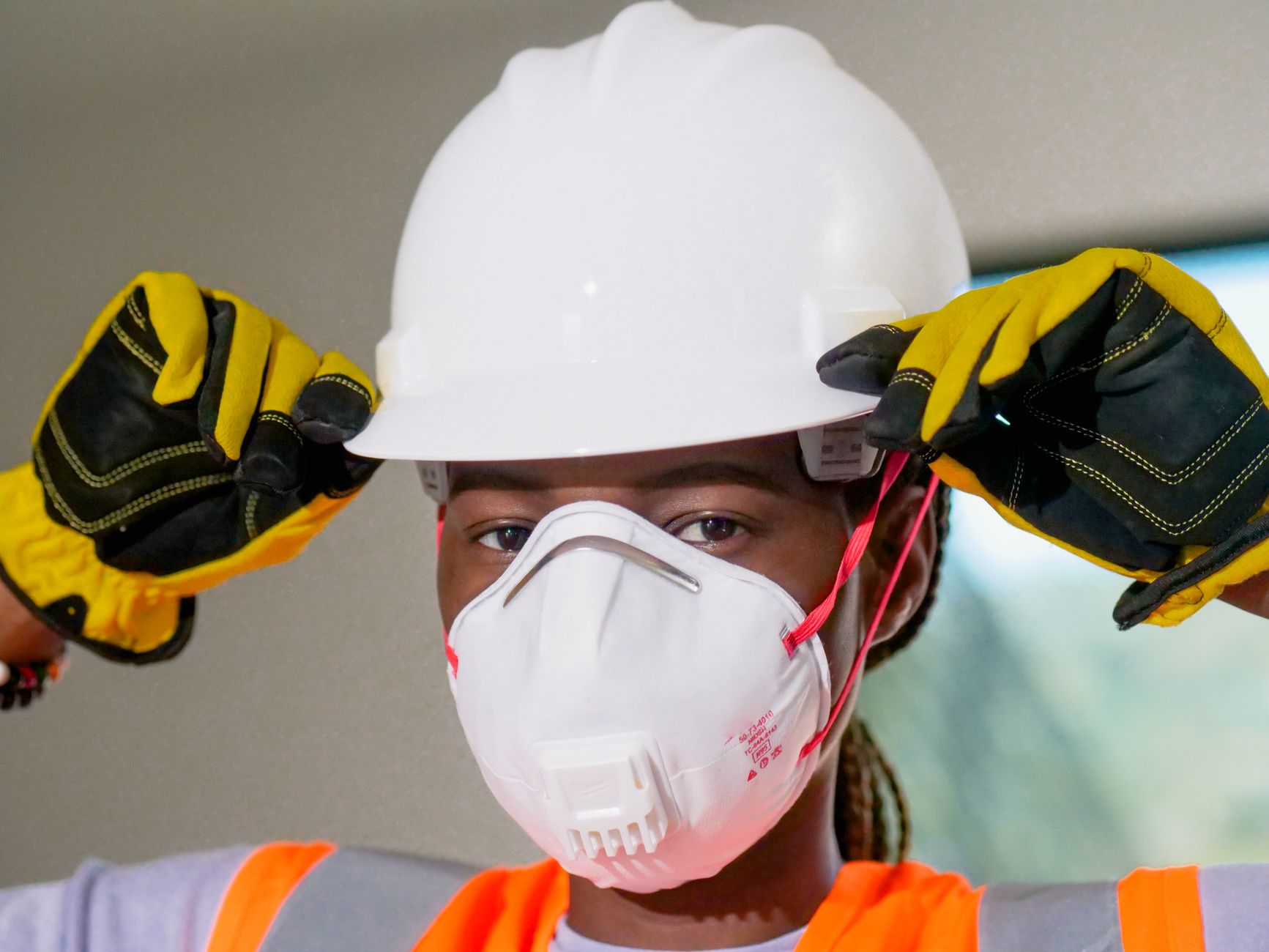
- Two straps that go around your head, one above the ears and one below, rather than loops over the ears. Ear loops cannot generate enough tension to seal a respirator, which is the main structural difference between an N95 and a surgical mask.
- A nose clip molded firmly to the bridge of your nose, with both hands, not pinched with one.
- A user seal check every time. Cover the respirator with both hands and exhale sharply, and if air escapes around the edges or your glasses fog, adjust and try again. Inhale sharply, and the respirator should pull slightly toward your face.
- A clean-shaven seal surface. This is not optional and it is not a preference, because facial hair crossing the seal area prevents a seal and studies of respirator performance with facial hair show substantial leakage. A mustache above the lip line is fine; a beard is not.
- A size that suits your face. Respirators come in different shapes and sizes and people's faces differ, so a model that seals well on one person may not on another.
The masks that do not work
Worth being blunt. Cloth masks do essentially nothing for PM2.5, because the weave is too open and the fit is loose. Surgical masks filter reasonably well as material but are designed to be loose-fitting and to block droplets outward, so air flows around the sides and they provide little protection against fine particles. Bandanas and neck gaiters provide no meaningful protection. And wet cloth over the face is a persistent piece of folk advice that does not work and can make breathing harder.
N95 Fit Test Instructional VideoKN95, and how to avoid a counterfeit
KN95 is a Chinese standard broadly comparable to N95 on paper. In practice, quality has varied enormously, counterfeit product has been widespread, and most KN95 designs use ear loops, which as above cannot generate a proper seal.
The check for a genuine N95 is straightforward, because NIOSH-approved respirators carry markings on the respirator itself, including NIOSH, the approval number in the form TC-84A followed by digits, the manufacturer, the model and the filter class. If those markings are absent, it is not a NIOSH-approved N95 regardless of what the packaging says. Buy from the manufacturer or an established supplier rather than a marketplace listing.
Elastomeric respirators, the overlooked option
Worth mentioning because for anyone facing smoke every year the disposable is not the best answer. An elastomeric half-face respirator is a reusable rubber or silicone facepiece with replaceable cartridge filters, of the kind used in painting, sanding and industrial work.
The advantages over a disposable N95 are real. The seal is better, because a molded facepiece with an adjustable head harness seals more reliably and more repeatably than a disposable shell. The filter class is higher, since P100 cartridges filter at least 99.97 percent and are the standard option. It is genuinely reusable, because the facepiece lasts years and the cartridges last a long time in smoke service, so the running cost over multiple seasons is lower. It is washable, unlike a disposable respirator whose electrostatic charge is destroyed by water. And it is fit-testable and consistent, so you can establish that a particular size seals on your face and then rely on it.
The disadvantages are that it is conspicuous, it makes speaking harder, it costs more up front, and the same beard problem applies. For someone who lives with several weeks of smoke a year and needs to be outside during it, it is a better purchase than a box of disposables.
The gear
A respirator that fits badly is a respirator that does not work, so most of this list is about fit rather than filtration.
A NIOSH-approved N95 with two head straps, which is the single most important specification. Two straps that go behind the head, not ear loops. Ear loops cannot generate the tension needed to seal a respirator against a face, which is why the ear loop products sold as N95s are generally not NIOSH-approved at all. The approval number is printed on the mask itself and it is checkable against the NIOSH list.
More than one model or size, because faces differ and the fit that works for somebody else may not work for you. Buying three different models and finding the one that seals is a better use of thirty dollars than buying thirty of the wrong one.
A razor, during smoke season, which is an unwelcome item and an unavoidable one. Facial hair crossing the seal defeats a respirator completely, and this is measured rather than argued.
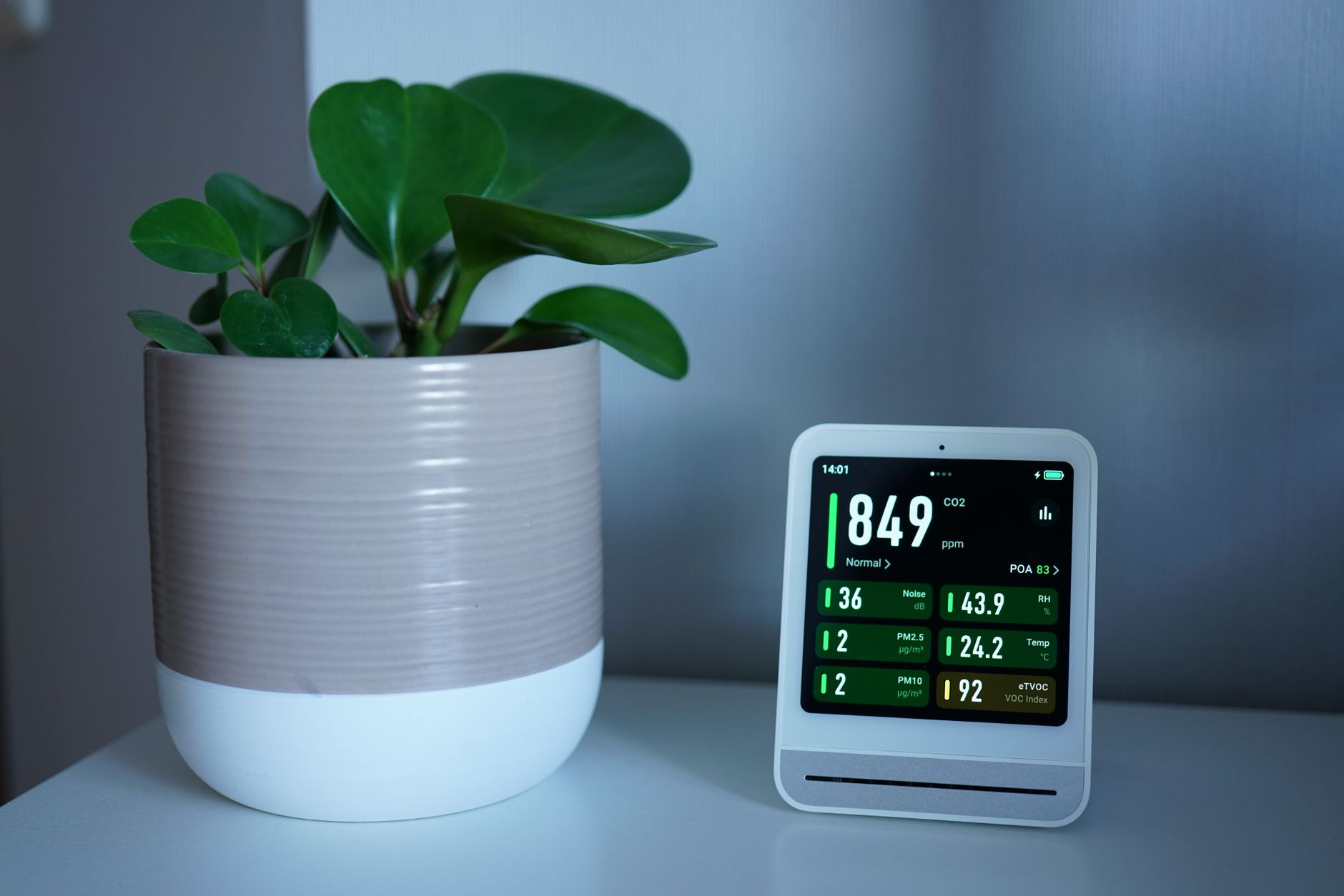
A PM2.5 monitor or a reliable AQI source, so the mask comes out when it is needed rather than as a default.
A supply bought before the season. N95s sell out regionally the week the smoke arrives.
An air cleaner for indoors, because the mask is for the time you have to be outside and the indoor solution is a different one.
And a plan for anyone who cannot wear one, which includes small children, anyone with significant respiratory or cardiac disease, and anyone who cannot get a seal. For them the answer is clean indoor air, not a mask.
Reuse, storage and when to throw it away
Respirators are single-use in occupational settings and that is not how anyone uses them during a two-week smoke event, so here is the practical position.
- They can be reused for smoke, within limits, because the failure modes are mechanical rather than biological.
- Replace it when breathing becomes noticeably harder. Loading with particles increases resistance, and increased resistance is the signal that the filter has done its work.
- Replace it when the seal is compromised. Stretched straps, a nose clip that no longer holds shape, or a crushed or deformed shell all mean it will not seal, and a respirator that does not seal is not a respirator.
- Replace it when it is soiled, wet or damaged, and after any exposure that got it visibly dirty.
- Do not wash it. Water destroys the electrostatic charge that a large part of the filtration depends on, and the same applies to alcohol and to any cleaning agent.
- Do not microwave, bake or otherwise treat it, because consumer decontamination methods degrade the material and the fit.
- Store it in a paper bag, not sealed plastic, somewhere it will not be crushed, and label the bag if more than one person in the house is using them.
- Buy enough in advance, because regional supply disappears within hours of a major smoke event, and that is exactly when counterfeit product floods online marketplaces.
When a mask is not the answer
The official guidance is consistent on this and it is worth repeating. Reducing exposure comes first, because staying indoors with filtered air is more protective than going outside in a respirator, and a respirator is for when you must be outside or when indoor air cannot be cleaned. Valved respirators vent exhaled air and are perfectly appropriate for smoke, though not for protecting others from infection.
Exercise defeats it, since breathing resistance, sweat and facial movement all degrade the seal, so a mask is not a way to keep running in bad air. And near an active fire, particulate filtration is not enough, because carbon monoxide and other gases are not filtered, and that is a firefighting-equipment problem rather than a consumer one.
Which points at the question underneath all of this. A mask answers what to do once the smoke is here, and the more useful question is usually how bad it is right now, where you are, and where it is going. That is what Guidepole Fire is for: air quality, smoke forecasts, fire perimeters and hotspot detections on one map, so the decision about whether today is an N95 day, an indoors day or a normal day is based on the actual number at your location rather than on how the sky looks. Smoke concentration can change several-fold within a day, and knowing that is worth more than any single piece of equipment.
The people who need this most
Worth naming, because the general guidance under-serves several groups.
- Outdoor workers. Construction, agriculture, landscaping and delivery workers cannot go indoors, and several states have adopted workplace standards requiring employers to provide respirators above defined AQI thresholds. If you work outside, find out what your state requires, because the protection may be an entitlement rather than a purchase.
- People with asthma or COPD, for whom the threshold for taking action is lower and the breathing resistance of a respirator is itself a consideration worth discussing with a clinician rather than assuming.
- People with cardiovascular disease. The cardiac effects of fine particles are as significant as the respiratory ones, and this group is frequently unaware it is in a sensitive category at all.
- Pregnant people, for whom exposure is associated with adverse outcomes in the research.
- Older adults, both because of underlying conditions and because seal quality can be harder to achieve.
- Children, for whom there are no NIOSH-approved respirators in child sizes at all. Smaller adult sizes fit some older children and adolescents and a seal check is the test, while for younger children the practical answer is that masks are not the tool and the protective measure is reducing exposure: staying indoors, running filtration and limiting time outside.
- Unhoused people, for whom none of the indoor advice applies, and for whom distribution of respirators during smoke events is one of the few interventions available.
The general advice to stay indoors with filtered air assumes an indoors with filtered air. For a substantial number of people that assumption does not hold, and for them the respirator is not a supplement to the plan. It is the plan.
The short version
An N95 works and a cloth or surgical mask does not. Fit matters more than the rating, which means two head straps, a firmly molded nose clip, a seal check every time and no beard. Check for NIOSH markings on the respirator itself rather than on the box.
There is nothing approved for small children, so reduce their exposure instead. A respirator filters particles, not gases. And staying indoors with clean air beats going out in a mask, every time.
For more, building a clean-air room covers the indoor half of this, AQI explained covers reading the numbers, and exercising in wildfire smoke covers the activity question specifically.
The indoor half of the problem, which is where most people should actually be solving it, is in setting up a clean air room. Why a mask does not make a run through smoke acceptable is in exercising in wildfire smoke. What the numbers mean is in the air quality index explained, how long it will last is in when will wildfire smoke clear, and where it is coming from is in how to read a wildfire smoke map.