Fish
Fish Fire
Fire Hike
Hike Bird
Bird


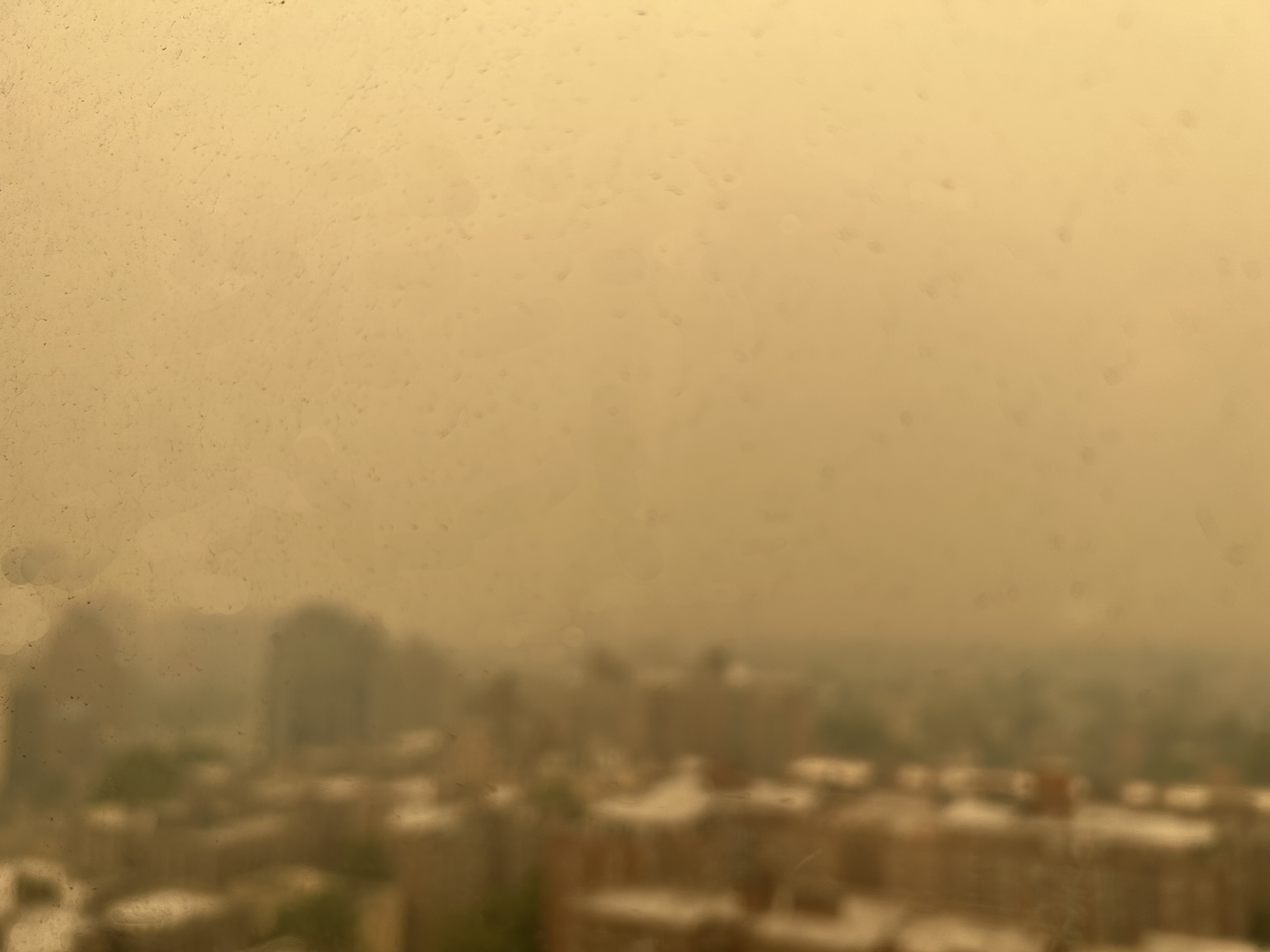
Smoke events are not usually a matter of hours. A stalled pattern can put a region under smoke for a week or more, and during that period the practical question is not what mask to wear outside. It is how clean the air is in the place you sleep.
The answer is a clean air room, and it is achievable in an afternoon with equipment from a hardware store.
Why indoor air is not automatically better
Start with the uncomfortable part. Buildings leak, because outdoor air enters continuously through gaps and typical homes exchange a meaningful fraction of their air with outside every hour, so during a smoke event indoor PM2.5 concentrations frequently track outdoor concentrations at some fraction, often a large one in a leaky house.
Some homes are worse than others. Older construction leaks more, homes with evaporative coolers pull outdoor air in by design, and homes with a fresh-air intake on the HVAC do the same. Indoor sources add to it too, since cooking, particularly frying and broiling, along with candles, incense, smoking, vacuuming without a sealed HEPA machine and any combustion appliance, all generate fine particles.
So indoors is usually better than outdoors, and it is not clean by default. Making one room clean is far more achievable than making a whole house clean, which is the entire logic of the approach.
Choosing the room
Pick the room where you spend the most time, which for most people means the bedroom. What makes a good candidate:
- Few windows and doors, and ideally on the sheltered side of the house.
- A door that closes and can be kept closed.
- No fireplace, which is a large uncontrolled opening.
- No exterior door to the outside if you can avoid it.
- Small enough that a single air cleaner can handle it, since a large open-plan living space needs far more capacity than a bedroom.
- Somewhere you can stay, because a clean room you do not use is not doing anything.
Sizing the air cleaner
The specification that matters is CADR, the Clean Air Delivery Rate, given in cubic feet per minute for smoke, dust and pollen, and the smoke figure is the relevant one. A widely used rule of thumb is that the smoke CADR should be at least two-thirds of the room's floor area in square feet, so a 150 square foot bedroom wants a smoke CADR of about 100 or higher. During a heavy smoke event more capacity is better, and running a unit sized for a larger room is a reasonable choice.
What to look for is a true HEPA filter or a filter with a stated high-efficiency particulate rating, a published CADR figure and ideally a certified one, because units that advertise a room size without a CADR number are harder to evaluate, and adequate airflow on a setting you can tolerate overnight, since many units are only effective on their highest and loudest setting.
What to avoid is ozone generators and any device marketed as producing ozone or activated oxygen, because ozone is a lung irritant, it is regulated as a pollutant outdoors, and these devices do not meaningfully clean smoke. Avoid ionizers as a primary measure, which have limited effectiveness for smoke and some of which produce ozone as a by-product, and avoid filterless devices generally.
How to Build a Corsi-Rosenthal Box Air PurifierThe DIY option, which works
If a commercial unit is unavailable or unaffordable, the box fan and filter approach is legitimate and has been studied. The simplest version is a box fan with a MERV 13 furnace filter taped securely to the intake side, arrow pointing into the fan.
The better version is the Corsi-Rosenthal box: a box fan on top of a cube built from four MERV 13 filters with a cardboard base, sealed at the seams with tape, and usually with a cardboard shroud over the fan face to prevent air recirculating around the blade tips. Four filters means four times the surface area, which means much lower resistance, much higher airflow and a quieter, more effective unit than a single filter, and measured performance of these builds is comparable to commercial air cleaners costing several times more.
Two safety points matter. Use a modern box fan, because fans manufactured since around 2012 are required to include a thermal fuse that cuts power if the motor overheats, and restricting airflow with a filter increases motor load, so that is the relevant safety feature. And do not leave any fan running unattended overnight if you have doubts about it, noting that a four-filter build imposes much less load than a single filter, which is one more reason to build the cube version.
The rest of the house
The clean room is the priority and there is useful work outside it.
- Upgrade the HVAC filter. A MERV 13 or higher filter removes fine particles including smoke, and you should check that your system can handle the pressure drop, which most modern residential systems can, with the filter slot dimensions telling you what fits.
- Run the HVAC fan continuously rather than only when heating or cooling, so air keeps passing through the filter.
- Close the fresh-air intake if your system has one.
- Set portable and window air conditioners to recirculate and close the outdoor air damper.
- Turn off the evaporative cooler. A swamp cooler brings outdoor air in continuously and is the single worst appliance to run during a smoke event.
- Seal obvious gaps around windows and exterior doors with weatherstripping or tape.
- Do not run bathroom and kitchen exhaust fans more than necessary, since they depressurize the house and pull outdoor air in through every gap.
The special cases
A few situations need a different approach.
- Rented accommodation, where you may not be able to change the HVAC filter or seal windows permanently. A portable air cleaner in the bedroom does most of the work and comes with you when you leave.
- Homes without central HVAC, which is much of the Pacific Northwest, where the whole-house filter option does not exist. Portable cleaners in the rooms that matter are the entire strategy, and the number of units matters more than in a house with ducted air.
- Wildfire smoke plus summer heat, which is the hard case. Cooling frequently requires bringing in outdoor air or opening windows at night, and during a heat wave the heat is the more immediate danger, so the best available answer is usually a room with both a filtered air supply and a recirculating air conditioner, and if that is not possible, a public cooling center is the safer choice.
- Medically vulnerable household members. People with significant respiratory or cardiac disease, infants and pregnant people should be the reason the clean room exists and the reason it is set up early rather than reactively.
- Homes with a wood stove or fireplace, which need the damper closed and sealed, since a chimney is a large opening driven by exactly the temperature difference that pulls smoke in.
- Power outages during a smoke event, which happen and remove filtration entirely. A battery or generator option for at least one air cleaner is worth thinking about in areas subject to shutoffs.
What not to do indoors
During a smoke event, avoid adding to what you are trying to remove. No candles, incense or open flame, and no smoking or vaping indoors. Minimize frying, searing and broiling, and use the range hood when you do cook, accepting the trade-off. Do not vacuum unless the machine has a sealed HEPA system, because a standard vacuum re-suspends fine particles. Do not use a wood stove or fireplace. And skip the aerosol sprays.
The gear
A clean air room is one of the few smoke interventions where spending money reliably buys you something, and the list is short.
A HEPA air cleaner with a published smoke CADR is the core of it. The smoke clean air delivery rate is the number that matters, not the room size printed on the box, and it should be at least two thirds of the room's floor area in square feet if you want several air changes an hour. Buy on that number and ignore the marketing.
A modern box fan and four MERV 13 filters, if you would rather build than buy. The Corsi-Rosenthal design performs comparably to commercial units at a fraction of the cost, and the only real caution is to use a fan made after 2012, when the fused plug requirement came in.
A MERV 13 furnace filter for the HVAC system, which turns the whole house's air handler into a filter. Check that your system can handle the pressure drop first.
Good tape and cardboard, for the box build and for the gaps around a window air conditioner.
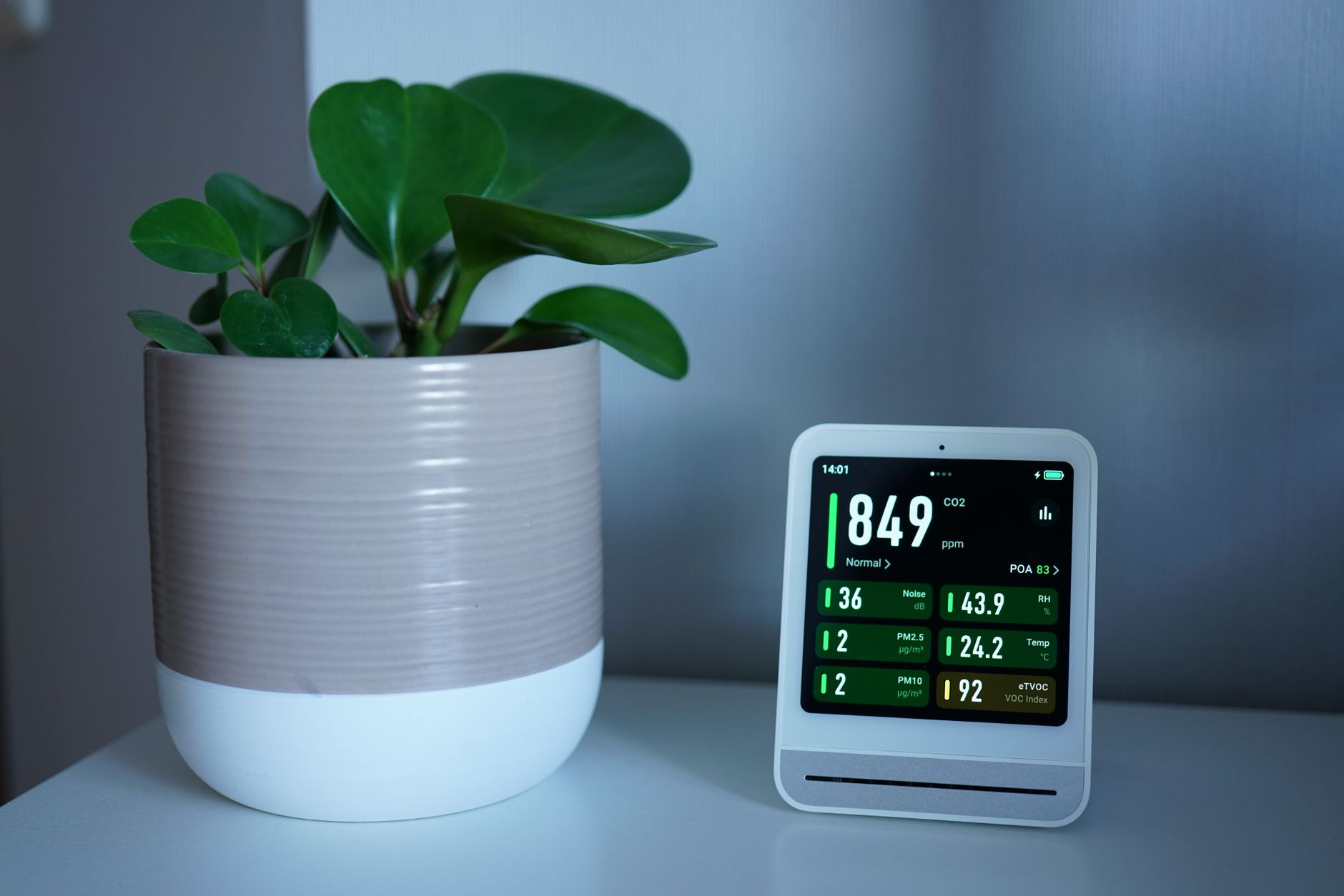
A low-cost PM2.5 monitor, which is the item most people skip and the one that tells you whether any of the rest is working. Indoor readings are the only feedback loop you have.
Weatherstripping, because a room that leaks is a room the cleaner cannot keep ahead of.
And spare filters, bought before the season rather than during it. Filters sell out regionally within a day of a bad smoke event, every year, without fail.
Homemade Air Purifier Can Protect Against Wildfire Smoke Inside at HomeKnowing whether it is working
Some rough numbers help you judge whether the setup is doing its job. Outdoor PM2.5 during a significant smoke event frequently runs in the tens to low hundreds of micrograms per cubic meter and can go far higher close to a fire, while a typical home without filtration will show indoor levels at some substantial fraction of outdoor, often roughly half in an ordinary house and higher in a leaky one. A sealed room with an adequately sized air cleaner should get considerably lower than the rest of the house, and a large reduction relative to outdoor is achievable.
The reduction takes time, because an air cleaner needs to exchange the room's air several times to reach steady state, which for a properly sized unit is a matter of tens of minutes rather than seconds, so turn it on before you need the room rather than when you enter it. Opening the door resets it partially, not catastrophically, but a room that is opened constantly will not hold a large differential. And cooking anywhere in the house will show up on a monitor in the clean room, which is a useful demonstration of how much indoor sources matter.
A low-cost PM2.5 monitor turns all of this from an act of faith into a measurement, and inexpensive units are adequate for seeing relative change. What you are looking for is a clear difference between the clean room and the rest of the house, and a drop after the cleaner has been running for an hour, and if neither happens then the room leaks too much, the unit is undersized, or something in the house is generating particles. The practical target is not a specific number, it is a clear, sustained gap between the clean room and everywhere else. The satisfaction of watching the number fall is also, practically, what gets people to keep the door shut.
The cost, honestly
Since the argument for doing this rests partly on it being cheap, here are the actual figures. A Corsi-Rosenthal box costs roughly the price of a box fan plus four filters, plus tape, which is comfortably the cheapest effective option and performs comparably to units costing several times more. A single-filter box fan is cheaper still and less effective, though better than nothing and buildable in five minutes.
A commercial HEPA air cleaner suitable for a bedroom is a moderate purchase, with ongoing filter replacement costs that vary enormously by brand, so check the replacement filter price before buying the unit, because some are priced like printers. A MERV 13 HVAC filter costs slightly more than a basic filter and lasts a season, and a low-cost PM2.5 monitor is a modest one-off. Against that, the alternative is a week or more of breathing air that measurably affects health, in the room where you spend eight hours a night.
The reason to say this plainly is that cost is the usual reason people do not do it, and for most of these options the cost is not the barrier. Knowing about them is, and so is timing, because a clean air room built the evening before a plume arrives is worth considerably more than one built two days into the event. That is what Guidepole Fire is for on this particular decision, putting smoke forecasts, current air quality and fire activity on one map so you can see a smoke event coming rather than discovering it when the sky turns orange.
The short version
Pick one room, usually the bedroom, with few openings, a door that closes and no fireplace. Get a HEPA air cleaner with a smoke CADR of at least two-thirds the room's square footage, or build a Corsi-Rosenthal box for a fraction of the price. Upgrade the HVAC filter to MERV 13, run the fan continuously, close fresh-air intakes and turn off the swamp cooler.
Do not add smoke indoors, which means no candles, no frying and no vacuuming, and measure it if you can. And build it before the season rather than during it, because that is when the filters are in stock.
For more, N95s and wildfire smoke covers the outdoor half, AQI explained covers the numbers, and when will the smoke clear covers how long you will need it.
What the numbers on the monitor actually mean is in the air quality index explained, and how long you will need the room is in when will wildfire smoke clear. What to do when you have to go outside anyway is in N95 masks and wildfire smoke, and how to train through a smoke season without making it worse is in exercising in wildfire smoke. If the smoke is close enough to be a fire question rather than an air quality one, that is wildfire evacuation levels explained.