Fish
Fish Fire
Fire Hike
Hike Bird
Bird

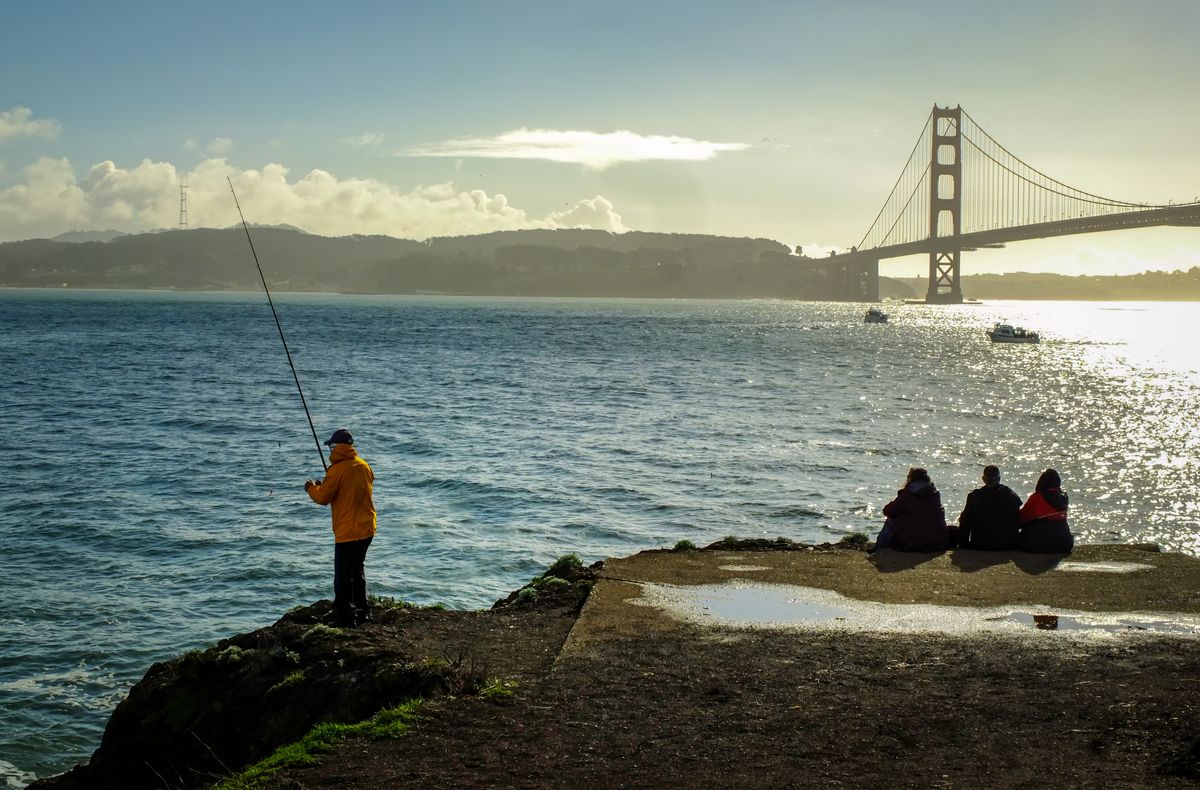

San Francisco Bay is one of the most productive urban fisheries in America, and one of the most underappreciated. While tourists crowd Fisherman's Wharf for clam chowder, locals are catching California halibut on the Berkeley Flats, battling striped bass under the Golden Gate Bridge, dragging sturgeon out of the deep channels in winter, and landing leopard sharks from public piers with no fishing license required. All of this within sight of the San Francisco skyline.
The Bay is a massive estuary, roughly 60 miles long from the Sacramento River Delta to the Pacific Ocean, fed by freshwater rivers from the Sierra Nevada and flushed by powerful Pacific tides. That mix of fresh and salt water creates a nutrient-rich ecosystem that supports an extraordinary variety of fish. The tides are the organizing principle here: when the water moves, the fish feed. When it's slack, they don't. Understanding the tide schedule is more important than any lure choice.
This guide covers the practical how-to for each major fishery. For the full destination overview, seasonal calendars, the charter fleet, and trip planning, read our complete San Francisco fishing guide.
California Halibut: The Bay's Premier Target
California halibut are the marquee species of San Francisco Bay. These flatfish, not to be confused with the massive Pacific halibut caught in Alaska, typically run 5 to 15 pounds in the Bay, with fish over 20 pounds possible. They're ambush predators that lie flat on sandy bottoms and explode upward to grab passing baitfish. The fight is surprisingly strong for a flat fish, they make short, powerful runs and use their broad body to resist being lifted.
Where Halibut Live
Berkeley Flats, the wide, sandy shallows between Berkeley and Angel Island, are the most famous halibut grounds in the Bay. The flat, sandy bottom is perfect halibut habitat, and the tidal currents sweep baitfish across the flats on every tide change.
Crissy Field, the beach inside the Golden Gate on the San Francisco side. Halibut move into the shallows here on incoming tides, making it one of the best shore fishing spots for halibut in the entire Bay.
Alameda Rock Wall, the riprap along Alameda's south shore creates structure where halibut stage to ambush bait swept along the wall by current.
South Bay near Oyster Point, shallower water with sandy flats that hold halibut from spring through fall.
How to Catch Halibut
From a boat (drift fishing): The most productive method. The captain positions the boat up-current and drifts across the flats while anglers fish live bait on the bottom. The rig is simple: a sliding sinker setup with a 1- to 3-ounce sinker (depending on current), 3-foot fluorocarbon leader, and a live anchovy, sardine, or shiner perch hooked through the nose or collar. Let the bait bounce along the bottom as the boat drifts. When a halibut grabs it, wait, they eat tail-first and need a second to turn the bait. Count to three, then set the hook.
San Francisco Bay Live Bait Drifting for Halibut and Striped BassFrom shore: Wade out at Crissy Field on an incoming tide and cast a 3- to 5-inch swimbait (white, silver, or smelt pattern) on a 1/2- to 1-ounce jighead along the sandy bottom. Retrieve slowly, halibut want a bait that's moving along the bottom, not swimming above them. Berkley Gulp Grub in white on a 1/2-ounce VMC jighead is the go-to artificial. Live bait (anchovies or shiners) on a Carolina rig also works from shore.
Gear
A 7-foot medium to medium-heavy spinning rod with a 4000-size reel spooled with 20-pound braid and a 15- to 20-pound fluorocarbon leader. The Penn Battle III 4000 combo handles everything in the Bay. For heavier current or deeper drifts, step up to a 30-pound braid mainline.
Season and Regulations
Halibut season peaks April through September but they're caught year-round. Legal minimum size: 22 inches total length. Daily limit: 3 fish. Measure carefully, undersized halibut are common and wardens are active.
Striped Bass: The Bay's Most Exciting Fight
Striped bass, "stripers", are the most popular game fish in San Francisco Bay. They're aggressive, they fight hard (5- to 20-pound fish are common, with occasional fish over 30), and they can be caught from boats, piers, and shore. Stripers were introduced to the Bay from the East Coast in the 1800s and thrived in the estuary environment.
Where to Find Stripers
Stripers follow the bait, and the bait follows the tide. Key areas:
Under the Golden Gate Bridge, the strongest tidal flows in the Bay funnel through here, creating rips and eddies that concentrate baitfish. Stripers stack up in the current breaks and ambush bait. This is premier charter territory.
The Delta, the Sacramento-San Joaquin Delta upstream is the primary striped bass spawning and nursery area. In fall and winter, stripers migrate into the Delta and provide excellent fishing.
Berkeley Flats and Central Bay, stripers cruise the flats alongside halibut, especially during bait migrations in spring and summer.
San Pablo Bay, the northern arm of the Bay holds good numbers of stripers, especially in fall.
Catch & Cook Striped Bass & Halibut, Shore Fishing San Francisco BayHow to Catch Stripers
From a boat: Trolling with large swimbaits, bucktail jigs, or live bait rigs through tidal rips. Casting topwater lures into surface blitzes when stripers are chasing bait, look for birds diving and bait spraying on the surface. A 1-ounce white bucktail jig bounced along the bottom in current is deadly.
From shore or pier: Cast Kastmaster spoons in 1- to 2-ounce chrome into moving current and retrieve at medium speed. Pencil poppers and walking baits on the surface during blitzes. Live bait, anchovies, shiners, or bullheads, on a fish-finder rig from piers.
Season: Stripers are caught year-round but peak in the Bay from April through November. The fall run (September through November) often produces the largest fish.
Leopard Sharks: The Pier Fishing Specialty
Leopard sharks are one of the most beginner-friendly species in the Bay, they're common, they fight well for their size (3 to 5 feet, up to 30+ pounds), they're beautiful (silver with dark leopard spots), and they're caught from piers with simple gear. And here's the best part: you don't need a fishing license to fish from a public pier in California.
Where to Find Them
Pacifica Pier, the most famous pier on the California coast. Extends into the Pacific just south of San Francisco. Produces leopard sharks, stripers, perch, and occasional halibut. Free access, free parking, no license needed.
Berkeley Pier, extends into the Bay with access to deeper water. Good for leopard sharks, bat rays, and perch.
Pier 7 (San Francisco Embarcadero), a popular municipal pier in the city. 35 feet of water, sharks, skates, flounder, and stripers.
Fort Mason Pier and Torpedo Wharf, near the Golden Gate Bridge, good for stripers and sharks on incoming tides.
How to Catch Leopard Sharks from a Pier
Rig: A simple sliding sinker rig, 2- to 4-ounce pyramid sinker on the mainline, barrel swivel, 2-foot leader of 30-pound fluorocarbon to a 4/0 to 6/0 circle hook. Bait with a chunk of squid, a strip of anchovy, or a piece of shrimp. Cast out, set the rod in a pier rail holder, and wait. Leopard sharks cruise the bottom searching for food, when one finds your bait, the rod tip will start to bounce. Let it load up fully before setting the hook.
Using The Currents To Catch Halibut & Striper From Shore, SF BayGear: A heavy spinning rod (7 to 8 feet, medium-heavy to heavy action) with a 5000 to 6000 reel spooled with 30-pound braid. You need the backbone to handle a 4-foot shark on a pier, they'll run along the pilings and try to wrap you.
Season and Regulations
Leopard sharks are caught year-round but concentrate in the warmer shallows from May through October. Minimum size: 36 inches. Daily limit: 3. Handle with wet hands and release quickly if undersized, these sharks are a vital part of the Bay ecosystem.
Sturgeon: Winter's Deep-Water Challenge
White sturgeon, prehistoric, bottom-feeding giants that can exceed 100 pounds, are the winter specialty of San Francisco Bay. Sturgeon season typically runs November through March (check current CDFW regulations, seasons change annually). These are deep-water fish caught on heavy tackle with patience and skill.
How Sturgeon Fishing Works
Sturgeon fishing is done from boats anchored in deep channels, the main shipping channel, Carquinez Strait, San Pablo Bay, and the Delta. The rig is heavy: 6- to 8-foot heavy-action rod, conventional reel with 80-pound braid, sliding sinker (8 to 16 ounces to hold bottom in the strong tidal current), and a large circle hook baited with grass shrimp, ghost shrimp, or eel.
You anchor, cast out, and wait. Sturgeon are slow, deliberate feeders, a bite starts as a series of gentle taps as the fish mouths the bait, then a slow, heavy pull as it moves off. Don't set the hook, the circle hook does the work. Just reel tight and hold on.
Charter cost: Sturgeon charters run $200 to $350 per person for a full day. The captain provides gear, bait, and knows the channels.
Regulations: Sturgeon seasons change annually. Slot limit typically 40 to 60 inches fork length. One fish per day. Barbless hooks required. Check CDFW regulations before booking.
Charter Fishing
San Francisco Bay has a large charter fleet operating from multiple marinas:
Berkeley Marina, the largest fleet. California Dawn Sportfishing, Pacific Pearl, and others run daily trips for halibut, stripers, rockfish, and salmon. Half-day trips start at $125 to $200 per person.
Emeryville, Fish Emeryville runs open-party boats for Bay and ocean trips.
San Francisco (Fisherman's Wharf), multiple operators run Bay and ocean trips. Convenient but more expensive ($200+ per person).
Private charters: $1,000 to $1,650 for a half to full day with up to 6 anglers. The captain focuses exclusively on your group.
Halibut & Striped Bass Fishing in San Francisco BayTides: The Single Most Important Variable
The tides control everything in San Francisco Bay. The Golden Gate funnels an enormous volume of water in and out of the Bay every 6 hours, creating powerful currents that move baitfish and activate predators. Understanding the tide is more important than any lure, bait, or technique.
General rule: Fish the moving water. The two hours before and after a tide change (both incoming and outgoing) are the most productive. Dead slack tide, the brief pause between tides, is usually the slowest.
Incoming tide: Brings clean ocean water and bait into the Bay. Best for halibut on the flats, stripers near the Golden Gate, and sharks in the shallows.
Outgoing tide: Pushes bait out of the marshes and creeks into the main Bay. Good for stripers in the channels and sturgeon in the deep water.
Check tide charts at tidesandcurrents.noaa.gov for San Francisco before every trip.
Practical Details
Fishing License: California requires a fishing license for anyone 16 and older. Non-resident 1-day: $17.02. Annual: $111.85. Exception: no license needed to fish from public piers. Buy online at wildlife.ca.gov or at tackle shops. Charter boats usually include or sell licenses.
Where to Buy Tackle and Bait: Berkeley Marina Bait Shop, live anchovies, shiners, and local expertise. Gus's Discount Tackle (south San Francisco), huge selection. Hi's Tackle Box (south San Francisco), a Bay Area institution. For live bait, call ahead, availability depends on what the bait boats catch that morning.
What to Wear: Layers, Bay mornings are foggy and cold (50s), even in July and August. Karl the Fog is real. Waterproof jacket, warm fleece, and a hat. Afternoons can warm up significantly once the fog burns off, so be ready to shed layers. Non-slip shoes for boats and piers.
Safety: The Bay has powerful tidal currents. If you're wading at Crissy Field or other shore spots, be aware of the tide, incoming water rises fast in flat areas. Never wade in the main channels. On boats, the wind can build quickly in the afternoon, dress warm.
Best Times: April through September for the widest variety, halibut, stripers, leopard sharks, and salmon are all in play. November through March for sturgeon. Year-round for pier fishing.