Fish
Fish Fire
Fire Hike
Hike Bird
Bird

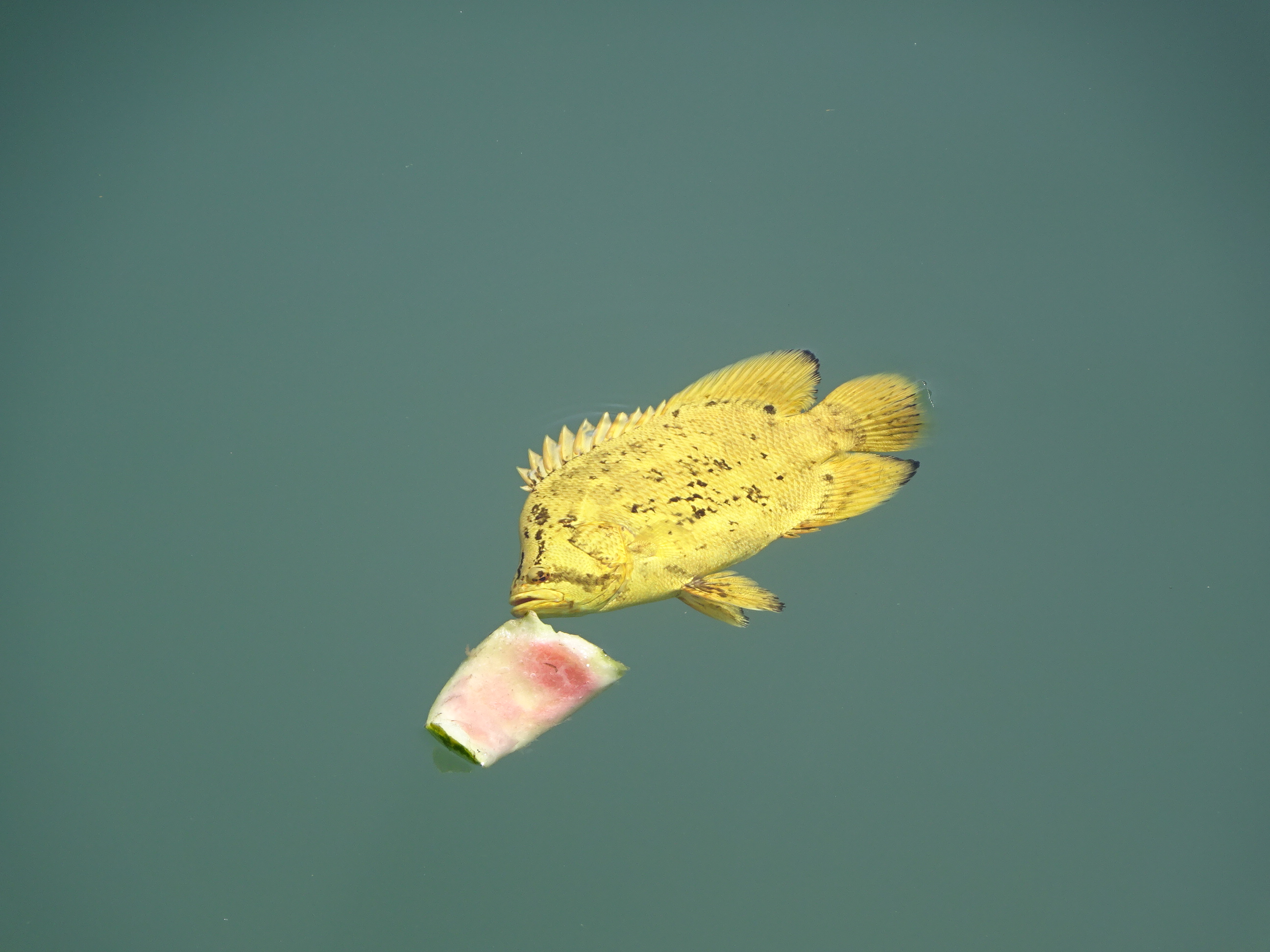

The tripletail is one of the ocean's great oddballs, a deep-bodied, camouflage-mottled fish that floats near the surface on its side, drifting like a dead leaf or a piece of debris, until an unsuspecting shrimp or baitfish wanders close enough to inhale. Named for the way its rounded dorsal and anal fins extend back toward the tail to give it a "three-tailed" look, the tripletail is a sight-fishing angler's delight: you cruise the nearshore looking for a fish floating beside a crab-trap buoy, a channel marker, or a weed line, then pitch a live shrimp or jig to it and watch it eat. They fight hard, grow to over 30 pounds, and are among the very best-eating fish in the sea. This guide covers the tripletail's strange habits and where to find them, and every core technique, with step-by-step instruction, to catch them.
Tripletail share the "float near structure" habit with another prized fish, see our guide on how to catch cobia.
The Floating Oddball
The tripletail (Lobotes surinamensis) is unmistakable once you know it: a deep, flattened, oval body with mottled camouflage coloring that ranges from yellowish to brown to nearly black, and its namesake feature, rounded dorsal and anal fins that extend far back toward the tail, giving the fish the appearance of having three tails. Its face is a bit bass-like, and it can rapidly change its coloring to blend with its surroundings. That camouflage, plus its habit of floating limply on its side, lets a tripletail masquerade convincingly as a floating leaf, a patch of debris, or a clump of weed.
Most tripletail run 2 to 15 pounds, a fish over 15 is a very good one, and the giants exceed 30 pounds (the world record is over 40). They're found along the Atlantic and Gulf coasts and in warm seas worldwide, nearshore and in the bays and sounds. Tripletail are prized as both a fun, challenging sight-fishing target and as outstanding table fare, their firm, white, sweet fillets are often compared to grouper or snapper and rank among the best-eating fish you can catch.
The Master of Camouflage
Everything about catching tripletail flows from their unique float-and-ambush lifestyle. Tripletail associate strongly with floating and near-surface structure, crab-trap buoys, channel markers, buoys, weed lines, floating debris, and any object drifting at or near the surface, where they hang motionless, often lying on their side, camouflaged to look like debris. From this hidden position they ambush shrimp, crabs, and small baitfish that drift by. This makes tripletail a classic sight-fishing fish: you hunt by cruising from one piece of floating structure to the next, looking for a tripletail floating beside it.
Two practical takeaways. First, check every floating object, each crab-trap float, marker, and piece of debris is a potential tripletail spot, and the fish can be hard to see (that's the point of the camouflage), so look closely for a flat, mottled, leaf-like shape. Second, approach carefully and pitch accurately, tripletail can be skittish, so ease up to the fish and place your bait close without spooking it. Find the floating structure, spot the camouflaged fish, and make a good pitch. It's a fundamentally different game from most saltwater fishing, less about covering water blindly and more about slow, patient hunting and precise, opportunistic casting to fish you can actually see.
Where and When to Find Tripletail
Tripletail relate entirely to floating and near-surface structure. Target:
- Crab-trap floats and buoy lines, the classic tripletail spot; run the lines of crab-trap buoys and check each one.
- Channel markers, buoys, and pilings, near-surface structure that holds fish.
- Weed lines and floating debris, drifting grass, boards, and flotsam offshore and nearshore.
- Anchor lines, range markers, and any floating object, tripletail will hang on almost anything at the surface.
- Bays, sounds, and nearshore, wherever this floating structure occurs in warm water.
Timing follows warm water: tripletail are most abundant and active from late spring through fall (year-round in the far south), when they move into the bays and nearshore and hang on the structure. Calm, sunny days make the floating fish far easier to spot. Run the crab-trap lines and the markers on a calm, warm, sunny day, and you'll find tripletail.
The Techniques That Catch Tripletail
Tripletail are caught by sight-fishing bait and lures to floating fish. Here are the core methods, how to fish each, and when to use it.
Sight-Casting to Floating Fish, the hunt
Sight-casting, spotting a floating tripletail and pitching to it, is the essence of the fishery and a thrilling, visual hunt.
How to fish it: Idle along crab-trap lines, markers, and weed lines, scanning the surface beside each piece of structure for the flat, mottled, leaf-like shape of a floating tripletail. When you spot one, ease within casting range without spooking it, and pitch a live shrimp, a jig, or a fly a foot or two beyond and past the fish, then bring it slowly into the tripletail's view. A tripletail will usually turn, track, and inhale a well-placed offering. Accuracy and a quiet approach are everything, a bad cast or a spooked fish and it's gone. Watching a camouflaged tripletail materialize and eat is a unique fishing thrill.
How to Rig and Sight-Fish for TripletailLive Shrimp, the top bait
A live shrimp is the number-one tripletail bait, it's their natural food, and a lively shrimp pitched to a floating fish is rarely refused.
How to fish it: Pitch a live shrimp (free-lined, or under a small float/popping cork to keep it near the surface) to a spotted tripletail, placing it close and letting it drift naturally to the fish. Because tripletail hang near the surface, keeping the shrimp up in the water column (a cork helps) puts it right in the strike zone. When the tripletail eats, give it a moment and set. Live shrimp is the surest way to get a floating tripletail to commit, and the classic bait for this fishery. Fresh dead shrimp works too when live isn't available.
Tossing Live Shrimp for TripletailJigs and Soft Plastics, the artificial approach
Jigs and soft plastics let you sight-cast to tripletail without bait, and are a fun, effective, and mobile way to fish.
How to fish it: Pitch a jighead with a soft-plastic shrimp or paddle-tail, or a small bucktail jig, to a floating tripletail, letting it sink slightly and working it slowly across the fish's face, tripletail will track and eat a well-presented jig just like a bait. Keep the presentation near the surface where the fish is, and give it a natural, tempting action. Jigs let you stay mobile and hit lots of floating structure quickly without managing live bait, and a soft-plastic shrimp closely imitates the tripletail's favorite meal. It's a productive, engaging way to fish for them.
Tripletail Secrets: How to Catch MoreFishing Crab Traps and Buoys, run the structure
Because tripletail hang on floating structure, systematically fishing crab-trap floats, buoys, and markers is how you find and catch them.
How to fish it: Run the lines of crab-trap buoys and the channel markers, slowing to check each one for a floating tripletail. Approach up-current or up-wind so you can drift a bait naturally to the fish, and pitch a shrimp or jig to any tripletail you spot beside the structure. If you don't see a fish but the spot looks good, a bait drifted alongside can draw one out. Working a long line of crab-trap floats, checking each for a camouflaged floater, is the bread-and-butter of tripletail fishing, cover the structure, and you'll find the fish.
Sight-Casting Tripletail on Crab TrapsFly Fishing, the ultimate sight-fishing challenge
Tripletail are a rewarding fly-rod target, sight-casting a fly to a floating fish is technical, visual, and immensely satisfying.
How to fish it: With an 8- or 9-weight fly rod, ease up to a spotted tripletail and present a shrimp or baitfish fly (a shrimp pattern or a small Clouser) close to and past the fish, then strip it slowly into its view. Accuracy and a delicate, non-spooking presentation are critical, tripletail can be wary, and you often get one good shot. When the fish tracks and eats, strip-set. Fooling a camouflaged tripletail floating by a crab-trap buoy on the fly is a coveted light-tackle achievement and a favorite of saltwater fly anglers looking for a unique, challenging target.
Fly Fishing for TripletailLearning to See Them
The single biggest skill in tripletail fishing is simply learning to see the fish, their camouflage and habit of floating like debris make them genuinely hard to spot, and anglers who train their eyes catch far more. A tripletail beside a crab-trap float might look like a dark, flat, leaf-shaped patch, a clump of weed, or a shadow just under or at the surface, often lying on its side. It won't look like an obvious "fish."
So slow down and study each piece of floating structure. Wear good polarized glasses and, when possible, keep the sun at your back and approach from an angle that lets you see into the water beside the float. Look for anything that seems slightly off, a shape with a hint of a fin, a patch that's a bit too solid or symmetrical to be trash, a subtle color that doesn't match the surrounding debris. On calm, sunny days the fish are easiest to pick out. As you gain experience, you'll start "seeing" tripletail that you'd have cruised right past before, and your catch rate will climb dramatically. In this fishery, the hunt, and the trained eye, is more than half the game.
Fighting a Tripletail
Don't let the tripletail's lazy, floating demeanor fool you, once hooked, it fights with surprising strength, and landing one takes some care. A tripletail uses its deep, flat body the way a permit or a jack does, turning sideways and pulling hard, and it will immediately try to dive back into the structure, the crab-trap line, the buoy, the piling, it was floating on, where it can wrap and cut you off.
So the moment you hook a tripletail, apply firm pressure to pull it away from the structure and into open water before it can wrap the line, using enough tackle to turn the fish. Once it's clear of the structure, ease off and let it fight, staying tight through its strong, boring runs and head-shakes. Have a net ready, because a tripletail's deep body and sharp gill covers and fin spines make it awkward (and a little hazardous) to hand-land. Turn it away from the structure early, play it out in open water, and net it cleanly, and you'll convert those hard-won sight-fishing shots into fish in the box, and one of the best meals in the sea.
Gear for Tripletail
Tripletail gear is accurate, medium sight-fishing tackle:
- Spinning combo: A 7-foot medium or medium-heavy inshore rod with a 3000–4000-size reel, you need to pitch accurately and have enough backbone to pull a strong fish away from the structure it's floating on.
- Fly setup: An 8- or 9-weight fly rod with a floating line.
- Line and leader: 15- to 30-lb braid with a 20- to 40-lb fluorocarbon leader (tripletail have raspy mouths and hang on line-fraying structure, so a stout leader helps).
- Terminal tackle and lures: Circle or J hooks and popping corks/floats for live shrimp, and jigheads with soft-plastic shrimp/paddle-tails and small bucktail jigs. Plus shrimp and baitfish flies.
- Bait: Live shrimp (the top choice).
- Essentials: Polarized glasses to spot the camouflaged floating fish.
One of the Best Fish on the Table
A major reason anglers seek out tripletail is the eating: their firm, white, sweet fillets are outstanding, frequently compared to grouper or snapper and considered among the best-eating fish in the sea. Combined with the fun of the sight-fishing hunt, that makes a tripletail a doubly rewarding catch. They're managed with size and bag limits that vary by state (often a solid minimum size and a modest bag), so know and follow the current rules, keep a legal fish or two for a superb meal, and release the rest carefully. Few fisheries pair such a unique, visual challenge with such a delicious reward.
Finding the Floaters
Tripletail sight-fishing rewards knowing where the productive crab-trap lines, markers, and structure are, and having the sharp eyes to spot a camouflaged floating fish. It's a fun, visual, and productive style of fishing with a fantastic meal at the end, and a great way to learn to read floating structure and pick out these masters of camouflage. Scout the calm, sunny days, run the buoy lines patiently, and put in the time to train your eye, the more floating structure you cover and the sharper your eyes get, the more of these oddballs you'll turn into fish in the box.