Fish
Fish Fire
Fire Hike
Hike Bird
Bird

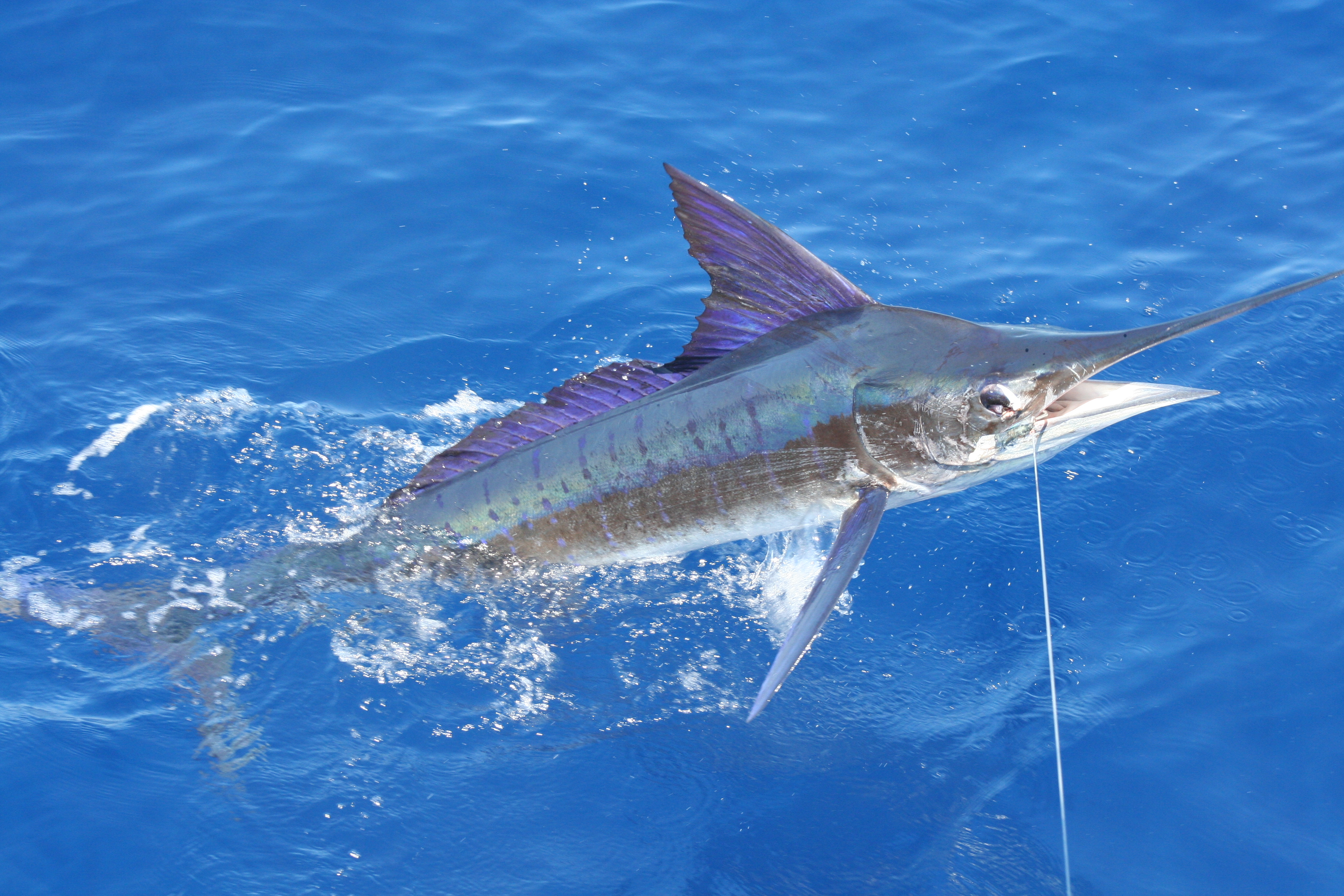

The striped marlin is the most sight-fishable billfish in the ocean and, for many, the most fun. Where other marlins are hunted blind across empty water, the striped marlin can often be spotted first, tailing down-sea in the swells, "sleeping" on the surface, or lit up and slashing through a bait ball, and then cast to with live bait or a fly. Add in the fact that striped marlin travel in numbers on famous grounds like Baja and Cabo, that they light up in electric neon blues and stripes, and that they are the most acrobatic of the marlins, and you have one of the most exciting and accessible billfish targets in the world. This guide covers what striped marlin are, where and when to find them, and every core technique, with step-by-step instruction, to spot, hook, and release these spectacular Pacific gamefish.
Striped marlin share the blue water with their larger cousin, see our guide on how to catch blue marlin.
Meet the Striped Marlin
The striped marlin (Kajikia audax) is a slender, athletic billfish named for the prominent blue vertical stripes and bars that run down its sides and light up brilliantly when the fish is feeding or excited. It has a long, streamlined body, a spear-like bill, and a tall, pointed dorsal fin the fish often raises like a sail when tailing or slashing at bait. Its coloring shifts from a dark blue back to silvery-white sides, with those neon stripes flashing on and off with the fish's mood.
Striped marlin are a mid-sized billfish, most run 90 to 200 pounds, larger than sailfish or white marlin but smaller than a big blue, which makes them an ideal light-to-medium-tackle and fly target. They roam the Pacific and Indian Oceans, with world-famous fisheries in the eastern Pacific off Baja California, Cabo San Lucas, and Magdalena Bay, as well as New Zealand, Australia, and beyond. They are prized as a catch-and-release sport fish for their acrobatics and sight-fishing appeal; the standard is to hook them cleanly on circle hooks and release them healthy, which is how this guide is written. Their manageable size, their willingness to eat a pitched bait or a fly, and their habit of showing themselves on the surface combine to make striped marlin the billfish most anglers dream of catching first, a fish you can hunt with your eyes and land on tackle light enough to feel every jump.
Where and When: Sight-Fishing the Pacific
What makes striped marlin special is that you often hunt them by sight. Look for:
- Tailing fish, striped marlin "tail" down-sea in the swells, their dorsal and tail fins showing above the surface as they cruise; spotting tailers and easing up to cast is classic striped marlin fishing.
- Sleepers and finners, fish lying on or just under the surface, sometimes sunning, that can be approached and cast to.
- Bait balls, striped marlin famously herd sardines and other bait into tight, churning balls, then slash through them with their bills; a working bait ball with marlin lit up around it is the ultimate sight-fishing scene.
- Birds, bait, and temperature breaks, working birds and concentrated bait on the right water mark feeding fish.
The fishery is seasonal and location-driven, the Baja and Cabo grounds, for example, have famous fall and winter concentrations, and Magdalena Bay's autumn bait-ball "run" draws anglers from around the world. Local knowledge of the season, the water, and where the bait and fish concentrate is everything. When conditions are right, striped marlin can be present in remarkable numbers, offering shot after shot.
Spotting and Casting to Tailers
The signature striped marlin technique is to spot a fish and cast to it. Crews run the swells watching for a tail and dorsal showing as a fish cruises down-sea, or for finners lying on the surface. When you spot one, the captain eases the boat into position ahead of or alongside the fish without spooking it, and an angler makes an accurate cast, usually a live bait, sometimes a lure or fly, right in front of the fish.
The keys are a good spotter, a careful approach, and an accurate cast. Place the bait where the fish will see it and track it, not on top of the fish, and be ready for a dramatic, visual eat. This is hunting as much as fishing, cruising, glassing the water, and making the most of each shot at a fish you can actually see. Few things in fishing are as thrilling as watching a striped marlin light up and charge a bait you have just cast to it.
How to Rig Marlin Casting and Trolling RodsPitching Live Bait
Live bait is the deadliest offering for a sighted or teased striped marlin. Frisky live sardines, mackerel, or caballito, bridled to a circle hook, are pitched to a tailing or lit-up fish and are almost irresistible. The approach is to have a pitch bait rigged and ready, a lively bait on a circle hook, so that the instant a fish shows or comes into the spread, you can present it. Feed the fish, let it eat and turn, and come tight steadily to set the circle hook in the jaw.
Keeping a livewell of frisky bait is central to this fishery: a lively, well-bridled sardine drifting in front of a striped marlin draws far more eats than a sluggish one, and the bait's nervous behavior often tips you off that a marlin is near. Learn to rig and pitch live baits smoothly, and you will convert far more of your sightings into hookups.
Rigging and Pitching Live Baits for MarlinTrolling to Find Fish
When fish aren't showing on the surface, trolling covers water to find them and to raise fish into casting range. A spread of skirted lures and rigged ballyhoo pulled across the grounds locates fish, draws strikes, and, crucially, often raises a striped marlin up behind the boat where the crew can then pitch a bait to it. Troll the temperature breaks, bait, and productive water, watching the spread constantly.
Trolling and sight-fishing work hand in hand: the spread finds and raises fish, and the pitch-bait and casting game converts them. Many striped marlin days are a blend, troll to locate and raise fish, then switch to live bait or casting when fish show. A well-run trolling spread is the search engine that puts you on fish to sight-cast.
Marlin Trolling Lure Spread SetupTeasers and Bait-and-Switch
As with all billfish, teasers raise and excite striped marlin. Hookless teasers and dredges pulled in the spread pull curious fish up to the boat, where the crew executes a bait-and-switch: pull the teaser away from the fired-up fish and present a hook bait or fly in its place. This is the deadliest way to get a fish lit up and committed, and it is the foundation of fly fishing for striped marlin (below).
Watching a striped marlin materialize behind a teaser, stripes blazing and dorsal up, and then crash the switched bait is the heart-pounding payoff. The technique demands teamwork and timing, someone works the teaser, someone delivers the bait, and it turns curious lookers into hooked fish. A good teasing and switching game dramatically raises your odds on any striped marlin trip.
Bait-and-Switch Teaser TacticsFly Fishing for Striped Marlin
Striped marlin are the premier fly-rod billfish, and the tease-and-switch makes it possible. The technique: raise and excite a fish on a hookless teaser, pull the teaser away as the fish charges, and present a big fly to the lit-up marlin right at the boat. A 12- to 14-weight fly rod with a big saltwater reel and plenty of backing handles the fish's blistering runs and jumps, and large, flashy billfish flies (often with poppers) draw explosive eats.
Fly fishing for striped marlin is one of the ultimate achievements in the sport, a lit-up billfish eating a fly a rod's length from the boat, then greyhounding across the horizon. It is a team effort (teaser, feeder, and angler working together) and a spectacular, visual way to catch these fish. The Baja and Pacific grounds, with their willing, visible, teasable fish, are the world's great striped marlin fly-fishing destinations.
Fly Fishing for Striped MarlinFighting and Releasing
Striped marlin are among the most acrobatic of all billfish, expect spectacular greyhounding jumps and long runs on the hookup. Fight the fish efficiently with steady rod pressure and sound technique, using the boat to help chase and position on the fish, and don't overplay it to exhaustion. Their mid-size and willingness make them ideal for light and fly tackle, but that also means fighting them cleanly and quickly for a healthy release.
To release: keep the fish in the water, remove the hook or cut the leader close, and revive the marlin by easing the boat forward so water flows over its gills until it kicks off strong and swims down. Circle hooks, short fights, and gentle in-water handling maximize survival. A properly revived, released striped marlin swims back into the blue to jump another day, the goal of this conservation-minded, sight-fishing fishery. Take a quick photo with the fish in or beside the water if you want a memento, but keep handling to a minimum and get the fish swimming as fast as you can.
Reviving and Releasing a Striped MarlinFishing the Bait Balls
The most spectacular striped marlin fishing on earth happens around bait balls, the famous autumn phenomenon off Magdalena Bay and elsewhere, where marlin (often alongside sea lions, dolphins, and birds) herd sardines into tight, churning spheres and take turns slashing through them. Finding a working bait ball with marlin lit up around it is the ultimate scene, and it offers shot after shot at fired-up, feeding fish.
Fishing a bait ball takes finesse and etiquette: approach carefully so you don't scatter the bait or the fish, and present a live bait or fly to a marlin on the edge of the ball rather than plowing into the middle. The fish are competitive and aggressive here, so a well-placed bait to a lit-up fish gets crushed. Because bait balls draw crowds of boats on the famous grounds, courteous, patient approaches keep the fish balled up and the fishing good for everyone. A day on the bait balls, sight-casting to marlin slashing through sardines, is a bucket-list experience.
Tackle and Teamwork
Striped marlin fishing is a coordinated, light-tackle team sport. The standard is 20- to 30-pound live-bait and casting outfits, light enough to make the fight and the sight-casting fun, with enough backbone and drag for a strong, jumping fish, rigged with fluorocarbon leaders and circle hooks. Keep several pitch rods ready with lively bridled baits, plus teaser and fly gear if you're playing that game. Everything must be staged so you can react the instant a fish shows.
The crew makes it work: a spotter watches for tailers, finners, and bait balls, the captain positions the boat, and the angler makes the cast and feeds the fish. On the tease-and-switch and fly game, the teamwork is even more critical, teaser-hand, feeder, and angler moving as one. Striped marlin are visible, willing, and often present in numbers, so the crews that stay sharp, communicate, and keep baits ready convert the most shots. That blend of hunting, teamwork, and light-tackle drama is what makes striped marlin so beloved.
Common Mistakes to Avoid
Striped marlin reward good technique and punish sloppiness. Spooking tailing fish with a fast, loud approach or a cast right on top of them blows shots; ease in and place the bait ahead of the fish. Setting too soon on a circle-hook bait pulls it away; feed the fish and come tight steadily. Sluggish or poorly bridled baits draw refusals; keep bait lively and well-rigged. Not being ready, no pitch bait rigged when a fish shows, wastes fleeting opportunities. And overplaying or roughly handling a fish hurts the release. Sharpen these and you will convert far more of your sightings into hooked and released fish.
Put It All Together
Striped marlin fishing is billfishing you can see: run the swells and glass for tailers and bait balls, ease into position, and pitch a lively bait or a fly to a fish lit up in neon stripes, or troll and tease to raise fish into range, then switch. It rewards good eyes, a careful approach, and quick, accurate presentations, and it delivers the most acrobatic, visual billfishing on earth. Learn the seasons and the Pacific grounds, keep your baits lively and your pitch rods ready, and you will be sight-casting one of the ocean's great gamefish. And for the giant blue-water cousin, read our guide on how to catch blue marlin next.