Fish
Fish Fire
Fire Hike
Hike Bird
Bird

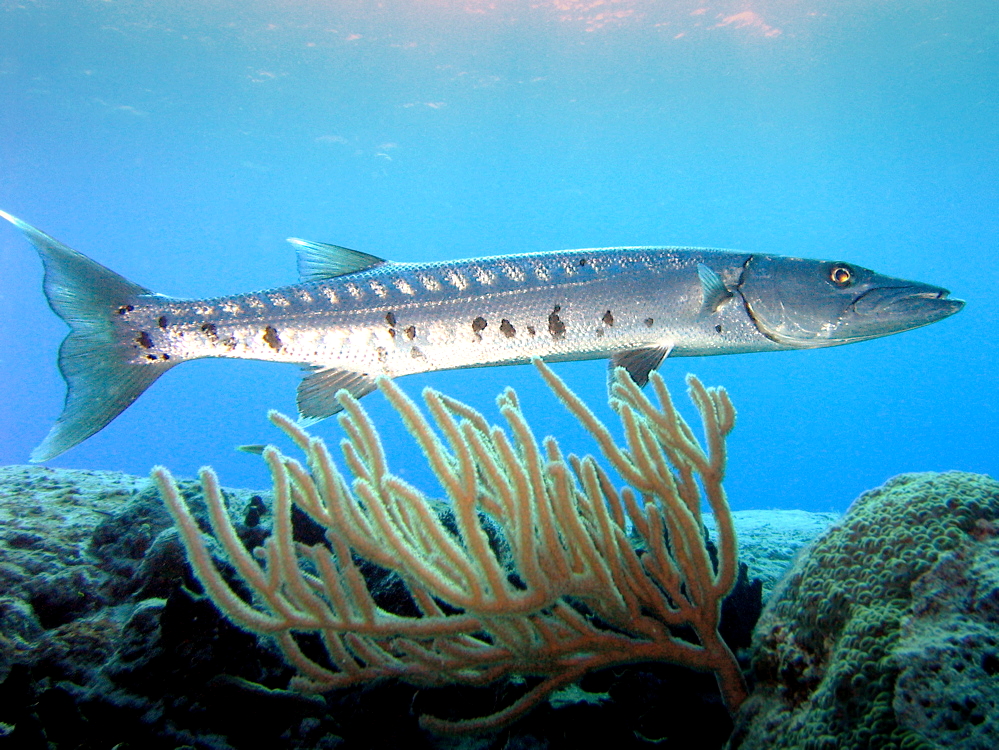

The great barracuda is a fanged missile, a long, silver, torpedo-shaped ambush predator with a mouth full of dagger-like teeth and the acceleration of a sports car. Barracuda are everywhere in warm water, from the flats to the reefs to the wrecks, and they attack a lure with a slashing, blistering speed that makes them one of the most explosive and accessible gamefish there is. They crush tube lures and topwaters, tail-walk and greyhound when hooked, and can be sight-fished in inches of water on the flats, yet they're so common that many anglers overlook them. Do that at your peril: a big 'cuda on light tackle is a genuine thrill, and hooking one is often as easy as a fast retrieve past its nose. This guide covers what great barracuda are, where and when to find them, and every core technique, with step-by-step instruction, to catch these toothy speedsters.
Ready for a slashing strike? Barracuda are one of the most action-packed, underrated gamefish in warm water, and they haunt the same flats and reefs you already fish, often within an easy cast of a bridge, dock, or skiff. Barracuda share the toothy-speedster club with another favorite, see our guide on how to catch king mackerel.
Meet the Great Barracuda
The great barracuda (Sphyraena barracuda) is unmistakable: a long, slender, torpedo-shaped body, silvery with scattered dark blotches on the lower rear sides, a pointed head, an underslung jaw, and a mouthful of long, razor-sharp, dagger-like teeth. Built for explosive acceleration, a barracuda hangs nearly motionless and then rockets forward to slash prey in half. Its speed, teeth, and fearless demeanor make it one of the ocean's most efficient ambush predators and a striking, sometimes intimidating, fish.
Great barracuda are a good-sized, fast, hard-fighting fish: most run 2 to 15 pounds, solid fish push into the twenties and thirties, and big ones exceed 40 to 50 pounds (the record is over 100). They're found in warm tropical and subtropical waters worldwide, abundant in South Florida and the Keys, the Bahamas, the Caribbean, and beyond, relating to flats, reefs, wrecks, channels, and structure, where they ambush prey. A note on eating them: while smaller barracuda are eaten in some areas, large barracuda can carry ciguatera toxin, so most anglers release the big ones and it's wise to be cautious about eating any of size. Barracuda are prized mainly as an exciting, accessible, hard-fighting sport fish rather than table fare. That accessibility is a big part of their charm: unlike many trophy species that demand long offshore runs or specialized gear, a barracuda can be caught by almost anyone, from a flats skiff, a reef boat, a bridge, or a dock, often on tackle you already own, and a big one will still give you a fight and a strike you won't forget.
Where and When to Find Barracuda
Barracuda are warm-water ambush predators found in a range of habitats:
- Flats and shallows, barracuda cruise and lie in wait on the flats, especially in winter in places like the Keys, where they can be sight-fished in skinny water.
- Reefs, wrecks, and structure, 'cudas hang around reefs, wrecks, channel edges, and any structure that holds bait.
- Channels, bridges, and inlets, moving water and structure concentrate fish.
- Around bait and other activity, barracuda follow bait and will even shadow hooked fish and divers.
A special note on the winter flats fishery: in South Florida and the Keys, cooler months push big barracuda onto the shallow flats, where they lie still and can be spotted and cast to like bonefish or permit, a fun, visual, light-tackle game. The rest of the year, barracuda are around reefs, wrecks, and structure and are usually more than willing. Because they're ambush predators that relate to structure and bait, and because they're so common, finding barracuda is rarely the hard part, the fun is in getting them to eat and then hanging on.
How to Catch Barracuda: Where, Lure, and GearTube Lures: The Classic 'Cuda Bait
The single most iconic barracuda lure is the tube lure, a length of brightly colored surgical tubing rigged with hooks and wire, designed to be retrieved as fast as you can crank it. Barracuda are triggered by speed, and a tube lure ripped across the surface or just under it, wobbling and darting, is irresistible, a 'cuda will chase it down and crush it in a spectacular slashing strike. The tube lure is the classic flats and reef barracuda lure for exactly this reason.
The technique is simple and a blast: cast past the fish or the structure and retrieve the tube lure as fast as you possibly can, keeping it moving so the barracuda can't get a good look. The faster the better, barracuda love to chase, and a slow retrieve gets refused while a screaming-fast one gets annihilated. When a big 'cuda materializes behind the tube and inhales it in a blur, then greyhounds across the surface, you'll understand why the tube lure is a barracuda staple.
Light-Tackle Barracuda FishingSight-Fishing the Flats
One of the most exciting ways to catch barracuda is sight-fishing on the flats, especially in the winter Keys fishery. Barracuda lie nearly motionless in shallow water, and you can pole or ease along, spot a fish, and cast to it, a technical, visual game much like flats fishing for bonefish or permit. The take, when a lurking 'cuda suddenly rockets forward to crush your lure in inches of water, is heart-stopping.
The approach is to spot the fish, cast a tube lure or plug past it, and retrieve fast across its field of view to trigger the chase. Barracuda on the flats can be wary and sometimes follow without committing, so a fast, erratic retrieve that fires up their chase instinct is key. Sight-casting to a big flats 'cuda, watching it track and then explode on your lure, is a genuinely thrilling, underrated flats-fishing experience, and a great option on days when other flats species are tough.
Sight-Fishing Barracuda on the Flats in WinterTopwater Plugs
Barracuda crush topwater plugs with abandon, and few strikes in fishing are as violent and visual as a big 'cuda annihilating a surface lure. A fast-moving topwater, a plug, a stickbait, or a similar lure worked quickly across the surface over reefs, wrecks, or structure, draws blistering surface blowups as barracuda race up to slash it. The speed and surface commotion trigger their predatory instinct.
The approach is to cast over structure or to fish you spot and work the topwater fast across the surface, keeping it moving to fire up the chase. Because barracuda have those dagger teeth, you'll want wire ahead of the lure (below), and be ready for a savage strike and often a spectacular jumping fight. Topwater 'cuda fishing is fast, visual, and explosive, one of the most fun ways to catch them, and a great way to draw a reaction strike from a fish that loves to chase down fast-moving prey.
Barracuda Crushing Topwater BaitsWire Leaders: Dealing With the Teeth
You cannot talk about catching barracuda without talking about their teeth. A barracuda's long, razor-sharp teeth will slice through monofilament and fluorocarbon leader instantly, so a wire leader (or a heavy, wire-reinforced rig) is essential for anything but the most fleeting encounter. Most barracuda anglers run a section of single-strand or cable wire between the lure or bait and the mainline leader to prevent bite-offs, without it, you'll lose lures and fish all day.
The trade-off is that wire is more visible and can reduce strikes from wary fish, so anglers balance stealth and security, but when barracuda are the target, wire is almost always worth it. Rig a clean wire leader ahead of your tube lure, plug, or bait, keep it as short and unobtrusive as you can while still beating the teeth, and you'll land the fish you hook. Learning to rig wire well, and always using it for 'cudas, is a fundamental part of barracuda fishing.
How to Rig a Wire Leader for BarracudaLive Bait
While lures are the most fun way to catch barracuda, live bait is deadly, especially for big fish or when 'cudas are being finicky. A live baitfish, a pilchard, ballyhoo, mullet, or similar, free-lined or fished under a float near reefs, wrecks, channels, or the flats gets crushed by a hungry barracuda. Live bait is a great option when you want to target a specific big fish you've spotted, or when the reaction-strike lure bite is off.
The approach is to present a lively bait on a wire leader (the teeth demand it) near structure or to a spotted fish, and be ready for a fast, hard take. Live-baiting is especially effective for the biggest barracuda, which sometimes prefer an easy natural meal to chasing a lure. Keep the bait lively, rig it on wire, and present it naturally, and you'll tempt even wary or well-fed 'cudas. Combining live bait with the reaction-strike lure game gives you an answer for any barracuda situation.
How to Catch a Barracuda on BaitHandling, Safety, and the Fight
Barracuda fight hard and fast, expect blistering runs, greyhounding jumps, and a spirited battle on light tackle, which is a big part of their appeal. But their teeth make handling a real safety consideration: a green barracuda thrashing boatside with a mouth full of blades is genuinely dangerous, so control the fish carefully, use a long-handled dehooker or pliers, keep your hands well clear of the mouth, and never lip a barracuda. Many anglers release them without ever bringing them fully into the boat.
Because large barracuda can carry ciguatera toxin, most are released, so handle them for a healthy release: control the fish, remove the hook safely with a dehooker, and revive and release it. Use appropriate tackle so you can land and release the fish without exhausting it. Respect the teeth, handle with care, and release big 'cudas, and you'll enjoy one of the most explosive, accessible, and underrated gamefish in warm water, safely.
Why Speed Is Everything
If there's one thing to understand about catching barracuda on lures, it's that speed triggers the strike. Barracuda are visual, reaction-strike predators built to chase down fleeing prey, and their whole hunting strategy is the explosive sprint. A lure that darts and races across their field of view fires that instinct, while a slow-moving lure gives them time to inspect it and refuse. This is why the tube lure is retrieved as fast as you can crank, and why fast topwaters and stickbaits work so well.
The practical takeaway: when a barracuda is following your lure without committing (which happens often, especially with wary flats fish), speed up rather than slow down, the opposite of the instinct with many fish. Rip the lure faster, add erratic twitches, and make it look like escaping prey, and a hesitant 'cuda will frequently convert into a slashing strike. Reading a fish's interest and cranking faster to seal the deal is one of the key skills in barracuda fishing, and it's a big part of what makes the reaction-strike game so exciting.
Common Mistakes to Avoid
Barracuda are easy to hook but expose a few errors. No wire leader tops the list, fish mono or fluoro and a 'cuda will cut you off instantly; always run wire. Retrieving too slowly gets your lure inspected and refused; go fast, and faster when a fish follows. Careless handling of a toothy fish leads to injuries, use a dehooker and keep hands clear of the mouth. Keeping and eating big barracuda risks ciguatera; release the big ones. And undergunning or overgunning, too heavy a rod kills the light-tackle fun, while too light a rod on a big 'cuda near structure loses fish, so match your tackle to the fish and the fun. Rig wire, retrieve fast, handle carefully, release the big ones, and match your gear, and you'll get the most out of barracuda fishing.
Put It All Together
Barracuda fishing is fast, visual, explosive fun: find them on the flats, reefs, wrecks, and structure; rip a tube lure or topwater across their field of view as fast as you can crank; sight-cast to lurking flats fish; or present a live bait to a big one, always on a wire leader to beat those teeth, and then hang on for a slashing strike and a spirited, jumping fight. Handle them carefully, release the big ones, and you'll have a blast with one of the most accessible and thrilling gamefish in the sea. When you're ready to chase 'cudas, scout the flats, reefs, wrecks, and channels near you, check the local conditions, and go, they're rarely far from anywhere warm water meets structure and bait. And for another toothy speedster that shares the warm water, read our guide on how to catch king mackerel next.