Duluth Fishing: The Fish Come to You, Steelhead, Salmon, and the Big Lake
← All field notes

Duluth · Minnesota

Duluth Fishing: The Fish Come to You, Steelhead, Salmon, and the Big Lake

Duluth sits where Lake Superior's North Shore tributaries pour into the largest freshwater lake on Earth. Twice a year, the fish run upstream, and the fishing is unlike anything else in the Midwest.

Colin Van Dyke

Colin Van Dyke

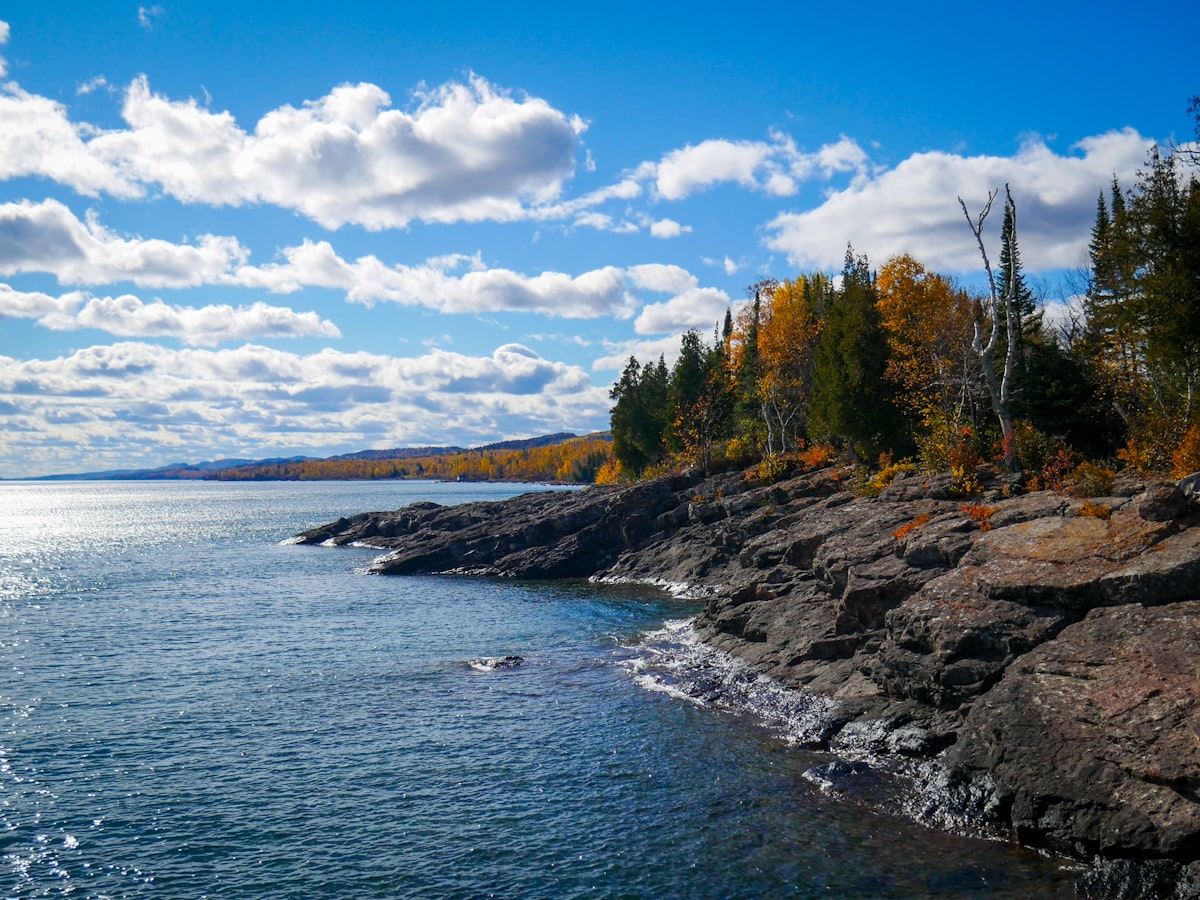
Duluth is built on the steep hillside where Minnesota meets Lake Superior, the largest freshwater lake on Earth by surface area. The city sits at the western tip of the lake, where the St. Louis River empties through a broad estuary and dozens of smaller tributaries cascade down the North Shore into the big water.

The fishing here revolves around movement. Lake Superior's cold, deep water pushes migratory fish, steelhead, salmon, and lake trout, into the rivers and streams that drain into it. Twice a year, in spring and fall, these runs transform small urban creeks into world-class fisheries for a few intense weeks.

The Spring Steelhead Run

The spring steelhead run is the event that puts Duluth on the fishing map. Beginning in mid-April, as water temperatures climb and snowmelt swells the North Shore tributaries, Lake Superior steelhead push upstream to spawn. The run builds through late April and peaks in early to mid-May.

The Knife River is the most famous and productive steelhead stream on the North Shore, and the only tributary with a fully naturalized wild steelhead population. The DNR has improved habitat and access along the Knife, and the river produces fish in the 4- to 10-pound range, with occasional steelhead over 12 pounds. The river is small enough to wade but big enough to hold serious fish.

The Lester River flows right through the city of Duluth, running through forested ravines and over exposed bedrock before entering the lake at the Lester River trailhead. It holds resident rainbow and brown trout year-round, and the spring steelhead run stacks fish in the pools and behind the ledges. You can fish world-class steelhead water 10 minutes from downtown.

The French River, Sucker River, and dozens of smaller creeks all receive spring runs. Each stream has its own character, some are tight and brushy, others open with long pools, and the fish distribute differently depending on water levels and temperature. A good day during the peak involves hitting two or three streams as conditions change.

Steelhead fishing on these rivers is a wading game. You're reading the current, casting spawn bags, beads, or small nymphs into the heads of pools, and swinging flies through the tailouts. The takes are subtle, a hesitation in the drift, and then the fish is running downstream and you're chasing it over slippery rocks. It's physical, technical fishing in beautiful settings.

The Fall Salmon and Steelhead Run

Fall brings a second wave. Chinook salmon begin entering the tributaries in September, followed by coho salmon and fall-run steelhead through October and November. In odd-numbered years, pink salmon add to the mix, they run in enormous numbers and provide fast, accessible fishing.

The fall run is different from spring, the fish are bigger, the water is typically lower, and the crowds are smaller. Chinook salmon in the 15- to 25-pound range pull into pools that seem too small to hold them. Coho are acrobatic fighters that jump repeatedly. Fall steelhead are chrome-bright and aggressive.

Mid-October is usually the sweet spot, salmon and steelhead overlap in the rivers, and a single session can produce both. The fishing lasts through early November before winter shuts down the smaller streams.

Lake Superior Charter Fishing

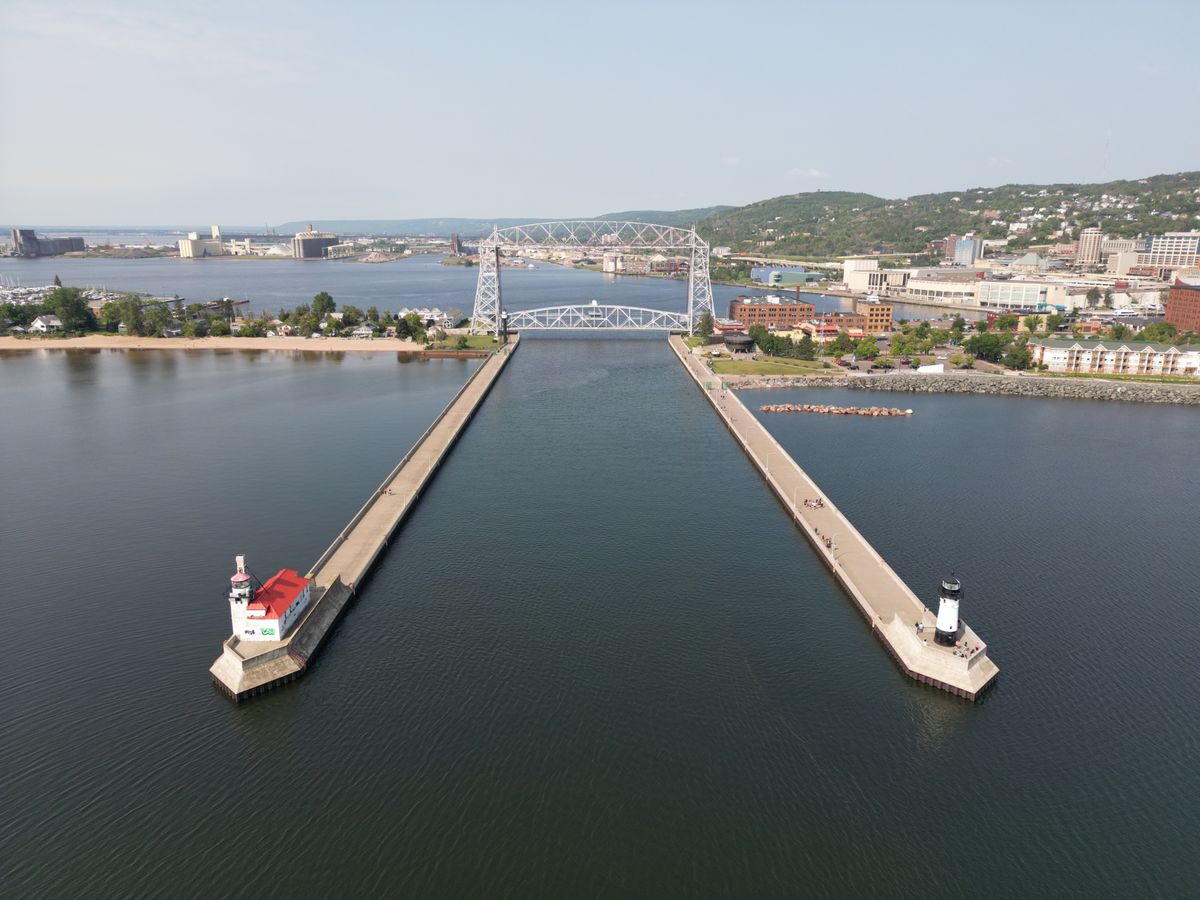
Beyond the rivers, Lake Superior itself holds a charter fishery that runs from May through October. Duluth's charter fleet launches from the harbor and trolls the nearshore and deep-water structure for lake trout, steelhead, chinook salmon, coho salmon, and brown trout.

Lake trout are the foundation, they're present year-round and stack along the deeper thermal breaks in summer, typically 60 to 120 feet down. Fish average 5 to 10 pounds, with lakers over 15 pounds caught every season. Trolling with downriggers and lead-core line is the standard method.

Chinook and coho salmon are the bonus catch on summer charters, both species were introduced to Lake Superior and have established populations that supplement the native lake trout and steelhead. The chinook grow big here, 20-pound fish are caught every year.

The lake is dramatic fishing. Superior's cold, clear water, rocky shoreline, and the North Shore's cliffs rising behind you make even a slow day scenic.

The St. Louis River Estuary

The St. Louis River broadens into a wide, marshy estuary as it approaches Duluth, and the estuary holds a completely different fishery from the lake or the streams.

Walleye are the primary target. The estuary's combination of current, structure, and warm-water habitat supports a healthy walleye population that's most active in spring and fall. Jigging or live-bait rigging along the channel edges and around the bridge pilings produces consistent action.

Northern pike cruise the weedy bays and backwaters. Smallmouth bass hold on the rocky points and current seams. Muskie are present in the lower river, though they're a trophy target, not an everyday catch.

The St. Louis River estuary is an excellent option when the lake is too rough for charters or when the tributaries are running too high or too low for steelhead.

When to Go

  • Mid-April through mid-May: Spring steelhead run, the main event
  • June through August: Lake Superior charters for lake trout and salmon, St. Louis River walleye
  • Late September through early November: Fall salmon and steelhead runs
  • Winter: Ice fishing on the St. Louis River estuary for walleye and pike

Recommended gear

  • Shimano Tekota 500 Line Counter

    Mid-tier, Lake Superior lake trout and salmon trolling

  • Okuma Classic Pro 451 Line Counter

    Entry level, budget trolling for lake trout

  • Pflueger President Spinning Combo 2500

    Mid-tier, North Shore stream trout and steelhead

  • Ugly Stik GX2 Spinning Combo 6'6"

    Entry level, river trout and smallmouth

  • Rapala Husky Jerk 10 Silver

    Trolled for lake trout on Superior

  • Blue Fox Vibrax #3 Silver

    North Shore stream trout and steelhead

Frequently asked

How much does a Duluth fishing charter or guide cost?

A guided Lake Superior trolling charter for lake trout and salmon out of Duluth typically runs about $500 to $800 for a half to full day for up to four to six anglers. River steelhead guide trips on the Knife and French rivers run less, around $300 to $450 for a walk-and-wade day.

What fish can you catch in Duluth?

Lake Superior holds lake trout, coho and chinook salmon, and lake-run steelhead and brown trout. The North Shore tributaries (Knife, French) get the spring and fall steelhead runs, and the St. Louis River estuary is a strong walleye, smallmouth, and muskie fishery.

When is the steelhead run in Duluth?

The spring steelhead run typically peaks from mid-April through mid-May, when fish push into North Shore tributaries like the Knife River, Lester River, and French River to spawn. A fall run follows from late September through November, overlapping with salmon.

What is the Knife River known for?

The Knife River is the most productive steelhead stream on Lake Superior's North Shore and the only tributary with a fully naturalized wild steelhead population. It produces fish in the 4- to 10-pound range with occasional fish over 12 pounds. The DNR has improved habitat and access along the river.

Can you fish Lake Superior from Duluth?

Yes. Charter boats launch from Duluth harbor and troll for lake trout, steelhead, chinook salmon, coho salmon, and brown trout from May through October. Lake trout are the most consistent target, averaging 5 to 10 pounds and holding along deep thermal breaks.

What fish are in the St. Louis River?

The St. Louis River estuary holds walleye, northern pike, smallmouth bass, and muskie. Walleye are the primary target, most active in spring and fall along channel edges and bridge pilings. The estuary is a good alternative when Lake Superior is too rough or the tributaries aren't running.

Do you need a trout stamp to fish near Duluth?

Yes. Most North Shore tributaries are designated trout streams and require a Minnesota trout stamp ($10) in addition to your regular fishing license. This includes the Knife River, Lester River, French River, and other streams in the Duluth area. Lake Superior charter fishing does not require the stamp.

More Minnesota field notes

Urban Fishing in Minneapolis: Muskie in City Lakes, Walleye Below the Dam, and the Chain of Lakes You Can Bike To

Minneapolis, MN

Urban Fishing in Minneapolis: Muskie in City Lakes, Walleye Below the Dam, and the Chain of Lakes You Can Bike To

Minneapolis has more than 20 fishable lakes inside city limits, the Chain of Lakes holds muskie, northern pike, bass, and walleye within biking distance of downtown. The Mississippi River adds walleye and smallmouth below the Ford Dam. This is the Land of 10,000 Lakes, and the fishing starts inside the city.

Fly Fishing Voyageurs National Park: Smallmouth Bass, Big Lakes, and the Canoe Country Fly Rod

International Falls, MN

Fly Fishing Voyageurs National Park: Smallmouth Bass, Big Lakes, and the Canoe Country Fly Rod

Voyageurs National Park has no roads into its interior, only water. Four massive lakes on the Canadian border, 655 miles of wild shoreline, and smallmouth bass that crush poppers against granite ledges at sunset. This is fly fishing by canoe, in one of the last truly quiet places in America.

How to Fish Duluth, Minnesota: A Beginner's Guide to Steelhead, Lake Trout, Salmon, and the North Shore

Duluth, MN

How to Fish Duluth, Minnesota: A Beginner's Guide to Steelhead, Lake Trout, Salmon, and the North Shore

Everything a first-timer needs to fish Duluth, North Shore steelhead on small streams, trolling lake trout and salmon on Lake Superior, walleye in the St. Louis River estuary, ice fishing, charter options, and practical details for visiting anglers.

How to Fish Brainerd, Minnesota: A First-Timer's Guide to Walleye, Pike, and Panfish

Brainerd, MN

How to Fish Brainerd, Minnesota: A First-Timer's Guide to Walleye, Pike, and Panfish

What a beginner needs to fish the Brainerd Lakes, the Minnesota license and opener dates, how to catch walleye on the Gull Lake chain, northern pike and muskie, bass and panfish for the whole family, winter ice fishing, and the gear and rigs that work across Minnesota's 10,000 lakes.

Brainerd Lakes Fishing: Every Lake Has a Personality

Brainerd, MN

Brainerd Lakes Fishing: Every Lake Has a Personality

The Brainerd Lakes Area has over 400 fishable lakes within an hour's drive, but the ones that matter most each have their own character, and their own fish. Here's how to pick the right water.

How to Fish the Mississippi River: A Beginner's Guide to Walleye, Smallmouth, Panfish, and Giant Catfish

Mississippi River, MN

How to Fish the Mississippi River: A Beginner's Guide to Walleye, Smallmouth, Panfish, and Giant Catfish

The Mississippi is America's great river, 2,300 miles and 119-plus species, from cool-water walleye and smallmouth up north to 100-pound catfish down south. Here's the whole-river guide to its pools, wing dams, backwaters, and tailwaters.