Fish
Fish Fire
Fire Hike
Hike Bird
Bird

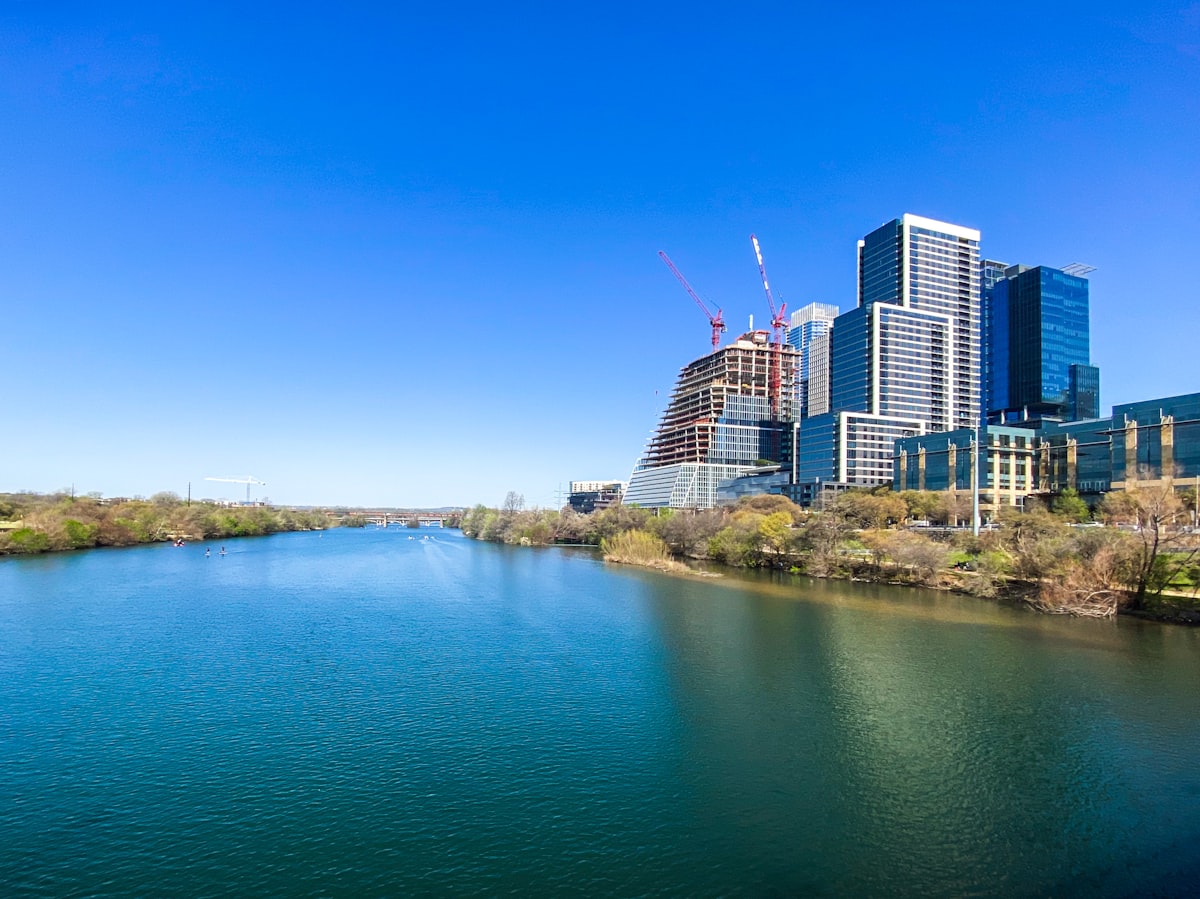

Most people don't come to Austin for the fishing, and that's a mistake. The city sits on the Colorado River, which was dammed into a chain of Highland Lakes stretching northwest into the Hill Country. The result is urban fishing that doesn't feel urban, clear-water reservoirs carved into limestone bluffs, surrounded by live oaks and cliff faces instead of strip malls.
The real headline is the Guadalupe bass. It's the Texas state fish, native to the Colorado River drainage and found nowhere else on Earth. If you've never caught one, Austin is where you fix that.
Lake Travis
Lake Travis is the big water. It stretches over 60 miles through the Hill Country west of Austin, impounded by Mansfield Dam, and holds healthy populations of largemouth bass, striped bass, white bass, and catfish. The lake fluctuates significantly with rainfall, in wet years, the flooded timber and brush create outstanding bass habitat along the shoreline.
Largemouth bass are the primary target. Spring and fall are the productive seasons, when fish move shallow to feed on shad along rocky points and bluffs. Topwater walking baits worked along main-lake points produce well on windy days. In summer, bass suspend deep over structure, 25 to 40 feet, and you're drop-shotting or working jigs vertically. Good electronics earn their keep in July and August, when the fish hold tight to deep structure and won't move far to chase a bait.
Striped bass are the other draw. Lake Travis is one of the better striper lakes in Texas, with fish running 10 to 30 pounds. Stripers school on open water, chasing threadfin shad, and the bite is best in cooler months, November through March. Live bait (shad or sunfish) fished near humps and long points is the go-to technique. When you find a school busting on the surface, it's some of the most exciting freshwater fishing in Central Texas.
Mansfield Dam Park, Pace Bend Park, and Arkansas Bend Park all offer shoreline access if you're fishing without a boat.
Lake Austin
Lake Austin is the narrow, river-like section of the Colorado between Mansfield Dam and Tom Miller Dam, running right through the western edge of the city. The neighborhoods along its banks are some of the most expensive real estate in Austin, but the fishing is free.
The lake has an excellent largemouth bass population, TPWD surveys consistently rate it above average for both numbers and size. The key is the stable water level and abundant docks, seawalls, and overhanging vegetation that provide year-round cover. Flipping jigs and Texas-rigged soft plastics along docks is the bread-and-butter technique. It's also one of the best Guadalupe bass waters in the state, look for them around rocky structure and current seams near the dam outflows.
Lady Bird Lake
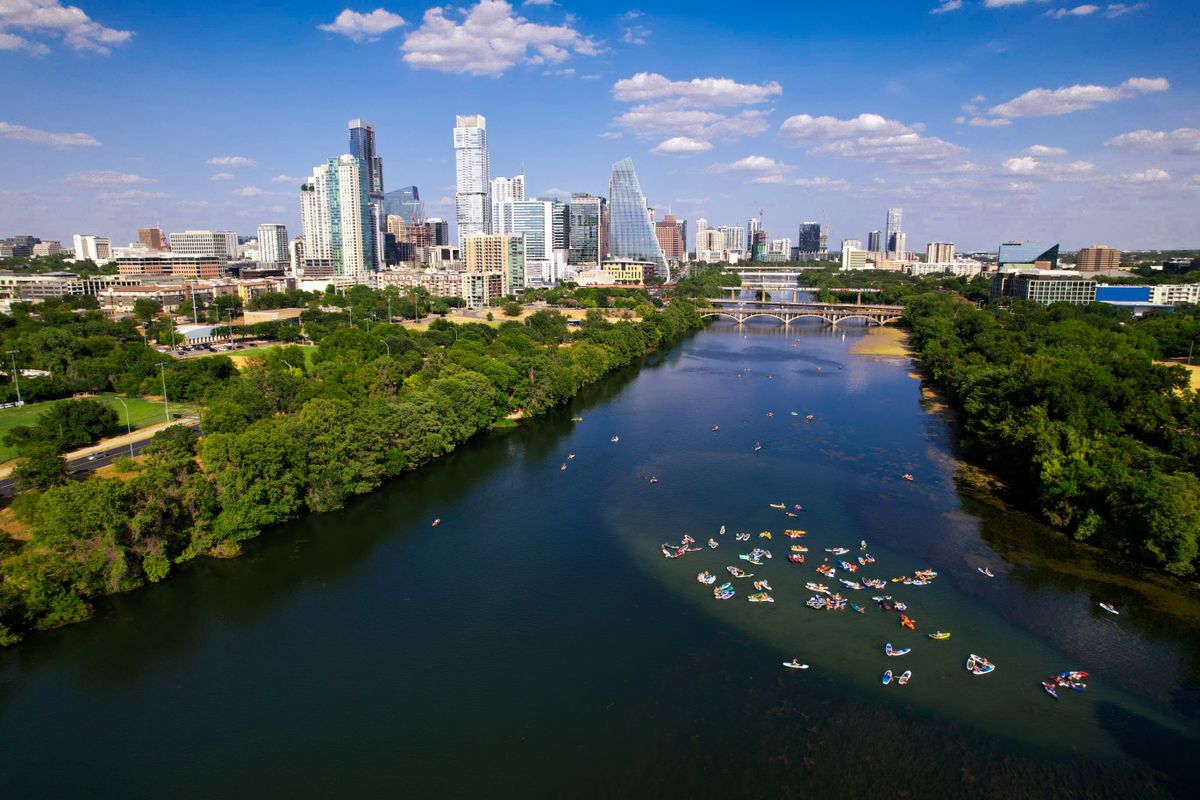
Lady Bird Lake sits in the center of downtown Austin, the stretch of Colorado River between Tom Miller Dam and Longhorn Dam. It's catch-and-release only and has restrictions on motorized boats, which means you're fishing from a kayak, canoe, or the shoreline. The upside is minimal fishing pressure and a surprisingly strong largemouth bass population right in the middle of a major city.
The shaded banks along the hike-and-bike trail hold fish year-round, and topwater in low-light hours produces explosive strikes. It's not wilderness fishing, you'll hear music from Zilker Park and see paddleboarders, but the fish don't seem to care.
The Colorado River Below Austin
Below Longhorn Dam, the Colorado River runs southeast toward Bastrop and eventually the Gulf. This is where Guadalupe bass fishing gets serious. The river's rocky runs, gravel bars, and limestone ledges are textbook habitat for Guadalupes, and the fish here are genetically pure, not hybridized with smallmouth bass, which is a growing concern in other Texas rivers.
Guadalupe bass rarely top two pounds, but they fight like fish twice their size in current. Small crankbaits, inline spinners, and fly tackle all work. A float trip by kayak or canoe opens up stretches of the Colorado that hold solid numbers of pure-strain Guadalupes alongside largemouth and spotted bass, put in below Longhorn Dam and drift the rocky runs to reach water most bank anglers never touch.
The White Bass Run
Every spring, usually late February into March, white bass begin their spawning run up the Colorado River and its tributaries. Millions of fish push upstream, stacking in deep holes and running riffles. It's a numbers game, double-digit days are the norm, and 50-fish afternoons happen. The run timing depends on water temperature (around 60°F triggers it) and flows, so check conditions before you go. Which creek arms are firing changes with flows and water temperature, so scout current conditions before you commit to a stretch.
When to Go
Spring (March–May) is the best all-around season: the white bass run peaks in March, largemouth move shallow on Lake Travis and Lake Austin, and Guadalupe bass are active in the river.
Fall (October–November) is the second-best window: cooling water pushes baitfish into the creeks, largemouth feed aggressively before winter, and striper fishing picks up on Lake Travis.
Summer works for early-morning topwater and deep structure fishing, but expect heat and boat traffic on Lake Travis.
Winter is striper season on Lake Travis, the best fish of the year come in December and January.