Fish
Fish Fire
Fire Hike
Hike Bird
Bird

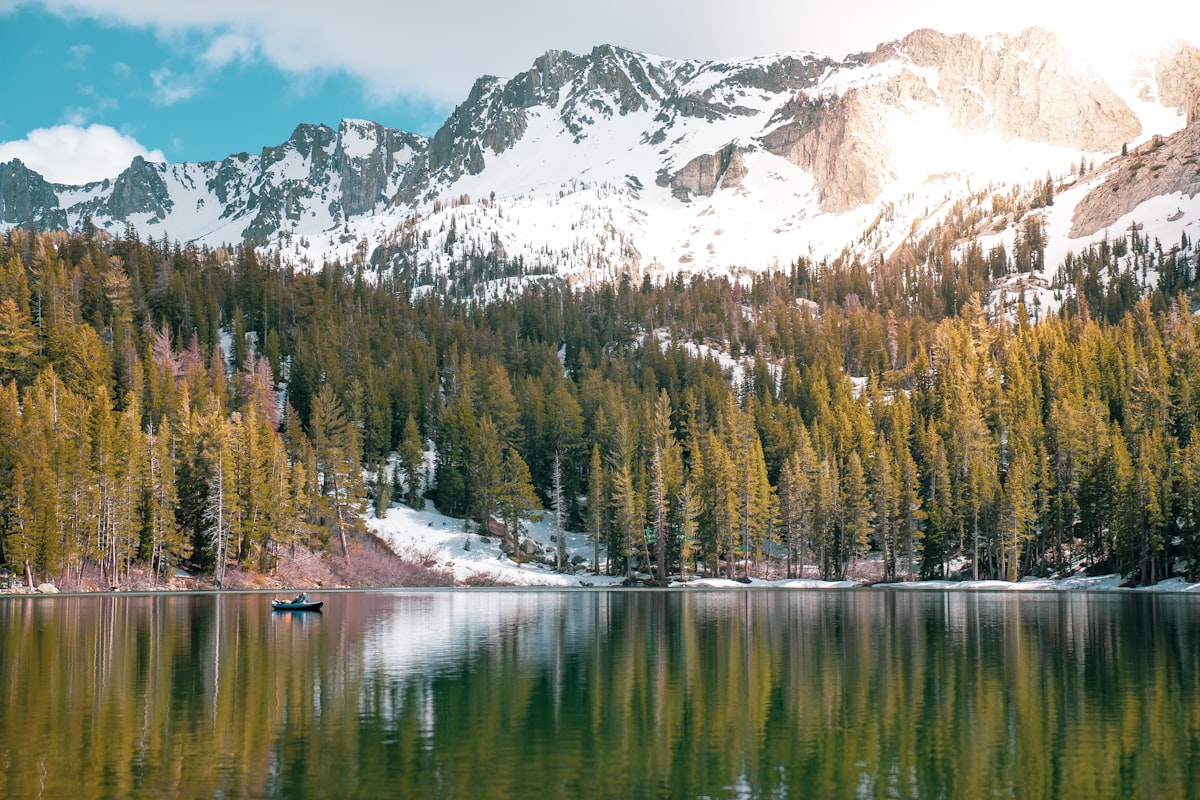

For generations of California anglers, the Eastern Sierra is the trout capital of the state, and the town of Mammoth Lakes sits right in the middle of it. Within a short drive you'll find sparkling alpine lakes stocked so heavily that catching your first trout off the bank is almost a sure thing, a legendary stillwater that grows trophy fish, and crystalline spring creeks that test the best fly fishers in the world. Few destinations pack so much variety, from dead-easy to deeply technical, into one mountain valley.
That range is exactly why Mammoth is such a great place to learn. A complete beginner can catch a limit of rainbows on a worm in an afternoon, while still having world-class water to grow into. This guide walks you through the waters, the fish, the gear, and the licenses you'll need to get started.
Stillwater and river trout fishing in the mountainsFirst, the License and the Season
Anyone 16 or older needs a California fishing license to fish around Mammoth Lakes. They're sold online through the California Department of Fish and Wildlife (wildlife.ca.gov) and at virtually every tackle shop, sporting-goods store, and many gas stations in town. One-day and two-day licenses are available, which makes a quick trip easy.
Mammoth's fishing calendar is built around a tradition: the general trout season in the Eastern Sierra runs from the last Saturday in April through November 15. Opening day is a genuine event up here, with anglers lining the lakeshores at dawn. (Some waters have their own special seasons or year-round catch-and-release rules, Hot Creek, for instance, so always check the regulations for the specific water you're fishing.)
Regulations vary by species and water: rainbow trout generally carry a five-fish daily limit, brown trout a smaller limit with a minimum size, and some premier waters are artificial-lures-only or catch-and-release. The current rules are printed in the CDFW regulations booklet and posted at local shops. When in doubt, ask, Mammoth's tackle shops are friendly and full of up-to-the-day information.
The Mammoth Lakes Basin: Where Beginners Start
The heart of easy, family-friendly fishing is the Mammoth Lakes Basin, a cluster of four stunning alpine lakes just minutes above town: Twin Lakes, Lake Mary (the largest), Lake George, and Lake Mamie. All four are stocked regularly throughout the season with rainbow, brook, and brown trout, and they're accessible by car with plenty of shoreline, rental boats, and nearby campgrounds.
This is the place to catch your first trout, and the methods couldn't be simpler:
- Bait fishing from the bank: The classic. Thread Berkley PowerBait (floating trout dough) or a nightcrawler onto a small hook, add a sliding sinker about 18 inches up the line, cast out, and prop your rod up. The PowerBait floats your bait off the bottom right into a cruising trout's path. Reel in slack, watch your rod tip, and wait. It's about as beginner-proof as fishing gets.
- Casting lures: A small spoon like a Kastmaster or Thomas Buoyant, or an inline spinner like a Panther Martin, cast out and retrieved steadily, draws aggressive strikes from stocked trout.
- Trolling from a boat: Rent a small boat and slowly troll a spinner or a worm-and-flasher rig around the lake to cover water and find fish.
Don't overlook nearby Convict Lake and the June Lake Loop a short drive away, both are gorgeous, well-stocked, and beginner-friendly, and Convict in particular is known for kicking out the occasional trophy.
Crowley Lake: The Trophy Stillwater
About 20 minutes south of town lies Crowley Lake, one of the finest stillwater trout fisheries in the country. This 5,000-acre reservoir is so rich in food that its trout pack on six to nine inches of growth in a single year, producing fat rainbows and browns that draw serious anglers from across the West. Crowley's opening day (the last Saturday in April) is a Sierra institution.
Crowley fishes differently from the basin lakes. Fly fishers anchor up or drift in boats and float tubes, fishing tiny midge (chironomid) imitations under indicators in spring, then switch to perch fry patterns later in summer when the trout gorge on young perch. Conventional anglers troll and jig. It's a step up in technique, and because covering the right depth and water is everything here, it's the spot near Mammoth where many newcomers fish their first day with a guide and a boat.
Hot Creek and the Upper Owens: Wild-Trout Streams
Just across Highway 395 from Mammoth, the landscape shifts from stocked lakes to wild trout streams, and the fishing gets more technical and more revered.
Hot Creek is a world-famous spring creek, a slow, gin-clear meadow stream packed with wild, educated trout. It's catch-and-release, artificial-lures-only, and genuinely challenging: the fish see everything, and success comes down to tiny flies, fine tippet, and a delicate presentation. It's not where most beginners land their first fish, but it's a bucket-list destination to aspire to, and watching it teaches you a lot about trout.
The Upper Owens River is a more forgiving meadow stream that winds through open ranch country. It holds resident trout year-round, but its real fame comes in the fall, when big migratory rainbows and browns run up out of Crowley Lake to spawn, offering a shot at the largest stream trout of the year. The Middle Fork of the San Joaquin, on the other side of town toward Devils Postpile, is a classic small wild-trout stream for those who like to hike and explore.
Fly fishing a clear mountain trout streamBait, Lures, or Flies? Choosing Your Approach
One of the nicest things about Mammoth is that every style of trout fishing works somewhere here, and you can match the method to your experience:
- Bait fishing is the easiest and most productive way to catch stocked trout in the basin lakes, ideal for first-timers, kids, and anyone who just wants to catch fish and have fun. PowerBait and nightcrawlers are all you need.
- Spin fishing with small spoons and spinners is a great next step. It's more active than bait, covers more water, and catches both stocked and wild trout. A light spinning rod is the most versatile single setup for a Mammoth trip.
- Fly fishing opens up the crown jewels, Crowley, Hot Creek, the Owens. It has the steepest learning curve, but a guided day shortcuts years of trial and error, and the Eastern Sierra is one of the best classrooms on earth.
There's no wrong answer. Many anglers fish bait off the bank with the family in the morning and try a fly rod on a stream in the evening.
Reading the Water and When to Go
In the stocked basin lakes, fish tend to hold near inlets where cold water enters, along drop-offs, and around any structure. Early morning and the last hours of light are most productive, especially in summer when midday sun pushes fish deeper. After the lakes are stocked (ask the shops when the trucks ran), the action near boat ramps and access points can be fast.
On streams, the principles of moving water apply: trout hold where current delivers food without making them fight it, in riffles, along seams where fast water meets slow, behind rocks, and under cut banks. Approach from downstream, move quietly, and keep a low profile; Sierra trout in clear water spook easily.
Seasonally:
- Spring (opener through June): Cold water, hungry fish, and the famous opening weekend. Crowley and the basin lakes fish well; snowmelt can blow out streams into early summer.
- Summer (July–September): Peak season. Everything is fishable, the high country opens up, and evenings are prime. The best all-around time for a beginner.
- Fall (October to November 15): Crisp weather, fewer crowds, and the spectacular Upper Owens run of big trout out of Crowley before the season closes.
Gear: What a Beginner Needs
For a first trip focused on the basin lakes, a simple spin setup does everything:
- Rod & reel: A 6'–7' light or ultralight spinning rod with a 1000–2500 size reel. The Ugly Stik GX2 is a tough, inexpensive choice that's perfect for trout.
- Line: 4–6 lb monofilament. Light line is important for wary trout.
- Terminal tackle: Small bait hooks, a few sliding sinkers, a couple of jars of Berkley PowerBait in different colors, and a small selection of Kastmaster spoons and Panther Martin spinners.
If you want to try fly fishing the streams or Crowley, a 9-foot 5-weight fly rod outfit is the Eastern Sierra standard; for Crowley specifically, rig indicators with the midge or perch-fry flies the lake demands, and check with the local tackle shops on what's working. Whatever you fish, bring layers, Sierra mornings are cold even in July and the weather changes fast, plus polarized sunglasses, sun protection, and a net.
Unlocking the Best Water
You can absolutely catch trout in Mammoth on your own, the stocked lakes practically guarantee it. But the truly special fishing, Crowley's trophy trout and the Owens River's fall run, rewards local knowledge: the right depth, the right fly, and up-to-the-day intel on what's biting and where. That's the difference between a fishless learning curve and a productive, confidence-building day. Lean on the tackle shops for current conditions, watch what the regulars are doing on the water, and, for trophy stillwater like Crowley, plenty of newcomers hire a local guide with a boat for a day to shortcut years of trial and error.
The ideal Mammoth itinerary for a newcomer: spend an easy first day catching stockers off the bank in the basin to get comfortable, then step up to Crowley or a Sierra stream to experience what makes this place legendary. You'll come home hooked, and ready to keep exploring the Eastern Sierra on your own.
Opening Day: A Sierra Tradition
If you can time your trip to it, the trout opener, the last Saturday in April, is an experience unto itself. For decades, families have made the pilgrimage up Highway 395 to claim a spot on the lakeshore before dawn, thermoses of coffee in hand, waiting for the season's first cast. The basin lakes and Crowley draw crowds, the energy is festive, and the fishing can be fast as winter-rested trout meet the first baits of the year. It's loud and busy by Eastern Sierra standards, but it's also a slice of California fishing culture worth seeing at least once. If crowds aren't your thing, simply come a week or two later, the fish are still there and the shorelines clear out quickly.
The High-Country Lakes for the Adventurous
Beyond the drive-up waters, the mountains above Mammoth hold dozens of backcountry lakes reachable by short hikes or longer backpacking trips. Waters in the Duck Lake area, the lakes off the Mammoth Crest, and countless tarns in the John Muir and Ansel Adams Wilderness hold wild and stocked trout, including golden trout, California's strikingly colored state fish, in some of the higher, more remote waters. These hike-in lakes see far less pressure, the fish are often eager, and the scenery is unmatched. They're a perfect next step once you've gotten comfortable on the easy waters below: pack a light rod, a small box of spinners and flies, and make a day of it. Always check current stocking and regulations, carry the ten essentials for the high country, and respect the wilderness you're walking into.
Making It a Family Trip
Few fishing destinations are as family-friendly as Mammoth. The basin lakes have restrooms, picnic areas, rental boats, and shorelines gentle enough for small children, and the near-guaranteed action of freshly stocked trout keeps young anglers engaged. Pair a morning of bank fishing with the town's other draws, the Village, mountain biking, hot springs, and easy hikes, and you have a vacation that works for anglers and non-anglers alike. Bring snacks, sunscreen, and a camera; a child's first trout in front of the Sierra crest is a photo you'll keep forever.
A Word on Conservation
The Eastern Sierra's wild trout are a treasure, and its premier waters are protected for a reason. Honor the special regulations, catch-and-release and artificial-lures-only zones like Hot Creek exist to keep wild populations thriving. When you release a fish, use barbless hooks, keep it wet, handle it with wet hands, and revive it fully before letting go. Pack out every scrap of line and trash, never move fish or bait between waters, and tread lightly on the fragile meadow banks. The clear, cold water that makes Mammoth a trout paradise depends on anglers who respect it.