Fish
Fish Fire
Fire Hike
Hike Bird
Bird

Hawaii is not on the short list of American fly-fishing destinations. It should be.
The islands hold the largest bonefish in the world, not the 2- to 4-pound schooling fish you chase in the Bahamas, but solitary 6- to 12-pound brutes that cruise coral flats in knee-deep water, eat mantis shrimp the size of your thumb, and run into the backing before you've processed the take. The state record is 18 pounds, 2 ounces. Fish over 10 pounds are caught regularly on O'ahu's south shore flats, within sight of Waikiki high-rises.
But bonefish are only the beginning. Giant trevally, the apex predators of the Indo-Pacific reef, called ulua in Hawaiian, patrol the same flats and shorelines, ambushing baitfish in water shallow enough to see their dorsals. Bluefin trevally (omilu) flash electric blue through the surf zone, hitting flies on aggressive strips. Peacock bass, the hard-fighting tropical cichlid, thrive in O'ahu's Lake Wilson, a 400-acre reservoir surrounded by pineapple fields. And in the volcanic uplands of Kaua'i, stocked rainbow trout hold in the streams of Kōke'e State Park, 4,000 feet above the ocean.
No other state in America offers bonefish, trevally, peacock bass, and trout. Hawaii has all four, and most fly anglers have no idea.
The Fish
Bonefish, O'io
Hawaiian bonefish (Albula species, both roundjaw A. glossodonta and the endemic sharpjaw A. argentea, found nowhere else on earth) are the biggest bonefish available to American fly anglers without a passport. The average fish on O'ahu's flats runs 5 to 6 pounds. Double-digit fish are a realistic possibility on any given day. Fish over 12 pounds are caught every season.
What makes Hawaiian bones different from their Caribbean cousins isn't just size, it's behavior. In the Bahamas, you hunt schools of tailing fish on white sand. In Hawaii, you hunt singles and pairs on coral-and-sand flats, often in water deep enough that you can't see bottom. There are no productive mud clouds to follow. The fish are solitary, educated, and fast. When a Hawaiian bonefish eats, the first run is longer and more violent than anything a 3-pound Bahamian fish can produce. An 8-pound o'io on an 8-weight rod will put you into the backing in seconds.
The primary forage is mantis shrimp, aggressive, armored crustaceans that dominate Hawaiian flats the way crabs and shrimp dominate Caribbean flats. Hawaiian bonefish patterns are built around mantis shrimp imitations: larger, heavier, and darker than the pink Gotchas and Crazy Charlies you'd fish in Belize. This is a different game.
Giant Trevally, Ulua
Giant trevally are the fish that make your hands shake. Called ulua as adults and papio as juveniles, GTs are the top predator on Hawaiian reefs, muscular, fast, aggressive, and powerful beyond anything in freshwater. A 30-pound ulua hooked from shore will spool a reel that would handle a tarpon. They hit flies, baitfish patterns, poppers, Deceivers, with an explosion that makes bonefish fishing feel meditative by comparison.
GTs cruise shorelines, reef edges, and the same flats where bonefish feed. The juveniles (papio, under 10 pounds) are catchable on 8- to 10-weight rods and provide spectacular light-tackle sport. The adults require a 12-weight rod, 80- to 100-pound fluorocarbon leaders, and the willingness to accept that the fish will probably win. Shore-based fly fishing for adult ulua is one of the most challenging pursuits in all of fly fishing, the fish have access to reef structure, and once they reach it, the fight is over.
Bluefin Trevally, Omilu
Bluefin trevally are the electric-blue reef predators that patrol every rocky shoreline in the islands. Smaller than GTs (most fish run 1 to 5 pounds, with occasional fish to 10), they're the most commonly caught trevally species on the fly because they're everywhere, they're aggressive, and they respond to fast-stripped Deceivers and Clousers with reckless strikes.
The key to omilu is retrieve speed. Start fast and go faster. They're visually triggered predators that chase down fleeing baitfish, a slow retrieve doesn't register. Two-hand strip as aggressively as you can manage, and be ready for a hit that nearly pulls the rod from your hand. Omilu fight with short, violent runs toward structure. Keep the pressure on, if they reach the reef, they'll cut you off on the coral.
Peacock Bass, Lake Wilson
Peacock bass (Cichla ocellaris) were introduced to O'ahu's Lake Wilson (Wahiawa Reservoir) in the 1950s and have thrived in the warm, calm freshwater. They're the same species that draws fly anglers to the Amazon, brilliantly colored, aggressive, and hard-fighting for their size. Lake Wilson fish average 1 to 3 pounds, with occasional fish over 5.
Lake Wilson is a 400-acre public reservoir in central O'ahu, surrounded by residential neighborhoods and agricultural land. The fishing feels nothing like saltwater, you cast poppers and Clousers toward lily pads, overhanging trees, and submerged structure, stripping aggressively to trigger the peacock's predatory instinct. A 5- or 6-weight rod, a floating line, and a box of small baitfish patterns is the entire setup. Kayaks and belly boats are the preferred craft, though bank fishing is productive.
The reservoir also holds largemouth bass, oscar cichlids, red-devil cichlids, and tilapia, a bizarre tropical freshwater assemblage unlike anything on the mainland.
Rainbow Trout, Kōke'e State Park
Kaua'i's Kōke'e State Park, perched above Waimea Canyon (the "Grand Canyon of the Pacific"), holds stocked rainbow trout in several small streams and a lake at 3,500 to 4,000 feet of elevation. The trout fishery depends on annual stocking by the state, the water is too warm for natural reproduction, and the fish are small (8 to 12 inches), but the setting is extraordinary: tropical forest, red canyon walls, and mountain streams that feel more like Appalachia than Polynesia.
A 2- to 4-weight rod with small nymphs and dry flies (Parachute Adams, Elk Hair Caddis, Pheasant Tail Nymphs, sizes 14-18) covers the trout fishing. A freshwater fishing license is required, and the season is limited to summer months (typically mid-June through September). Check the Hawaii Division of Aquatic Resources for current regulations, seasons and stocking schedules change annually.
The Islands, Where to Fish
O'ahu, The Center of Hawaiian Fly Fishing

O'ahu is where Hawaiian fly fishing happens. The island has the most guide services, the most accessible flats, the most diverse fishery, and the most developed DIY infrastructure. If you're making one trip to Hawaii specifically to fly fish, O'ahu is the island.
South Shore Flats
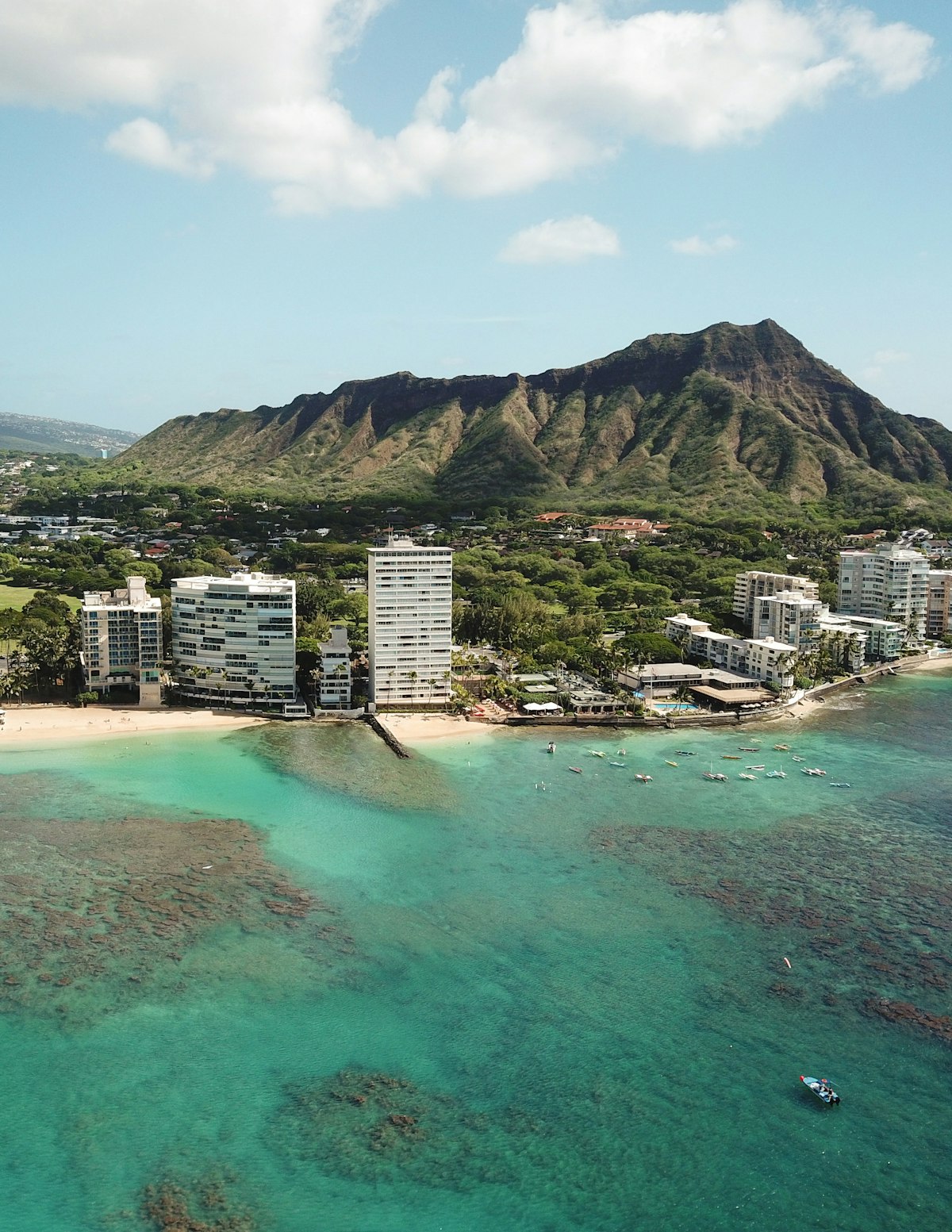
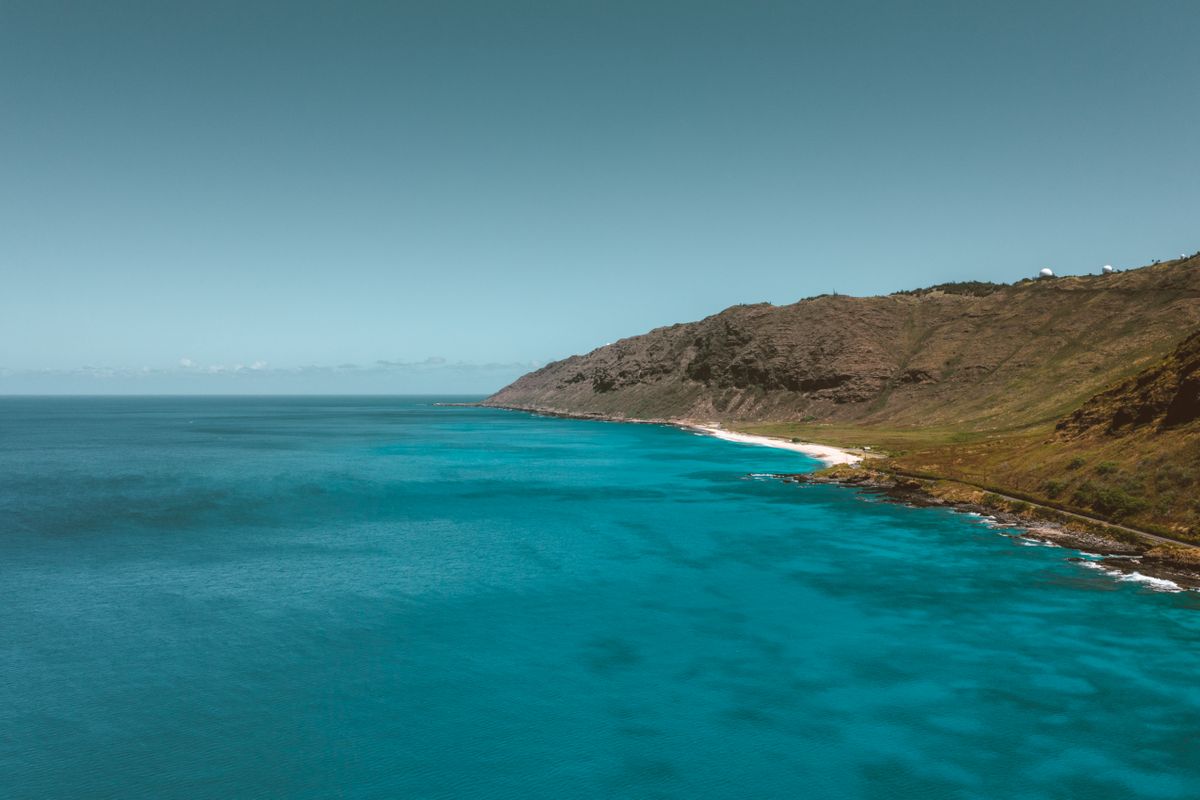
The south shore from Ala Moana to Hawai'i Kai holds the most accessible bonefish flats in the state. These are urban flats, you park at a beach park, walk across the sand, and wade onto coral-and-sand flats that hold 6- to 10-pound bonefish within a mile of Waikīkī hotels.
Ala Moana Beach Park, Multiple flats accessible on foot. Tourist traffic increases through the day, so fish early. Bonefish cruise the sandy channels between coral heads on the incoming tide.
Wai'alae Beach Park, Shallow flat with sandy cuts running through coral. Less foot traffic than Ala Moana. Bonefish and bluefin trevally.
Wailupe Beach Park, Fertile flat extending south into Maunalua Bay. Sandy channels and cuts within the coral hold bonefish on incoming tides. One of the more consistent DIY spots.
Hawai'i Kai, The flats near Kuli'ou'ou Beach Park extend into Maunalua Bay with access to Paikō Lagoon Wildlife Sanctuary. Larger area, less pressure, good trevally fishing along the reef edges.
Kāne'ohe Bay (Windward Side)
Kāne'ohe Bay is O'ahu's bonefishing heartland, a massive, sheltered bay on the windward coast with miles of sand-and-coral flats. The bay is best accessed by kayak or skiff (several launch points along Kamehameha Highway, including He'eia State Park and He'eia Kea Boat Harbor). The flats here are extensive, the fish are big, and the setting, Ko'olau Mountains rising directly behind you, is the most dramatic bonefish backdrop in the world.
Lake Wilson (Wahiawa Reservoir)
Central O'ahu. Public boat launch, kayak-friendly. Peacock bass, largemouth bass, and exotic cichlids. Best from April through October when warm water peaks peacock bass activity. Fish early morning for consistent action.
Moloka'i, The Biggest Flats, The Least Pressure
Moloka'i has more square miles of fishable bonefish flats than any other Hawaiian island. The fish see fewer flies, face less pressure, and bite more willingly than O'ahu's educated bones. In 2016, a client of guide Joe Kalima landed a 16-pound, 3-ounce bonefish on a fly rod, one of the largest fly-caught bonefish ever recorded.
Moloka'i is also the most culturally sensitive island for visiting anglers. The island has a strong local fishing culture, and outsiders wading the flats near someone's home can create tension. Hire a local guide. Be respectful. Ask before you walk onto a flat. This isn't about regulations, it's about respect for a community that depends on these waters.
Maui, Small Flats, Giant Fish
Maui's accessible flats are limited compared to O'ahu and Moloka'i, but the bonefish that use them are disproportionately large. Maui has no established fly-fishing guide services, making it a DIY-only proposition that rewards research and exploration. The limited flats mean limited pressure, which means the fish that are there haven't been educated by a parade of flies.
Big Island (Hawai'i), Reef Diversity

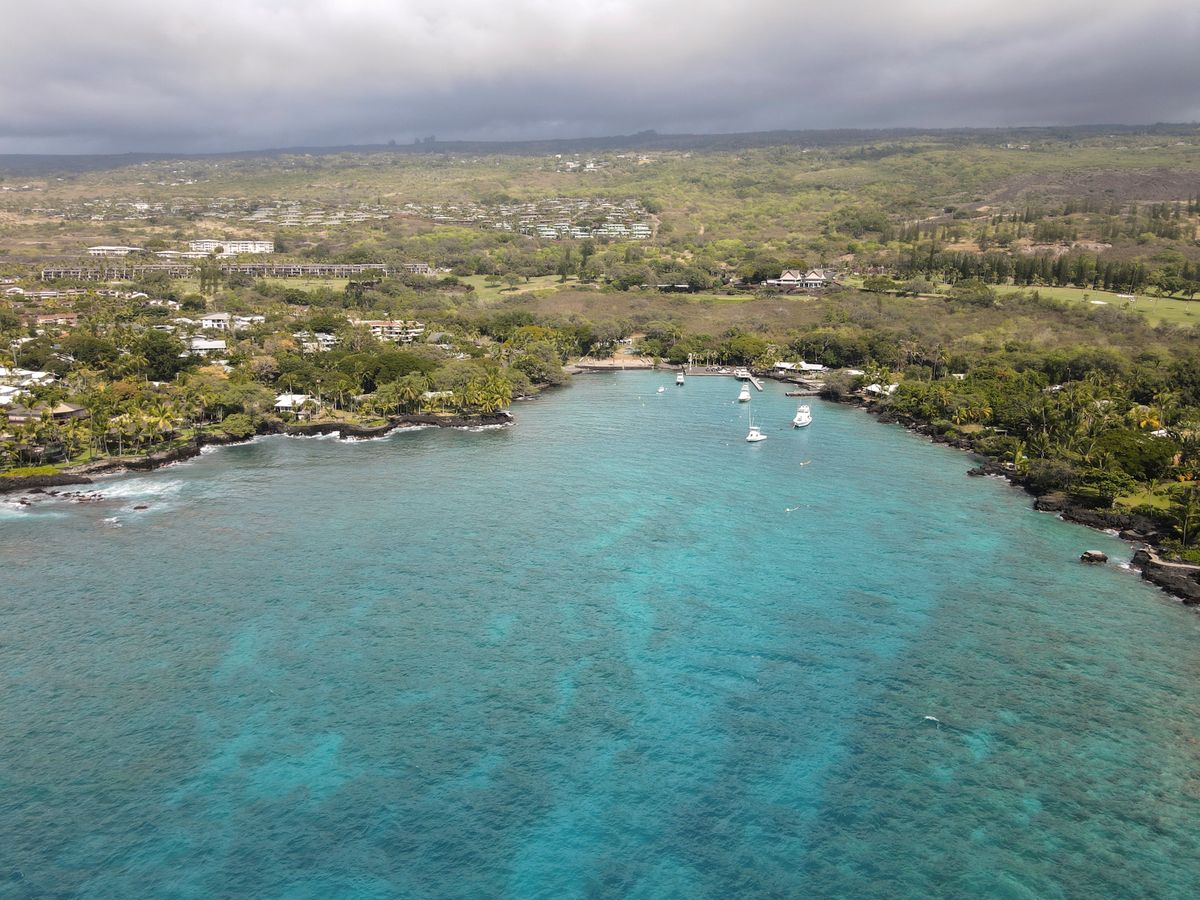
The Big Island's Kona Coast offers the most species diversity of any island. The fishing is more reef-oriented than flats-oriented, you cast from lava edges, rocky shorelines, and the occasional sandy beach into water that drops off quickly. The target list is long: bluefin trevally in the surf zone, papio along the reef edges, bonefish at A-Bay (Anaeho'omalu) and Kiholo Bay, barracuda in the harbors, peacock grouper in the rocks, and the ever-present possibility of hooking a giant trevally that you have zero chance of stopping.
A-Bay (Anaeho'omalu Bay), The Big Island's best bonefish spot. Sandy beach curving into reef and rocky ledges, with sandy pockets that function like mini-flats on the incoming tide. Arrive early before swimmers. Bonefish here are caught blind-casting small shrimpy patterns and stripping slowly.
Kiholo Bay, Turquoise water, bonefish, barracuda, trevally, and milkfish (awa), 20-pound herbivores that are nearly impossible to catch on a fly but mesmerizing to watch. Mile walk from the highway.
Kawaihae Harbor, Jetties with deep water access. Giant trevally to 30+ pounds cruise within casting range. Sinking lines and fast-stripped Deceivers. The ulua here have access to deep water and will spool you.
Puako Reefs, Extensive reef flats north of the Kohala Coast resorts. Trevally, reef species, and occasional bonefish. Fish the incoming tide.
Kaua'i, Trout and Solitude

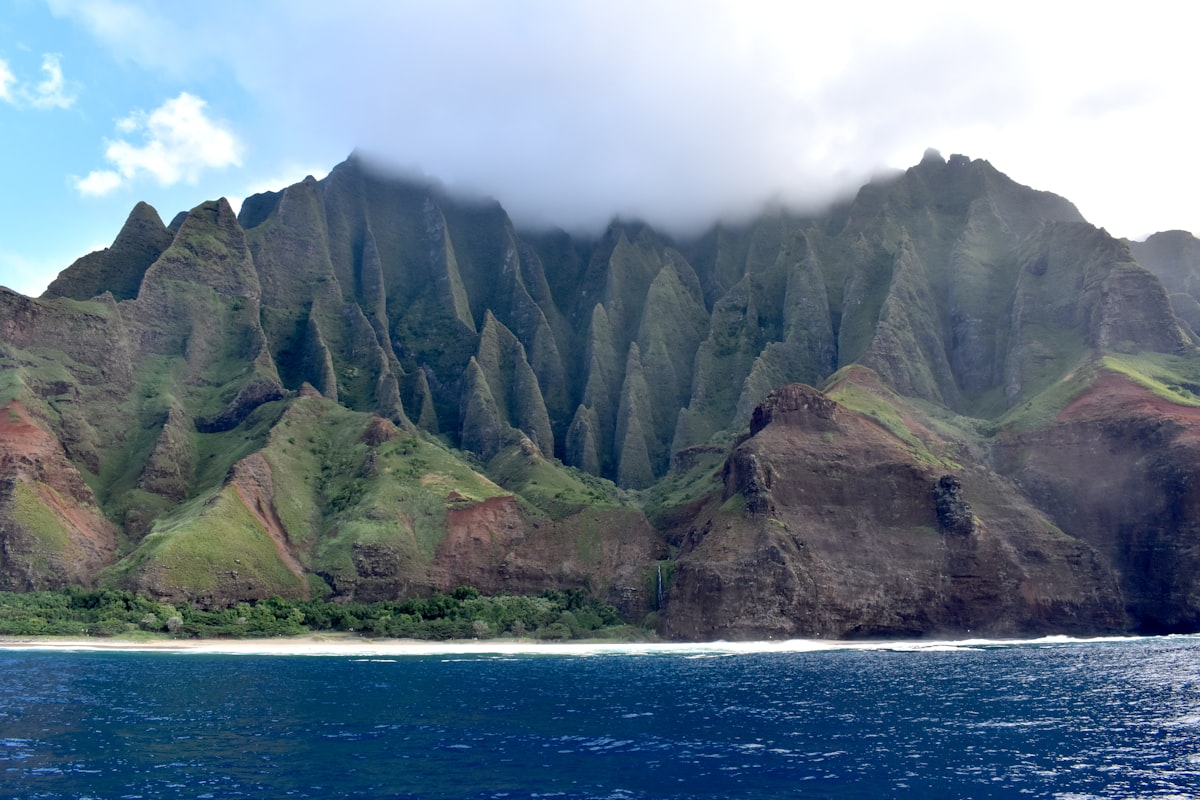
Kaua'i is the quiet island. Less developed, less touristed, and less fished than O'ahu or Maui. The saltwater fishing exists but is less accessible. Kaua'i's unique contribution to Hawaiian fly fishing is the trout fishery at Kōke'e State Park, a mountain ecosystem above Waimea Canyon where rainbow trout hold in small, clear streams surrounded by tropical forest. It's the most unusual trout fishery in America.
Access requires a four-wheel-drive vehicle. The streams are small enough to cast across. The trout are stocked and modest in size. But standing in a Hawaiian mountain stream at 4,000 feet, casting a dry fly to a rising trout while looking down into a red-walled canyon that drops 3,000 feet to the ocean, that's an experience no other trout stream in the world can match.
The Fly Box
Hawaiian fly fishing demands a different box than Caribbean bonefishing. The forage is different, the behavior is different, and the patterns that produce reflect those differences.
Bonefish Patterns
Spam and Eggs (#4-6), The signature Hawaiian bonefish fly, developed specifically for o'io on mantis shrimp flats. Tan dubbing body with flash, rubber legs off the top of the head, heavy wire hook (Gamakatsu SL11), and a weed guard. Imitates the mantis shrimp that are the primary forage on Hawaiian flats. Tan for most locations. This is the fly Hawaiian guides reach for first.
Mantis Shrimp Pattern (#4-6), All-black construction: black EP fiber, black dubbing, black dumbbell eyes. Counterintuitive but effective, as guide Makani Christensen says, "elephants eat peanuts." Small, dark, and heavy. The fly that produces when bonefish are rooting in coral rubble with their noses down.
EP Micro Crab (#6-8), Tan, dark brown, or olive. A small crab pattern for tailing bonefish in skinny water. Weed guards are often removed for spooky fish in very shallow water, accepting the trade-off of more snags for better hookups. Bead chain eyes for the shallowest water.
Spawning Shrimp (#4, EP Flies), Heavier dumbbell eyes for deeper rocky flats where bonefish cruise channels between coral heads. The go-to when fish are in 2 to 4 feet of water and you need the fly to sink fast.
Crazy Charlie (#4-8), Tan, pink, or brown. The standard tropical bonefish fly works in Hawaii too, especially for smaller fish and on sandier flats. Not the first choice of guides, but a solid backup.
Trevally Patterns
Clouser Minnow (#2-2/0), Chartreuse-and-white for papio and omilu. Pink-and-white for larger trevally. The Clouser's jigging action on a fast strip triggers trevally strikes. The single most versatile pattern for reef fishing, anything that swims will eat a Clouser.
Deceiver (#2/0-1/0), White, blue-and-white, or chartreuse. The classic saltwater baitfish pattern. Tied with extra flash for reef fishing. For GT-sized trevally, tie on heavy hooks with heavy eyes and present them like a wounded baitfish, erratic strips with pauses.
Poppers and Sliders (#2/0), Surface flies for trevally and papio in the surf zone. The explosion of a trevally on a popper in 2 feet of water is one of the most violent strikes in fly fishing. Fish them on a floating line with long, aggressive strips.
Freshwater Patterns
Clouser Minnow (#4-6), Chartreuse-and-white or olive-and-white for peacock bass. The same pattern that works in the salt works in Lake Wilson, peacock bass are baitfish predators with the same chase instinct as trevally.
Woolly Bugger (#6-8), Olive, black, or chartreuse. Cast to structure (lily pads, submerged logs, shoreline cover) and strip aggressively. Peacock bass hit buggers with the same aggression as smallmouth.
Poppers (#6-8), Foam or deer-hair poppers for surface strikes from peacock bass. Morning fishing with poppers produces the most dramatic takes.
Parachute Adams (#14-16), For rainbow trout in Kōke'e streams. Small, visible, and effective on stocked fish in clear mountain water.
Elk Hair Caddis (#14-16), The universal dry fly works on Kaua'i trout just like it works on mainland streams.
The Gear
Saltwater Setup, Bonefish and Reef Species
Rod: 8-weight, 9-foot, fast action. The 8-weight handles everything from bonefish to papio to barracuda. It's the workhorse rod for Hawaiian fly fishing. Bring a 10-weight if you want to target larger trevally, and a 12-weight if you're seriously pursuing GT-sized ulua.
Reel: Large arbor with a sealed, saltwater-rated drag and at least 200 yards of backing. Hawaiian bonefish run harder than Caribbean fish, you need the capacity.
Line: Weight-forward floating, tropical taper. The warm water requires a line designed for tropical conditions (standard cold-water lines go limp and tangle in 80°F heat). An intermediate sinking line or sinking shooting head is useful for deeper reef fishing on the Big Island.
Leader: 9 feet of fluorocarbon, 12 to 16 pound test for bonefish. 20-pound for papio and omilu. 80 to 100 pounds for GT-sized ulua, no taper, straight heavy fluorocarbon. For barracuda, add a 6-inch wire bite tippet (knotable multi-strand like Tyger Wire).
Freshwater Setup, Peacock Bass
Rod: 5- or 6-weight, 9-foot. The peacock bass are strong but not large enough to demand heavy gear.
Reel: Any matching reel with a basic drag. This isn't a backing-burning fishery.
Line: Weight-forward floating. Poppers and streamers on a floating line cover everything at Lake Wilson.
Leader: 6 to 8 pounds, 7 to 9 feet. Peacock bass aren't leader-shy.
Trout Setup, Kōke'e
Rod: 2- to 4-weight, 7.5 to 8.5 feet. The streams are small and the fish are small.
Leader: 5X or 6X, 7.5 feet. Standard trout setup.
Wading Hawaii, Safety and Gear
Wading Hawaiian flats and reef is fundamentally different from wading a mainland trout stream, and the hazards are different too.
Footwear: Felt-soled tabis (Japanese-style reef booties, available at local tackle shops) or sturdy hard-soled wading boots with gravel guards. The coral will slice through neoprene booties and bare feet in seconds. Wear guide socks underneath, coral sand works into any shoe and abrades skin raw over a full day of walking.
Coral cuts: Treat every coral cut seriously. Coral introduces bacteria and organic material into wounds that infect quickly in tropical conditions. Clean every cut immediately with fresh water and antiseptic. Carry a small first-aid kit with bandages and antibiotic ointment. A minor scrape at 8 AM can become an angry, swollen infection by dinner.
Sun protection: Hawaii law requires reef-safe sunscreen, mineral-based formulas with zinc oxide or titanium dioxide as active ingredients. Oxybenzone and octinoxate sunscreens are banned statewide. Bring a sun hoodie, a buff, and a wide-brimmed hat. The tropical sun at Hawaiian latitudes is intense, and a full day on the flats without protection will end your trip.
No waders: You don't wear waders in Hawaii. Lightweight quick-dry pants (or shorts) and wading boots. The water temperature is 75 to 82°F year-round.
Tides and Timing
Tides drive Hawaiian saltwater fly fishing the same way they drive bonefishing everywhere, but the Hawaiian tide cycle has its own personality.
Incoming tide is the prime window. Bonefish move onto the flats to feed as the water rises, pushing into sandy channels and coral cuts where mantis shrimp and crabs are exposed by the rising water. The first two hours of the incoming tide are the most productive period.
New and full moons create the strongest tidal exchanges, pushing more water onto the flats and bringing larger fish into shallower water. Plan your trip around the lunar cycle if possible.
Low tide concentrates fish in deeper channels and cuts. Sight-fishing during low tide can be productive if you can find the channels where bonefish stage before moving onto the flats.
Fish early. On O'ahu's south shore flats, swimmers, snorkelers, and paddle-boarders begin arriving by mid-morning. Their presence pushes bonefish off the flats. The window from first light to 9 AM is the most productive, after that, the urban fishery becomes an urban beach.
The Culture, Respect the Place
Hawaiian fly fishing requires cultural awareness that most mainland destinations don't. The ocean and its resources have deep significance in Native Hawaiian culture. The fish you're catching have Hawaiian names, o'io, ulua, omilu, papio, because they've been part of Hawaiian life for centuries.
Hire local guides. On every island, but especially on Moloka'i and in less-touristed areas, the best way to access the fishery respectfully is through guides who live there, know the community, and have relationships with local fishermen. Walking onto a flat near someone's home without introduction is a cultural misstep, not just a tactical one.
Catch and release. Hawaiian bonefish are long-lived and slow to reproduce. The fly-fishing guides on O'ahu have partnered with researchers on the O'io Tagging Program, a conservation effort studying bonefish movement, growth rates, and habitat use across the islands. Local guides are actively fighting illegal gillnetting and advocating for bonefish protection. Support their work.
Handle fish carefully. The Keep Fish Wet principles are especially important in warm tropical water where fish stress quickly. Wet your hands before touching any fish. Keep bonefish in the water during release, never on dry sand or coral. Limit air exposure to 10 seconds or less. Watch for sharks near your release, a stressed bonefish is vulnerable to predation.
No sunscreen in the water that isn't reef-safe. This isn't optional. Hawaii's reefs are stressed by warming oceans, runoff, and decades of chemical sunscreen damage. Mineral sunscreen only.
The Local Angling Scene
O'ahu is home to some of the most respected bonefish anglers in Hawaii, specialists in trophy o'io on the south shore flats who have developed locally famous fly patterns and contribute to the O'io Tagging Program. The best of them bring a scientific understanding of the flats to the water, tracking water temperature, current patterns, and forage cycles, and it's not unusual to land double-digit bonefish when you've dialed in those variables.
A handful of long-running operations range across multiple islands, including Kaua'i and O'ahu, and some run Christmas Island trips for anglers who want to extend their tropical flats fishing.
On Moloka'i, deep local knowledge and cultural access matter as much as tackle, and the island holds the biggest flats in the state.
Honolulu's fly shops are the hub for Hawaiian saltwater fly fishing, locally tied flies, island-specific patterns, and staff who fish these flats regularly and can point you toward what's working.
Licenses and Regulations
Saltwater: No fishing license required for recreational saltwater fishing in Hawaii. You can wade onto any public beach and cast.
Freshwater: A Hawaii freshwater fishing license is required for Lake Wilson, Kōke'e streams, and all other freshwater. Purchase online through the Hawaii Division of Aquatic Resources (DLNR).
Trout season: Kōke'e trout fishing is limited to summer months (typically mid-June through September), and regulations change annually. Check DLNR before planning a trip.
Marine protected areas: Some shoreline areas, particularly around Waikīkī and Hanauma Bay, are marine life conservation districts with fishing restrictions. Know the boundaries before you cast.
When to Go
-
March–May (Spring): Warming water pushes bonefish onto the flats more consistently. Trade winds moderate. Best overall window for first-time visitors combining bonefishing with reef species.
-
June–August (Summer): Peak water temperatures. Bonefish active but move to feed early and late to avoid midday heat. Peacock bass peak at Lake Wilson. Trout season opens at Kōke'e. Larger trevally more active. The busiest tourist season, fish early to beat the crowds on O'ahu's south shore.
-
September–November (Fall): The second-best window overall. Water temperatures begin cooling from summer highs. Bonefish active throughout the day. Fewer tourists on the beaches. Many guides consider fall the most consistent bonefishing season.
-
December–February (Winter): North shore surf builds. South shore remains fishable. Bonefish move to deeper channels more often. Big swells can limit access to exposed shorelines on the Big Island. Winter can still produce, committed anglers find fewer crowds and fish that haven't seen a fly in weeks.