Fish
Fish Fire
Fire Hike
Hike Bird
Bird

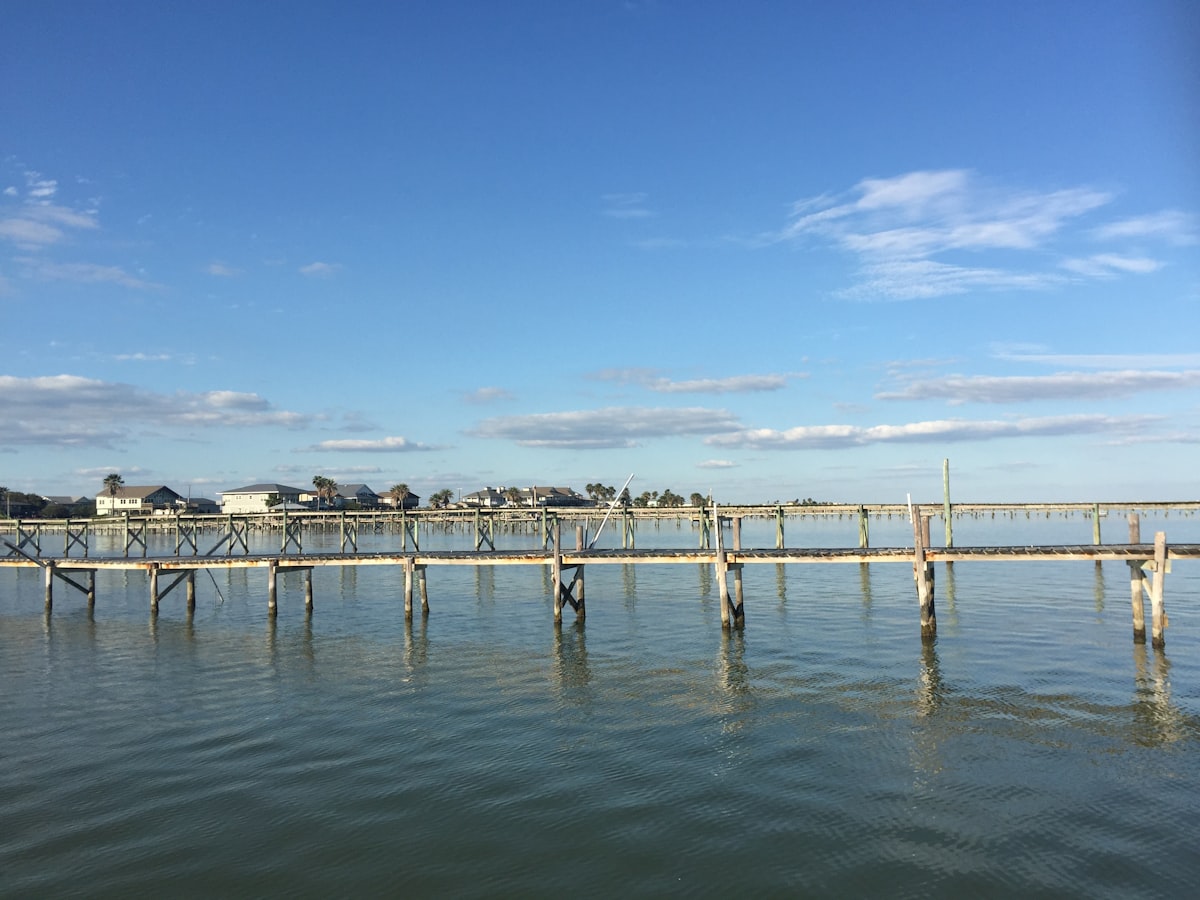

Rockport is a small coastal town on the Texas mid-coast, perched between Aransas Bay and Copano Bay, with St. Charles Bay and Mesquite Bay stretching to the south. The town calls itself the Redfish Capital of Texas, and unlike most fishing-town titles, this one holds up under scrutiny. The shallow-water grass flats surrounding Rockport hold year-round redfish populations that are among the densest on the entire Gulf Coast.
What makes Rockport different from other Texas coastal towns, Port Aransas, Galveston, South Padre, is the emphasis on sight-fishing. The bays here are shallow (two to four feet in most areas), the water is often clear enough to see bottom, and the redfish move across the flats in a way that's visible to anglers who know what to look for. The guides who work these flats have developed sight-casting into a discipline that's closer to bonefishing than traditional Texas inshore fishing.
The Sight Cast, Redfish on the Flats
On a calm morning in Aransas Bay, a guide poles a shallow-draft skiff across a grass flat in two feet of water. The angler stands on the casting platform, rod loaded, scanning the water ahead. A wake appears, a subtle V-shaped disturbance moving across the flat, and the guide calls it: "Redfish, two o'clock, 40 yards, moving left."
The cast has to be ahead of the fish, not on top of it. A gold spoon, soft-plastic paddletail, or fly lands three feet in front of the moving wake. The red turns, accelerates, and eats, and the flat erupts as a five-pound fish blows up in inches of water with nowhere to hide.
This is Rockport fishing at its best: visual, precise, and technical. The guides who pole these flats daily can spot fish at distances that seem impossible, reading the water color, the movement, the subtle signs that distinguish a redfish from a mullet or a shadow. They've been doing it for decades, and the institutional knowledge on these docks is deep.
Tailing redfish, reds tipping nose-down to eat crabs off the bottom, with their copper tails waving above the surface, are the trophy sighting. Tailing fish are actively feeding, less spooky, and will eat a well-placed lure with confidence. The best tailing conditions come on moderate tides during warm months, when water pushes over the grass flats and activates the crabs.
The Bay System, Beyond Redfish
Rockport's bay system holds far more than redfish, and the multispecies fishing is excellent.
Speckled trout sit over the sand potholes, bare depressions in the grass bottom where shrimp and small fish are vulnerable. Drifting across a pothole-studded flat and working topwater plugs or soft plastics produces consistent trout action. Trophy specks (over five pounds) are caught in the Rockport bays every season, with the best big-trout fishing in the cooler months.
Black drum are the overlooked powerhouse. They school in the bays year-round, growing to 50 pounds or more, and they eat with the subtlety of a vacuum cleaner, no dramatic strike, just a heavy pull as the rod loads. Sight-casting to schools of black drum on the flats is a Rockport specialty.
Flounder hold along channel edges and transitions between sand and grass. The fall flounder run (October–November) concentrates fish in the passes as they migrate toward the Gulf.
Sheepshead stack around the jetties, pilings, and rock structure from December through March, eating barnacles and crabs.
The Fly-Fishing Scene
Rockport has developed one of the strongest saltwater fly-fishing scenes in Texas. The shallow, clear-water flats are ideal for fly tackle, the fish are visible, the casts are measured, and the presentation matters. Multiple guide services in Rockport specialize exclusively in fly fishing, poling technical skiffs across the flats and putting anglers on tailing reds, black drum, and trout.
A redfish on fly in Rockport, a copper fish in two feet of water eating a crab pattern that you placed six inches from its nose, is a clean, honest catch that stays with you.
When to Go
- Spring (March–May): Redfish active on the flats, trout on topwater, black drum schooling, excellent all-around
- Summer (June–August): Early-morning sight-fishing before the heat, tailing reds on higher tides
- Fall (September–November): Peak redfish, bull reds arrive, flounder run, the best all-around season
- Winter (December–February): Trophy trout in deep holes, sheepshead on structure, redfish concentrated in warmer bays