Ludington Fishing: Following the Migration from Lake Michigan to the Pere Marquette
← All field notes

Ludington · Michigan

Ludington Fishing: Following the Migration from Lake Michigan to the Pere Marquette

Ludington is Michigan's top salmon port, the fish spend summer fattening in Lake Michigan, then pour into the Pere Marquette River every fall. Here's how to fish both sides of the migration.

Colin Van Dyke

Colin Van Dyke

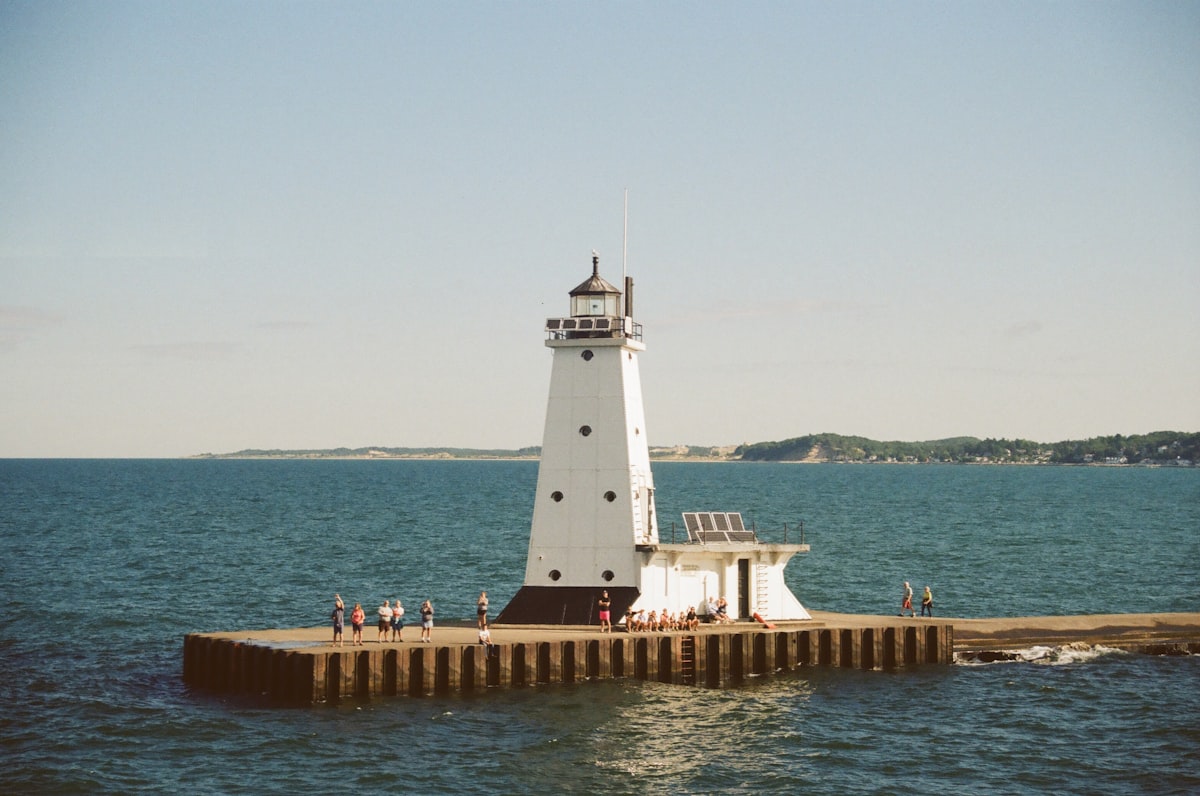
Ludington sits on the Lake Michigan shoreline where the Pere Marquette River meets the big lake. The town has earned its reputation as the number-one salmon port in Michigan, and the fishing calendar follows the migration: salmon and trout fatten in the open water of Lake Michigan through spring and summer, then push into the Pere Marquette and other nearby rivers to spawn in fall.

The result is two distinct fisheries that hand off to each other as the seasons change, charter fishing on the lake from April through September, and river fishing from September through spring. Between them, you can fish 12 months a year.

Lake Michigan Charters, Spring Through Fall

The charter fleet launches from Ludington's harbor and runs Lake Michigan for the full roster of salmonids: chinook salmon, coho salmon, steelhead, lake trout, and brown trout.

Spring (April–May): The season opens with brown trout. These fish cruise the nearshore water within a mile of shore, attracted to the warm-water plumes at river mouths. April brown trout run big, "football" browns of five to ten pounds, thick and heavy after a winter of feeding. Trolling spoons and stickbaits in 10 to 30 feet of water along the temperature breaks produces the best fish of the year.

Summer (June–August): The fishery diversifies. Lake trout are the consistent target, holding along the deeper thermal breaks in 60 to 100 feet. Steelhead appear on the deep scumlines and thermal barriers, running hard and jumping repeatedly. Chinook salmon build through July and August as fish stage offshore before their fall river migration, August chinook are at peak fighting weight, and 20-pound fish are standard.

Early Fall (September): This is the transition. Thousands of mature chinook and coho mass off the river mouths, staging for their upstream push. The charter fishing is at its peak, boats trolling the staging areas encounter dense schools of aggressive fish. Then, almost overnight, the fish turn upriver.

The Pere Marquette River, Fall Through Spring

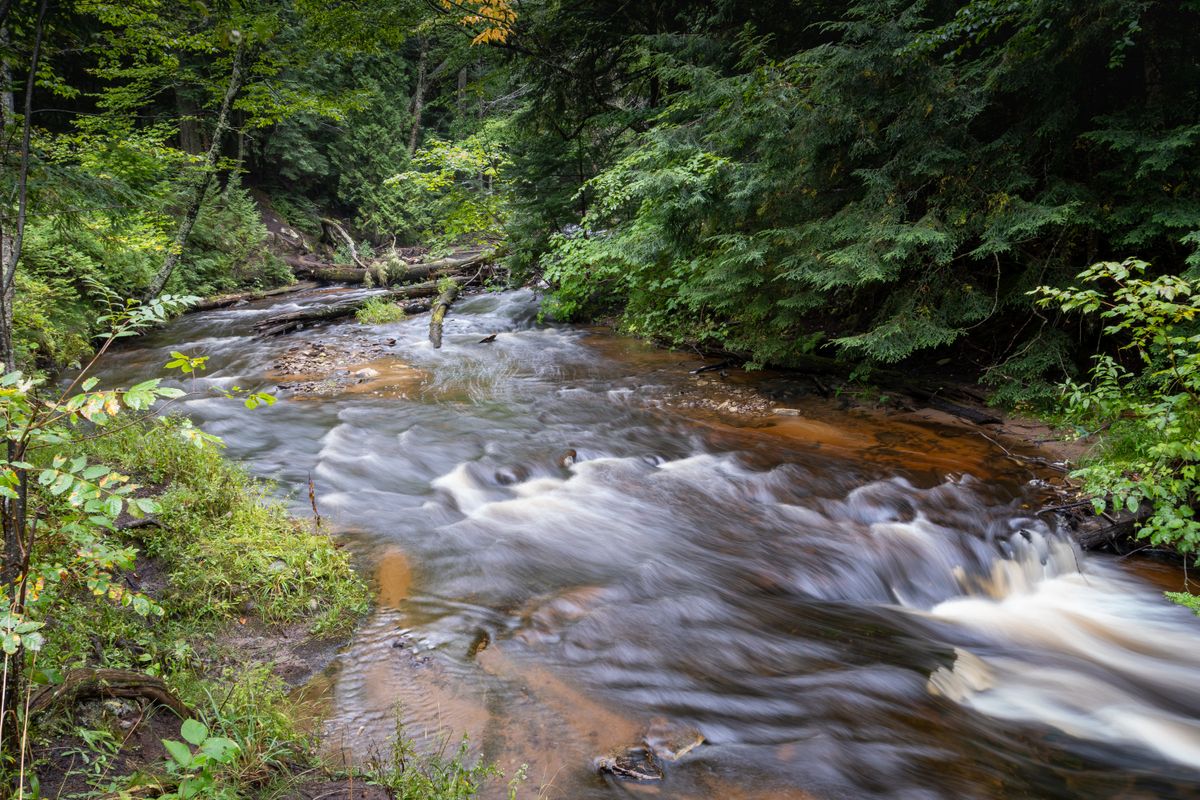
The Pere Marquette is one of the most famous steelhead and salmon rivers in the Great Lakes system. It's a mid-sized freestone river with a gravel bottom, clear water, and a gradient that creates textbook holding water, deep pools, long runs, and riffles that fish use as staging areas during the migration.

Fall (September–November): Chinook salmon lead the run, pushing upstream in late August and September. Fish of 15 to 30 pounds fill the pools, and the fishing is intense, heavy rods, big spawn bags or streamers, and powerful fish that have earned every ounce of their weight. Coho salmon follow in October, smaller but more acrobatic. Steelhead mix in with the salmon and continue running into November.

Winter (December–March): The Pere Marquette is one of the few Michigan rivers that supports winter steelhead fishing. The fish hold in the deeper pools and runs through the cold months, and catching a chrome steelhead on a snowy January morning is a defining Michigan fishing experience. The river's flow is dam-regulated enough to remain wadeable even in winter.

Spring (March–May): The spring steelhead run peaks in late March through April. Fresh fish push upstream from Lake Michigan, chrome-bright and aggressive after months in the big lake. This is the PM's most popular season, the fish are willing, the weather is improving, and the competition for water with other anglers is real. Popular runs fill up fast on spring weekends, so plan to arrive early and stake out your water.

Summer (June–August): The river holds resident brown and rainbow trout through summer. The fish are smaller than the migratory runs but the river is beautiful, uncrowded, and productive for dry-fly and nymph fishing. The PM's hatches, Hendricksons, sulphurs, and hex, bring trout to the surface and draw fly anglers from across the Midwest.

When to Go

  • April–May: Brown trout on Lake Michigan, spring steelhead on the PM, the two fisheries overlap
  • June–August: Lake trout and chinook on charters, resident trout on the river, hex hatches
  • September–October: The main event, salmon and steelhead stacking in the PM, staging fish offshore
  • November–March: Winter steelhead on the Pere Marquette, the quiet season with big rewards
Recommended gear

  • Shimano Tekota 600 Line Counter

    Mid-tier, Lake Michigan salmon trolling

  • Okuma Classic Pro 451 Line Counter

    Entry level, budget salmon trolling

  • G. Loomis E6X Downrigger Rod 8'6"

    Premium, Ludington salmon charter rod

  • Pflueger President Spinning Combo 3000

    Mid-tier, Pere Marquette steelhead

  • Rapala Husky Jerk 14 Silver Blue

    Trolled for chinook and coho offshore

  • Maxima Ultragreen Mono 10lb

    Pere Marquette River steelhead line

Frequently asked

Do you need a license to fish Ludington?

Yes, Michigan requires a fishing license, available daily or annual for non-residents through the Michigan DNR; the all-species license covers salmon and trout. A guided charter covers your license for the trip.

How much does a Ludington salmon charter cost?

A guided big-water salmon and trout trolling trip out of Ludington typically runs about $600 to $900 for a half to full day for up to six anglers, including rods, downriggers, and gear. Pere Marquette River fly and steelhead guide trips run separately, around $400 to $550.

Why is Ludington called the top salmon port in Michigan?

Ludington sits where the Pere Marquette River meets Lake Michigan, creating a natural convergence point for migrating salmon. The charter fleet targets chinook and coho in the lake through summer, and the PM receives massive salmon runs in fall. The combination makes it the most productive salmon fishing base in the state.

What is the Pere Marquette River known for?

The Pere Marquette is one of the most famous steelhead and salmon rivers in the Great Lakes. It receives chinook salmon in September, coho in October, and steelhead from fall through spring. It also supports winter steelhead fishing and summer dry-fly trout fishing with notable Hendrickson and hex hatches.

When is the best time to fish Ludington?

September and October are peak, salmon fill the Pere Marquette and staging fish stack offshore. April and May offer brown trout on the lake and spring steelhead on the river. Summer (June through August) is prime charter season for chinook and lake trout.

Can you fish the Pere Marquette in winter?

Yes, the Pere Marquette is one of the few Michigan rivers that supports winter steelhead fishing. Fish hold in deeper pools through the cold months, and the river remains wadeable. Catching chrome steelhead on a snowy morning is a signature Michigan experience.

What are hex hatches on the Pere Marquette?

Hex (Hexagenia limbata) hatches occur in June and July, large mayflies that emerge at dusk and draw trout to the surface for explosive feeding. It's the most dramatic dry-fly fishing event on the PM, and it happens after dark, which adds to the intensity. Resident browns and rainbows are the targets.

More Michigan field notes

Urban Fishing in Detroit: Walleye Runs on the Detroit River, Smallmouth Under the Bridges, and World-Class Shore Fishing from Belle Isle

Detroit, MI

Urban Fishing in Detroit: Walleye Runs on the Detroit River, Smallmouth Under the Bridges, and World-Class Shore Fishing from Belle Isle

Detroit sits on one of the best smallmouth bass fisheries in North America. The Detroit River connects Lake St. Clair to Lake Erie, and every spring 14 million walleye migrate through it. Belle Isle puts you on a fishing pier in the middle of the river. No boat needed for any of it.

Fly Fishing Isle Royale National Park: Backpacking, Brook Trout, and the Most Remote Island in the Great Lakes

Houghton, MI

Fly Fishing Isle Royale National Park: Backpacking, Brook Trout, and the Most Remote Island in the Great Lakes

Isle Royale is a 45-mile-long island in the middle of Lake Superior, no roads, no cars, no cell service. You take a ferry from Houghton or Copper Harbor, hike between inland lakes with a pack rod, and catch brook trout on dry flies while moose browse the shoreline. This is wilderness fishing without flying to Alaska.

How to Fish Traverse City, Michigan: A Beginner's Guide to Salmon, Lake Trout, Smallmouth Bass, and Grand Traverse Bay

Traverse City, MI

How to Fish Traverse City, Michigan: A Beginner's Guide to Salmon, Lake Trout, Smallmouth Bass, and Grand Traverse Bay

Everything a first-timer needs to fish Traverse City, trolling for salmon and lake trout on Grand Traverse Bay, smallmouth bass on the rocky shoals, fly fishing the Boardman River, fall salmon runs, ice fishing, and practical details for visiting anglers.

How to Fish Ludington, Michigan: A Beginner's Guide to Salmon, Steelhead, Piers, and Charters

Ludington, MI

How to Fish Ludington, Michigan: A Beginner's Guide to Salmon, Steelhead, Piers, and Charters

Everything a first-timer needs to fish Ludington, what gear to bring, how to rig for the breakwater piers, what the charter captains run on Lake Michigan, how the Pere Marquette River salmon and steelhead run works, and where to take the family for walleye and panfish on Hamlin Lake.

Anywhere, MI

Egg Patterns: The Glo Bug, Blood Dot, Sucker Spawn, and the Flies That Purists Hate and Guides Love

Egg patterns are the simplest flies you'll ever tie and the most controversial you'll ever fish. Four recipes, the full color chart, where to dead-drift them, and why the purist debate doesn't matter.

Fly Fishing the Pere Marquette: Great Lakes Steelhead, the Hex Hatch, and a River That Fishes Every Month of the Year

Baldwin, MI

Fly Fishing the Pere Marquette: Great Lakes Steelhead, the Hex Hatch, and a River That Fishes Every Month of the Year

The Pere Marquette is the longest unregulated river in Michigan's Lower Peninsula, no dams, wild fish, and a season that never ends. Spring steelhead, summer hex hatches, fall salmon, winter solitude. Every month has a reason to be on the water.