Fish
Fish Fire
Fire Hike
Hike Bird
Bird


Everyone knows Kona. The charter fleet, the tournaments, the grander marlin. But the Big Island has another coast, the Hilo side, the windward side, the east side, and the fishing here is a different experience entirely.
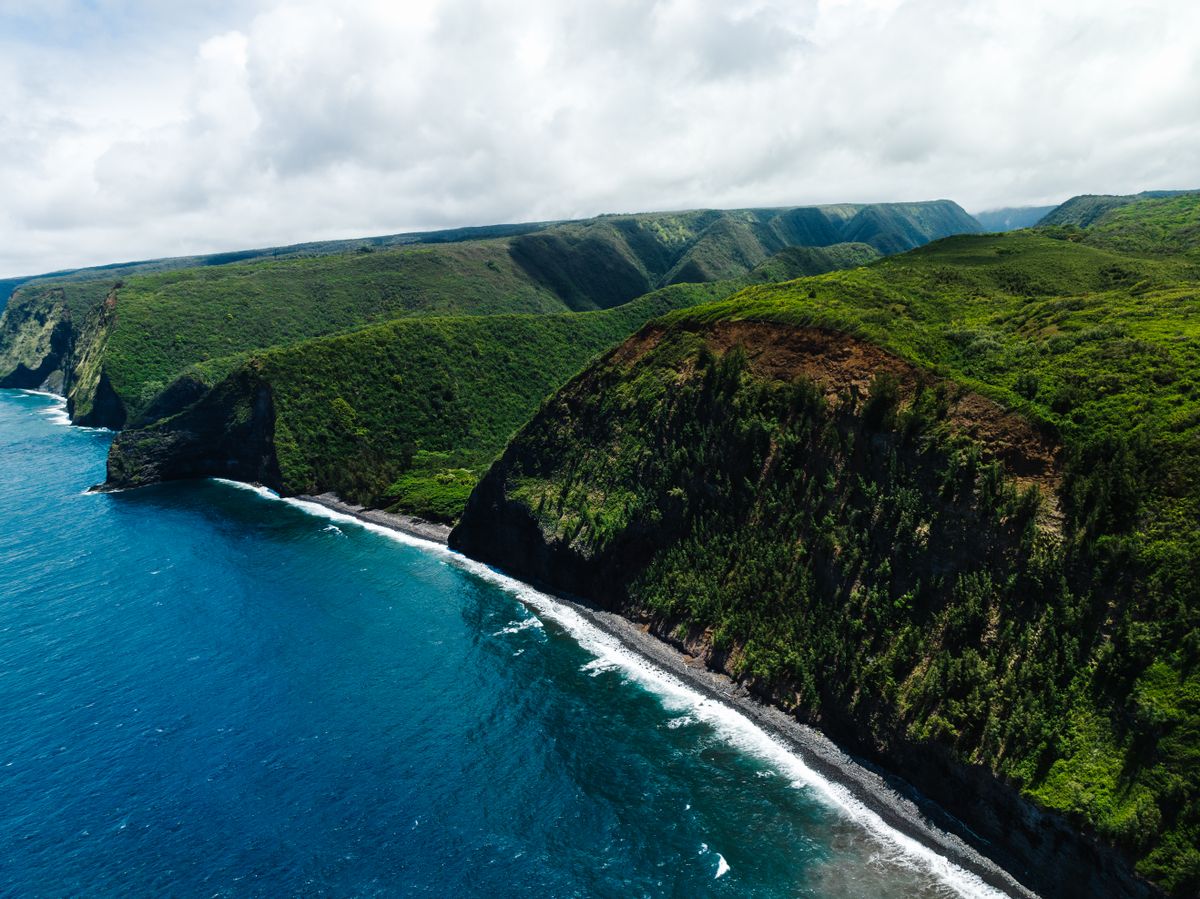
Hilo is the Big Island's second city, sitting where the Hamakua Coast's volcanic cliffs meet the Pacific. The water is the same ocean, holding the same species, yellowfin tuna, blue marlin, mahi-mahi, ono, but the fishing culture is quieter, the boats are fewer, and on most days you'll be the only charter on the water. If Kona is the tournament stage, Hilo is the backcountry.
Why the East Side Is Different
The east coast of the Big Island faces the open Pacific and catches the northeast trade winds, which means rougher water and more weather than the sheltered Kona side. That's what keeps the crowds away, and it's what creates the fishing opportunity.
The rougher water means more upwelling, more nutrients, and more bait. The Hamakua Coast drops steeply into deep water just like the Kona side, so the same deep-water species are present. But with a tiny fraction of the charter pressure, the fish see fewer lures and are more willing to eat.
When the weather cooperates, and in summer it often does, the Hilo side produces fishing that matches or exceeds Kona, with the added bonus of solitude. You won't see another charter boat on the horizon.
Yellowfin Tuna, The Hilo Headliner
While Kona is the marlin port, Hilo has quietly built a reputation for yellowfin tuna. The nutrient-rich water along the Hamakua Coast concentrates baitfish, and the ahi follow.
Fish in the 50- to 100-pound range are the bread and butter, with the occasional monster over 150. The tuna hold along the depth breaks, the 250- to 400-foot curve just offshore, and respond to trolled lures and live bait. The peak runs June through September, but ahi are caught year-round out of Hilo.
Aku (skipjack tuna) school in large numbers closer to shore and provide fast, light-tackle action. They're also the traditional Hawaiian poke fish, catching aku and eating it fresh is a distinctly local experience.
Blue Marlin and Other Pelagics
Blue marlin patrol the Hilo side just like the Kona side, and fish over 500 pounds have been caught on the east coast. The difference is effort, with fewer boats trolling, you're more likely to have a productive spread to yourself.
Mahi-mahi stack under debris and floating logs along the Hamakua Coast, especially in the winter months when storms wash material offshore. The Hilo mahi bite can be exceptional, schools of 20 to 30 fish under a single log, all willing to eat.
Ono (wahoo) run the east coast from spring through summer, and striped marlin appear in winter.
Inshore and Bottom Fishing
Hilo offers more variety beyond the offshore pelagics than Kona does.
Bottom fishing over the rocky volcanic structure along the coast produces 'opakapaka (pink snapper), onaga (red snapper), ehu (ruby snapper), and hapuupuu (grouper). These deep-water bottom fish are prized in Hawaiian cuisine and are caught in 300 to 800 feet of water using electric reels and multi-hook rigs.
Ulua (giant trevally) patrol the rocky shoreline, and the Hilo coast has productive ulua spots that see far less pressure than the Kona side. Shore-based ulua fishing at night, casting large baits from the lava rock, is a serious pursuit here.
Freshwater Bonus
The Big Island's east coast receives heavy rainfall, Hilo is one of the wettest cities in the US, and the rivers and reservoirs hold introduced freshwater species. Peacock bass (tucunare) live in irrigation reservoirs and provide a uniquely Hawaiian freshwater option for anglers between ocean trips.
When to Go
- June–September: Best weather on the east coast, peak yellowfin tuna and ono, blue marlin
- October–December: Mahi-mahi building, striped marlin starting, fewer crowds
- January–March: Mahi-mahi peak, striped marlin, bottom fishing, rougher weather but productive
- April–May: Transition, weather improving, ono showing, ahi building