Fish
Fish Fire
Fire Hike
Hike Bird
Bird

Bozeman is the epicenter of Montana fly fishing, and it earns that reputation honestly. Within an hour's drive you can reach three of the most storied trout rivers in the American West, the Madison, the Gallatin, and the Yellowstone, each with its own character, its own fish, and its own reasons to keep you coming back.
The town itself runs on fly fishing. Shops on Main Street will rig you up and point you in the right direction, and the local fishing culture runs deep, these are rivers people log 200-plus days a year on. What follows is what you need to know to plan your own days on the water: the rivers, the hatches, the seasons, and where to get in.
The Madison is a destination in its own right, see our Madison River fly fishing guide for the hatches, the floats, and where to wade.
The Rivers
Madison River
The Madison is the headliner. It forms at the confluence of the Firehole and Gibbon Rivers inside Yellowstone National Park and flows northwest through the Madison Valley before joining the Jefferson and Gallatin at Three Forks to form the Missouri. It is arguably the most famous trout river in Montana, and the fishing backs that up.
The upper Madison from Quake Lake down through the Bear Trap Canyon holds healthy populations of rainbow and brown trout in the 14- to 18-inch range, with bigger fish mixed in. The lower Madison from Ennis to Three Forks is wider, slower, and loaded with browns. Float trips cover the most water here, and wade fishing works well in the upper canyon sections.
The Madison's insect life is what sets it apart. The salmonfly hatch, typically late June into early July, draws anglers from around the world. These giant stoneflies are three to four inches long, and when they're on the water, the fishing is chaos in the best possible way. Earlier in the season, the Mother's Day caddis hatch blankets the lower river in May, turning the surface into a feeding frenzy. By August, hopper season takes over and lasts into September, big dry flies, aggressive strikes, and some of the most fun you'll have with a fly rod.
Gallatin River
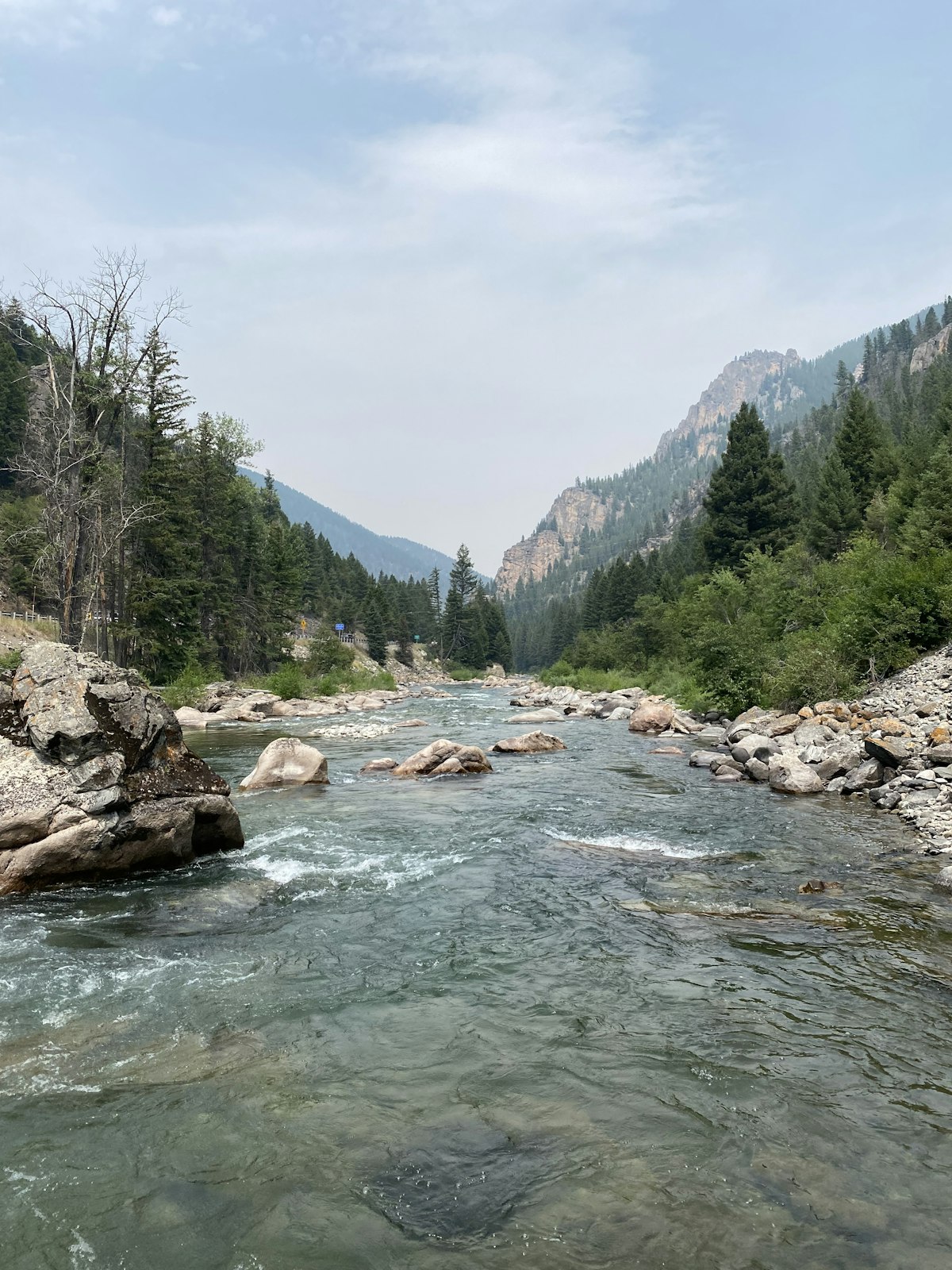
The Gallatin is the local river, the one Bozeman anglers grew up fishing. It flows out of Yellowstone National Park through Gallatin Canyon, a stretch of fast pocket water and deep runs that holds wild rainbow and brown trout. The fish aren't as large as what you'll find on the Madison, but the setting is spectacular and the canyon sees far less pressure.
This is wade-fishing water. You're hopping between boulders, reading seams, and dropping nymphs into slots where trout hold out of the current. The productive water often doesn't look like much from the road, the slots and soft pockets behind boulders are where the fish sit, and they produce consistently. The Gallatin fishes well from late June through October, with dry-dropper rigs and small stonefly patterns producing all summer.
Yellowstone River
The Yellowstone is Montana's longest undammed river, and the stretch through Paradise Valley south of Livingston is world-class. This is big water, a powerful freestone river that holds rainbow trout, brown trout, and native Yellowstone cutthroat trout. The cutthroat are native to the Yellowstone River drainage specifically, and catching one on a dry fly in their home water is a bucket-list moment for many anglers.
Float trips are the standard here, a drift boat works long riffles, deep runs, and undercut banks, covering miles of water in a day. The Yellowstone fishes best from July through October once spring runoff clears. Late-summer hopper fishing on the Yellowstone is legendary, big cutthroat slashing at foam flies against the backdrop of the Absaroka Range.
What You're Fishing For
Rainbow trout and brown trout are the primary species across all three rivers. Rainbows tend to dominate the faster water, riffles and runs with good oxygen, while browns hold in the deeper pools, undercut banks, and structure. Both species are wild and self-sustaining in these rivers.
Yellowstone cutthroat trout are the native species in the Yellowstone River drainage. They're the prettiest fish you'll catch here, golden flanks with black spots and the distinctive red slash under the jaw. They rise freely to dry flies and are the main reason many anglers point their trucks toward the Yellowstone in the first place.
Mountain whitefish are abundant in all three rivers. They're not the glamour species, but they fight well on light tackle and fill in the gaps between trout. Don't turn your nose up at a whitefish day, either, especially in winter when trout are sluggish, they'll keep your rod bent.
When to Go
Late June through September is peak season. The salmonfly hatch kicks things off on the Madison in late June, the rivers are clear and wadeable by early July, and hopper season runs August through September. This is when the rivers are busiest and the fishing is at its most consistent.
May and October are the shoulder months, and some of the best fishing of the year if you time it right. The Mother's Day caddis hatch on the lower Madison in May can produce nonstop surface action. October brings the fall brown trout spawn, streamer fishing picks up, and the crowds disappear.
November through April is the off-season, but the fishing doesn't stop. Tailwaters and spring creeks produce through the winter for anglers willing to brave the cold. Nymphing with small midges and BWOs is the game, and the fish that eat are usually the bigger residents.
How the Days Play Out
Most days on these rivers start early, you'll want to be on the water between 7 and 8 AM, launching from a boat ramp or hiking in before the sun climbs. A full float on the Madison or Yellowstone runs 7 to 8 hours and covers 8 to 12 miles of river. Wading the Gallatin is more of a half-day rhythm, though there's plenty of water for a full one.
You'll want a 9-foot 5-weight, a box that covers the local hatches, a raft or drift boat for float days, and waders for the wade days. Bring your Montana fishing license (purchase online at fwp.mt.gov), polarized sunglasses, layers, sunscreen, and lunch. If you'd rather hand off the rowing and the fly selection, a guided float on the Madison or Yellowstone is a fast way to learn the water, expect the boat, rods, and flies to be supplied, and figure tips of $100-150 for a full day, standard rather than optional.
Beginners shouldn't be intimidated. These rivers reward time on the water more than raw talent, and the fundamentals, casting, mending, reading water, come quickly. If you'd rather shortcut the learning curve, a guide teaches exactly that every day of the season; tell them it's your first time with a fly rod and they'll build the day around getting you comfortable and catching fish, not chasing personal bests.