Fish
Fish Fire
Fire Hike
Hike Bird
Bird

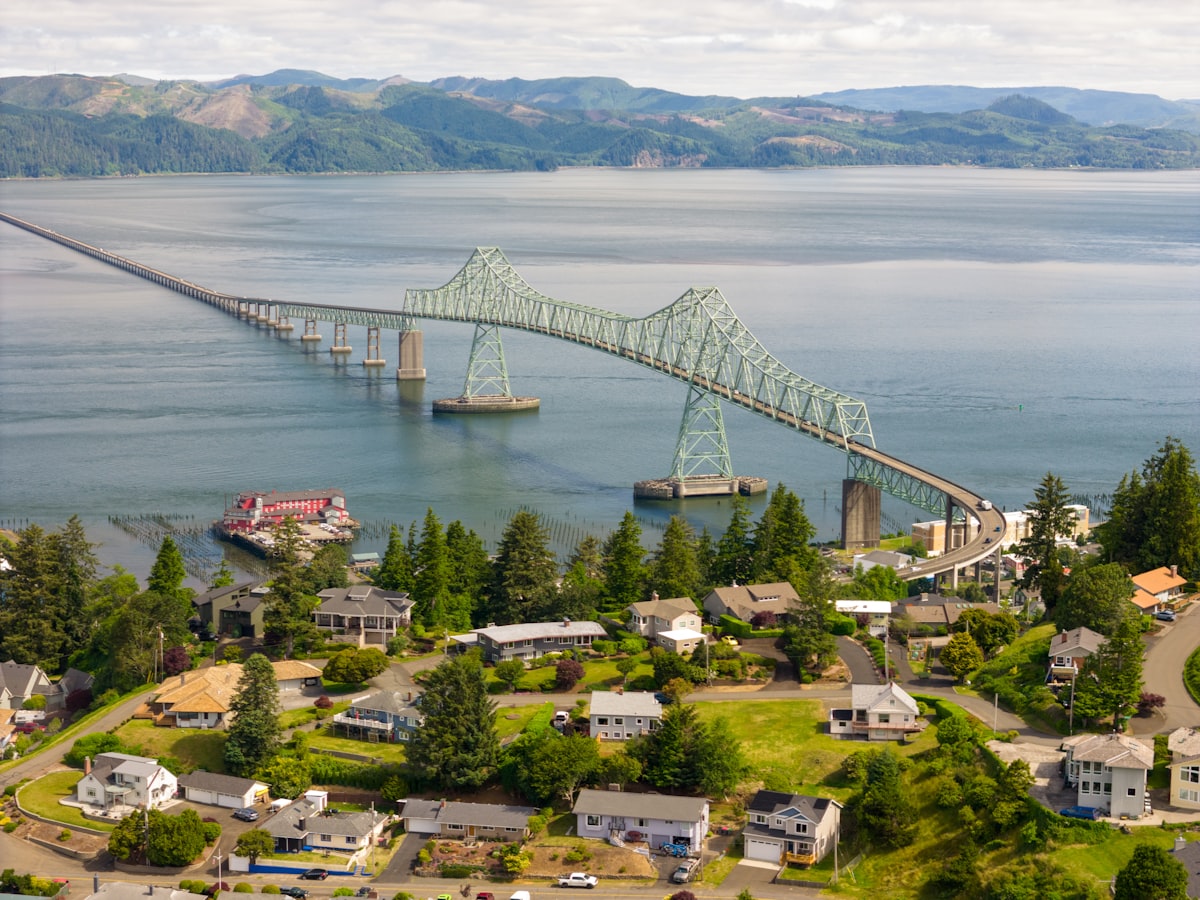

There's a buoy anchored near the mouth of the Columbia River, right where the current meets the Pacific. It's painted red, it bobs in the swells, and it marks the boundary between the river and the ocean. Its name, Buoy 10, has become shorthand for one of the most intense salmon fisheries in North America.
Every August, hundreds of boats crowd into the estuary between Astoria and the open sea, because this is where over a million fall Chinook and coho salmon funnel through on their way upstream to spawn. The fish stage around the river mouth, feeding on anchovies that wash in with the tides, and for about eight weeks the fishing is fast, physical, and chaotic. Boats jockey for position, rods bend, nets flash, and coolers fill. It's not a quiet day on the water. It's an event.
But Astoria's fishing story doesn't start and end with Buoy 10. This small town at the far northwest corner of Oregon has been a working fishing port since the 1800s, and the waters around it produce fish nearly year-round. Here's what the calendar looks like.
Spring: Sturgeon and Spring Chinook (March - June)
Spring starts with sturgeon. The Columbia River estuary around Astoria holds some of the best catch-and-release sturgeon fishing in the system, with fish moving onto shallow flats in the bay to feed on clams. On a good day it's not uncommon to hook 40 to 60 fish, ranging from juveniles to monsters over 100 pounds and eight feet long.
Regulations here are strict, there has been no keeper sturgeon season below Bonneville Dam in recent years, so expect catch and release. But the sheer number of fish and the power of these animals makes it a worthwhile trip. Anglers anchor up in Youngs Bay and the estuary flats, fishing heavy rigs on the bottom with shrimp, smelt, or sand shrimp.
By April, spring Chinook salmon begin moving through the lower Columbia. The run peaks in May, and the play switches between trolling for salmon and anchoring for sturgeon depending on the day's conditions and what you're after. Combo days are popular, salmon in the morning, sturgeon in the afternoon.
Summer: Ocean Salmon and Bottom Fish (June - August)
Before the Buoy 10 madness kicks off in August, Astoria's ocean salmon season opens in June. Boats head out past the Columbia River bar into the Pacific, trolling for Chinook in open water. The ocean fishery is a different animal than the river, you're on bigger water, the fish are chrome-bright and full of fight, and you're also in range of lingcod and rockfish on the nearshore reefs.
Bottom fishing trips target lingcod and black rockfish along the rocky structure outside the river mouth. Lingcod are aggressive predators that average 10 to 20 pounds, with occasional fish over 30. Rockfish come up in steady numbers and are excellent eating. These trips run all summer and are a great option on days when salmon regulations restrict the bite or when you want guaranteed action.
July builds anticipation for the main event. The fleet starts watching water temperatures, tide charts, and reports from other boats.
Late Summer: Buoy 10 (August - September)
Buoy 10 opens August 1st, and the Astoria waterfront transforms. Boat trailers pack every lot, hotels fill up, and the estuary buzzes with hundreds of boats at first light.
The fishery works like this: fall Chinook salmon, big fish averaging 20 to 30 pounds, stage at the river mouth, moving in and out with the tides. The standard approaches are trolling herring or anchoring up and back-bouncing eggs and prawns, targeting fish in the channels and along current seams. When a Chinook hits, the rod doubles over and you earn every inch of line.
Coho salmon arrive mid-August and overlap with the Chinook through September. Coho are smaller (8-12 pounds) but aggressive and acrobatic, they jump, they run, and they hit flies and spinners as readily as bait. The limit is generous in good years, and on the right day it's realistic to put both species in the box.
After Labor Day, the fishery often shifts to coho-only retention with the bonus of Dungeness crab. Drop pots between drifts, and by the end of the day you're heading home with salmon fillets and a bag of fresh crab. It's the best day on the water in Oregon, period.
Fall and Winter: Crab, Bottom Fish, and the Quiet Season (October - February)
When the salmon runs taper off in October, the fishery pivots to Dungeness crab, 12 crab per person per day is the limit, and the crabs are fat and sweet in fall. Bottom fishing for lingcod and rockfish remains open into mid-October.
Winter is the quiet season in Astoria. The fleet slows down, the town gets foggy and atmospheric, and the fishing is mostly limited to estuary sturgeon for the dedicated. But by March the cycle starts again.
What to Bring
If you're going out on a charter, the boat provides all the fishing gear, tackle, and bait. Running your own boat, you'll want salmon and sturgeon setups built for heavy Columbia water (see the gear notes below). Either way, plan on:
- An Oregon fishing license with a combined angling tag for salmon and steelhead (buy online at myodfw.com)
- Warm, waterproof layers, the Columbia River mouth is cold and windy, even in August
- Non-slip shoes or boots
- Seasickness medication if fishing the ocean (take it before you board, the Columbia River bar is notoriously rough)
- A large cooler with ice for the drive home
- If you book a guide or charter, a cash tip, $50-100 per person is standard for a good day