Fish
Fish Fire
Fire Hike
Hike Bird
Bird

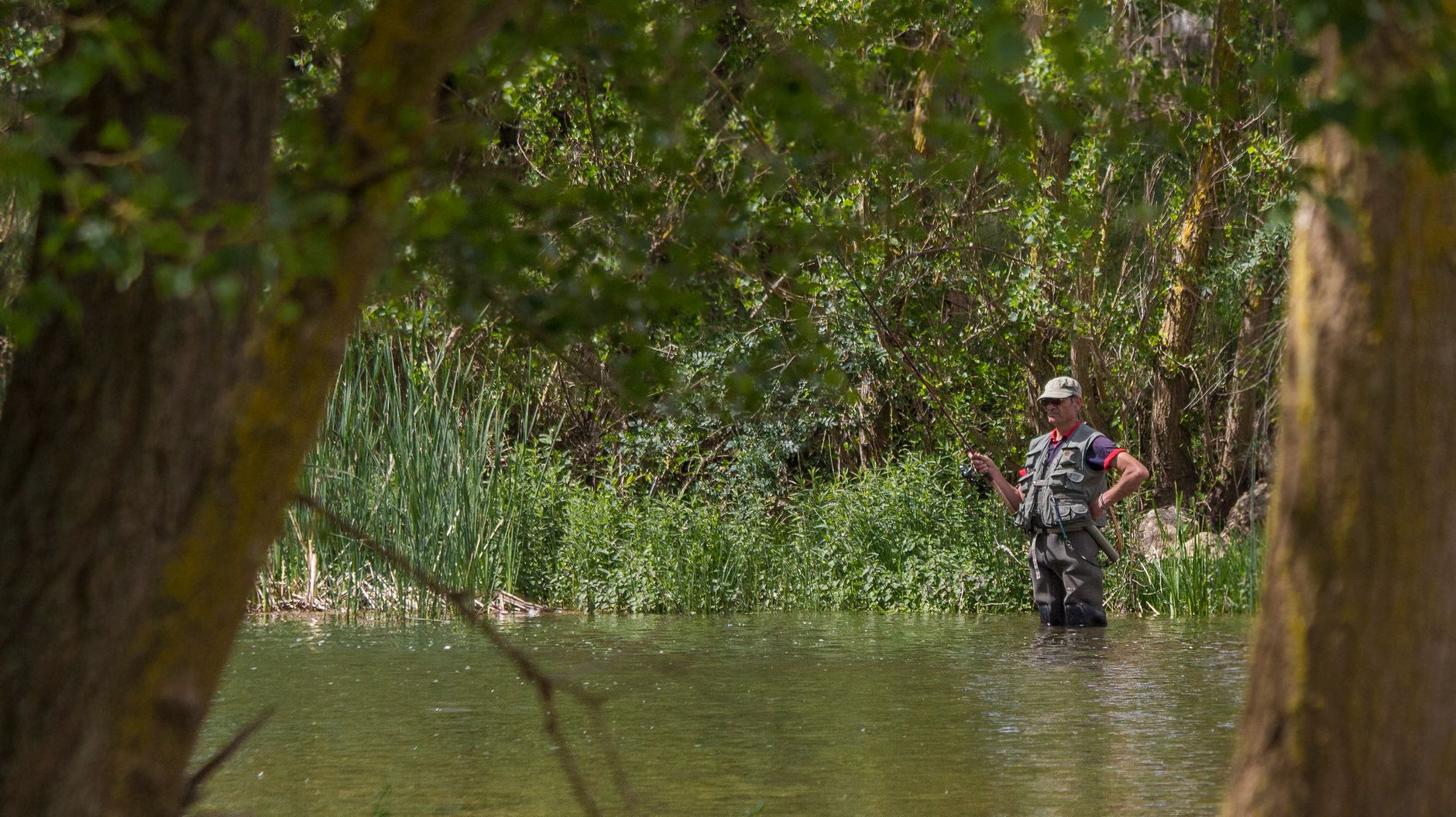
Here is the question that decides more American fishing trips than fly selection ever will: can you put your feet down?
Floating a river and wading a river are treated as completely different legal acts in much of the country. Some states allow both. Some allow floating and treat touching the bed as trespass. The line between them is a state line, and it moves.
Why the distinction exists at all
The logic, once you see it, is consistent even where the outcomes are not. The water itself is generally public, because most states hold flowing water as a public resource and a right to use public water for navigation and recreation is widely recognized. The bed underneath may be private, because on streams that were never navigable for title purposes the original federal patents conveyed the land including the streambed to private owners.
So a floater is using public water and touching nothing private, while a wader is standing on somebody's dirt. Whether that matters is the whole argument, and states have answered it in opposite ways.
Montana Stream LawsThe permissive end: Montana
Montana has the broadest stream access in the United States. Under the state's stream access law, enacted in 1985 after a pair of state supreme court decisions, the public may use surface waters capable of recreational use for fishing, floating, swimming and other water-related recreation up to the ordinary high water mark, regardless of who owns the streambed and regardless of whether the water is navigable for title purposes.
You may wade, you may walk the gravel, and you may portage around a barrier, within limits, by the least intrusive route. You may not cross private land above the mark to get there without permission, and that limit is where most Montana access disputes arise, not in the water. Idaho is broadly permissive on streams meeting the state's navigability standard, allowing public use below the mark.
The restrictive end: Colorado, Utah and Wyoming
Colorado is the state that surprises visiting anglers most. Under long-standing Colorado case law, floating through private land is permitted but touching the bed of a non-navigable stream can constitute trespass, which in practice means you may drift and you may not anchor, stand or wade, and very few Colorado rivers are navigable for title purposes. The practical consequence is that Colorado fishing is heavily concentrated on public land, on leased public access, and on the small number of navigable reaches.
Utah has litigated this repeatedly and landed in a similar place. After a period in which a state supreme court decision appeared to grant broader rights, the legislature passed the Public Waters Access Act, which affirms a public right to float on public water and to incidentally touch private property for safe passage, but not to wade for fishing, hunting or swimming. A later state supreme court case, brought by the Utah Stream Access Coalition, tested whether a historical easement gave the public a right to touch privately owned streambeds, and the court concluded that no such easement was established when Utah achieved statehood. So Utah in practice: float, do not wade, touch only as necessary to get through. Wyoming takes a similar approach, permitting floating while treating contact with a private bed on a non-navigable stream as trespass.
The state that went the other way: New Mexico
New Mexico is the most interesting recent development, and it moved in the opposite direction from Utah. In 2017 the State Game Commission adopted a regulation allowing landowners to have stretches of stream certified as non-navigable and then closed to public access, and the New Mexico Wildlife Federation, the Adobe Whitewater Club and the state chapter of Backcountry Hunters and Anglers challenged it.
On September 1, 2022, the New Mexico Supreme Court issued a unanimous opinion holding that the public right to recreate and fish in public water includes the right to touch the privately owned beds beneath those waters, and that the Game Commission regulation was an unconstitutional infringement on that right. The state attorney general subsequently moved against landowners who had barred access, seeking removal of signs and physical barriers on stretches including the Pecos River.
So within a few years, two neighboring western states looked at nearly the same question and reached opposite conclusions.
The west coast
Washington, Oregon and California all hold the beds of title-navigable waters in public trust, with public rights below the ordinary high water mark on those waters. The difficulty in all three is that navigability for title is determined water by water and reach by reach, and there is no tidy published list covering every stream, so large rivers are generally clear and small ones frequently are not.
In practice, west coast anglers rely heavily on public land, state access sites and known navigable reaches rather than on arguing about the status of a small creek. That is an ownership-data problem rather than a legal one, which is why Guidepole carries the ownership and management layer under the water: which reaches run through public land, where private ownership begins, and where the public access points are, visible before you commit to a float or a walk. On a river where wading is prohibited over private beds, knowing exactly where the public sections start is the difference between a legal day and a citation.
Fishing in Montana: River Access and Trespassing Laws ExplainedHow the arguments run
Understanding both sides makes the state-by-state variation less arbitrary. The public-access argument rests on the idea that water is a public resource held in trust, that a right to use water is meaningless if you cannot make physical contact with what is under it, and that the public paid for the rivers through the equal footing doctrine and should not lose them because a nineteenth-century patent happened to describe the bank.
The property argument rests on the idea that a deed conveying land including a streambed conveyed real property, that the owner pays taxes on it, that the right to exclude is the core of property ownership, and that a state cannot convert private land to public use without compensating for it. Both arguments are serious, and the reason states reach opposite conclusions is not that some of them are being obtuse, it is that they weight a genuine conflict differently and their constitutions and statehood histories differ.
It also explains why these fights are long-running and recurrent, because a legislature enacts access, landowners litigate, a court narrows or broadens it, and the legislature responds. Utah has been through several complete cycles and New Mexico is in the middle of one. For an angler, the operational takeaway is that the rule can change, and that a guidebook printed five years ago is not a legal source.
The gear
In the restrictive states the most important piece of equipment is a boat, which is an unusual thing to say about a fishing article and is the whole point of this one.
The state rule, read before you travel, is the first item. The difference between Montana and Colorado is not a difference of degree. In one, wading a river through private land is a recognized public right; in the other, touching the bed may be trespass and floating through may be too, depending on where you are and who you ask. Nothing about the river tells you which you are on.
A boat, in the restrictive states, because in several of them the only defensible position is one where you never touch the bottom. That reshapes the whole trip: the craft, the launch, the takeout and the shuttle become the plan rather than details of it.
A land-ownership map, so you know which stretches are the problem and which are not.
A wading staff, in the permissive states, where the legal position is that you may be in the river and the practical position is that the river is slippery.
Offline maps, since canyons have no coverage and the boundary you care about is invisible from the water.
Anchor discipline, which is the detail that catches floaters in Colorado and Utah. In several states the right to float does not include the right to anchor, stand, or stop, and dropping an anchor converts a permitted transit into contact with a private bed.
And documentation of your put-in and take-out, both of which need to be public, and both of which are worth photographing.
What a floater may still not do
Even in float-only states, the right is narrower than people assume.
- Anchoring on a private bed is usually not permitted.
- Getting out to scout or portage is usually not permitted, except where a state expressly allows it for safety.
- Standing up to fish is exactly the thing the rule prohibits.
- Using the bank to rest, eat lunch or camp is trespass.
- Fishing from the boat is generally fine, which is why drift boats and rafts dominate on rivers with restrictive rules.
The practical implication is that in Colorado, Utah and Wyoming a boat is not a luxury. It is the legal instrument that makes a stretch of river fishable.
Portage, the everyday problem
The rule that matters most on an actual float is the one about getting out. A diversion dam, a logjam, a low bridge or a fence across the river is a routine feature of western streams, and dealing with it means either running it, lining the boat, or getting out and walking round.
Montana expressly addresses this, permitting portage around barriers by the least intrusive route, with provisions about how far you may leave the water and a requirement that you return as soon as practicable. Most float-only states do not, which produces an unpleasant situation: you are legally entitled to be on the water, physically unable to continue, and not entitled to step out. In practice several of those states recognize a narrow safety exception permitting incidental contact for safe passage, which is exactly the language in Utah's statute.
The operational advice is short.
- Scout the float in advance for known barriers, because discovering one at river level with no legal exit is dangerous.
- Know your take-outs, and treat a barrier without a legal portage as a reason to end the float above it.
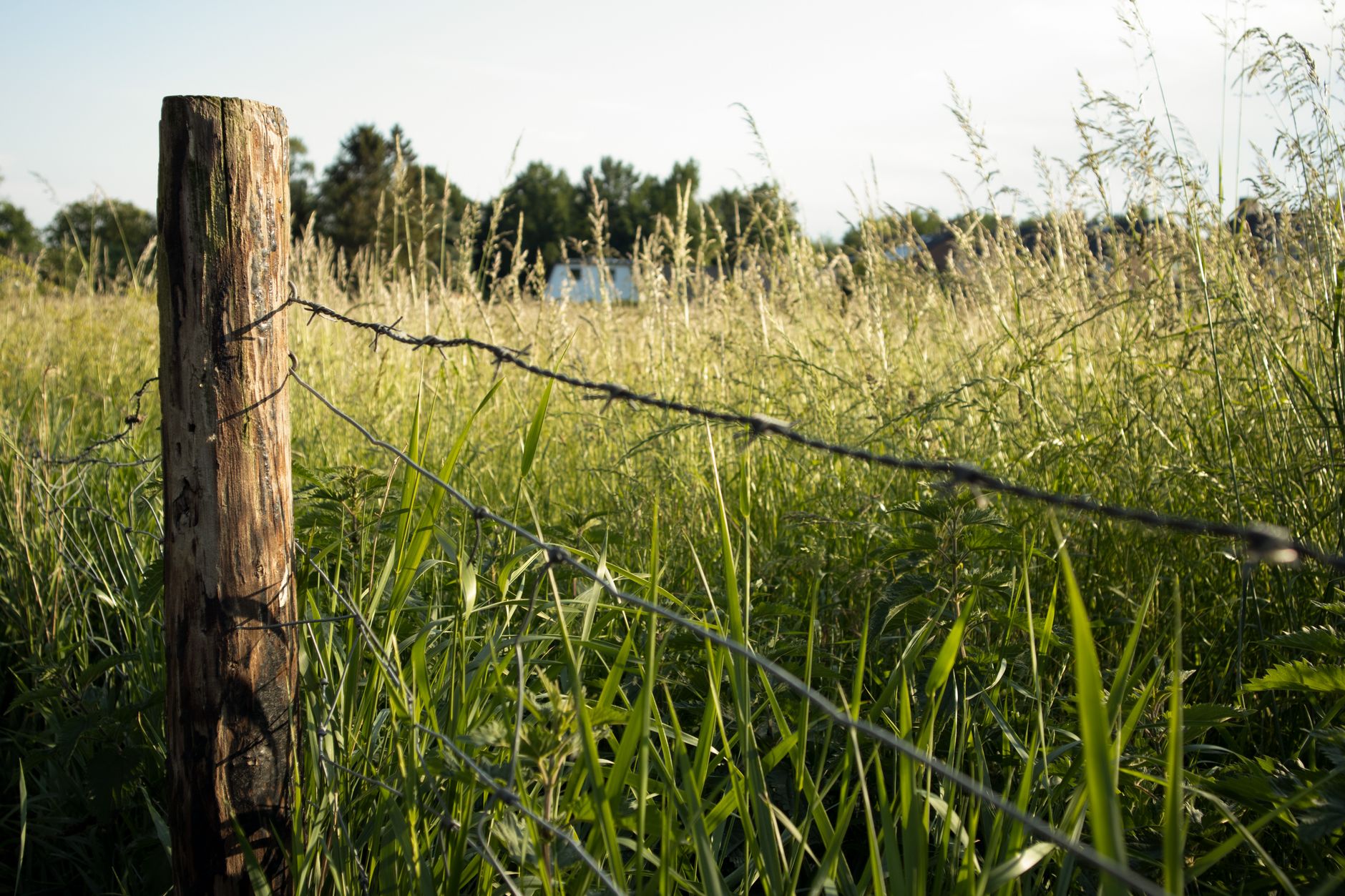
- Fences across rivers are common on ranch water and are the single most dangerous obstacle on small western streams. Barbed wire in current has killed people.
- If safety and the rule conflict, choose safety and be prepared to explain yourself afterward.
Tidal water, lakes and the odd cases
Moving water gets the attention and the other water bodies have their own rules.
- Tidal waters are the most consistently public. Under the public trust doctrine, tidelands below the mean high tide line are generally held in trust and public rights of navigation and fishing are strong, though a few New England states recognize private ownership to low water subject to public rights of fishing, fowling and navigation, which is a genuine quirk worth knowing about.
- Great Lakes shorelines have been litigated extensively, with several states affirming public rights along the shore below the ordinary high water mark and one state's supreme court reaching a different conclusion, which produced a long-running dispute about walking the beach.
- Natural lakes that are navigable for title have public beds, while small non-navigable lakes wholly within private land are generally private, including the water.
- Reservoirs follow the project rules of the managing agency rather than common-law doctrine.
- Irrigation canals and ditches are almost always private infrastructure, are dangerous, and are not public water regardless of what flows through them.
The common thread is that the rule follows the water body type as much as the state, and the assumption that any water you can float is open is wrong in several directions at once.
The rules of thumb
Check the state, not the region, because neighboring states are frequently opposite. Assume float-only unless you know otherwise, which is the safer default in most of the interior west. Montana is the exception rather than the pattern, and anglers who learn to fish there often carry the wrong assumptions everywhere else.
Access is a separate question from use, so even where wading is legal, getting to the water across private land is not. And when in doubt, launch from public ground and stay in the boat. If you are traveling to fish, the ten minutes it takes to read the state rule is the best-value preparation in the sport.
For more, the ordinary high water mark explains the boundary these rules run on, fishing access laws by state has the state detail, and bridge and road-end river access covers how to get to the water legally in the first place.
The physical boundary that all of these rules attach to is in the ordinary high water mark, and the doctrine underneath it is in water access law explained. Getting to the river in the first place is in bridge and road end river access, and reaching landlocked public stretches is in corner crossing explained. The state-by-state version of the whole question is in fishing access laws by state.