Fish
Fish Fire
Fire Hike
Hike Bird
Bird

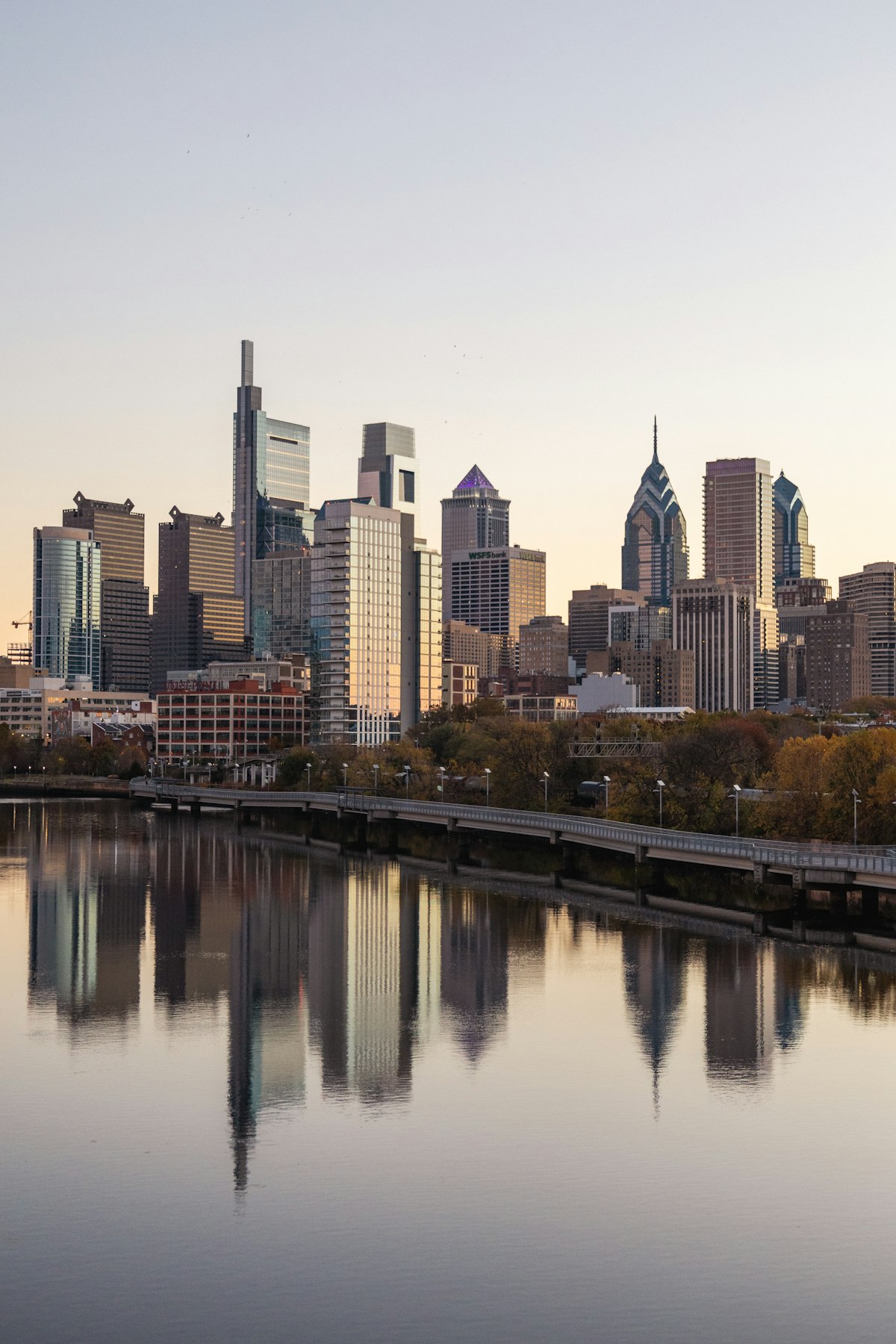

Philadelphia is a river city. The Schuylkill flows through the center of town, passing the Art Museum, Boathouse Row, and the neighborhoods of Manayunk, East Falls, and University City before meeting the Delaware River at the southern tip of the city. The Delaware forms Philadelphia's entire eastern border, 30 miles of tidal river holding striped bass, shad, channel catfish, and carp. And between these two rivers, within the 142 square miles of city limits, Wissahickon Creek runs through 1,800 acres of old-growth forest in Fairmount Park, stocked with trout every spring while the rest of Philly watches from the bridges above.
This city has been fishing since before the Revolution. The Schuylkill was once so polluted it was a punchline. Now it holds over 40 species, and the city has invested millions in riverfront trail systems, fishing piers, and public access points that make it one of the most accessible urban fisheries on the East Coast.
The Schuylkill River: Center City Catfish and Carp
The tidal Schuylkill runs through the middle of Philadelphia, and the fishing is surprisingly good. Channel catfish, flathead catfish, carp, largemouth bass, smallmouth bass, striped bass, bluegill, crappie, and American shad all swim past Boathouse Row. The river is tidal from the Fairmount Dam downstream to the confluence with the Delaware, the current reverses with the tide, and the fishing changes with it.
Where on the Schuylkill
Schuylkill Banks (Center City): Walk-on access from the Schuylkill Banks Boardwalk between Locust and Walnut Streets. Fishing piers at Race Street and the Grays Ferry Crescent. The boardwalk puts you right on the water with the Center City skyline behind you. Catfish, carp, and occasional stripers.
Grays Ferry Crescent Fishing Pier: A dedicated fishing pier at the Grays Ferry Crescent Esplanade on the west bank. Deep water, good catfish habitat. Walk-on from the Schuylkill Avenue and Wharton Street access point.
Bartram's Mile Fishing Pier / Bartram's Garden: On the west bank below Grays Ferry. A fishing pier and the historic Bartram's Garden dock provide access to deeper tidal water. Flathead catfish, channel cats, carp, and occasional stripers.
Manayunk Canal and Towpath: The old canal paralleling the Schuylkill through Manayunk holds largemouth bass, bluegill, and carp in slack water. The Schuylkill itself above the Manayunk Bridge has smallmouth bass in the rocky sections. Walk-on from the Manayunk Towpath trail.
East Falls / Falls Bridge: Above the Fairmount Dam, the river becomes non-tidal. Smallmouth bass, rock bass, and carp in the faster water around the Falls Bridge rapids. Walk-on from Kelly Drive or the East Falls neighborhood.
Schuylkill Techniques
Flathead catfish: The Schuylkill's trophy species. Flatheads over 30 pounds have been pulled from the tidal section. Live bluegill (caught on-site) on a 6/0 circle hook with a 2-ounce sinker, fished on the bottom near deep structure, bridge pilings, submerged timber, and channel edges. Heavy tackle: 7-foot medium-heavy rod, 4000-size reel, 30-pound braid. Fish at night during summer for the biggest flatheads.
Channel catfish: Cut shad, chicken liver, or nightcrawlers on a bottom rig. Every fishing pier and access point on the Schuylkill holds channel cats. The easiest catch on the river.
Carp: Common carp up to 20 pounds cruise the Schuylkill's shallow edges. Corn or dough bait on a hair rig, fished on the bottom near the boardwalk. Or fly fishing with small nymphs and San Juan Worms, Mike Iaconelli filmed an episode fishing monster carp on the Schuylkill.
Smallmouth bass (above Fairmount Dam): Small soft plastics (Ned rigs, tubes) and crankbaits worked around the rocky structure in the non-tidal section. The smallmouth are 8 to 15 inches and feisty.
Multi-Species Fishing on the Tidal Schuylkill River, Philadelphia, PA Fishing for Monster Carp in PhiladelphiaWissahickon Creek: Stocked Trout in the City
Wissahickon Creek is Philadelphia's best-kept fishing secret. Eight miles of this rocky, shaded creek run through the Wissahickon Valley section of Fairmount Park, 1,800 acres of forest so dense you forget you are in a city of 1.6 million people. The Pennsylvania Fish and Boat Commission stocks the Wissahickon with adult rainbow, brown, and palomino (golden) trout before the statewide opener in early April, with additional stockings through mid-May.
Between stockings, the creek also holds wild brown trout in the upper sections, smallmouth bass throughout, rock bass, bluegill, and fallfish. The Wissahickon is a designated Trout Stocked Waters section, a trout permit is required in addition to the fishing licence during trout season.
Where on the Wissahickon
Valley Green Inn area: The most popular section. Walk-on from the Valley Green parking area. The creek is wide here with good pools and riffles. Stocked heavily in spring. Can be crowded on opening day.
Northwestern Avenue downstream to Walnut Lane: The primary stocking zone. Multiple access points from Forbidden Drive (the gravel path running alongside the creek). Deep pools at bridge crossings hold fish.
Devil's Pool area: A deeper section with rock ledges and pools. Smallmouth bass and holdover trout in summer. Walk-on from the Forbidden Drive trail.
Thomas Mill Road Covered Bridge: The only covered bridge in a major American city. The pool below the bridge is a classic trout spot. Walk-on from Forbidden Drive.
Wissahickon Techniques
Stocked trout (April-May): A 5- to 6-foot ultralight spinning rod with a 1000-size reel and 4-pound monofilament. Small spinners (Panther Martin 1/16-ounce, gold or silver), Berkley PowerBait on a bottom rig, or live bait (nightcrawlers or mealworms) under a small bobber. Cast to the deeper pools and runs.
Fly fishing for trout: A 3- or 4-weight fly rod with a 9-foot leader and small nymphs (Pheasant Tail, Hare's Ear, size 14-16) or streamers (Woolly Bugger, olive, size 10). The Wissahickon's rocky bottom and shaded pools are classic small-stream trout water.
Smallmouth bass (summer): After the trout stockings end, smallmouth bass become the primary target. Small crankbaits, Ned rigs, and tubes worked along the rocky bottom. The smallmouth are 6 to 15 inches and aggressive on light tackle.
PA Trout Fishing 2025 in PhiladelphiaFDR Park: Snakeheads in South Philly
Meadow Lake in FDR Park, in the stadium district of South Philadelphia, has become one of the most interesting urban fisheries in the Northeast for an unexpected reason: northern snakeheads. These invasive predators, native to China and Korea, have established themselves in the lake and surrounding waterways. Snakeheads are aggressive, hit topwater lures explosively, fight hard, and grow to 15 pounds or more. Pennsylvania encourages anglers to keep every snakehead they catch, do not release them.
Fishing for Snakeheads
Where: Meadow Lake in FDR Park (Pattison Avenue, South Philadelphia). Walk-on from the park's paved paths. Also found in the tidal marshes and creeks connecting to the Delaware River in Southwest Philadelphia.
Technique: Topwater frogs (Booyah Pad Crasher, Spro Bronzeye Frog) worked over lily pads and vegetation. Snakeheads are ambush predators that explode on topwater lures. Also: chatterbaits, spinnerbaits, and soft plastic swimbaits retrieved through the vegetation. They hit like bass but fight harder.
Regulations: No size or bag limit for snakeheads in Pennsylvania. Keep every one you catch. They are excellent eating, firm, white, mild flesh similar to grouper.
Meadow Lake also holds largemouth bass, crappie, carp, and bluegill. The bass fishing is good on its own, and the snakeheads are a bonus.
The Delaware River: Tidal Stripers and Shad
The Delaware River forms Philadelphia's eastern border and is one of the great tidal fisheries on the East Coast. Within city limits, the river holds striped bass (spring and fall), American shad (spring run, one of the last great shad runs in the country), channel catfish, carp, and smallmouth bass above the tidal reach.
Shore Access
Penn Treaty Park (Fishtown): Walk-on to the Delaware waterfront. Catfish and occasional stripers from the bulkhead.
Frankford Avenue access / Bridesburg: Shore access to the tidal Delaware. Catfish and carp.
Little Tinicum Island area (Southwest Philly): Near the Commodore Barry Bridge. Stripers, catfish, and shad in season.
Pennypack Creek mouth (Northeast Philly): Where Pennypack Creek enters the Delaware. Herring, shad, white perch, and catfish during the spring runs.
Delaware River Techniques
Striped bass (spring/fall): Casting plugs (SP Minnow, Yo-Zuri Crystal Minnow) from shore into the tidal current. Or chunk bait (cut bunker) on a fish-finder rig. The striper run peaks in April-May and October-November.
American shad (April-May): Shad darts (1/8 to 1/4 ounce, chartreuse or white) cast into the current and retrieved with short, sharp strips. Shad are 3 to 7 pounds and fight like fish twice their size on light tackle. One of the most underrated fisheries in urban America.
Fishing the Delaware River, First Striper of 2024 What Lurks in the Depths of the Schuylkill River Right Now?Fishing Licence and Regulations
Pennsylvania fishing licence: Required for anyone 16+. Resident annual $27.97. Nonresident annual $60.97. One-day tourist licence $11.97. Buy online at fishandboat.com.
Trout permit: Required for trout fishing (including Wissahickon Creek during stocked season). $14.97 in addition to the fishing licence.
Trout season: Statewide opener is the first Saturday of April. Wissahickon Creek is stocked before opening day and biweekly through mid-May. After June 15, the creek goes to general regulations.
Striped bass (Delaware River): One per day, 28-inch minimum (check current PFBC regulations, they change).
Snakehead: No size or bag limit. Kill and keep every snakehead caught. Do not release.
Important: Some Philadelphia waterways have fish consumption advisories. Check the PADEP for current advisories before eating fish from the Schuylkill or Delaware.
When to Fish
April-May (Spring): The best season. Trout stocking in Wissahickon Creek. American shad run on the Delaware. Striped bass in the tidal rivers. Schuylkill catfish and carp become active.
June-August (Summer): Smallmouth bass in the Wissahickon and upper Schuylkill. Catfish peak in the tidal Schuylkill, night fishing for flatheads. Snakeheads in FDR Park on topwater. Carp cruising the Schuylkill Banks.
September-November (Fall): Fall striper run on the Delaware. Schuylkill catfish still biting. Snakeheads still aggressive on warm days. Cooling water brings perch and crappie.
December-March (Winter): Slowest season but not dead. Catfish in the deep holes of the tidal Schuylkill on warm days. Winter trout stocking in some SE Pennsylvania waters. The die-hards fish the Delaware for holdover stripers.
Practical Details
Getting there: SEPTA reaches most fishing spots. The Manayunk/Norristown Regional Rail line stops at Manayunk, East Falls, and Wissahickon stations, walk to the creek or river. The Broad Street Line reaches FDR Park (NRG station). The Schuylkill Banks boardwalk is a short walk from 30th Street Station. Bike the Schuylkill River Trail for miles of river access. Driving works too, most spots have street parking or small lots.
Gear that travels: A two-piece 6'6" medium spinning rod and a small tackle bag covers Schuylkill catfish, Wissahickon trout, FDR Park snakeheads, and Delaware stripers. For Wissahickon trout, an ultralight rod is ideal. For flathead catfish, bring heavier gear (7-foot MH rod, 30-pound braid).
Tackle shops: The Sporting Gentlemen (Rittenhouse, fly fishing gear and Wissahickon intel), Philadelphia Bait and Tackle (Northeast Philly, Delaware River intel), Dick's Sporting Goods and Bass Pro Shops in the suburbs.
For more East Coast urban fishing, see urban fishing in Washington DC (Potomac snakeheads and blue catfish), urban fishing in Boston (harbor stripers from Castle Island), or urban fishing in Pittsburgh (Three Rivers smallmouth under 446 bridges). For saltwater near Philadelphia, read our Chesapeake Bay fishing guide.
Safety: Fish in daylight or with a partner. The Schuylkill Banks boardwalk and Wissahickon trails are well-used during the day. FDR Park is generally safe but use judgment after dark. Watch your footing on wet rocks in the Wissahickon. The Delaware riverfront has some isolated sections, fish with company at night.