Fish
Fish Fire
Fire Hike
Hike Bird
Bird

Boca Grande is, quite simply, the tarpon capital of the world. Every spring, tens of thousands of giant tarpon, silver kings pushing well past 100 pounds, funnel into Boca Grande Pass, the deep natural cut at the south end of Gasparilla Island where Charlotte Harbor empties into the Gulf. Anglers travel from around the globe for the chance to hook one of these ancient, leaping fish, and during the famous "hill tides" of early summer the pass fills with boats and bent rods. But there's far more to Boca Grande than the pass: the calmer beaches and back bays offer a more intimate tarpon experience, and the vast flats of Charlotte Harbor and Pine Island Sound hold a world-class inshore slam of snook, redfish, and trout. This guide covers all of it.
For the wider picture, the island, the seasons, and trip planning, read our complete Boca Grande fishing guide. For nearby Gulf-coast fishing, see how to fish Fort Myers and Sarasota.
First: Your Florida License
Anyone 16 or older needs a Florida saltwater fishing license to fish here, available in minutes online at GoOutdoorsFlorida.com or the Fish|Hunt FL app, or at local tackle shops and Walmart; short-term (3-day and 7-day) non-resident licenses are handy for a visit. If you fish with a licensed charter, you're covered under the captain's license, which is one reason many first-timers start with a guided trip. A crucial rule: tarpon are catch-and-release in Florida. They must be released, and any tarpon over 40 inches must stay in the water (you cannot remove it from the water for a photo). A special harvest tag is required only if you're pursuing a state or world record, otherwise, every tarpon swims free.
What You'll Catch
- Tarpon, the silver king, the reason Boca Grande is legendary; giant fish that leap, run, and test everything you've got.
- Snook, the prized ambush predator of the mangroves, docks, and passes.
- Redfish, copper-bronze flats bruisers that tail on the grass.
- Speckled trout, abundant and fun on the grass flats, great for beginners.
- Goliath grouper, the enormous (several-hundred-pound), protected reef giants that lurk in the pass and around structure.
- Sharks, cobia, and mackerel, the aggressive bonus fish along the beaches and passes.
- Grouper and snapper, the offshore bottom prizes a short run into the Gulf.
Tarpon in the Pass: The Main Event
Boca Grande Pass is a deep trough, reaching 70 to 80 feet, and in late spring it becomes the greatest concentration of tarpon on the planet. The classic technique is a deep, bait-fishing game: the captain positions the boat up-current of a school marked on the sounder, and you lower a live crab, threadfin, or squirrelfish down to the fish's depth on heavy conventional gear (think a lever-drag reel, 80- to 100-pound braid, a 60-pound fluorocarbon leader, a few ounces of lead, and a stout circle hook), then drift through the fish. When a 130-pound tarpon eats and comes tight, it will greyhound across the surface and try to spool you, the fight of your life.
The pass is a busy, crowded, and etiquette-heavy fishery in May and June, with boats drifting in a coordinated line; this is not the place to learn on your own, so fish it with a guide who knows the drift, the rules, and how to keep you (and everyone around you) safe. Hooked-up boats have the right of way, and there's a real rhythm to it. It's chaotic, thrilling, and utterly unique.
Florida Tarpon: Rigging, Techniques, and Pro TipsThe Hill Tides: Boca Grande's Magic Window
The single most famous phenomenon here is the "hill tide." During May, June, and into July, on the days around the full and new moons (roughly two days before to two days after), a powerful afternoon outgoing tide rips out of Boca Grande Pass, flushing crabs and baitfish out with it. The tarpon stack up and gorge, and the fishing can be spectacular, trips typically run from mid-afternoon until sunset, and hooking ten fish in an evening is not unheard of. If you can time your visit to the hill tides, do it: mark the moon phases, book early (guides fill up a year ahead for these dates), and prepare for the best tarpon fishing on earth.
Tarpon on the Beaches and Flats: The Intimate Alternative
Not everyone wants the crowded chaos of the pass, and the good news is you don't have to. Tarpon also cruise the beaches, grass flats, and back bays around Gasparilla Island, Cayo Costa, and Pine Island, where you can hunt them in calm, quiet water. This is sight-fishing: you idle along looking for rolling, "daisy-chaining," or laid-up tarpon, then cast a live bait, a soft-plastic, or a fly ahead of them and lead the school. It's a more personal, technical, and arguably more rewarding way to catch a silver king, one fish at a time, on lighter tackle, often with no other boats in sight. For fly anglers especially, the Boca Grande beaches at dawn are a dream.
The Backcountry Slam: Snook, Redfish, and Trout
When the tarpon aren't the target, the flats and mangroves of Charlotte Harbor and Pine Island Sound, one of the largest and healthiest estuaries in Florida, deliver a superb inshore slam, and it fishes well year-round.
- Snook hold tight to mangrove shorelines, dock lights, and the passes; work a live pilchard, a soft-plastic jerkbait, or a topwater along the structure, especially at dawn and dusk.
- Redfish tail and cruise the shallow grass flats and oyster bars; a gold spoon, a live shrimp under a popping cork, or a weedless soft-plastic tight to structure is the ticket.
- Speckled trout are abundant over the deeper grass flats and potholes, a shrimp under a popping cork or a soft-plastic on a jighead catches them all day, making them a perfect first target for kids and beginners.
Goliath Grouper and the Bonus Fish
Boca Grande Pass is also famous for its goliath grouper, colossal, protected fish that can top several hundred pounds and inhale a bait meant for something smaller. Hooking one is a back-breaking (and strictly catch-and-release) tug-of-war against a fish the size of a refrigerator, a bucket-list experience of its own. Along the beaches and passes you'll also find sharks (which follow the tarpon), cobia cruising the surface, and Spanish and king mackerel in the spring and fall. A short run into the Gulf puts you over reefs and wrecks for grouper and snapper, the makings of a great fish dinner when the inshore bite is slow.
Choosing Your Trip: Pass, Beach, or Backcountry
Because Boca Grande offers such different fisheries, tell your captain what you want:
- Pass tarpon trips target the deep pass with heavy conventional gear, the classic big-tarpon experience, best May–June and on the hill tides.
- Beach and flats tarpon trips are quieter, more personal, and great for fly and light-tackle anglers.
- Backcountry trips chase snook, redfish, and trout on the flats, the most beginner- and family-friendly option, and productive all year.
The guide provides the boat, tackle, bait, and license; you bring sun protection, snacks, water, and a camera. Book well ahead for tarpon season, the best guides are reserved months in advance.
When to Go
- Spring (April–May): Tarpon pour in and stage; snook and redfish get active. Early-season tarpon on the beaches and in the harbor before the pass gets crowded.
- Early Summer (May–July): Peak tarpon, the pass is packed, and the hill tides produce the best fishing of the year. Book far ahead.
- Late Summer–Fall (August–November): Excellent, less-crowded late-season tarpon on the beaches, plus prime snook and redfish and the fall mackerel/cobia run.
- Winter (December–March): The tarpon are gone, but backcountry snook, redfish, and trout, plus sheepshead and offshore grouper, keep the fishing good in cooler, quieter conditions.
Gear: What to Bring
- Pass tarpon: Heavy conventional gear, a Penn Fathom or similar lever-drag reel, a stout rod, 80- to 100-pound braid, 60-pound fluorocarbon leader, circle hooks, and lead. The charter provides all of it.
- Flats and beach tarpon: A 7- to 7.5-foot medium-heavy spinning rod with a 6000-size reel and 30- to 50-pound braid, or an 11- or 12-weight fly rod for the fly crowd.
- Backcountry (snook/redfish/trout): A 7-foot medium spinning rod with a 3000-size reel and 15- to 20-pound braid, a Penn Battle III or Shimano Stradic combo, plus popping corks, jigheads, gold spoons, and soft-plastics like the Berkley Gulp Shrimp.
- Everyone: Polarized sunglasses, a wide-brim hat, a long-sleeve sun shirt, heavy sunscreen, and plenty of water, the Southwest Florida sun is intense.
Reading the Tides and the Moon
More than almost any fishery, Boca Grande tarpon fishing revolves around tide and moon. The tarpon feed hardest on strong moving water, which is why the powerful outgoing "hill tides" around the full and new moons are so productive, the current flushes crabs and bait out of the pass and the tarpon line up to eat. Even outside the hill tides, plan your fishing around the strongest tide movement of the day, whether that's an incoming or outgoing tide, and around the low-light windows of dawn and dusk when tarpon (and snook) feed most aggressively. On the flats, a rising tide pushes redfish up onto the grass and into the mangroves, while a falling tide concentrates fish in the guts and channels. Build the day's plan around the tide charts and the moon phase, and understanding why makes you a better angler. Download a tide app, watch the moon, and you'll quickly see the rhythm that drives everything here.
Making It a Trip: Gasparilla Island
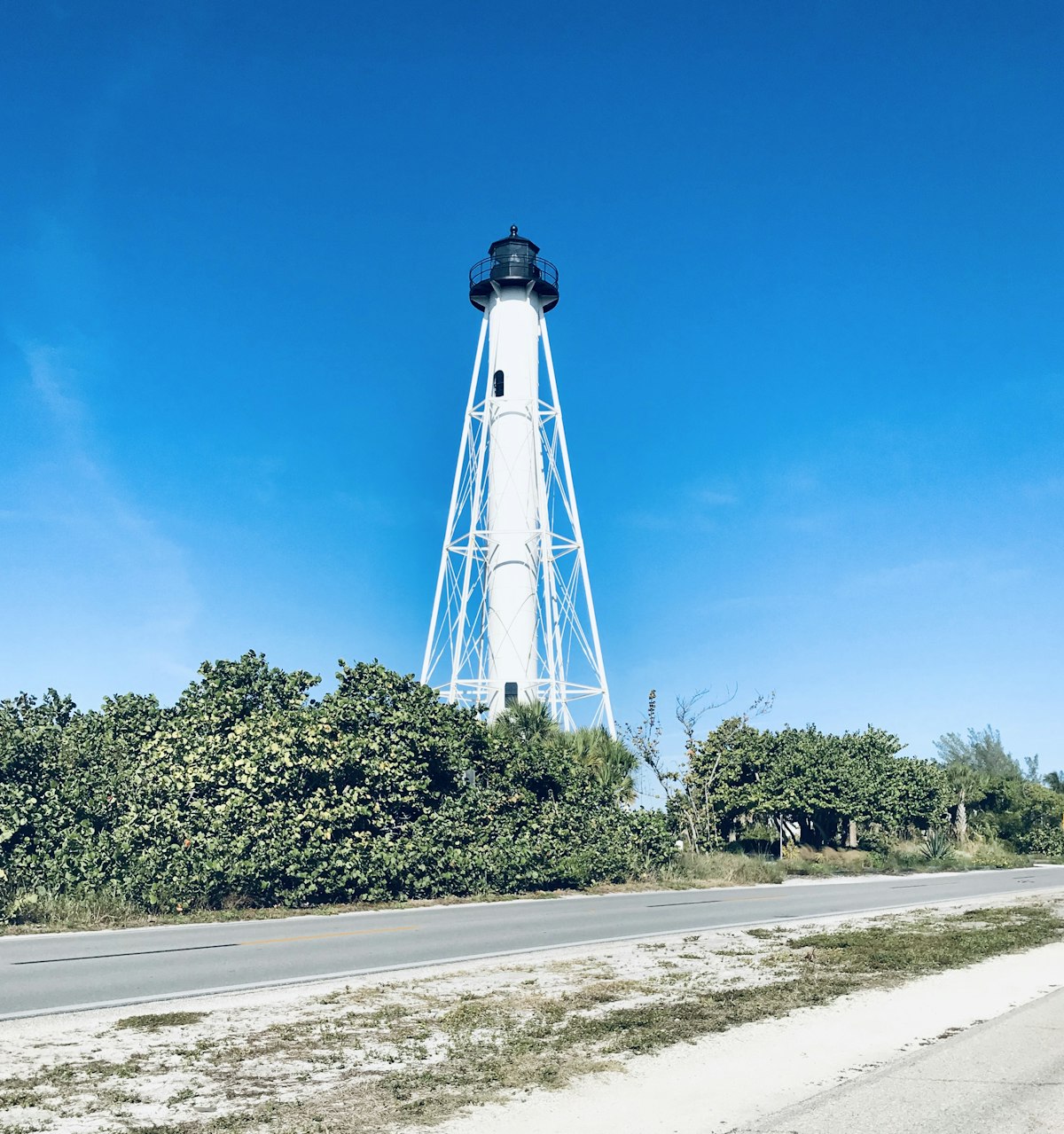
Boca Grande the town, on Gasparilla Island, is as charming as its fishing is famous, a throwback of banyan-shaded streets, golf carts, historic inns, and a genuine old-Florida pace with none of the high-rise sprawl of the bigger coastal cities. The candy-striped Boca Grande Lighthouse at the tip of the island, overlooking the very pass you'll fish, is the iconic landmark and a lovely spot to watch the tarpon roll. Between trips you can bike the Gasparilla Island trail, hunt for shells and sharks' teeth on the Gulf beaches, tour Cayo Costa's undeveloped barrier-island shoreline by boat, and eat fresh grouper at a dockside restaurant. The island's tarpon tournaments in early summer are a spectacle in their own right. It all makes Boca Grande a rare fishing destination that doubles as a relaxed, upscale island getaway, easy to share with a non-angling partner or family who'll be just as happy on the beach.
A First-Timer's Best Bet
If it's your first time and you want the best experience, match the trip to your goal and the calendar. If a giant tarpon is the dream, come in May or June, book a guided pass trip on or around a hill tide (reserve months ahead), and be ready for a heavy, physical fight, this is the bucket-list option. If you'd rather have a calmer, more personal day, ask for a beach or flats tarpon trip, or come in the shoulder seasons when the pass is less crowded. And if you're bringing kids or beginners, or just want steady action, book a backcountry trip for snook, redfish, and especially speckled trout, forgiving, productive, and fun, and available year-round. Whatever you choose, protect yourself from the sun and plan your day around the tide, and for the crowded, deep pass in particular, fishing with a local captain is the safe way to start. Start with the trip that fits your experience, and Boca Grande will have you planning your return before the boat's back at the dock.
A Word on Conservation
Boca Grande's tarpon fishery is a global treasure, and how you handle these fish matters enormously. Tarpon are catch-and-release: keep fish over 40 inches in the water, use circle hooks to reduce deep-hooking, revive a tired fish alongside the boat before release, and never drag one aboard for a photo. Be aware that sharks target hooked, exhausted tarpon in the pass, land your fish quickly to give it the best chance. Honor the snook and redfish slot limits and closed seasons (both are tightly managed in Florida), release every goliath grouper, and take only what you'll eat from the reef. Respect the pass etiquette and your fellow anglers, and pack out all your line and trash. Fished with care, Boca Grande will keep earning its title as the tarpon capital of the world.