Traverse City Fishing: Where Grand Traverse Bay, the Rivers, and Lake Michigan Converge
← All field notes

Traverse City · Michigan

Traverse City Fishing: Where Grand Traverse Bay, the Rivers, and Lake Michigan Converge

Traverse City sits where Grand Traverse Bay meets the rivers of northern Michigan, smallmouth bass in the bay, steelhead in the tributaries, and salmon and lake trout on Lake Michigan charters.

Colin Van Dyke

Colin Van Dyke

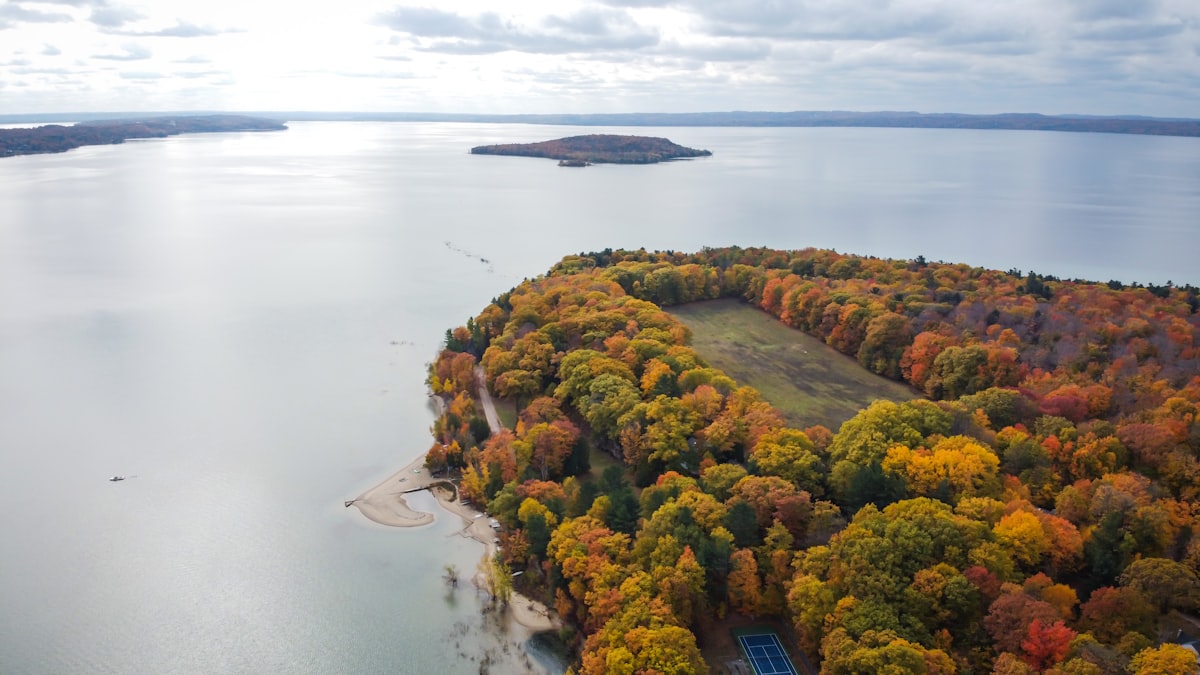
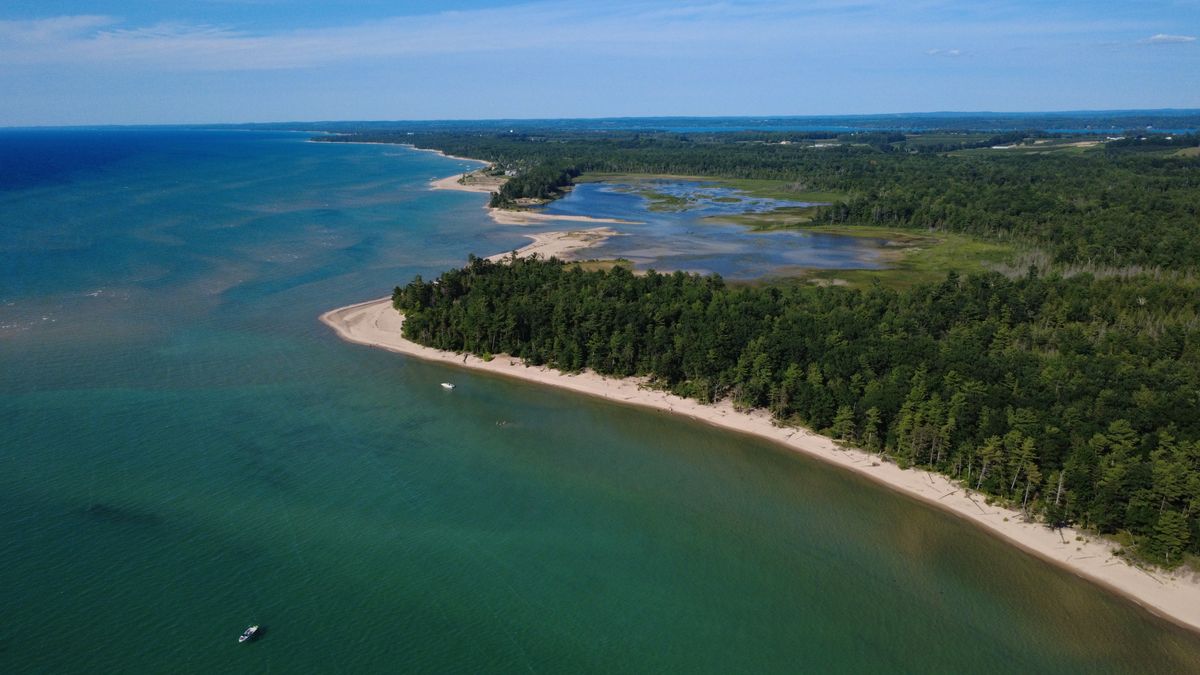
Traverse City sits at the base of Grand Traverse Bay, a deep arm of Lake Michigan that splits the Leelanau Peninsula from the mainland. The bay itself holds one of the best smallmouth bass fisheries in the Midwest. The rivers that feed into it, the Boardman, the Betsie, the Platte, run steelhead and salmon on seasonal migrations. And the open water of Lake Michigan supports a charter fleet targeting lake trout, chinook salmon, and coho.

Three fisheries, all within 30 minutes, each with its own gear, technique, and character.

Grand Traverse Bay, Smallmouth Bass

The bay is the centerpiece. Grand Traverse Bay's clear, cold water and rocky bottom create ideal smallmouth bass habitat, and the fishery has become one of the best-known smallmouth destinations in the country.

Smallmouth bass in the bay average two to four pounds, with fish over five pounds caught regularly and occasional smallmouth pushing six. They hold on rocky points, boulder fields, and gravel bars in 5 to 25 feet of water, and they fight with an intensity that belies their size, long runs, acrobatic jumps, and a stubbornness that makes them hard to land on light tackle.

The fishing peaks in two windows: late May through June during the spawn, when fish move shallow and are visible over the gravel in clear water, and September through October during the fall feed, when smallmouth bulk up before winter and hit aggressively. Tube jigs, drop shots, and ned rigs are the conventional standards. Fly anglers throw crayfish patterns and clousers on 6-weight rods.

Sight-fishing for spawning smallmouth in the crystal-clear bay, spotting a four-pound bass on a gravel bed in six feet of water and dropping a tube right on its nose, is a visual experience more commonly associated with bonefishing than bass fishing.

The Rivers, Steelhead and Salmon

The tributaries that empty into Grand Traverse Bay and the nearby Lake Michigan shoreline are the migration highways for steelhead and salmon.

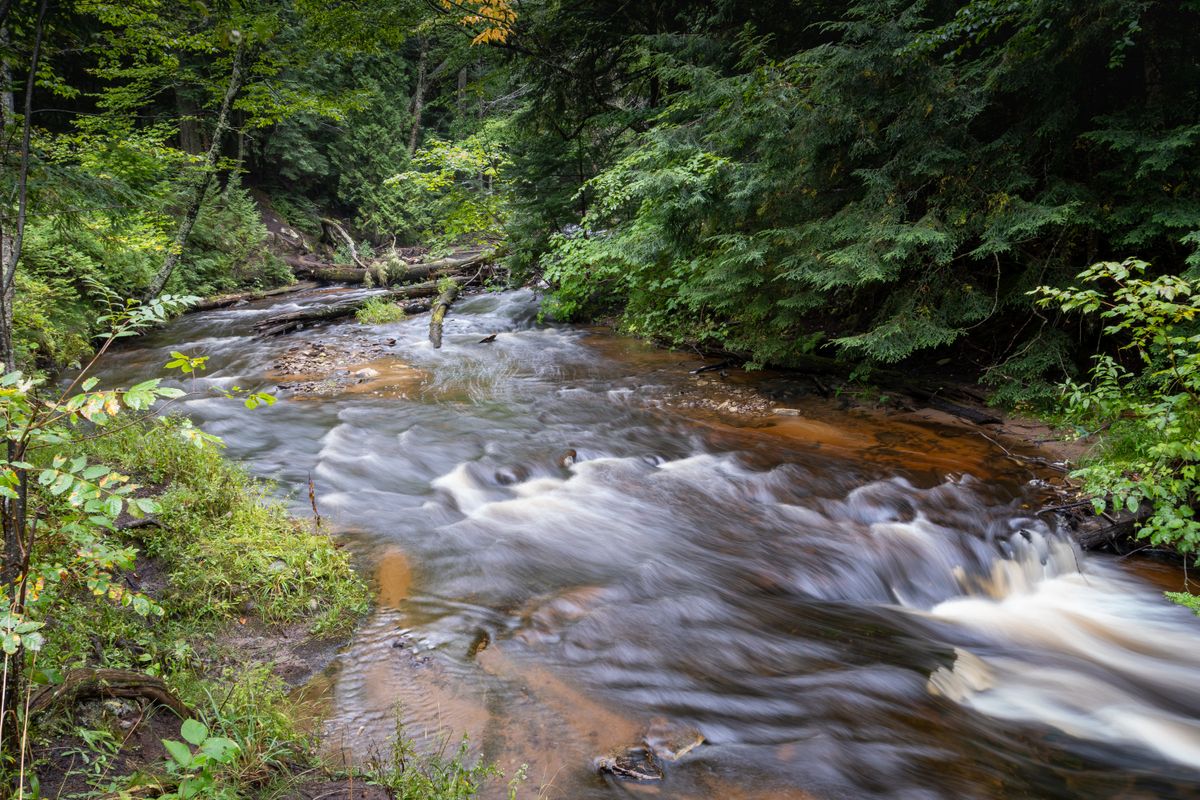
The Boardman River flows right through Traverse City and receives runs of steelhead in spring (March through April) and chinook and coho salmon in fall (September through October). The lower river is accessible from downtown, and the upper sections wind through forested hills with good wade-fishing access.

The Platte River south of town is famous for its coho salmon run, one of the most concentrated runs in Michigan. The Platte River Fish Hatchery on the lower river manages the run, and in September the fish stack in the river in numbers that have to be seen to be believed.

The Betsie River near Frankfort offers steelhead in spring and salmon in fall through a beautiful northern Michigan setting, smaller water, less pressure, and consistent runs.

Steelhead fishing on these rivers is a wading game, reading the current, swinging flies or drifting spawn bags through the pools and runs. Salmon fishing in fall is heavier, bigger rods, bigger fish, and bigger crowds at the popular holes. A 20-pound chinook in a river barely 30 feet wide is a violent, unforgettable fight.

Lake Michigan Charters, Open Water

The charter fleet out of Traverse City, Frankfort, and Leland runs Lake Michigan for the open-water species that the rivers and bay can't offer.

Lake trout are the year-round foundation. They hold along the deep thermal breaks, 60 to 120 feet in summer, and are caught by trolling with downriggers. Fish average five to ten pounds, with lakers over 15 caught every season.

Chinook salmon are the summer and fall highlight. Fish in the 15- to 25-pound range chase bait along the thermocline, and the fight of a big chinook on a charter rod, long screaming runs and powerful head shakes, is the signature Lake Michigan experience.

Brown trout cruise the nearshore water in spring and fall, often within a mile of shore. April and May brown trout fishing, targeting the big fish that cruise the warm-water plumes near river mouths, produces some of the largest trout of the year.

When to Go

  • March–April: Spring steelhead in the rivers, brown trout nearshore on Lake Michigan
  • Late May–June: Smallmouth bass spawn in Grand Traverse Bay, the visual fishing peak
  • July–August: Lake Michigan charters for chinook and lake trout, bass in the bay
  • September–October: Salmon runs in the rivers, fall smallmouth bass, the best all-around window
Recommended gear

  • Shimano Tekota 500 Line Counter

    Mid-tier, Grand Traverse Bay salmon and lake trout trolling

  • Okuma Classic Pro 451 Line Counter

    Entry level, budget trolling reel

  • Pflueger President Spinning Combo 2500

    Mid-tier, smallmouth and trout on the rivers

  • Ugly Stik GX2 Spinning Combo 6'6" Medium

    Entry level, river trout and smallmouth

  • Rapala Husky Jerk 12 Silver Blue

    Trolled for lake trout and salmon in the bay

  • Z-Man TRD Green Pumpkin

    Ned rig for Traverse Bay smallmouth

Frequently asked

Do you need a license to fish Traverse City?

Yes, Michigan requires a fishing license, available daily or annual for non-residents through the Michigan DNR (the all-species license covers trout and salmon). On a charter, the captain's license covers everyone aboard.

How much does a Traverse City fishing charter cost?

A guided salmon and lake-trout trolling trip on Grand Traverse Bay typically runs about $500 to $800 for a half to full day for up to four to six anglers. River fly-fishing guide trips for trout and steelhead on the nearby Boardman and Manistee run about $350 to $500.

What is Grand Traverse Bay known for fishing?

Grand Traverse Bay holds one of the best smallmouth bass fisheries in the Midwest. The clear, cold water and rocky bottom support fish averaging two to four pounds with five-pounders caught regularly. Sight-fishing for spawning smallmouth in the crystal-clear bay is a signature experience.

When do salmon run near Traverse City?

Chinook and coho salmon run the Boardman, Platte, and Betsie Rivers from September through October. The Platte River coho run is one of the most concentrated in Michigan. Chinook average 15 to 25 pounds. Spring steelhead run March through April in the same rivers.

Can you fish Lake Michigan from Traverse City?

Yes. Charter boats out of Traverse City, Frankfort, and Leland troll Lake Michigan for lake trout, chinook salmon, coho salmon, and brown trout from spring through fall. Lake trout are the most consistent target, with chinook peaking in summer and early fall.

What is the best time to fish Traverse City?

September and October offer the best diversity, salmon in the rivers, fall smallmouth in the bay, and lake trout on charters. Late May through June is peak for smallmouth bass. March through April is steelhead season. Every season has a primary fishery.

Is Traverse City good for fly fishing?

Excellent. The Boardman, Betsie, and Platte Rivers offer steelhead and salmon fly fishing. Grand Traverse Bay smallmouth respond well to crayfish patterns and clousers on 6-weight rods. The clear water and diverse hatches on the rivers make this a premier northern Michigan fly-fishing destination.

More Michigan field notes

Urban Fishing in Detroit: Walleye Runs on the Detroit River, Smallmouth Under the Bridges, and World-Class Shore Fishing from Belle Isle

Detroit, MI

Urban Fishing in Detroit: Walleye Runs on the Detroit River, Smallmouth Under the Bridges, and World-Class Shore Fishing from Belle Isle

Detroit sits on one of the best smallmouth bass fisheries in North America. The Detroit River connects Lake St. Clair to Lake Erie, and every spring 14 million walleye migrate through it. Belle Isle puts you on a fishing pier in the middle of the river. No boat needed for any of it.

Fly Fishing Isle Royale National Park: Backpacking, Brook Trout, and the Most Remote Island in the Great Lakes

Houghton, MI

Fly Fishing Isle Royale National Park: Backpacking, Brook Trout, and the Most Remote Island in the Great Lakes

Isle Royale is a 45-mile-long island in the middle of Lake Superior, no roads, no cars, no cell service. You take a ferry from Houghton or Copper Harbor, hike between inland lakes with a pack rod, and catch brook trout on dry flies while moose browse the shoreline. This is wilderness fishing without flying to Alaska.

How to Fish Traverse City, Michigan: A Beginner's Guide to Salmon, Lake Trout, Smallmouth Bass, and Grand Traverse Bay

Traverse City, MI

How to Fish Traverse City, Michigan: A Beginner's Guide to Salmon, Lake Trout, Smallmouth Bass, and Grand Traverse Bay

Everything a first-timer needs to fish Traverse City, trolling for salmon and lake trout on Grand Traverse Bay, smallmouth bass on the rocky shoals, fly fishing the Boardman River, fall salmon runs, ice fishing, and practical details for visiting anglers.

How to Fish Ludington, Michigan: A Beginner's Guide to Salmon, Steelhead, Piers, and Charters

Ludington, MI

How to Fish Ludington, Michigan: A Beginner's Guide to Salmon, Steelhead, Piers, and Charters

Everything a first-timer needs to fish Ludington, what gear to bring, how to rig for the breakwater piers, what the charter captains run on Lake Michigan, how the Pere Marquette River salmon and steelhead run works, and where to take the family for walleye and panfish on Hamlin Lake.

Anywhere, MI

Egg Patterns: The Glo Bug, Blood Dot, Sucker Spawn, and the Flies That Purists Hate and Guides Love

Egg patterns are the simplest flies you'll ever tie and the most controversial you'll ever fish. Four recipes, the full color chart, where to dead-drift them, and why the purist debate doesn't matter.

Fly Fishing the Pere Marquette: Great Lakes Steelhead, the Hex Hatch, and a River That Fishes Every Month of the Year

Baldwin, MI

Fly Fishing the Pere Marquette: Great Lakes Steelhead, the Hex Hatch, and a River That Fishes Every Month of the Year

The Pere Marquette is the longest unregulated river in Michigan's Lower Peninsula, no dams, wild fish, and a season that never ends. Spring steelhead, summer hex hatches, fall salmon, winter solitude. Every month has a reason to be on the water.