Fish
Fish Fire
Fire Hike
Hike Bird
Bird

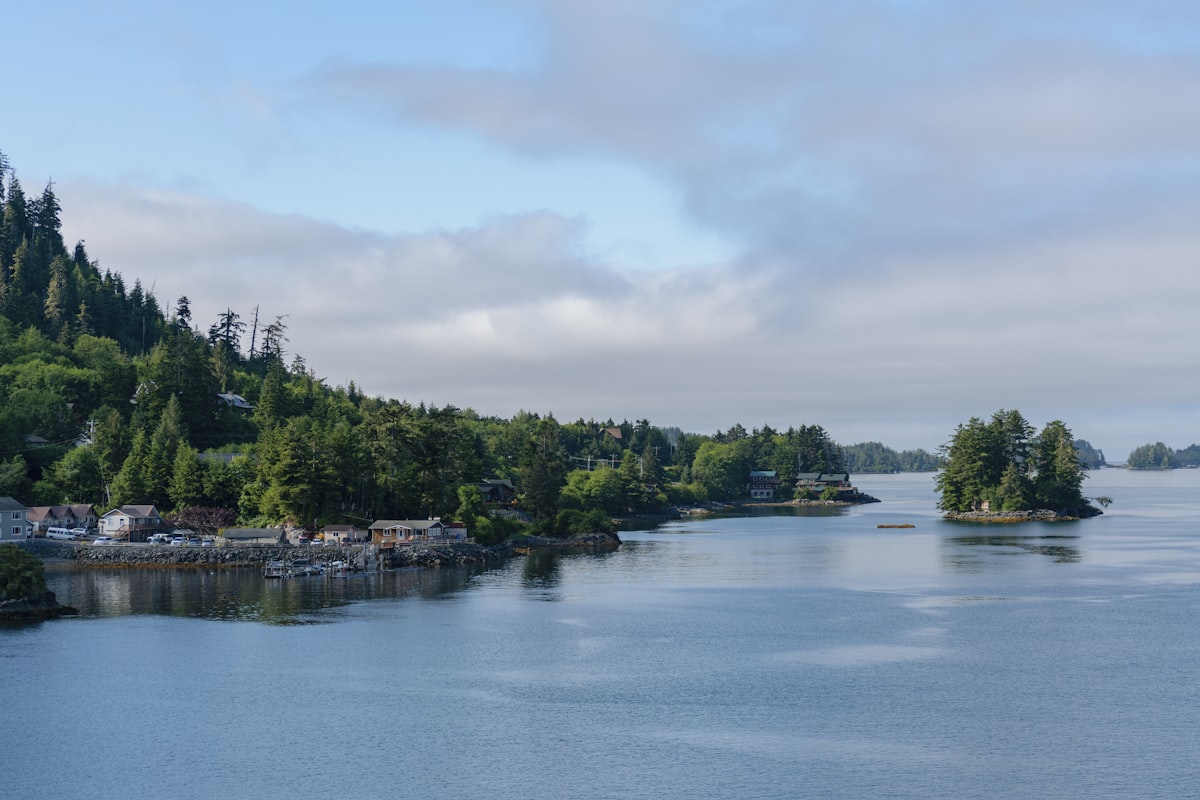

Sitka is different from every other fishing town in Alaska. While most Southeast Alaska ports, Juneau, Ketchikan, Petersburg, sit in the protected Inside Passage, Sitka faces the open Pacific Ocean on the outer coast of Baranof Island. That exposure to the open ocean means colder, more nutrient-rich water, stronger currents, and an abundance of baitfish that attracts predators in concentrations that the sheltered inside waters can't match.
The Alaska Department of Fish and Game has recognized Sitka as having the highest sportfishing catch rate for king salmon in the state, roughly 45 minutes of rod time per king salmon caught, a statistic that no other Alaska port approaches. The reason is Sitka Sound: a large, protected body of water surrounded by islands and fed by the open Pacific, creating a natural funnel that concentrates salmon, halibut, lingcod, and rockfish in fishable water close to town.
King Salmon, The #1 Catch Rate in Alaska
King salmon (chinook) are the headliner, and Sitka's numbers back the claim. The fish migrate through Sitka Sound from May through June, feeding on the herring, needlefish, and other baitfish that crowd the sound's rich waters. The kings average 20 to 35 pounds, with fish over 40 caught regularly and occasional fish pushing 60.
The technique is trolling, pulling herring or hoochies behind downriggers at specific depths, working the current edges, points, and underwater structure where kings hold. What makes Sitka different from other king salmon ports is the density, the sound's geography concentrates fish in a relatively small area, which means less searching and more catching. The 45-minute-per-king statistic isn't a record day; it's the average.
Sitka's king fishery is also notable for its timing. While many Alaska king fisheries have faced restrictions and closures in recent years due to declining runs, Sitka's outer-coast fishery has remained healthier because the fish are ocean-origin feeders passing through, not spawning-run fish dependent on a single river system.
Silver Salmon, July Through September
Silver salmon (coho) push into Sitka Sound from mid-July through September, and the fishing is fast, exciting, and often overshadowed by the king season. Silvers average 8 to 12 pounds, fight with acrobatic jumps and powerful runs, and respond to a wider variety of techniques than kings, trolling, casting, and fly fishing all work.
The silver run builds through August and peaks in September. As the fish stage near the creek mouths before entering the streams to spawn, the fishing can be outstanding, schools of silvers stacking in specific areas of the sound, hitting everything that's presented to them.
Halibut, The Year-Round Resident
Pacific halibut hold on the sandy and gravel bottom of Sitka Sound and the surrounding waters year-round, and they're available on every charter trip from May through September. Fish of 20 to 80 pounds are standard, with halibut over 100 caught regularly and occasional fish exceeding 200 pounds.
Halibut fishing in Sitka is typically combined with salmon fishing on the same trip, troll for kings or silvers first, then anchor up over productive bottom and drop for halibut. The sound's relatively protected water makes for comfortable halibut fishing even when the outer coast is rough.
Lingcod, Rockfish, and Black Cod
The rocky reefs and pinnacles throughout Sitka Sound hold lingcod, aggressive, toothy predators that eat whole herring and jigs with authority. Fish of 20 to 40 pounds are common, and the fight of a big lingcod pulling hard from rocky structure is a strength test.
Rockfish, yelloweye (red snapper), black rockfish, quillback, and others, hold on the deeper reef structure and are caught on the same halibut and lingcod rigs. Yelloweye are the prize, brilliantly orange, long-lived (some over 100 years old), and excellent eating. They're regulated carefully due to their slow reproduction.
Black cod (sablefish) are the deep-water delicacy, rich, buttery flesh that commands premium prices. They hold in 300 to 800 feet of water and are caught by deep-dropping weighted rigs. Not every charter offers black cod trips, but the ones that do access a fishery that most anglers have never experienced.
The Sitka Experience
Sitka's setting amplifies the fishing. The town sits against a backdrop of snow-capped mountains, temperate rainforest, and volcanic islands. Humpback whales feed in the sound throughout summer. Sea otters float in the kelp. Bald eagles nest on every available perch. Brown bears fish the streams on the surrounding islands.
The town itself is historic, the former capital of Russian Alaska, with an onion-domed cathedral and Tlingit cultural heritage visible everywhere. The fishing docks, the canneries, and the charter fleet sit alongside a town that has more cultural depth than most Alaska fishing ports.
When to Go
- May–June: King salmon, the main event, highest catch rates, best trophy opportunity
- July: Kings tapering, silvers starting, halibut consistent, the transition month
- August–September: Peak silver salmon, halibut and lingcod all season, full species roster
- October: Late silvers, halibut still producing, the quiet end of the season