Put-in-Bay Fishing: The Walleye Capital of the World and the Reef System That Feeds It
← All field notes

Put-in-Bay · Ohio

Put-in-Bay Fishing: The Walleye Capital of the World and the Reef System That Feeds It

Put-in-Bay sits in the western basin of Lake Erie, the shallowest, warmest, and most biologically productive section of the Great Lakes. The result is the best walleye fishing on the planet.

Colin Van Dyke

Colin Van Dyke

Put-in-Bay is a village on South Bass Island in the western basin of Lake Erie, three miles from the Ohio mainland. The island is small, barely four square miles, but the water surrounding it holds the most productive walleye fishery in the world.

The western basin of Lake Erie is shallow (averaging just 24 feet deep), warm relative to the other Great Lakes, and enormously fertile. The nutrient load from the Maumee and Sandusky Rivers feeds a food chain that produces walleye, yellow perch, and smallmouth bass in numbers that no other freshwater system can match. The reef complexes around the Bass Islands, South Bass, Middle Bass, Kelleys Island, are the epicenter, and Put-in-Bay is where the charter fleet docks.

The Western Basin Reefs, Walleye Factory

The limestone reefs surrounding the Bass Islands rise from the lake bottom like underwater plateaus, creating structure that walleye relate to throughout the year. These reefs, along with the extensive reef systems near Kelleys Island and the offshore bars, hold millions of walleye in the western basin.

Spring (April through May) is the first peak. Post-spawn walleye scatter across the reefs and begin feeding aggressively after a winter of minimal activity. The fish hold in 15 to 30 feet of water over the rock and gravel structure, and trolling crankbaits or drifting weight-forward spinners with nightcrawlers produces consistent action. Trophy fish, 28- to 32-inch walleye over eight pounds, are most common in the spring window.

Summer (June through August) pushes walleye deeper as the surface warms. They stack along the thermocline in 30 to 45 feet, and trolling with planer boards and deep-diving crankbaits covers the water to find scattered schools. The fish are smaller on average than spring, but the numbers can be outstanding, 30-fish days are not unusual for a good charter.

Fall (September through November) brings the walleye back shallow as the surface cools. The fall bite is fast, aggressive, and produces some of the best fishing of the year. Fish feed heavily before winter, and the action rivals spring for quality.

Yellow Perch, The Other Gold

Yellow perch are Lake Erie's other claim to fame, the lake holds the largest perch population in the Great Lakes, and the fish grow larger here than almost anywhere else.

Perch fishing peaks in late summer and fall (August through October), when schools stack over the deeper mud flats and rocky structure in 30 to 50 feet. The technique is simple, a spreader rig with emerald shiners on small hooks, lowered to the bottom on a tight line. When you find a school, the action is nonstop, filling a cooler with 10- to 14-inch perch for a fish fry is a Lake Erie tradition.

Perch aren't glamorous, but they taste better than walleye (locals will tell you this quietly) and the fishing is accessible to every skill level.

Smallmouth Bass, The Underappreciated Fishery

The rocky structure around the islands holds smallmouth bass that are often caught incidentally while targeting walleye but deserve dedicated attention. The fish average two to four pounds, with five-pounders caught around the deeper boulder structure.

Bass fishing peaks in late May and June around the spawn, when fish move to the rocky shallows around the islands, and again in fall when they feed aggressively on the same reefs.

The Charter Fleet

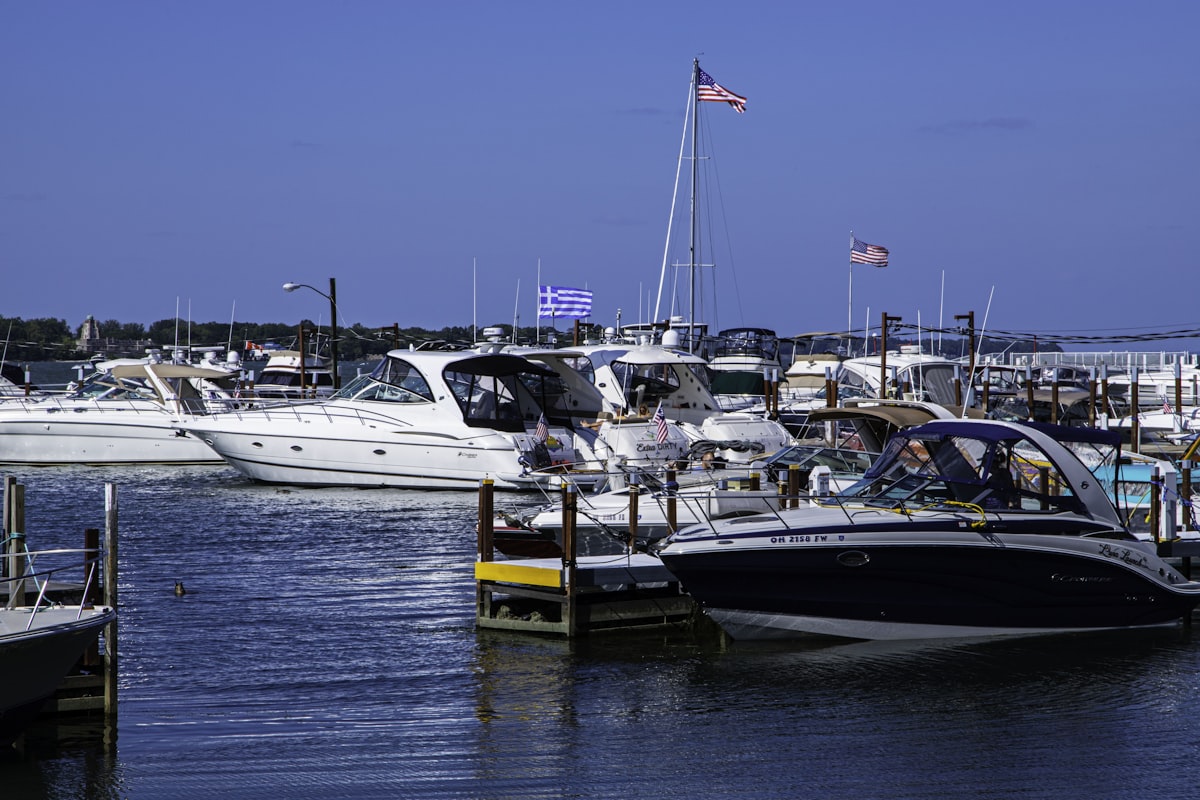
Put-in-Bay and the neighboring mainland ports, Port Clinton, Catawba Island, Marblehead, run one of the largest freshwater charter fleets in the country. The boats are purpose-built for walleye trolling: 28- to 36-foot center consoles and walk-arounds rigged with planer boards, downriggers, and rod holders.

Most charters run half-day (5 to 6 hours) or full-day (8 to 10 hours) trips, departing at dawn. The captains know the reef systems intimately, which bars hold fish in which conditions, where the schools are moving on any given day, and that knowledge is the difference between a limit and a slow boat ride.

When to Go

  • April–May: Trophy walleye on the reefs, the biggest fish of the year, spring feeding
  • June–August: Summer walleye trolling, perch starting, smallmouth bass on the reefs
  • September–October: Fall walleye and perch, the best numbers, aggressive fish before winter
  • Winter: Ice fishing when conditions allow (not every year on western Erie)

Recommended gear

  • Shimano Stradic FL 2500

    Premium, walleye jigging, feels every tick

  • Fenwick Elite Walleye Rod 6'6" ML

    Mid-tier, built for the vertical jig bite

  • Ugly Stik GX2 Spinning Combo 6'6" Medium

    Entry level, walleye and perch from charter or shore

  • Northland Fire-Ball Jig 3/4oz

    The Lake Erie walleye jig, tip with an emerald shiner

  • Berkley Gulp Alive Minnow Smelt

    When live shiners run out, almost as good

  • Silver Buddy Blade Bait 1/2oz

    Ripped and dropped for post-spawn walleye on the reefs

  • Eagle Claw Spreader Rig

    Pre-tied perch rig, bait with shiners and drop to the bottom

Frequently asked

Do you need a license to fish Put-in-Bay?

Yes, Ohio requires a fishing license to fish Lake Erie, available short-term (1-day, 3-day) or annual for non-residents through the Ohio DNR. On a charter, the captain's license covers everyone aboard.

How much does a Put-in-Bay walleye charter cost?

A guided Lake Erie walleye or perch trip out of the Bass Islands typically runs about $500 to $800 for a half to full day for up to six anglers, including rods, tackle, and bait. Spring and fall trophy walleye trips book out early.

Why is Put-in-Bay called the Walleye Capital of the World?

Put-in-Bay sits in Lake Erie's western basin, the shallowest, warmest, and most biologically productive section of the Great Lakes. The limestone reef complexes around the Bass Islands hold millions of walleye, and the charter fleet out of Put-in-Bay and Port Clinton is one of the largest freshwater fleets in the country.

When is the best walleye fishing at Put-in-Bay?

Spring (April through May) produces the biggest individual fish. Fall (September through October) produces the best numbers and most aggressive feeding. Summer trolling is consistent but requires deeper fishing. Every month from April through November is productive.

What is perch fishing like on Lake Erie?

Lake Erie holds the largest yellow perch population in the Great Lakes. Fish of 10 to 14 inches are standard, and the fishing peaks from August through October. The technique is simple (spreader rigs with shiners on the bottom), the action is fast, and the eating is outstanding.

How do you get to Put-in-Bay?

The Miller Ferry and Jet Express run from Catawba Island and Port Clinton to Put-in-Bay (18 minutes to 30 minutes). Most fishing charters depart from the mainland ports, you don't need to go to the island to fish, though the island has its own charter docks.

Can beginners fish at Put-in-Bay?

Absolutely, the charter fleet handles everything. The captain provides rods, tackle, bait, and instruction. Walleye trolling is straightforward (the rod does most of the work), and perch fishing requires no prior experience. It's one of the most beginner-friendly fisheries in the country.

More Ohio field notes

Urban Fishing in Columbus: Saugeye Below the Dams, Smallmouth in Two Rivers, and Stocked Trout in City Parks

Columbus, OH

Urban Fishing in Columbus: Saugeye Below the Dams, Smallmouth in Two Rivers, and Stocked Trout in City Parks

Columbus has two rivers running through the city, the Scioto and the Olentangy, holding smallmouth bass, saugeye, channel catfish, and carp. Add Griggs Reservoir, stocked park ponds with rainbow trout, and metro park lakes with bass and crappie, and Columbus is quietly one of the best urban fisheries in the Midwest.

Fly Fishing Cuyahoga Valley National Park: Steelhead in the Burning River, Carp on the Flats, and the Comeback That Changed American Environmental Law

Peninsula, OH

Fly Fishing Cuyahoga Valley National Park: Steelhead in the Burning River, Carp on the Flats, and the Comeback That Changed American Environmental Law

The Cuyahoga River caught fire in 1969 and helped launch the EPA and the Clean Water Act. Now it holds Lake Erie steelhead in its tributaries, smallmouth bass in its riffles, and overlooked carp on the fly, all within a national park wedged between Akron and Cleveland. Here's the fly box, the access, and the comeback story.

How to Fish Put-in-Bay, Ohio: Walleye, Perch, and the Western Basin

Put-in-Bay, OH

How to Fish Put-in-Bay, Ohio: Walleye, Perch, and the Western Basin

Everything a first-timer needs to fish Put-in-Bay, how to catch Lake Erie walleye, yellow perch, and smallmouth bass around South Bass Island, when the walleye bite shifts from reef jigging to open-water trolling, and how to book a charter.

How to Fish Lake Erie, Ohio: A Beginner's Guide to Walleye, Perch, Steelhead, and the Walleye Capital of the World

Lake Erie, OH

How to Fish Lake Erie, Ohio: A Beginner's Guide to Walleye, Perch, Steelhead, and the Walleye Capital of the World

Everything a first-timer needs to fish Lake Erie, spring walleye jigging on the reefs, summer trolling with crankbaits, fall jumbo perch on spreader rigs, winter steelhead in the tributaries, charter options, shore access, and practical details for visiting anglers.

How to Fish Lake Erie: A Beginner's Whole-Lake Guide to Walleye, Perch, Smallmouth, and Steelhead

Lake Erie, OH

How to Fish Lake Erie: A Beginner's Whole-Lake Guide to Walleye, Perch, Smallmouth, and Steelhead

Lake Erie is the most productive Great Lake, the Walleye Capital of the World, a jumbo-perch factory, a trophy smallmouth lake, and the heart of Steelhead Alley. Here's the whole-lake guide across all three basins and five jurisdictions.