Fish
Fish Fire
Fire Hike
Hike Bird
Bird

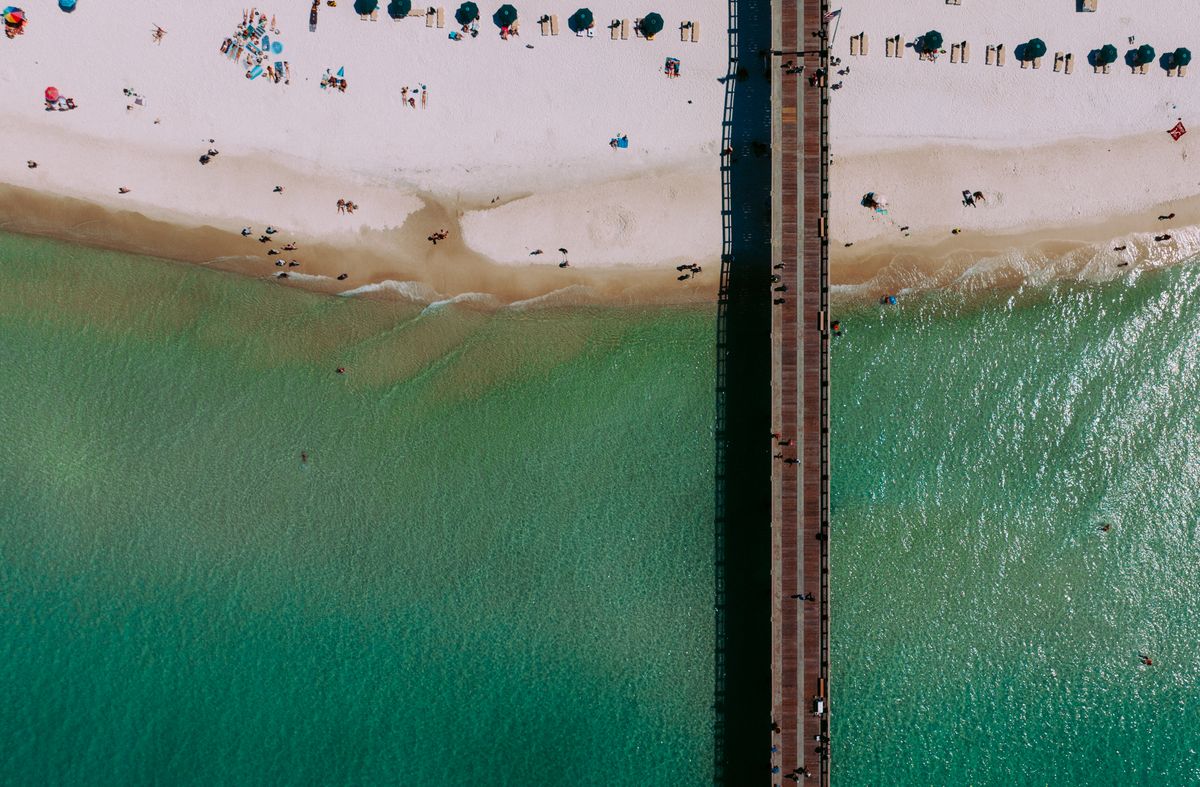
Panama City Beach stretches 27 miles along Florida's Panhandle, where St. Andrews Bay opens into the emerald-green Gulf of Mexico. The fishing here is stacked: two 1,500-foot Gulf piers, a state park with rock jetties that funnel baitfish and predators through a tidal pass, an undeveloped barrier island with empty surf, a four-bay inshore system, and one of the largest offshore charter fleets on the northern Gulf Coast. It is an absurdly good place to learn to fish.
But showing up without a plan is how beginners waste a vacation day casting the wrong bait from the wrong spot at the wrong tide. This guide covers the practical side, what gear to bring, how to rig it, what bait to use, and exactly where to fish for each species, so you can actually catch something your first time out.
For a broader overview of Panama City Beach's fishery, seasons, and the species calendar, read our complete Panama City fishing guide.
The Two Gulf Piers: Your Easiest Starting Point
If you have never fished saltwater before, start on one of PCB's two massive Gulf piers. They put you 1,500 feet over open water without needing a boat, a fishing license, or even your own rod. Both have on-site bait shops, rod rentals, and plenty of experienced anglers who will show you the ropes.
M.B. Miller County Pier
The county pier sits at the eastern end of the beach strip, operated by Bay County. It is 1,500 feet long, open year-round, and charges $3 for spectators and $6 for fishing. The bait shop at the base rents rods and sells frozen bait, sabiki rigs, and terminal tackle. This pier tends to draw a more local crowd and is slightly less crowded than Russell-Fields, especially on weekday mornings.
Russell-Fields City Pier
Russell-Fields is one of the longest piers on the entire Gulf of Mexico at over 1,500 feet. Spectators pay $4, and a daily fishing pass is $7. The pier has a well-stocked bait shop with rod rentals, live bait, and tackle. Because of its central location on the beach, it draws more tourist traffic, but the fishing is just as good. On summer mornings, the end of this pier can be elbow-to-elbow with king mackerel anglers, and that is actually part of the fun.
What You Will Catch From the Piers
Both piers produce the same species depending on the season:
- Spring (March through May): Spanish mackerel, cobia, pompano, whiting, sheepshead
- Summer (June through August): King mackerel, Spanish mackerel, cobia, redfish, sharks
- Fall (September through November): Pompano, redfish, flounder, bluefish, king mackerel
- Winter (December through February): Sheepshead, whiting, black drum, occasional flounder
How to Rig for Pier Fishing
For bottom fish (sheepshead, black drum, whiting, flounder): Use a Carolina rig, thread your mainline through a 1/2- to 1-ounce egg sinker, add a plastic bead, tie on a barrel swivel, then attach 12 to 18 inches of 20-pound fluorocarbon leader to a 1/0 or 2/0 circle hook. Bait with a live shrimp, chunk of fresh shrimp, or a fiddler crab for sheepshead.
For Spanish mackerel: Use a Gotcha plug (silver or white, 1-ounce) or a 1-ounce silver casting spoon. Cast it out and retrieve with a fast, erratic jerk-jerk-reel motion. Spanish mackerel are visual predators that chase fast-moving bait, if you are reeling slowly, you will not get bit.
For king mackerel: Catch live bait with a sabiki rig first, drop the sabiki off the pier and jig it to load up on cigar minnows or threadfin herring. Then rig a live baitfish on a wire leader with a 4/0 treble hook, no weight, and let the current carry it away from the pier. Kings are ferocious and fast. When one hits, let it run for a three-count before setting the hook hard. You will need a pier net to land anything over a few pounds, bring one or make friends with someone who has one.
For cobia: Cobia cruise the surface near the piers during spring migration, following rays and other large marine life. Keep a heavier rod rigged and ready with a large live bait or a 2-ounce white bucktail jig. When you spot a brown shape cruising near the surface, cast ahead of it and let the jig sink. Cobia are curious and will often swim right up to investigate. These are big, powerful fish, 30 to 60 pounds is common, so use at least 30-pound leader and be ready for a serious fight.
THIS is HOW You Fish Panama City Beach FloridaSt. Andrews State Park: Jetties, Piers, and the Pass
St. Andrews State Park occupies the eastern tip of the Panama City Beach peninsula, where St. Andrews Bay meets the Gulf through a narrow tidal pass. This is arguably the most productive shore-fishing spot in the entire area, because the pass acts as a natural funnel, every tide cycle pushes baitfish through the cut, and predators stack up on both sides waiting for the buffet.
The park charges a vehicle entry fee (currently $8 per vehicle), but once you are inside, there is no additional fishing fee. The park has two separate fishing piers, the Tiller Pier on the Gulf side and a smaller pier on the Grand Lagoon side, plus the rock jetties flanking the pass.
The West Jetty
The west jetty is the star of St. Andrews and the spot that separates this park from every other fishing pier on the beach. It is a long rock structure that extends into the pass, giving you access to moving water with serious current. The rocks create structure that attracts sheepshead, mangrove snapper, redfish, flounder, and black drum year-round. During spring and fall, Spanish mackerel, jack crevalle, and even tarpon push through the pass chasing baitfish.
How to fish it: A Carolina rig with live shrimp dropped along the rocks is the simplest approach. Cast upstream and let the current carry your bait along the edge of the rocks. For sheepshead specifically, use fiddler crabs or fresh shrimp on a small (size 1 or 2) hook with a split shot for weight, sheepshead have small mouths and will steal a large bait without getting hooked.
For Spanish mackerel and jack crevalle in the pass, cast a 3/4-ounce silver spoon or a white Gotcha plug across the current and retrieve quickly. These fish are chasing bait through the pass and will hit anything shiny moving fast.
The East Jetty (Shell Island Side)
The east jetty sits on the Shell Island side of the pass and is only accessible by boat. If you have a kayak or can catch a shuttle boat, this jetty fishes even better than the west side because it gets far less pressure. The same species apply, redfish, snapper, flounder, sheepshead, but you will often have the entire jetty to yourself.
Epic Jetty Fishing at St. Andrews State Park, Redfish, Bonita, and TarponThe Park Piers
The Tiller Pier on the Gulf side is a shorter pier better suited for bottom fishing, whiting, pompano, and the occasional flounder. The Grand Lagoon pier puts you over calmer water with grass flats and oyster structure below, which is ideal for speckled trout and redfish on a popping cork rig. Both are free once you have paid the vehicle entry fee.
Fishing The Famous St. Andrews State Park In Panama City BeachShell Island: Surf Fishing With No Crowds
Shell Island is a seven-mile undeveloped barrier island that sits directly across the pass from St. Andrews State Park. There are no roads, no buildings, no condos, just white sand, clear water, and fish. It is accessible only by boat, and several shuttle services run from the marina at St. Andrews or Captain Anderson's Marina on Grand Lagoon.
The fishing pressure here is a fraction of what you find on the main beach, and that makes a real difference. Pompano, whiting, redfish, and Spanish mackerel cruise the surf troughs with much less boat traffic and far fewer swimming tourists spooking them.
How to Surf Fish Shell Island
Gear: A 9- to 10-foot medium-heavy spinning rod paired with a 5000- or 6000-size reel is the standard surf setup. Spool with 20- to 30-pound braided line and use a 30-pound fluorocarbon leader. A Penn Battle III 5000 combo or a Daiwa BG 5000 combo are both excellent choices.
The pompano rig: This is a two- or three-hook dropper rig with small orange or chartreuse floats above each hook. Tie a 2- to 3-ounce pyramid sinker at the bottom to anchor your rig in the current. Use #1 or #2 circle hooks. Bait with sand fleas or peeled fresh shrimp.
Where to cast: Look for the troughs, darker water between the sandbars. Pompano, whiting, and redfish feed in these troughs where the current concentrates sand fleas and small crustaceans. Cast past the first sandbar if possible, set your rod in a sand spike, and wait. Rebait and recast every 15 minutes if nothing bites.
Surf Fishing Panama City Beach for Pompano, Redfish, and SharksThe Bay System: Four Bays Full of Inshore Fish
Behind the beach strip, Panama City Beach sits on a sprawling system of interconnected bays, St. Andrews Bay, Grand Lagoon, West Bay, East Bay, and North Bay. These brackish, nutrient-rich waters are where the inshore fishing truly shines.
Grand Lagoon
Grand Lagoon runs along the south side of the beach strip between Thomas Drive and St. Andrews State Park. It is lined with marinas, docks, and oyster bars, all of which hold fish. Redfish and sheepshead stack up around the dock pilings, while speckled trout patrol the grass flat edges.
How to fish it: A popping cork rig is the go-to. Thread a popping cork onto your mainline, then tie on 3 to 4 feet of 20-pound fluorocarbon leader to a 1/0 circle hook. Bait with a live shrimp or use a Berkley Gulp Shrimp in New Penny color on a 1/8-ounce jighead. Cast near dock pilings, oyster bars, or grass edges. Pop the cork, pause five seconds, pop again. When the cork disappears, set the hook.
West Bay
West Bay is the largest of the four bays and the least pressured. The creek mouths are the money spots, redfish stack up at these openings, especially during falling tides when bait gets flushed out of the creeks. Speckled trout, flounder, and sheepshead are also abundant. Best fished by boat or kayak. Work the shoreline creek mouths with a gold Johnson Silver Minnow spoon (1/4-ounce) or a Berkley Gulp Shrimp under a popping cork.
West Bay Inshore Fishing, Panama City BeachOffshore: The Charter Fleet
Panama City Beach runs one of the largest charter fleets on the northern Gulf Coast. As a beginner, offshore charters are the easiest way to catch big fish, the captain provides all gear, bait, tackle, and the fishing license. You just show up and fish.
Half-day (4-5 hours): Bottom fish nearshore reefs for red snapper (in season), vermilion snapper, triggerfish. Expect $150-$250 per person on a shared boat, or $800-$1,200 for a private charter.
Three-quarter day (6-8 hours): More variety and bigger fish. Private boats run $1,200-$2,000.
Full day (10-12 hours): Reaches deep ledges and blue water for tuna, mahi-mahi, and wahoo. Private charters cost $1,800-$2,500.
Most charters depart from Captain Anderson's Marina on Grand Lagoon or Treasure Island Marina. Book at least two weeks ahead during peak summer season.
Gear Summary
Pier and jetty: A 7-foot medium-action spinning rod with a Penn Battle III 3000 combo or Daiwa BG 3000, 15-20 lb braid, 20-lb fluorocarbon leader.
Surf fishing: A 9-10 foot medium-heavy rod with a Penn Pursuit IV 5000 combo, 20-30 lb braid, 30-lb fluorocarbon leader.
Inshore bay: Same 7-foot setup as pier fishing. Add a popping cork, circle hooks, and Berkley Gulp Shrimp.
Both piers rent rods and sell tackle on-site.
Bait
Live shrimp, Universal bait. Catches everything inshore. Hook under the horn.
Sand fleas, Best pompano bait. Catch your own or buy at bait shops.
Cigar minnows, Essential for king mackerel. Catch live with a sabiki rig off the pier.
Fiddler crabs, Sheepshead specialist bait. Available at most bait shops.
Berkley Gulp Shrimp (New Penny), Best artificial for inshore. Works under a cork, on the bottom, along pilings.
Practical Details
Fishing license: Florida requires a saltwater license for 16+. Non-residents: 3-day, 7-day ($30). No license needed on piers or charters. Buy at GoOutdoorsFlorida.com or local bait shops.
Pier fees: M.B. Miller: $6 fishing. Russell-Fields: $7 fishing. St. Andrews State Park: $8 vehicle entry. All have bait shops and rod rentals.
When to fish: Spring and fall are peak. Spring brings cobia and mackerel. Fall brings pompano runs and bull redfish. Summer is offshore season. Winter produces sheepshead and trout.
Sun protection: SPF 50+ sunscreen, wide-brimmed hat, polarized sunglasses, long-sleeve moisture-wicking shirt. Reapply sunscreen every two hours.
Also check out how to fish Destin, just an hour east on the Panhandle, Destin's East Pass and Choctawhatchee Bay offer a different but equally productive fishery for beginners.