Fish
Fish Fire
Fire Hike
Hike Bird
Bird

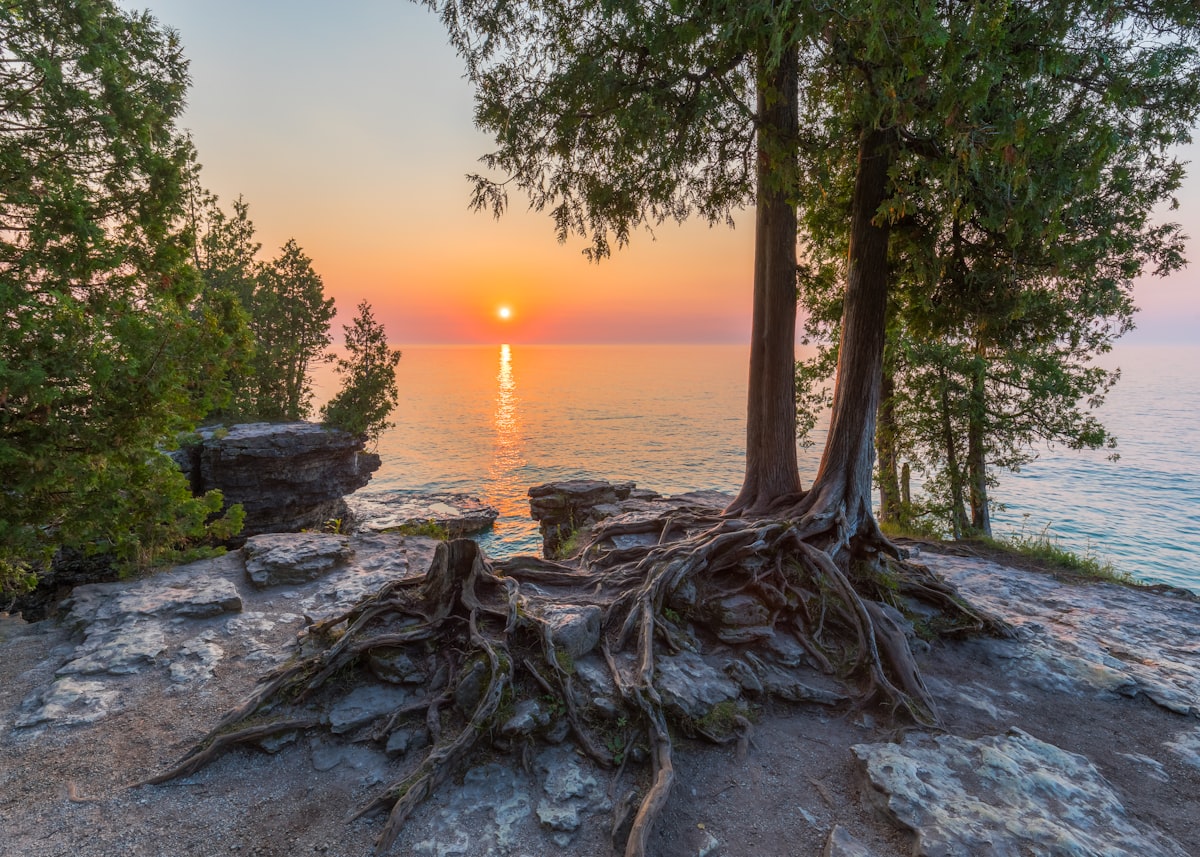

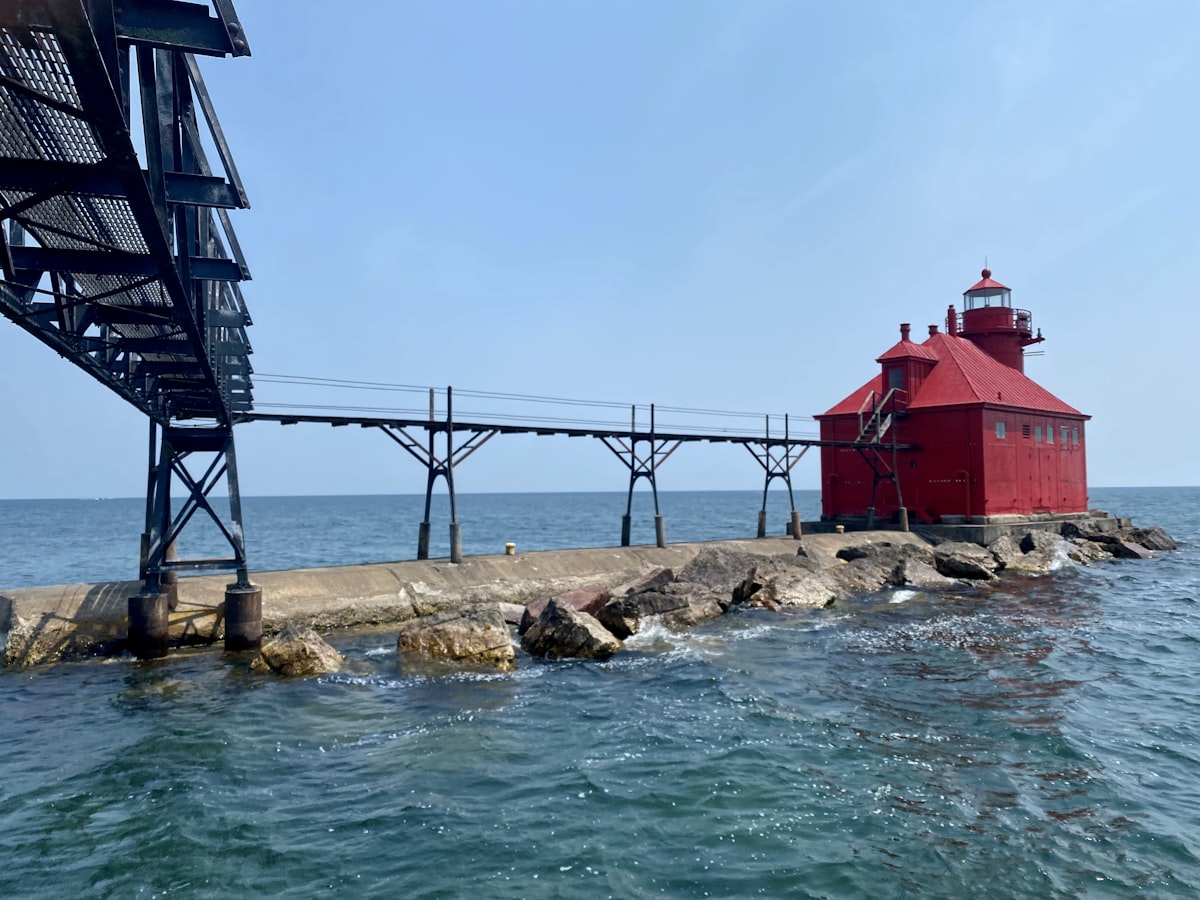
Door County is a 70-mile peninsula that juts northeast from mainland Wisconsin into Lake Michigan, separating the Bay of Green Bay from the open lake. The peninsula is narrow, 10 miles across at its widest, and the two bodies of water on either side create completely different fisheries.
The Green Bay side is warmer, shallower, and more sheltered. It holds walleye, smallmouth bass, and northern pike over structure that includes rock bars, weed beds, and the legendary Sturgeon Bay complex. The Lake Michigan side is colder, deeper, and more exposed. It holds chinook salmon, coho, lake trout, brown trout, and steelhead, the full Great Lakes salmonid roster.
Between them, Death's Door Passage, the narrow, current-swept channel between the tip of the peninsula and Washington Island, creates a natural fish-concentrating funnel that's been both a navigational hazard and a fishing hotspot for centuries.
The Green Bay Side, Sturgeon Bay Bass and Walleye
Sturgeon Bay is the crown jewel of the bay side. The city of Sturgeon Bay sits where a ship canal connects the bay to Lake Michigan, and the surrounding water holds smallmouth bass that have earned national recognition, Bassmaster ranked it the #1 bass destination in America.
The smallmouth hold on rocky points, boulder fields, and gravel bars in the clear bay water. Fish average three to four pounds, with five- and six-pounders caught regularly. The spawn in late May and June is the visual peak, fish are shallow and visible over the gravel, and the fall feed in September and October produces the most aggressive fishing.
Walleye are the bay side's other major species. Spring (April through May) brings the walleye run, when fish move into the shallower bays and reefs to spawn. The Sturgeon Bay and Sister Bay areas are prime walleye water, with jigging and trolling crankbaits producing fish in the 18- to 26-inch range.
The Lake Michigan Side, Salmon and Trout
The Lake Michigan shoreline and the offshore waters hold the cold-water species that define Great Lakes fishing.
Chinook salmon (king salmon) are the summer headliner. Charter boats troll the deep water from June through August, pulling spoons and plugs on downriggers at 60 to 120 feet where the fish hold along the thermocline. Kings average 15 to 25 pounds, with fish over 30 caught every season.
Brown trout cruise the nearshore Lake Michigan water in spring and fall, attracted to the warm-water plumes at creek mouths. April and May brown trout fishing, trolling or casting near shore, produces thick, heavy fish that have been feeding all winter.
Lake trout hold deep year-round and are the most reliable charter target. Steelhead (rainbow trout) make seasonal appearances and fight with spectacular acrobatics. Coho salmon run in the fall, smaller than kings but more willing to bite.
Death's Door Passage, The Funnel
Death's Door is the narrow strait between the peninsula's tip and Washington Island. Strong currents funnel bait and predators through the passage, creating a natural concentration zone.
Smallmouth bass hold in the rocky, current-swept water of the passage. Walleye and northern pike work the edges. The passage is most productive during tidal-like current flows, and fishing it requires knowledge of the current patterns, it's not for inexperienced boaters.
Inland Lakes and Rivers
Door County's inland waters, Kangaroo Lake, Clark Lake, and the tributaries that flow into the bay, hold largemouth bass, northern pike, and panfish in quieter, more accessible settings.
When to Go
- April–May: Walleye run on the bay side, brown trout nearshore on the lake side, early bass
- June–August: Peak salmon charters on Lake Michigan, smallmouth bass in full swing, the full season
- September–October: Fall smallmouth bass, salmon runs in the tributaries, lake trout and steelhead
- November–March: Ice fishing on Sturgeon Bay for walleye and whitefish when conditions allow