Fish
Fish Fire
Fire Hike
Hike Bird
Bird



Valdez is the rare Alaska fishing town where you can catch a limit of salmon standing on the side of the road. Tucked at the head of a deep fjord in Prince William Sound, ringed by glaciers and 5,000-foot peaks, Valdez combines two things almost no other destination offers at once: a world-famous roadside shore fishery where millions of hatchery salmon return within casting distance of the highway, and a protected inland sea that produces some of the most accessible giant halibut in the state. Add the oldest fishing derbies in Alaska and you have a place where a first-timer with no boat and modest gear can have the fishing trip of a lifetime. This guide covers exactly how.
For the wider picture, the town, the glaciers, and trip planning, read our complete Valdez fishing guide. For more Alaska saltwater, see how to fish Seward and Homer.
First: Your Alaska Fishing License
Every angler 16 and older needs an Alaska Department of Fish and Game (ADF&G) sport fishing license, plus a king salmon stamp if you'll target Chinook. Buy them online at adfg.alaska.gov, on the ADF&G app, or at any tackle shop in town; non-residents can get 1-, 3-, 7-, or 14-day licenses. Alaska's bag limits and gear rules are specific, and the roadside fisheries in particular have detailed regulations about snagging versus fair-hooking, so read the signs at the beach and the current ADF&G Prince William Sound rules before you fish. If you plan to enter the derbies (more on those below), you'll also need a separate, cheap derby ticket.
What You'll Catch
Prince William Sound is a salmon-and-bottomfish paradise:
- Silver (coho) salmon, the derby fish and the late-summer star, bright, hard-fighting, and often 10 to 15 pounds (sometimes 20).
- Pink (humpy) salmon, the roadside phenomenon, returning by the millions and providing genuine fish-on-every-cast action.
- King, sockeye, and chum salmon, the other three of Alaska's five salmon, present in smaller numbers.
- Pacific halibut, the heavyweight prize; the Sound grows some of the largest, most accessible halibut in Alaska.
- Rockfish and lingcod, the reef bottomfish that round out every combo charter.
The Roadside Fishery: Allison Point and Dayville Road
This is what makes Valdez unique. The Solomon Gulch Hatchery, across the bay from town on Dayville Road, releases millions of pink and silver salmon each year, and when those fish come home to spawn, they stack up along the shoreline at Allison Point in staggering numbers, right next to the road. You can park, walk a few steps to the water, and cast to fresh ocean salmon without a boat, a guide, or a big budget. It is, without exaggeration, one of the best shore salmon fisheries in North America.
How to fish it: For silvers, cast and retrieve a Pixee spoon, a Vibrax spinner (size 4–5), or a small spoon in the classic salmon colors, and work the moving fish on the incoming tide. For pinks, almost anything small and pink or silver will get bit during the peak, a tiny pink jig, a spinner, or a fly. Fish the tide changes, early and late in the day, and be ready for company: when the run is on, the shoreline is elbow-to-elbow "combat fishing," a friendly, chaotic Alaska scene where everyone's catching. Mind your backcast, keep your line tight, and don't snag, fair-hook fish in the mouth per the regulations.
A serious warning: those same salmon draw bears, both black and brown, to the creek mouths and shoreline, especially July through August. Fish in a group, keep your catch in a sealed cooler or bag (not at your feet), never get between a bear and the water, and be ready to back away and give up a fish. The bears were here first, and a stringer of salmon is not worth a confrontation.
Fishing an Alaska Coastal Creek for SalmonSilver Salmon: The Derby Fish
Silvers are the heart of Valdez's summer. They arrive in Valdez Bay around the first week of August and peak from mid-August into early September, and they can be caught both from shore (Allison Point, the small-boat harbor, Mineral Creek, Gold Creek) and from a boat in the Valdez Narrows and the Arm, where trolling or mooching a herring behind a flasher is the standard method. These are bright, aggressive, acrobatic fish in the 10-to-15-pound class, with some pushing 20, the perfect target for a beginner because they're both plentiful and willing. Time a trip for the second half of August and you'll hit the peak, the derby, and the best weather all at once.
Pink Salmon: Fish on Every Cast
Don't turn your nose up at pinks. Yes, they're the smallest salmon (3 to 5 pounds) and they don't freeze or ship as well as silvers, but during the July–August run at Allison Point the sheer volume creates the kind of nonstop, fish-on-every-cast action that hooks kids and first-timers for life. There's even a dedicated Kids' Pink Salmon Derby to celebrate it. Fresh, bright pinks (before they've begun to color up and develop their spawning hump) are perfectly good eating, especially grilled or smoked the day you catch them. If your goal is to bend a rod again and again and get a beginner giggling, the pink run is the single best fishing in Valdez.
Halibut and Prince William Sound
Beyond the beaches, the protected waters of Prince William Sound are the reason serious anglers book a charter. Unlike the open Gulf of Alaska that Seward and Homer face, the Sound is comparatively sheltered, which means smoother rides and more fishable days, and it grows enormous, accessible halibut. Anglers land big flatfish from spots like Jack Bay, Sawmill Bay, Bligh Reef, and Middle Rock. The technique is the standard halibut game: drop a heavy weight and a baited circle hook (herring, salmon bellies, or octopus) to the bottom, reel up a turn, and hold on. When a halibut loads the rod, don't swing, let the circle hook find the jaw corner and crank steadily. Winching a triple-digit fish up from the depths is a full-body workout and an Alaska rite of passage.
Because halibut is open year-round in these waters and the Sound is protected, Valdez charters run reliably all summer, and most are combination trips, halibut plus salmon plus bottomfish in a single day, which is the best value and variety for a visitor.
Alaska Halibut Fishing, Catch, Clean, and CookRockfish and Lingcod: The Bottom Bonus
While you're over structure for halibut, you'll catch rockfish, colorful, delicious reef fish (black rockfish are the common, willing ones; yelloweye are a spectacular but tightly regulated deep-water species), and lingcod, the toothy, aggressive ambush predator that hammers a big jig. Both come on the same combo trips, jigging heavy diamond or leadhead jigs straight down over reefs and pinnacles. One important note: rockfish suffer barotrauma when brought up from depth (their swim bladders over-expand), so any you release should go back down on a descending device, it dramatically improves survival and is required for released rockfish in Alaska. Your captain will have one aboard.
The Valdez Fish Derbies
No town takes derbies more seriously than Valdez, home to the oldest fish derbies in Alaska. The series runs all summer and includes several events: the Halibut Derby, the Silver Salmon Derby, the Halibut Hullabaloo, the Kids' Pink Salmon Derby, and the Women's Silver Salmon Sisterhood Derby. Entry is cheap, daily tickets run a few dollars and a season ticket covers the summer, and a tagged fish or a monster halibut can be worth serious prize money. You must have a valid derby ticket to weigh a fish (and to witness someone else's), so buy one before you head out; tickets are sold all over town. Even if you never sniff the leaderboard, having a ticket in your pocket adds a fun jolt of "what if" to every fish you land.
When to Go
- June–early July: Halibut and bottomfish charters are in full swing on the protected Sound, king salmon show early, and the crowds are thin.
- July–August: The pink salmon run explodes at Allison Point (fish on every cast), halibut fishing stays strong, and the derbies are rolling. Peak family fishing.
- Mid-August–early September: Prime silver salmon, the best of the year, from both shore and boat, plus continued halibut. The single best window if salmon are your goal.
- September: Late silvers and solid bottomfishing before the season winds down; crisp weather, fall color, and fewer people.
Weather, Bears, and What to Bring
Valdez is one of the wettest, snowiest towns in Alaska, so rain gear is non-negotiable even in July, waterproof jacket and bibs, warm layers, a hat, and rubber boots. On a charter, everything else is provided; if you're fishing from shore, bring your own rods and lures. If you're prone to seasickness, take medication before a boat trip, though the Sound's protected water is far gentler than the open Gulf. And take bear safety seriously around the salmon streams, carry bear spray, fish in groups, and store your catch smartly. Keep a camera handy, too: sea otters, seals, whales, bald eagles, and calving glaciers are part of the Valdez fishing experience.
Gear: Charter-Supplied or Bring Your Own
- Salmon (shore): A 9- to 10-foot medium-heavy spinning rod with a 4000–5000 reel and 20- to 30-pound braid handles silvers and pinks from the beach. Stock Pixee spoons, Blue Fox Vibrax spinners (size 4–5), and small pink jigs and spoons for the pink run.
- Halibut/bottom (private boat): Heavy conventional gear, 8- to 16-ounce weights, circle hooks, and big diamond jigs for rockfish and lingcod.
- Everyone: Waterproof rain jacket and bibs, warm mid-layers, gloves, rubber boots, polarized sunglasses, and a cooler. And a derby ticket.
More Than Fishing: Glaciers and the Sound
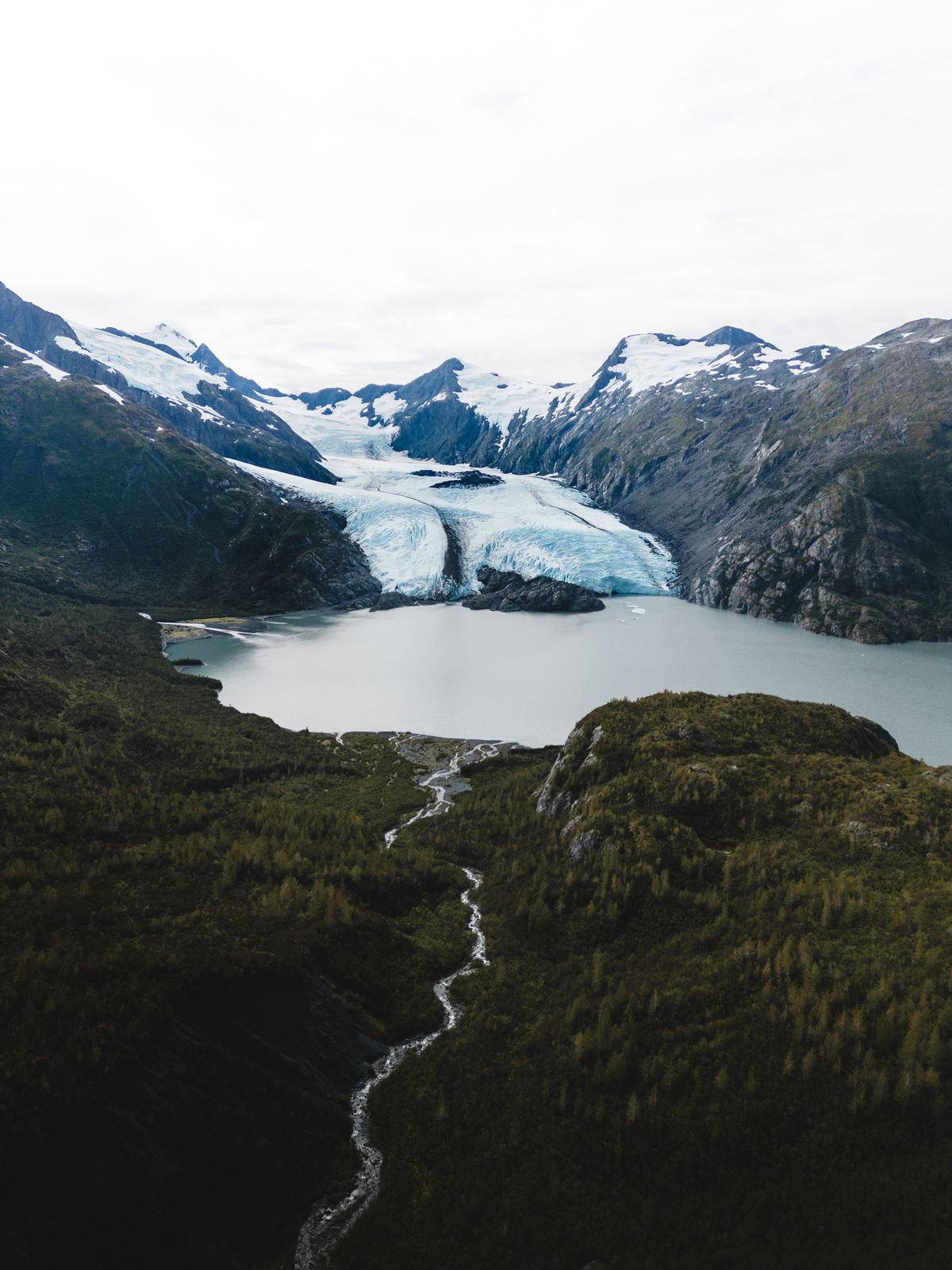
A Valdez fishing trip comes with some of the best scenery on the continent, and it's worth building the extras into your plans. Prince William Sound holds the Columbia Glacier, one of the largest tidewater glaciers in North America, and glacier-and-wildlife cruises out of the harbor routinely deliver calving ice, sea otters rafting in the kelp, Steller sea lions, humpback and orca whales, porpoise, seals, puffins, and bald eagles. Many charter runs to the fishing grounds pass this same show for free. On land, the drive into Valdez through Keystone Canyon, past Bridal Veil and Horsetail Falls and over Thompson Pass, is one of Alaska's most spectacular highways, and the town sits amid rainforest, waterfalls, and hanging glaciers. Because so much of the fishing is roadside and the sightseeing is world-class, Valdez works beautifully for a family with non-anglers along: someone can catch pinks at Allison Point while the rest hike to a glacier, then swap in the afternoon.
A Simple Plan for Your First Trip
If it's your first time and you're keeping it simple, here's a plan that stacks the odds. Come in the second half of August, when the silvers have arrived, the pinks are still around, the derbies are running, and the weather is at its best. Buy your fishing license and a derby ticket the day you arrive. Spend a low-cost morning or evening at Allison Point learning the shore fishery, you'll almost certainly catch salmon, and it costs nothing but a lure. Book one full-day combo charter in the Sound for the bucket-list halibut and a shot at a big silver, ideally mid-week when boats are easier to get. Arrange a processor in advance so your catch gets flash-frozen and shipped home. Pack head-to-toe rain gear, bring bear spray for the streamside fishing, and keep a camera ready. Do that, and you'll leave Valdez with a full cooler, a memory card full of glaciers and bears, and a very good reason to come back.
A Word on Conservation
Valdez's incredible fishing rests on careful management and a hard-working hatchery, and it's on all of us to keep it healthy. Know and follow the bag limits and the snagging-versus-fair-hooking rules on the roadside fisheries, and don't waste fish, keep only what you'll eat and arrange processing for the rest. Use a descending device on released rockfish to beat barotrauma. Handle released salmon gently and keep them wet. Pack out every scrap of line and trash, monofilament and litter are deadly to eagles, otters, and bears, and give the wildlife, especially the bears drawn to the salmon, plenty of room. Fish respectfully and Valdez will keep being the roadside miracle it is.