Fish
Fish Fire
Fire Hike
Hike Bird
Bird


The Grand Canyon is the most famous geological feature on earth. A mile deep, 18 miles wide, 277 miles long, carved over 6 million years by the Colorado River through layers of rock that span 2 billion years of earth's history. Every year, 6 million people stand on the rim and look down.
Almost none of them know that the river at the bottom holds one of the best rainbow trout fisheries in the West.
The Lee's Ferry reach, 15 miles of the Colorado River from Glen Canyon Dam downstream to the Grand Canyon's Marble Canyon, is a world-class tailwater. The dam releases water from the bottom of Lake Powell at a constant 46-50°F year-round, creating ideal trout habitat in the middle of the Arizona desert. The cold, clear, nutrient-rich water supports a population of wild rainbow trout that historically numbered in the thousands per mile, fish averaging 14-18 inches, with 20-inch fish common and occasional trophies over 22 inches.
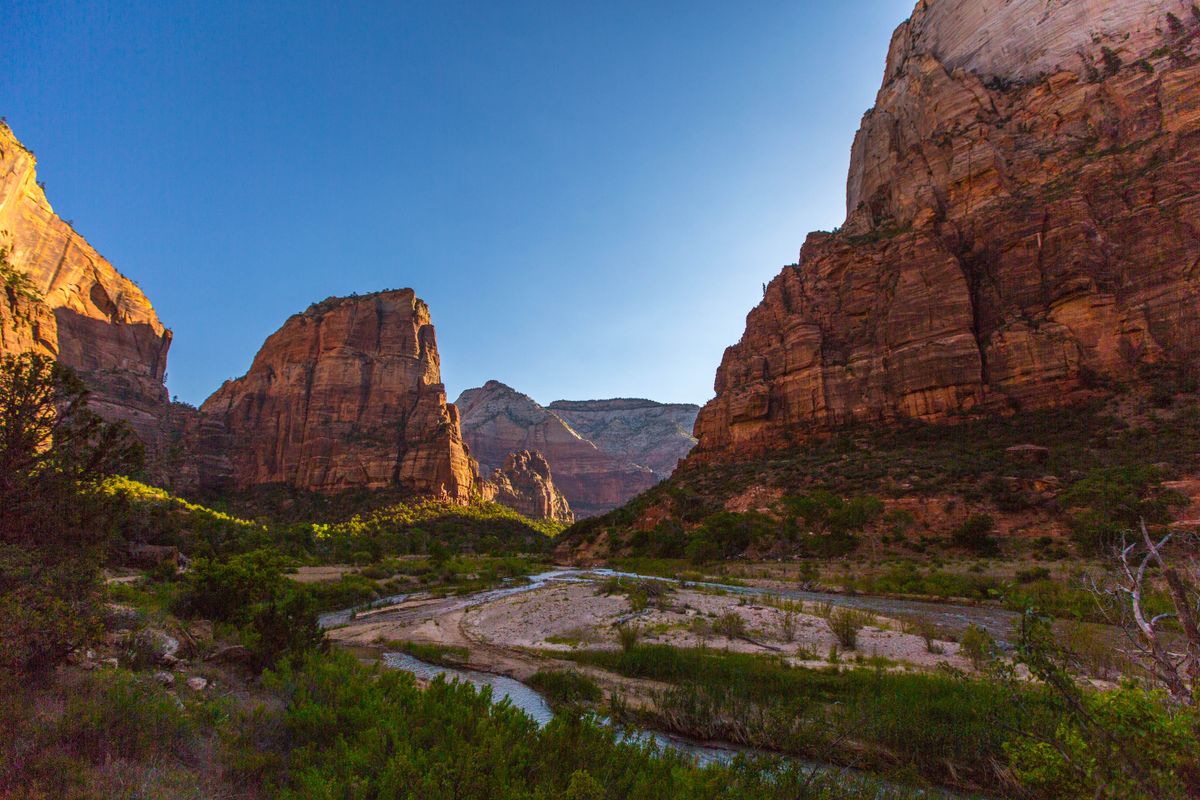
This is not the brown-water, raft-the-rapids Colorado River of popular imagination. Below the dam, the river runs crystal clear over a cobble bottom, flowing through a red-rock canyon that rises 800 feet on both sides. The setting is unlike any other tailwater in the country, the San Juan has its desert canyon, the Green River has its red rock, but neither can match the scale and drama of Marble Canyon.
The Fish
Rainbow Trout
Lee's Ferry rainbows are wild, born in the river, surviving on a diet of scuds, midges, and aquatic worms in the cold tailwater flow. The fish average 14-18 inches, with strong year-classes producing fish over 20 inches. These are not stocked fish, they're self-sustaining wild rainbows adapted to the unique conditions of a desert tailwater.
The population has fluctuated over the decades as dam operations have changed. High-flow experiments, designed to move sediment downstream for beach-building in the Grand Canyon, can temporarily disrupt the fishery. Recent years have seen lower catch rates than the historic peaks, but the fish that remain are quality fish, and the fishing rewards technical skill and patience.
Brown Trout
Brown trout are present in smaller numbers, particularly in the lower reaches of the Lee's Ferry section. They tend to be larger than the rainbows, fish over 20 inches are possible, and they hold in deeper water and along structure. Streamer fishing at dawn and dusk produces the best brown trout action.
The Water, Lee's Ferry Tailwater

The Lee's Ferry reach is a technical tailwater, similar in character to the San Juan River, the Bighorn, or the Missouri. The water is clear, the fish are educated, and the primary food sources are tiny, midges (#18-24), scuds (#14-18), and worms (#10-14). This is not chuck-and-duck nymphing with split shot. This is technical indicator fishing with long leaders, precise dead-drifts, and the ability to detect subtle takes on 6X tippet.
Access
Wade fishing: A walk-in section extends for about a mile below the launch ramp at Lee's Ferry. This is the most accessible water, you can fish it without a boat. The cobble-bottom runs and riffles fish well with nymphs under an indicator and dry-dropper rigs during midge hatches.
Drift boat fishing: Most anglers fish from drift boats, launching at the dam and floating downstream to Lee's Ferry. Guides row while you fish, casting to the banks, drifting nymphs through runs, and targeting rising fish during midge emergences. The float covers 15 miles of water that's inaccessible from shore.
Jet boat access: Some guides use jet boats to run upriver from Lee's Ferry toward the dam, giving access to the upper sections without launching at the dam.
The Midge Game
Midges dominate the Lee's Ferry food chain, over 50 species have been identified in this stretch. The fishing revolves around midges the way the San Juan revolves around midges and the Bighorn revolves around PMDs. If you can't fish small flies in clear water on long, drag-free drifts, Lee's Ferry will humble you.
Midge larvae (#20-24), fished subsurface on a dead-drift under an indicator. Zebra Midges in black, red, olive, and cream are the standard. This is year-round bread-and-butter fishing.
Midge emergers (#18-22), fished in or just below the surface film during hatches. RS2s, Mercury Midges, and CDC emergers produce when fish are feeding in the top 6 inches but refusing surface flies.
Midge adults / clusters, Griffith's Gnat in #18-22, fished dry during midge emergences. When the midges come off in numbers, particularly in spring (March-May), the fishing can be spectacular, with trout rising steadily across every riffle.
Scuds and Worms
Scuds (freshwater shrimp, #14-18), The secondary food source. Orange, pink, and olive scud patterns drifted along the bottom produce fish when the midges aren't hatching. Scuds make up a significant portion of the trout's diet and are available year-round.
San Juan Worm (#12-14, red or pink), The workhorse nymph, just like on its namesake river. Dead-drifted on the bottom as a point fly with a Zebra Midge dropper. This is the standard Lee's Ferry rig, worm on the bottom, midge trailing behind.
The Fly Box, Technical Tailwater
Lee's Ferry's fly box is a midge-and-scud box. If you've fished the San Juan, you know the drill:
Midges (the primary food):
- Zebra Midge #18-24, black/red/olive/cream, the anchor pattern
- Mercury Midge #20-22, glass bead emerger
- RS2 #20-22, the emerger standard
- Griffith's Gnat #18-22, midge cluster dry fly
Subsurface:
- Scud #14-18, orange/pink/olive, year-round secondary food
- San Juan Worm #12-14, red/pink, the bottom fly
- Pheasant Tail #18-20, general nymph
- Hare's Ear #16-18
Dry flies (midge hatches):
- Parachute Adams #18-20, visible midge dry
- CDC Emerger #20-22
Streamers (for browns):
- Woolly Bugger #8, olive/black, dawn and dusk
- Clouser Minnow #6, olive/white, sculpin imitation
The Gear
Rod: 9-foot 5-weight, the standard tailwater rod. Long, delicate leaders and tiny flies demand a rod that can present small patterns accurately at 30-50 feet. Same rod you'd use on the San Juan or Bighorn.
Leader: 9-12 feet, tapered to 5X or 6X. Fluorocarbon tippet is mandatory in the clear water, the fish can see mono. Long leaders and drag-free drifts are the technical demands of this fishery.
Indicator: Small, sensitive indicators that detect the subtle take of a trout eating a #22 midge. Thingamabobber, New Zealand strike indicator, or yarn. The indicator must be small enough to not spook fish in the clear water.
Wading: Breathable waders, the water is 50°F year-round. Felt-soled boots on the slippery cobble bottom. A wading staff is helpful in the stronger current near the dam.
License: Arizona state fishing license required ($55 non-resident). Lee's Ferry is managed as a special regulation area: barbless hooks, artificial only, two-fish daily limit (any size).
When to Go
Lee's Ferry fishes year-round thanks to the constant dam releases, but conditions vary:
-
March–May (Spring): The best midge hatches of the year. Extended emergences bring fish to the surface for hours. This is when the dry-fly fishing peaks. Weather is pleasant, warm days, cool nights in the desert.
-
June–mid-August (Summer/Monsoon): Hot. Air temperatures exceed 100°F on the canyon rim. The water stays 50°F but the heat makes long days on the water exhausting. Monsoon thunderstorms (mid-June through August) can muddy the side drainages and add silt to the river. The fishing is still productive but the conditions are challenging.
-
September–November (Fall): The sweet spot. Monsoons end, temperatures moderate, the midge activity remains strong. October and November are many guides' favorite months, pleasant weather, willing fish, fewer crowds than spring.
-
December–February (Winter): Cold mornings in the desert canyon (30s-40s°F), warm midday sun. The fishing is slower but the solitude is complete. Midge hatches still occur on warm afternoons. Winter is when the biggest fish are sometimes caught, less pressure, less spooked fish.
The Grand Canyon Connection
Lee's Ferry sits at the top of the Grand Canyon, Marble Canyon, the first section of the Grand Canyon, begins immediately downstream. Anglers who float the full Grand Canyon (a multi-day raft trip through the park) can fish the Colorado through the canyon itself, but the fishing quality declines below Lee's Ferry as the river warms and native species (humpback chub, flannel mouth sucker) replace the trout.
The Lee's Ferry tailwater is technically within Glen Canyon National Recreation Area, not Grand Canyon National Park, but the fishery is inextricable from the Grand Canyon system. The dam that creates the tailwater exists to store water for the Colorado River Compact; the cold releases that support the trout are a byproduct of the dam's operation; and the canyon through which you float is the beginning of the Grand Canyon's geological story.
For anglers, Lee's Ferry is a destination that combines world-class technical tailwater fishing with the most dramatic landscape setting in American fly fishing. The red-rock walls rising 800 feet above you while you dead-drift a #22 Zebra Midge through a riffle full of rising trout, that's an experience no other tailwater in the country can match.
The Technical Challenge, Why Lee's Ferry Humbles Good Anglers
Lee's Ferry is not beginner water. The fish have seen flies, thousands of them, and they've learned to distinguish a real midge from an imitation. The clear water means the trout can examine your fly from two feet away before deciding to eat. The constant 50°F temperature means the fish are active year-round, which sounds good until you realize it also means they've had 365 days a year to get educated.
The drift is everything. On a freestone river, you can get away with some drag on a dry fly, the choppy surface hides minor imperfections. On Lee's Ferry's glass-smooth tailwater, any drag, even the micro-drag that a slight current differential creates on your leader, is visible to the trout and results in a refusal. The drift must be dead, dead, dead. No drag. No twitch. No mend-induced pull. The fly must float at exactly the speed of the current as if it were attached to nothing.
Reading the water is different. Tailwaters don't have the obvious riffle-run-pool structure of a freestone. The current is more uniform, the bottom more consistent, and the lies less obvious. Learning to read Lee's Ferry water, finding the subtle seams, the barely visible drop-offs, the slightly deeper pockets where trout hold, takes time on the water. A guide's first-day investment pays for itself in fish caught versus fish not found.
Sight-nymphing. In the clear water, you can often see the trout holding on the bottom, dark shapes against the light cobble. When you can see the fish, you can sight-nymph: cast upstream, drift your midge directly over the trout's position, and watch the fish for the eat. The trout tips slightly, opens its mouth, and inhales the fly, you see the white flash of the open mouth before you feel anything on the line. This is the most technical and most rewarding nymphing in fly fishing. The San Juan and Bighorn offer similar sight-nymphing, but Lee's Ferry's combination of water clarity and red-rock contrast makes the fish particularly visible.
The tailwater brotherhood. If you've fished the San Juan River, you'll feel at home at Lee's Ferry, the same tiny flies, the same technical demands, the same long leaders and indicator work. If you've fished the Missouri or the Green River, the principles transfer. The tailwater brotherhood shares a common skill set: precision casting, drag-free drifts, midge identification, and the patience to dead-drift a #22 pattern through a 50-foot seam for the 30th time because you know a 20-inch rainbow is holding at the bottom of it.
Desert Fly Fishing, The Setting
Lee's Ferry is desert fly fishing, an experience category that doesn't exist in the popular imagination of trout fishing. No pine trees. No mountain meadows. No morning mist. Instead: red sandstone cliffs, desert varnish, clear blue sky, and the green ribbon of the Colorado River cutting through billion-year-old rock. The condors that were reintroduced to the Vermilion Cliffs soar overhead. The desert bighorn sheep watch from the canyon walls. The afternoon light turns the cliffs from red to orange to purple as the sun drops.
At dawn, the canyon is cold and still, the water steams in the early light, and the first midge hatch brings the trout to the surface in the riffles. By mid-morning, the sun hits the water and the canyon warms. By afternoon, the desert heat radiates from the rock walls. By evening, the canyon cools again, and the last light turns the river to gold.
No other trout fishery in America looks like this. The San Juan has its desert canyon, but it's smaller and less dramatic. The Green River through Flaming Gorge has red rock, but without the Grand Canyon's geological scale. Lee's Ferry is fly fishing at the bottom of the most famous canyon on earth, and the fishing is worthy of the setting.