Fish
Fish Fire
Fire Hike
Hike Bird
Bird

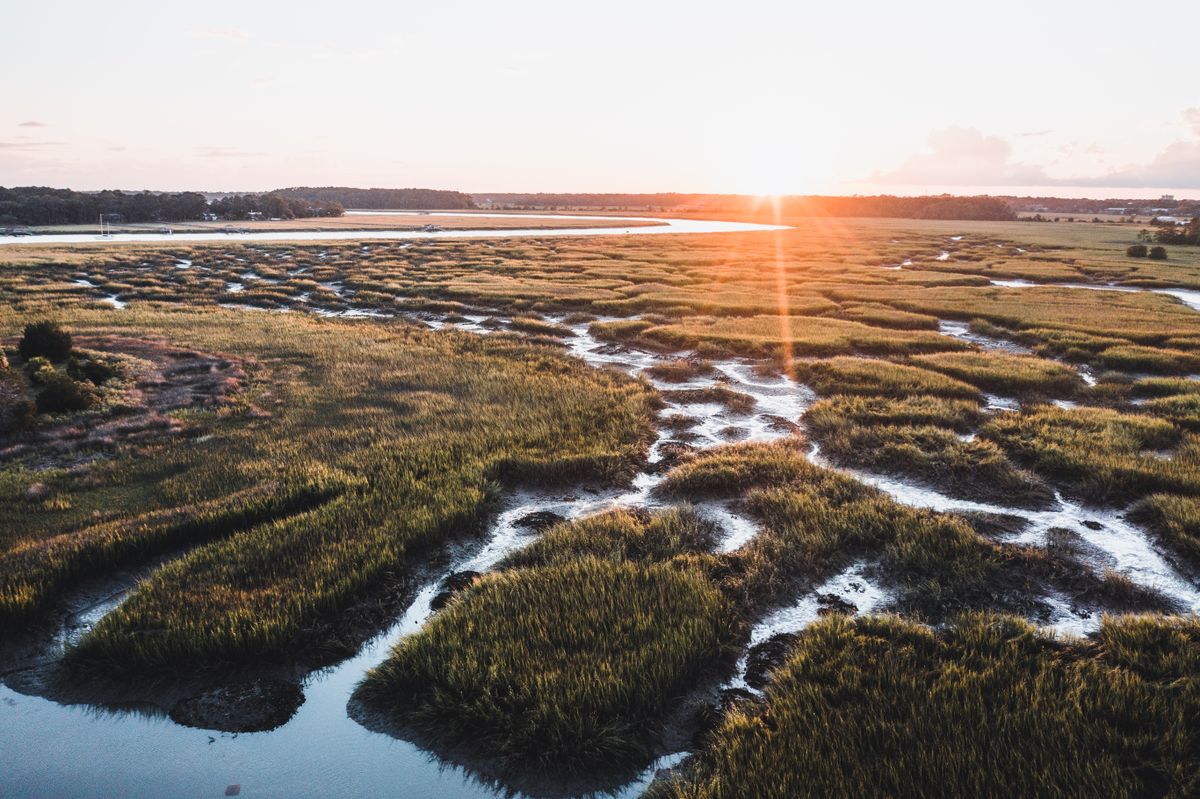

Savannah's fishing identity is defined by the marsh. Miles of spartina grass, oyster-studded creek banks, and tidal channels wind behind the barrier islands from the Savannah River south to Ossabaw Sound. The water rises and falls six to nine feet every tide cycle, among the highest tidal swings on the East Coast, and that constant flush of water through narrow creeks creates ambush points where redfish, speckled trout, and flounder stack up with a predictability that rewards anyone willing to learn the tides.
The city itself sits fifteen miles inland on the Savannah River, but the fishing water starts at Thunderbolt, a working waterfront community on the Wilmington River where charter captains have docked for generations. From there, the Wilmington River winds east through the marsh to Wassaw Sound and the open Atlantic. Tybee Island, Savannah's beach town, sits to the north with three public piers and jetty access. And offshore, a network of natural ledges and artificial reefs holds snapper, grouper, and black sea bass within an hour's run.
For a broader destination overview including restaurants, lodging, and culture, see our Savannah fishing guide. This guide is about the how-to, what gear to rig, what bait to throw, and how to actually catch fish in the Lowcountry.
The Marsh Creeks: Where Savannah Fishing Starts
The marsh system between the Wilmington River and Wassaw Sound is where most visiting anglers should spend their first day. The creeks are sheltered from wind, the fish are resident year-round, and the structure is obvious, every oyster bar, dock piling, and creek mouth is a potential fish-holding spot. If you've never fished saltwater before, a half-day inshore charter in the marsh creeks is the best introduction to Savannah fishing.
Reading the Tide
Nothing matters more than the tide in Savannah's marsh. The six-to-nine-foot tidal range means that spots fishable at high tide are exposed mud at low tide, and deep channels that look featureless at high water concentrate every fish in the creek at low water. The general rule: fish the moving water. The two hours before and after both high and low tide are the most productive windows. Slack tide, when the water stops moving, is usually the slowest period.
Rising tide: Fish push onto the flooded grass flats and oyster bars to feed. Work the edges where the marsh grass meets open water. Redfish tail in inches of water, rooting for crabs and shrimp in the grass. This is the most visual, exciting fishing Savannah offers.
Falling tide: Fish pull off the flats and funnel into creek mouths and deeper channels. Set up at a creek mouth where a small tributary drains into a larger creek, baitfish and shrimp wash out with the current, and redfish, trout, and flounder wait at the mouth to intercept them.
The Popping Cork Rig
The popping cork is the Lowcountry's signature rig, and it's the first setup every beginner should learn. It works for redfish, speckled trout, and flounder in the marsh, the three species you're most likely to catch.
Tie a Cajun Thunder or Bomber Paradise Popper cork onto your main line. Below the cork, tie 3 to 4 feet of 20-pound fluorocarbon leader to a 1/0 Gamakatsu circle hook. Pinch a small split shot about 12 inches above the hook to keep the bait hanging below the cork at the right depth. Thread a live shrimp onto the hook through the horn (the spike on its head) so it stays alive and kicks naturally.
Cast the rig near structure, oyster bars, dock pilings, creek mouths, grass edges, and let it sit. Give the cork a sharp pop every 15 to 20 seconds by snapping the rod tip. The concave face of the cork makes a loud "pop" and splash that mimics a shrimp fleeing a predator. Trout and redfish hear it from 30 yards away and come to investigate. When the cork disappears underwater, wait one full second, then reel tight and set the hook. Circle hooks do the work, you don't need a hard hookset.
No live shrimp? A 3-inch Berkley Gulp Shrimp in New Penny or Natural color on the same rig works nearly as well. The Gulp scent trail compensates for the lack of live action. A Z-Man EZ ShrimpZ in root beer gold is another local favorite.
Catching Redfish in Savannah GA, Tips and TechniquesTargeting Redfish
Redfish are Savannah's signature inshore species. They live in the marsh year-round, but fall, September through November, is peak season, when schools of slot-sized reds (14 to 23 inches in Georgia) push onto the flats in groups of a dozen or more. Sight-fishing to tailing redfish on a flooding tide is one of the great experiences in Southeast saltwater fishing.
Where: Oyster bars along the Wilmington River, the flats behind Cabbage Island where the Wilmington meets Wassaw Sound, the Skidaway River oyster rakes, and the creek mouths around the Bull River. On higher tides, reds push all the way into the spartina grass, look for wakes, tails, and mud puffs in water under a foot deep.
How: The popping cork rig with live shrimp is the highest-percentage approach. For more active fishing, tie a 1/4-ounce gold spoon, the Johnson Silver Minnow in gold is the classic, onto 20-pound fluorocarbon leader and cast it past the oyster bar, retrieving with a steady medium speed so the spoon wobbles just under the surface. Weedless soft plastics work too: rig a Berkley Gulp Shrimp or a Z-Man TRD on a 1/8-ounce jighead and bounce it along the bottom near structure.
Gear: A 7-foot medium-power spinning rod paired with a Penn Battle III 3000 or Daiwa BG 3000 loaded with 15-pound braid and a 20-pound fluorocarbon leader handles everything in the marsh. This same setup works for trout, flounder, and sheepshead, you don't need multiple rods for inshore fishing in Savannah.
The Easiest Way to Catch Redfish, Savannah GATargeting Speckled Trout
Speckled trout (called "specks" locally) are the second pillar of Savannah's inshore fishery. They're active year-round, but the best fishing is during the cooler months, November through February, when trout school up in deeper creek channels and around structure in the Wilmington and Vernon Rivers.
Where: The deeper bends and holes in the Wilmington River, the Herb River, Isle of Hope, and the Vernon River. In winter, trout hold in water 6 to 12 feet deep near channel edges, oyster bars, and dock pilings. In warmer months, they spread across the grass flats and feed over shallow oyster beds on the tide.
How: The popping cork rig dominates. Trout hit the cork setup aggressively, the strike is usually a violent pull-down with no subtlety. Under the cork, live shrimp is the top bait. For artificials, a white or chartreuse 3-inch D.O.A. Shrimp or a MirrOlure MirrOdine suspending twitch bait retrieved with a walk-the-dog cadence draws explosive surface strikes in the early morning.
Important: Speckled trout have soft, paper-thin mouths. Don't horse them, steady pressure, no sudden jerks, and net them rather than lifting by the lip. A trout that pops off at the boat is almost always the result of too much rod pressure.
Catching Big Trout in Savannah, GATargeting Flounder
Flounder are ambush predators that lie flat on the bottom near current breaks, channel edges, creek mouths, bridge pilings, and dock shadows. They're available year-round in Savannah but are most reliably caught from March through October in the tidal rivers. November is the famed "flounder run," when fish migrate out of the rivers toward the ocean to spawn and stack up at creek mouths and passes in big numbers.
Where: The Skidaway and Herb Rivers are Savannah's best flounder water. The area around Priest Landing on the Skidaway, the docks along Isle of Hope, and the channel edges of the Bull River all produce. During the fall run, concentrate on the mouth of Lazaretto Creek and the Back River behind Tybee.
How: A Carolina rig is the standard. Thread your main line through a 1/2-ounce egg sinker, tie a barrel swivel, then 18 inches of 20-pound fluorocarbon leader to a 2/0 Kahle hook or wide-gap circle hook. Bait with a live mud minnow (available at Bandy's Bait at the Skidaway Island boat ramp or Adams Bait in Thunderbolt) hooked through the lips. Drag the rig slowly along the bottom, painfully slowly, pausing every few feet. Flounder hit by inhaling the bait, and you'll feel a subtle weight, not a sharp strike. Wait until you feel the fish moving before setting the hook.
Alternative: A 3-inch Berkley Gulp Swimming Mullet in white or chartreuse on a 1/4-ounce jighead, dragged along channel edges with a slow hop-and-pause retrieve. Scented soft plastics outfish unscented ones for flounder by a wide margin.
Inshore Slam in GA, Redfish, Flounder, TroutWassaw Sound and the Open Water
Wassaw Sound is where the Wilmington River and several smaller creeks empty into the Atlantic. It's a large, shallow sound, mostly 5 to 15 feet deep, with grass flats, sandbars, and oyster reefs spread across the bottom. The sound produces all the same species as the marsh creeks but adds open-water opportunities: Spanish mackerel and ladyfish in summer, jack crevalle on the sandbars, and the occasional cobia cruising the surface in spring.
Spanish mackerel appear in the sound from April through October, chasing schools of menhaden and glass minnows. A 1/2-ounce silver Gotcha plug or a Clark Spoon behind a 3-foot wire leader, cast into a feeding frenzy and retrieved fast, is deadly. Mackerel are fast, they'll cut through monofilament or fluorocarbon. Always use a short wire leader or 40-pound fluorocarbon.
Cobia pass through the sound from March through May, often following large rays or sea turtles. They're copper-brown, curious, and big, 20 to 60 pounds. A white bucktail jig (1 ounce) tipped with a Berkley Gulp Swimming Mullet, cast in the cobia's path and retrieved with slow hops, is the standard approach. Polarized sunglasses are essential, you spot cobia before you cast to them.
Jack crevalle school over the sandbars in summer and fall, busting bait on the surface in violent feeding frenzies visible from hundreds of yards away. They eat anything, topwater plugs, spoons, jigs, live bait, and fight like a fish twice their size. A Heddon Super Spook Jr. in bone color walked across the surface through a school of jacks produces explosive strikes.
Tybee Island Piers and Jetties
Tybee Island is twenty minutes east of Savannah and offers three public piers plus the north-end jetties. This is the easiest, cheapest way to fish saltwater in the Savannah area, no boat, no charter, no experience necessary.
Tybee Pier and Pavilion
The main pier extends from the south end of the beach into the Atlantic. No fishing license is required to fish from this pier, the pier's own license covers everyone. You can rent rods and buy bait on-site.
What you'll catch: Whiting are the most common species, small, easy to catch, and good eating. Rig a size 4 circle hook with a piece of fresh shrimp on a double-drop bottom rig (also called a pompano rig) with a 2-ounce pyramid sinker. Cast it out, set the rod in a holder, and wait. Whiting, Atlantic croaker, and the occasional black drum will find it.
Sheepshead hang around the pier pilings year-round, with December through April being peak season. Use a small, sharp hook (size 1 Owner Mosquito hook) baited with a fiddler crab or piece of shrimp, fished tight to the pilings on a knocker rig. Sheepshead are notorious bait-stealers, set the hook at the first tap.
Lazaretto Creek Pier
On the back side of Tybee, the Lazaretto Creek fishing pier sits in the tidal marsh, a completely different environment from the ocean-side pier. The pier extends about 50 feet from shore and then runs 100 feet parallel to the creek. This is a National Park Service facility (part of Fort Pulaski National Monument), and it's free.
What you'll catch: Redfish, speckled trout, flounder, sheepshead, and blue crabs. The creek mouth funnels tidal current past the pier, concentrating bait and predators. A popping cork rig with live shrimp works from the pier just as well as from a boat. Fish the moving tide, the last two hours of falling tide and the first two hours of rising tide are the most productive.
North Jetties
The rock jetties on the north end of Tybee guard the entrance to the Savannah River shipping channel. This is where the biggest fish on the island are caught, bull redfish (over-slot fish, 30 inches and up), black drum to 50 pounds, tarpon in summer, and sharks. The jetties require careful footing (rocks are slippery with algae) and heavier tackle, a medium-heavy rod with 30-pound braid minimum.
Bull redfish on the jetties eat cut mullet or menhaden on a fish-finder rig: 3-ounce sliding sinker, 40-pound mono leader, 7/0 circle hook. Cast into the channel current and wait. The bite is unmistakable, a bull red bends the rod to the cork grip and runs.
Where the Big Girls Live, Jetty Fishing Savannah GAOffshore: Snapper, Grouper, and the Reef Complex
Savannah's offshore fishing centers on the natural and artificial reef system scattered across the continental shelf. Nearshore reefs start 5 to 10 miles out; the productive snapper banks sit about 45 miles offshore. Offshore trips require a charter, these are full-day commitments on larger boats with serious tackle.
Black sea bass are the bread-and-butter bottom species, available year-round on the nearshore wrecks and artificial reefs. They're not big, 1 to 3 pounds typically, but they bite aggressively and are excellent eating. Squid or cut bait on a double-drop bottom rig, fished straight down over structure, catches them.
Red snapper are the glamour species, concentrated on the deeper reefs 40 to 60 miles out. Georgia's red snapper season is limited, typically a few weekends per year, set by NOAA. When the season opens, every charter in Savannah books solid. Red snapper can exceed 30 pounds and fight hard on the bottom.
Gag grouper inhabit the same deep structure as red snapper. Georgia's grouper season typically runs May through December. A live bait (pinfish or grunt) on a heavy bottom rig, fished tight to the structure, is the standard approach. Grouper fights are tug-of-war, they dive for the rocks the instant they feel the hook, and if they reach the structure, you've lost them. Heavy tackle (50-pound braid, stout rod) and immediate, aggressive pressure are necessary.
Charter costs: Nearshore bottom-fishing trips (5 to 8 hours, 10 miles out): $600 to $900 for the boat, 4 to 6 anglers. Full-day offshore trips (10 to 12 hours, snapper banks): $1,200 to $2,000. Most charters depart from the Thunderbolt waterfront on the Wilmington River or from Bull River Marina near Tybee.
Inshore Saltwater Fishing, Savannah GABait and Tackle Shops
Savannah has a handful of essential shops that stock live bait and local knowledge:
Adams Bait & Tackle in Thunderbolt sits right on the Wilmington River waterfront near the charter docks. Live shrimp, mud minnows, fiddler crabs, and frozen bait. The staff knows the daily bite report and will tell you what's working.
Bandy's Bait & Tackle at the Skidaway Island boat ramp (Hall's Landing) is the go-to for the Skidaway and Herb River system. Live shrimp and mud minnows plus basic terminal tackle.
Hogan's Marina on Wilmington Island has live bait and serves as a launch point for the Wilmington River and Turner Creek system.
Gear for Beginners
If you're buying tackle for Savannah, one rod covers 90% of inshore fishing: a 7-foot medium-power fast-action spinning rod paired with a 3000-size spinning reel. The Penn Battle III 3000 combo or the Daiwa BG 3000 combo are the local standards, both handle redfish, trout, flounder, sheepshead, and small sharks without complaint. Spool with 15-pound Power Pro braided line in moss green, and carry a spool of 20-pound Seaguar Red Label fluorocarbon for leaders.
Terminal tackle to pack: Popping corks (Cajun Thunder, 3-pack), 1/0 and 2/0 Gamakatsu circle hooks, 1/4-ounce and 1/2-ounce egg sinkers, a bag of split shot, barrel swivels, 1/4-ounce gold Johnson Silver Minnow spoons, Berkley Gulp Shrimp in New Penny (3-inch), Z-Man TRD in Mud Minnow color, and a pack of size 1 Owner Mosquito hooks for sheepshead.
Fishing License
Georgia requires a fishing license for anyone 16 or older. Residents pay $15 for an annual license; non-residents can buy a one-day license for $10 plus $3.50 for each additional day (up to 10 days). A free Saltwater Information Permit (SIP) is also required for all saltwater fishing, it's free but mandatory, and you add it when purchasing your license. Buy both online at Go Outdoors Georgia (gooutdoorsgeorgia.com) or at any bait shop. A $3 transaction fee applies.
The Tybee Pier and Pavilion does not require a personal fishing license, the pier's own license covers you.
Redfishing Savannah's Wilmington and Skidaway Rivers