Fish
Fish Fire
Fire Hike
Hike Bird
Bird

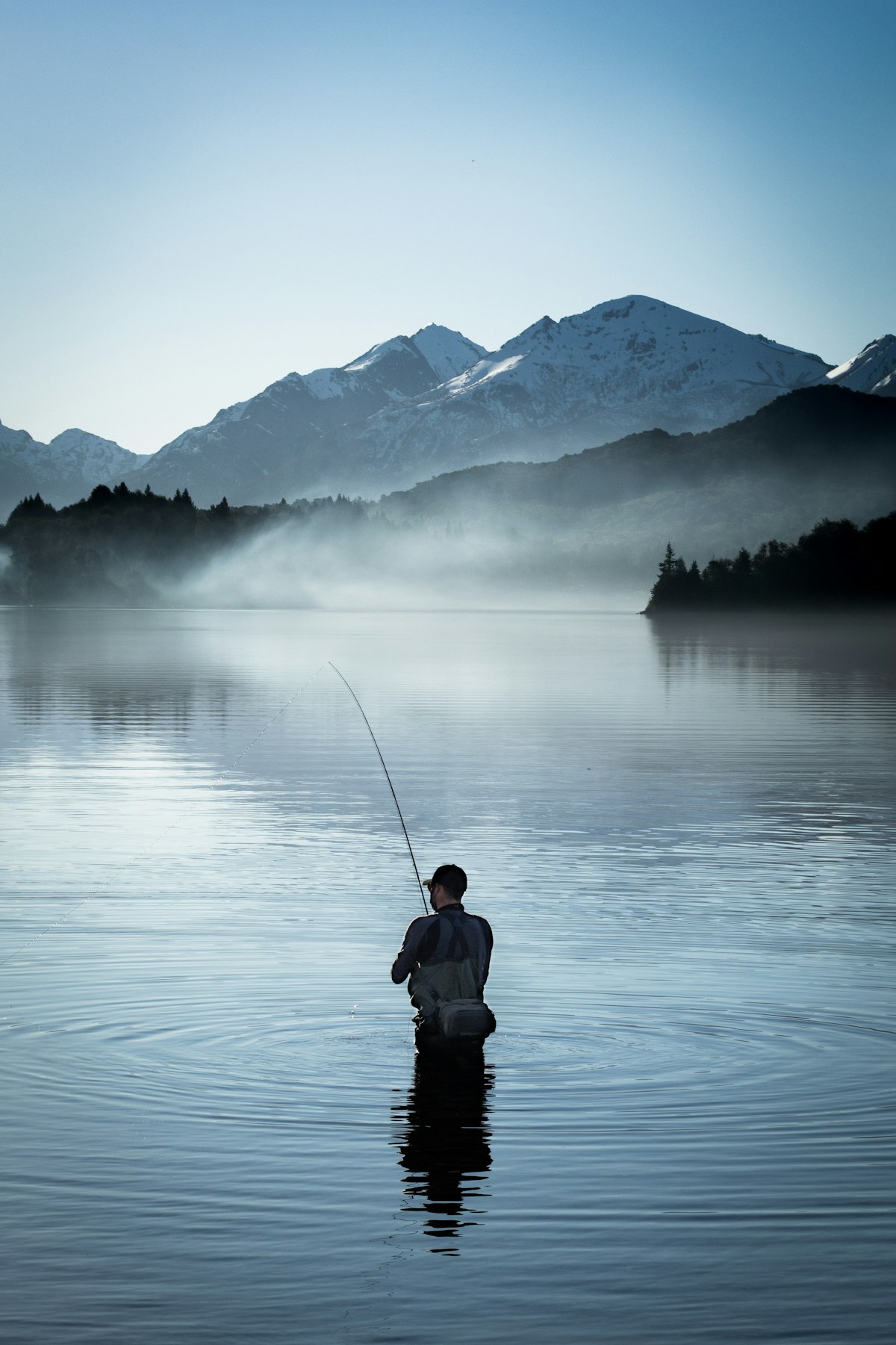

Georgian Bay rewards technique. The water is clear, visibility of 15 to 30 feet in summer, which means the fish can see you, your boat, and your lure from a distance. Sloppy presentations that work on stained-water lakes get refused here. The anglers who catch the most fish on Georgian Bay are the ones who downsize their tackle, lengthen their casts, and pay attention to what the fish are actually doing.
This guide covers the techniques for every major species on Georgian Bay. For trip planning, lodge options, and seasons, see our Georgian Bay destination guide.
Smallmouth Bass: The Main Event
Georgian Bay smallmouth average 2 to 4 pounds with trophies over 5 pounds. They hold on Canadian Shield rock, boulder fields, points, shoals, and ledges at 5 to 25 feet. The clear water makes them visible, which means sight fishing is a primary technique.
Topwater
The most exciting way to catch Georgian Bay smallmouth. Early morning and late evening, when the surface is calm and the light is low, smallmouth cruise the shallow rock shelves looking for crayfish, minnows, and anything that moves on the surface.
Lures: Walking baits (Heddon Zara Spook, Rapala Skitter V), poppers (Rebel Pop-R, Rapala Skitter Pop), and prop baits (Heddon Torpedo). Work them over shallow rock (3 to 8 feet) with a walk-the-dog retrieve, twitch the rod tip rhythmically while reeling slowly. The strike is explosive, smallmouth hit topwater with their whole body, often clearing the water completely.
When: Dawn to 9 AM, and the last hour of light. Overcast days extend the topwater window. Calm water is better than choppy, the fish need to see the surface disturbance. Post-frontal bluebird days with high pressure are poor topwater conditions.
Tackle: 6'6" to 7' medium baitcasting rod with a high-speed reel (7:1 ratio) and 10 to 15 lb braided line with a 10 lb fluorocarbon leader. The braid provides casting distance and sensitivity; the fluoro leader disappears in the clear water.
Drop-Shot
The most consistent technique for Georgian Bay smallmouth, works when topwater doesn't, which is most of the day.
The rig: A drop-shot hook (size 1 to 1/0) tied inline on the leader with a Palomar knot, 12 to 18 inches above a cylindrical drop-shot weight (1/4 to 3/8 oz). Bait with a 3- to 4-inch soft plastic, Roboworm, Jackall Cross Tail Shad, or Z-Man Finesse TRD in natural colours (green pumpkin, smoke, goby pattern).
Technique: Cast to visible structure, a boulder, a rock ledge, a crevice, and let the weight hit bottom. Keep the line semi-taut and shake the rod tip with tiny 1-inch twitches. The soft plastic dances in place above the bottom, imitating a feeding goby or crayfish. Smallmouth can watch it for 30 seconds before eating, patience is critical. The bite feels like a subtle tap or the line goes slightly slack.
Why it works: The drop-shot keeps the bait in the strike zone indefinitely. On clear-water Georgian Bay, smallmouth are cautious. A lure that sits in their face long enough eventually triggers a strike. Drop-shot fishing is not exciting, it is effective.
Tube Jig
The classic Georgian Bay smallmouth technique, a 3- to 4-inch tube bait on a 1/4 oz internal jig head, hopped along the bottom over rocky structure.
Technique: Cast to rock transitions (where the bottom changes from sand to rock, or from small gravel to boulders). Let the tube sink to the bottom, count it down. Hop it with short, sharp rod lifts, 6 inches off the bottom, and let it fall on a slack line. The spiralling fall of a tube jig imitates a fleeing crayfish, which is the primary forage for Georgian Bay smallmouth.
Colours: Green pumpkin, smoke/pepper, and brown/orange (crayfish pattern) cover most situations. On dark days or in deeper water, go darker. On bright days over light sand, go lighter.
Ned Rig
The finesse technique that catches fish when everything else fails. A 2.5- to 3-inch stick bait (Z-Man TRD, Berkley MaxScent Hit Worm) on a 1/8 to 1/4 oz mushroom jig head, fished slowly along the bottom.
Technique: Cast, let it sink, and drag it slowly with long pauses. The buoyant ElaZtech material stands the bait upright on the bottom during pauses, imitating a goby or small crayfish. Georgian Bay smallmouth eat ned rigs with barely perceptible bites, keep your line semi-taut and set the hook on any change in feel.
Georgian Bay Smallmouth Bass Fishing, Best Smallie TechniquesNorthern Pike: The Ambush Predator
Pike are everywhere on Georgian Bay, weed beds, shallow bays, creek mouths, and the edges of rock shoals. They are less finicky than smallmouth and respond to bigger, flashier presentations.
Casting
Spinnerbaits (1/2 to 1 oz, white or chartreuse): The most versatile pike lure. Cast to weed edges and retrieve at medium speed. The blade flash and vibration draw pike from 20 feet away. Let it helicopter down along weed edges, pike often strike on the fall.
Spoons (Eppinger Daredevle, Williams Whitefish, 1 oz): The classic. Cast and retrieve with a steady wobble over shallow flats and along weed lines. Red/white and five-of-diamonds are the standards.
Jerkbaits (Rapala X-Rap 12-14 cm): Suspending jerkbaits worked with a jerk-pause-jerk retrieve through pike-holding structure. The pause is when pike commit, they follow the bait on the jerks and eat it when it stops.
Tackle: 7' medium-heavy casting rod, baitcasting reel, 30 lb braided line with a 12-inch wire or heavy fluorocarbon (40 lb) leader. Pike teeth will cut anything lighter.
Fly Fishing for Pike
Georgian Bay's clear water and shallow weed beds make it excellent pike fly water. An 8- or 9-weight rod with a sink-tip line and a 6- to 8-inch streamer (Deceiver, Clouser, or articulated pike fly in white/chartreuse). Strip aggressively along weed edges. Pike on the fly are explosive and visual, you often see the fish tracking the fly before it eats.
Fall Fishing Georgian Bay, Smallmouth, Largemouth, and PikeLake Trout: The Deep Dweller
Lake trout hold in the deep basins and around deep-water points at 60 to 150 feet in summer. They move shallower (20 to 40 feet) in spring and fall when water temperatures suit them.
Trolling: The primary method. Large spoons (Williams Whitefish, Sutton, or Northern King) trolled on downrigger at 1.5 to 2.5 mph at 60 to 120 feet. Run multiple lines at different depths to find the feeding zone. Lake trout often suspend just above the thermocline.
Jigging: Vertical jigging with heavy spoons (Swedish Pimple, Hopkins, 1-2 oz) over deep structure, underwater humps, drop-offs, and rock piles in 60 to 100 feet. Drop to the bottom, reel up aggressively with sweeping rod lifts, then let it flutter back down. Lake trout hit on the fall.
Fall shallow-water fishing: In October, lake trout move to shallow rocky reefs (10 to 30 feet) for the spawn. This is the best time to catch lakers on casting gear, tube jigs, spoons, and swimbaits fished over shallow rock. The same gear you use for smallmouth works for fall lakers.
Walleye: The Bonus Species
Walleye on Georgian Bay are not the primary target (that distinction belongs to Lake of the Woods), but they provide excellent fishing on the deeper reefs and in river mouth areas.
Where: Main-lake reefs at 15 to 30 feet, river mouths (French River, Magnetawan, Moon River), and deep drop-offs adjacent to islands. Walleye are more common in the northern sections of the bay near the French River.
Technique: Jig and minnow (1/4 to 3/8 oz) bounced along the bottom of deeper reefs, the same technique that works on Lake of the Woods. Also effective: trolling crankbaits (Rapala Shad Rap, Berkley Flicker Shad) over reef structure at 1.5 to 2.5 mph.
When: Best in spring (May-June) near river mouths and shallow reefs. Fall (September-October) walleye push shallow again and become more accessible from shore. Summer walleye are present but hold deeper and require electronics to locate.
Practical Tips for Georgian Bay
Line visibility matters. Georgian Bay's clear water means fish see your line. Use fluorocarbon leaders (6 to 10 lb) for all finesse presentations. Braid to fluoro is the standard connection, the braid provides sensitivity and casting distance, the fluoro disappears in the water.
Downsize your tackle. If you typically fish 3/8 oz jigs on stained-water lakes, go to 1/4 oz on Georgian Bay. If you fish 5-inch plastics, go to 3 or 4 inch. The clear water magnifies everything, smaller, more natural presentations catch more fish.
Work the transitions. The most productive water on Georgian Bay is where something changes, where rock meets sand, where shallow meets deep, where current meets slack water, where sun meets shade. Fish those edges before fishing the middle of anything.
Watch the wind. Wind creates current around islands and points. Current concentrates baitfish, and baitfish concentrate bass and pike. A point getting hit by a steady breeze will hold more smallmouth than a calm, protected point. Use the wind to your advantage, drift along windy shorelines and cast to the current-swept structure.
Respect the rock. Georgian Bay is notorious for submerged rocks. Run at safe speeds, watch your depth sounder, and slow down in unfamiliar areas. A destroyed lower unit costs $2,000+ and ruins the trip. If the chart shows shallow, it is shallow. If you can't see the bottom, you might be in trouble.
Shore fishing access. Unlike many Ontario lakes, Georgian Bay has limited road-accessible shore fishing. The best fishing is from a boat among the islands. However, some access points exist, municipal docks in Parry Sound, Honey Harbour, and Killarney offer shore casting. The tributary rivers (Magnetawan, Moon) have wade-fishing access for fall salmon.
Seasonal Patterns Summary
| Season | Smallmouth | Pike | Lake Trout |
|---|---|---|---|
| June (opener) | Shallow rock, post-spawn | Weed beds, shallow bays | Deep (80-120 ft) |
| July-August | Rock points 8-20 ft, topwater AM/PM | Deep weed edges | Deep (60-100 ft) |
| September | Moving shallow, aggressive | Very active, shallow | Moving shallow |
| October | Still active, deeper | Weed beds thinning | Shallow spawn (10-30 ft) |
Tackle Summary
| Target | Method | Rod | Line | Terminal |
|---|---|---|---|---|
| Smallmouth (topwater) | Walking/popping | 6'6" M baitcast | 10-15 lb braid + fluoro | Zara Spook, Pop-R |
| Smallmouth (drop-shot) | Bottom finesse | 7' ML spinning | 8 lb braid + 6 lb fluoro | Drop-shot rig, Roboworm |
| Smallmouth (tube) | Hop and fall | 6'10" M spinning | 8 lb braid + 8 lb fluoro | 3" tube, 1/4 oz jig |
| Pike | Cast spoons/spinners | 7' MH casting | 30 lb braid + wire | Daredevle, spinnerbait |
| Lake trout (troll) | Downrigger trolling | 7' M trolling | 15 lb mono | Spoons at 60-120 ft |
| Lake trout (jig) | Vertical jig | 6'6" MH | 20 lb braid | Swedish Pimple 1-2 oz |
Regulations
Ontario fishing licence required. Smallmouth bass season opens fourth Saturday in June, catch-and-release only before the opener. Sport licence: 6 bass/day, 6 pike/day, 2 lake trout/day. Conservation licence: 2/2/1. Check current regulations for specific Georgian Bay zones, some areas have additional restrictions.
How to Find Fish on Georgian Bay, Big Smallmouth Bass