Fish
Fish Fire
Fire Hike
Hike Bird
Bird

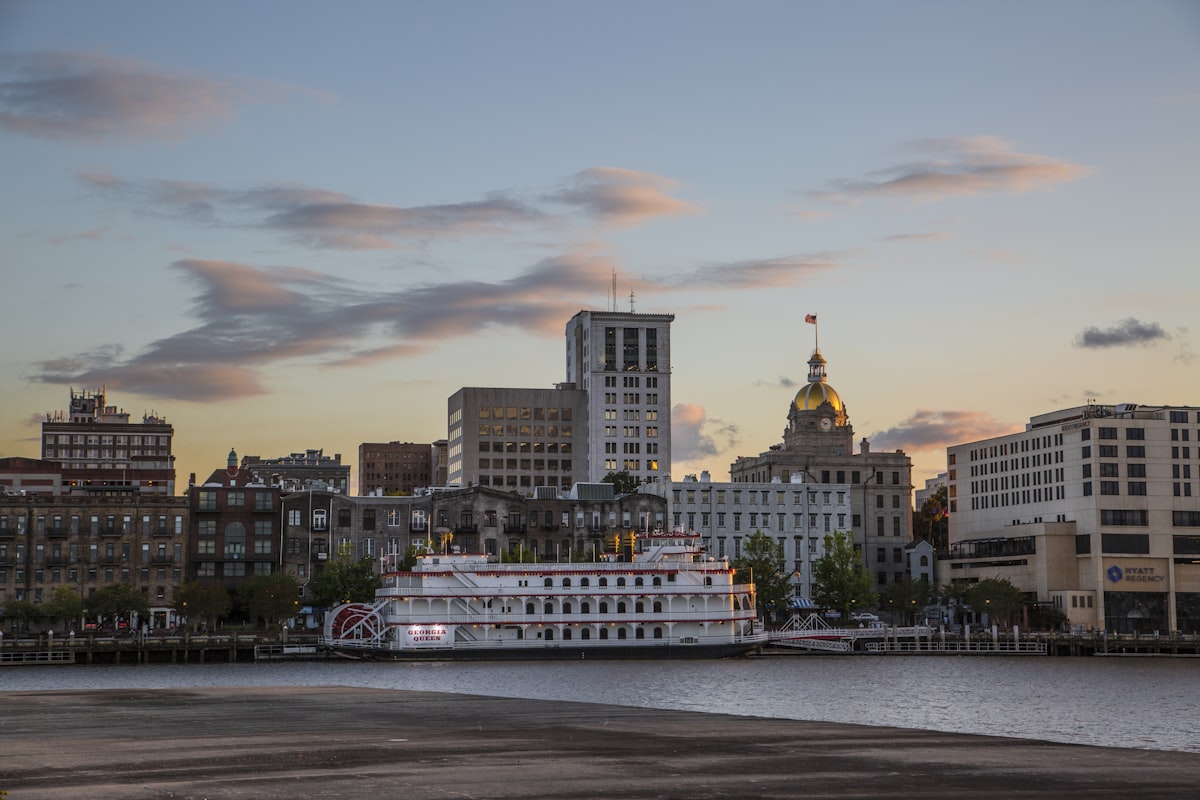

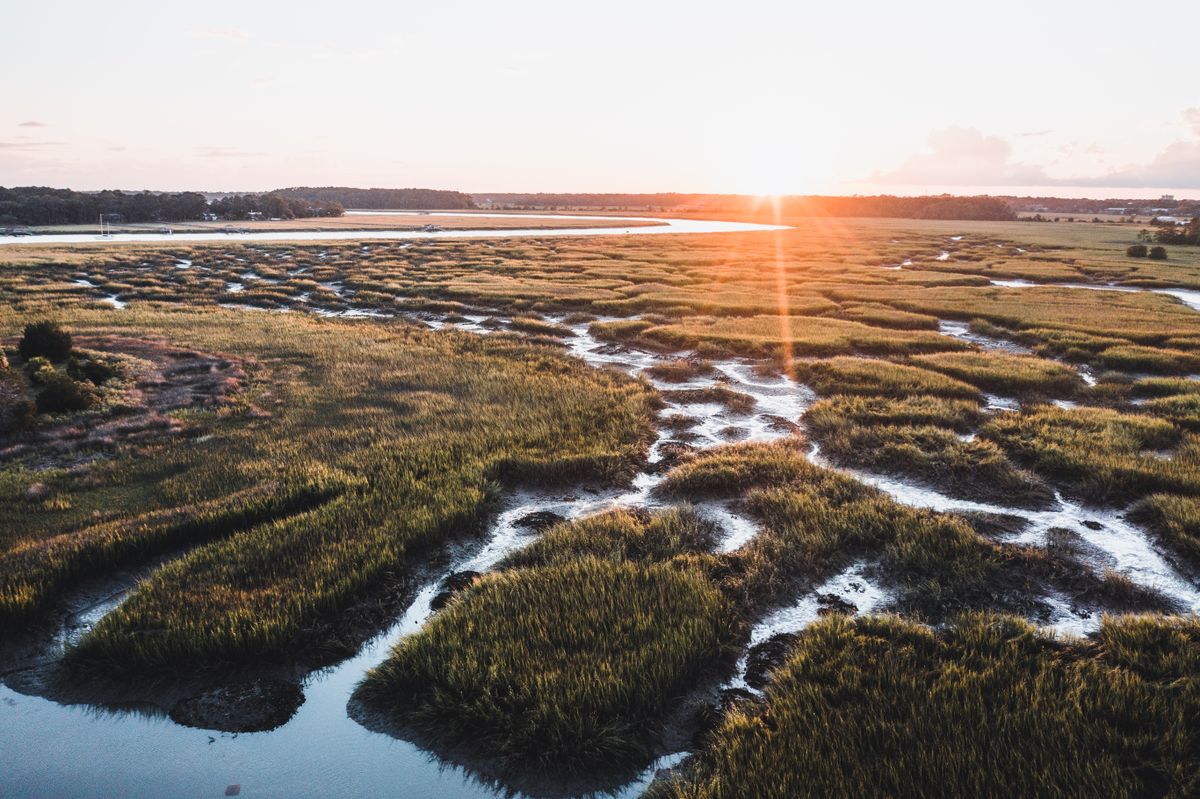
Savannah sits where the Savannah River meets the Atlantic Ocean, surrounded by the same kind of Lowcountry marsh that defines the South Carolina coast to the north. But Savannah's marsh has one major difference: the tidal range. The Georgia coast experiences a six- to eight-foot tidal swing, nearly twice what Charleston sees, and that extreme tide movement drives the entire fishery.
When the tide floods, water pours into the marsh, filling the creeks, covering the oyster bars, and pushing baitfish over the grass flats. Redfish, trout, and flounder follow the bait in. When the tide ebbs, the water drains, funneling everything, bait and predators alike, back through the creek mouths, passes, and channels. Understanding this cycle, and positioning yourself at the right place in the right phase, is the entire game.
The Flood Tide, Fish Moving In
On a rising tide, the Savannah marsh comes alive. Water floods over the Spartina grass flats, and redfish push up onto the shallow grass to feed on fiddler crabs, shrimp, and mud crabs. This is flood-tide redfishing, sight-casting to tailing fish in inches of water over the grass.
The fish are visible as wakes, tails, or copper-colored backs pushing through the grass. You cast a gold spoon, fly, or soft plastic ahead of the moving fish and strip it into their path. When a red eats on the flood, crashing a lure in six inches of water with nowhere to run but across the flat, it's the most exciting inshore fishing on the Georgia coast.
Flood-tide redfishing is best on the higher tides, spring tides around the new and full moon push more water onto the grass and bring more fish shallow. Anglers who fish the flood plan trips around the moon phase, not the calendar.
The Ebb Tide, Fish Funneling Out
As the tide drops, the marsh drains. The creeks that were barely visible at high tide become defined channels carrying strong current, and every predator in the system repositions to the choke points.
Speckled trout stack at the creek mouths and along channel edges during the falling tide, ambushing baitfish that wash out of the marsh. A popping cork with live shrimp or a soft-plastic jig bounced along the bottom through a creek mouth on a dropping tide is textbook Savannah trout fishing. The best trout fishing happens in the cooler months, November through February, when the fish concentrate in deeper holes and the larger specimens show up.
Flounder lie on the sandy and muddy bottoms adjacent to creek mouths and channel transitions, waiting for bait to flush past. A slow-bounced jig or live mud minnow along the bottom during the ebb produces reliable flounder action, especially in the fall (October–November) when they stage before their Gulf migration.
Wassaw Sound, The Open Water
Wassaw Sound is the large body of water where Savannah's tidal creeks and rivers empty into the Atlantic. It's the transition zone between the marsh and the ocean, and it holds both inshore and nearshore species.
Redfish and trout hold along the oyster bars and grass edges in the sound's shallower areas. Tarpon roll through Wassaw Sound in summer, June through August, following schools of menhaden. The fish run 60 to 120 pounds, and hooking one in the sound's open water is a fight measured in hours, not minutes.
Sharks, blacktip, bonnethead, and bull, patrol the sound and the nearshore water, providing catch-and-release action for anglers who want something bigger.
Cobia and tripletail are the nearshore migratory species, cobia cruising the surface near buoys and markers from April through June, and tripletail holding under floating debris and channel markers. Sight-casting to both is a visual, stalking game.
Tybee Island, Pier and Surf
Tybee Island sits at the mouth of the Savannah River and offers pier and surf fishing for anglers without a boat. Whiting, pompano, and bluefish are caught from the beach. Red drum run the surf in fall. The Tybee Pier puts anglers over deeper water for Spanish mackerel and king mackerel in the warmer months.
When to Go
- Spring (March–May): Trout and reds waking up, cobia migrating nearshore, flood-tide season starting
- Summer (June–August): Peak flood-tide redfishing, tarpon in Wassaw Sound, sharks nearshore
- Fall (September–November): The best overall, redfish everywhere, flounder staging, trophy trout starting
- Winter (December–February): Trophy speckled trout in deep holes, redfish concentrated in warmer creek bends