Fish
Fish Fire
Fire Hike
Hike Bird
Bird

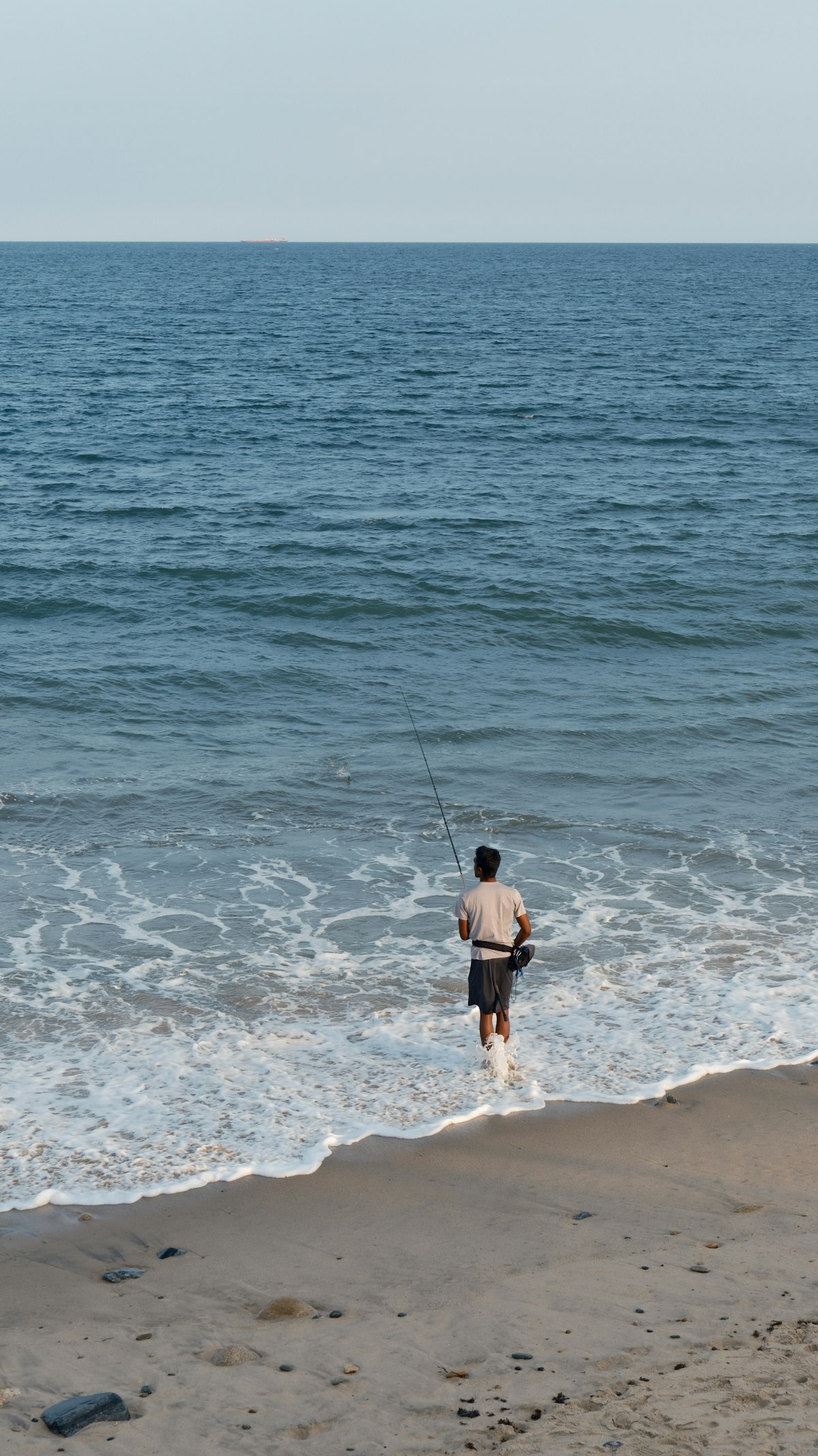
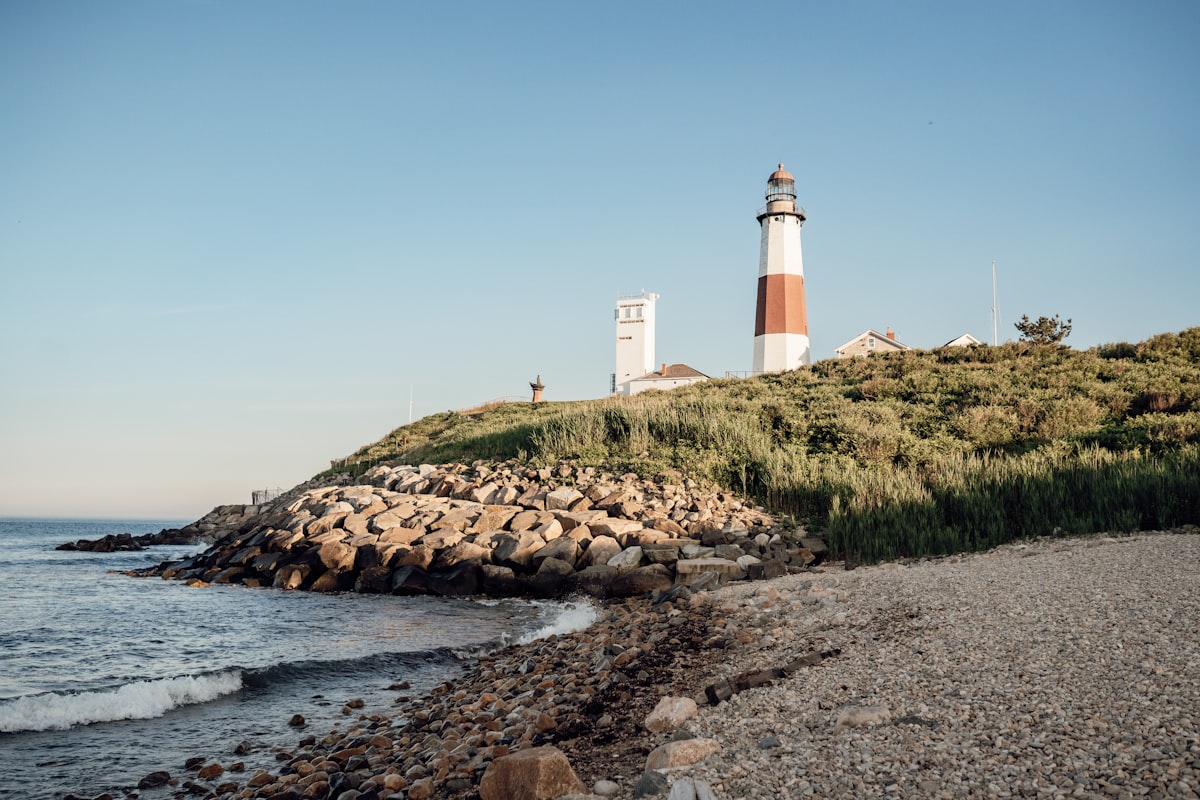
Montauk sits at the eastern tip of Long Island where the Atlantic Ocean meets Block Island Sound, and the fishing here has been legendary for a century. The rocky shoreline beneath the lighthouse is the most iconic surf-casting spot in the northeastern United States. Charter boats run offshore to canyons that hold yellowfin tuna, bigeye tuna, and mahi-mahi. Party boats anchor over structure loaded with fluke, black sea bass, and porgies. And during the fall run, late September through November, enormous schools of striped bass and bluefish push through Montauk Point in a feeding frenzy that draws anglers from every state on the East Coast.
Montauk is not a warm-water vacation fishery. The water is cold, the rocks are slippery, the currents are strong, and the wind blows hard from the southwest most days. But the fish are there in numbers that make all of it worth it. This is where surf casting was perfected, and where a beginner can stand on the same rocks as lifelong regulars and hook a thirty-pound striper on a plug they bought at the tackle shop an hour ago.
This guide covers the practical how-to for each fishery. For the full destination overview, seasons, species, charter fleet, and trip planning, read our complete Montauk fishing guide. For more Northeast fishing, see our Cape Cod guide.
Surf Casting: The Soul of Montauk
This is what Montauk is famous for. Standing on the rocks at the base of the lighthouse, casting a plug or bait into the Atlantic, and hooking a striped bass that runs line off your reel while the sun comes up behind you. It is physical, it is dramatic, and it is available to anyone willing to wake up early and get their feet wet.
Where to Go
Montauk Point State Park, the lighthouse rocks, is the most productive and most famous surf spot. The rocky shoreline creates rips, currents, and structure that hold bait and attract stripers. The best spots are the north bar, the south side, and the area directly below the lighthouse. The rocks are slick with algae and the footing is treacherous, wear korkers or studded wading boots, not sneakers. People get hurt here every year falling on wet rocks.
Ditch Plains is a sand beach a few miles west of the Point. Much easier footing, more beginner-friendly, and it still produces stripers, bluefish, and fluke in the surf. This is where to go if you are new to surf casting and want to learn without risking a broken ankle on the rocks.
North Bar and Shagwong Point are intermediate spots that produce well during the fall run when bass push west along the north side of the Point.
Gear
Montauk surf casting requires heavier gear than most beach fishing. You are casting heavy plugs and bucktails into wind and current, often from elevated rocks where you need leverage to control fish around structure.
Rod: A 9- to 10-foot medium-heavy spinning rod. The longer rod helps with casting distance and keeping your line above the waves. A Tsunami Airwave 10' or Penn Battalion 10' is a solid starter. On a budget, the Ugly Stik Tiger Elite 9' is nearly indestructible.
Reel: A 5000- to 6000-size spinning reel (Penn Spinfisher VI 5500, Shimano Saragosa 5000, or Daiwa BG 5000). These hold enough line for long casts and have drag systems that handle big fish. The Penn Spinfisher VI is the most popular surf reel at Montauk.
Line: 30- to 40-pound braided line (PowerPro Spectra or Sufix 832) with a 3-foot leader of 30- to 40-pound Seaguar Blue Label fluorocarbon, connected with a uni-to-uni knot. The braid gives you casting distance and sensitivity; the leader gives you abrasion resistance on rocks.
Lures and Rigs
Bucktails are the workhorse lure at Montauk. A 1- to 2-ounce Spro bucktail jig in white tipped with a white Uncle Josh pork rind trailer or a Berkley Gulp 3-inch Grub in white is the default presentation. Cast it out, let it sink to the bottom, and retrieve with a steady lift-and-drop cadence. Bucktails catch stripers, bluefish, and fluke, everything that swims at Montauk.
Pencil poppers and surface plugs, a Gibbs Pencil Popper or Tactical Anglers Crossover in bone or white is the plug to throw when you see fish blitzing on the surface. Cast past the breaking fish, reel fast with the rod tip high, and the plug skips and splashes across the surface. When a striper hits a topwater plug at dawn, you will understand why people drive four hours from the city to stand on wet rocks.
Live eels are the single most effective bait for big striped bass at Montauk, especially at night. Hook a live eel through the lips on a 7/0 circle hook with no weight, cast it into the current, and let it swim. Trophy fish over 40 pounds are caught on eels from the rocks at the Point every season.
Chunk bait, cut bunker (menhaden) fished on a fishfinder rig (sliding sinker above a swivel, 3-foot leader to a 8/0 circle hook) is the set-it-and-wait method. Effective from the rocks or from Ditch Plains beach. Cast it into a rip or current seam and put the rod in a sand spike or rock holder.
Surf Fishing Under Montauk Lighthouse, 25lb Striped Bass on BucktailWhen to Go
Fall run (September through November) is the main event. Striped bass migrate south along the coast and funnel through Montauk Point. Schools of bass and bluefish chase bait, bunker, sand eels, bay anchovies, through the rips and along the rocks. October is the peak month. On a good blitz morning, there are fish breaking on the surface as far as you can see.
Spring (May through June) is the other prime window. Bass move north and stage around the Point. Larger fish (30 to 50 pounds) are more common in spring than fall.
Summer is quieter for surf stripers but excellent for fluke in the surf at Ditch Plains and for false albacore ("albies") that show up in September.
Blitzing Montauk Striped Bass, Fall Run Surf Casting Montauk NY Surf Casting for June Stripers, Swimbaits and Diamond JigsParty Boats: The Easiest Way to Fish Montauk
If you do not want to surf cast, or if you want to catch dinner-table fish without buying a thousand dollars in tackle, the party boat (open boat) fleet at Montauk is your answer. These are large boats that carry 30 to 80 anglers, and they run daily trips targeting fluke, black sea bass, porgies, and sometimes striped bass. Everything is included.
What to Expect
Viking Fleet and Miss Montauk II are the two main party boat operations, both running out of Montauk Harbor. A half-day trip (5 hours) costs $55 to $75 per person. Full-day trips (8 to 9 hours) cost $80 to $120. Rod rental is typically $10. Bait, tackle, and your fishing license (the boat covers it) are included.
You board at the dock, the mate assigns you a spot on the rail, and the captain runs to the fishing grounds, usually reef structure or wrecks in 60 to 120 feet of water in Block Island Sound. The mate rigs your rod, shows you how to drop, and helps you when you hook up. When you catch a keeper, the mate puts it in the boat's fish box with your number on it. At the dock, they fillet your catch.
Rigs and Technique
For fluke: The standard party boat rig is a dropper loop rig, a 5/0 wide-gap hook on a 20-inch fluorocarbon leader with a 6- to 10-ounce bank sinker at the bottom. Bait with a strip of squid and a Berkley Gulp Swimming Mullet in nuclear chicken or white. Drop to the bottom, lift the rod tip a foot, and drift. Fluke hit on the lift, you feel a distinct thump. Do not set the hook immediately; wait two seconds for the fluke to turn the bait, then reel tight.
For sea bass and porgies: A two-hook high-low rig with 2/0 to 3/0 hooks baited with clam strips or squid. Drop straight down to the bottom over structure. Sea bass are aggressive, they hit hard and fight well for their size. Porgies bite light and steal bait.
What you will catch: Summer trips target fluke primarily, with sea bass, porgies, triggerfish, and occasional stripers as bycatch. Fall trips shift to sea bass (the season typically opens in October) and can be excellent. Winter boats run for cod and blackfish (tautog) on specific trips.
Offshore: Tuna and More
Montauk's offshore fleet targets pelagic species in the canyons and along the shelf edge, 50 to 100 miles south of the Point. This is serious blue-water fishing, yellowfin tuna, bigeye tuna, mahi-mahi, white marlin, and the occasional blue marlin.
What to Expect
A full-day offshore charter (12 to 16 hours) costs $2,000 to $3,500 for a private boat (up to 6 anglers). Split charters are sometimes available. The boat leaves before dawn, runs south for 2 to 3 hours, and trolls or chunks until the afternoon. Everything is included, tackle, bait, ice, and license.
Tuna season runs June through November, with the peak in August and September. Yellowfin tuna (30 to 80 pounds) are the primary target, with bigeye tuna (100 to 250 pounds) possible on overnight canyon trips.
Mahi-mahi show up June through September when warm Gulf Stream water pushes close to shore. They school under floating debris and weed lines. On a good day the captain finds a weed line or a floating pallet, pulls up alongside, and you pitch live bait or small jigs to a school of fish that lights up green and gold as they chase. Mahi are the most beginner-friendly offshore species, they eat aggressively, they fight acrobatically, and they are outstanding on the table.
False albacore, while technically inshore, albies are the offshore-light option. They show up in September and October, run at blistering speed, and can be caught from shore or boat on small jigs and flies. They are not good eating but they are some of the most exciting fish to catch on light tackle. At Montauk, albies show up in the rips off the Point and around the harbor mouth, often mixed in with the fall striper run.
For Beginners
If a private offshore charter is out of budget, the Viking Fleet runs occasional open-boat offshore trips for tuna at per-person rates. Check their schedule. These trips are long (14+ hours) and can be rough if the weather turns, but they put beginners on tuna without the private-boat price tag.
Knots You Need
Uni-to-Uni Knot, for connecting braid mainline to fluorocarbon leader. The essential surf-casting knot.
Surgeon's Loop, for creating a loop at the end of your leader to attach to a snap or to a dropper loop rig. Standard on party boats.
Improved Clinch Knot, for tying hooks and lures to your leader. Fast and reliable.
Snell Knot, for tying circle hooks, which are required for striped bass fishing in New York. The snell keeps the hook oriented correctly for a corner-of-the-mouth hookset.
Double Uni Knot: How to Tie Braid to FluorocarbonPractical Details
Fishing License: New York does not require a license for saltwater fishing. However, you must register (free) for the New York Recreational Marine Fishing Registry at dec.ny.gov. Party boats and charters cover this for you.
Where to Buy Tackle and Bait: Paulie's Tackle Shop in Montauk is the local institution, they know what is biting, where, and on what. Mrs. Sam's Bait & Tackle and Montauk Marine Basin also carry everything you need. Live eels are available at most shops during striper season.
What to Wear: Layers. Montauk mornings are cold even in summer, 50s and 60s at dawn with wind off the water. During the fall run, expect temperatures in the 40s to 50s. Bring a waterproof jacket (you will get splashed), wool or synthetic base layers, and waterproof boots. On the rocks, wear korkers or studded boots, not sneakers, not rubber boots. The algae-covered rocks at the Point are dangerously slippery.
Safety on the Rocks: Never turn your back on the ocean at Montauk Point. Rogue waves sweep people off the rocks, it happens every season. Fish with a buddy, wear a stripping basket (keeps your line out of the rocks), and know your exit route before you set up. If conditions look heavy, fish Ditch Plains instead.
Getting There: Montauk is about 2.5 hours from New York City via the Long Island Expressway (LIE) to Route 27. During summer weekends, traffic on Route 27 east of Southampton can add an hour or more. The Long Island Rail Road (LIRR) runs a Montauk branch with direct trains from Penn Station, about 3 hours, and the station is a short cab ride from the harbor and tackle shops. If you are flying in, the nearest airports are Long Island MacArthur (ISP, 90 minutes west) and JFK (2.5 hours).
Best Times: Dawn and dusk are prime for surf stripers. The two hours around tide changes (incoming to high, high to outgoing) produce the best rip currents and feeding activity. Party boats run on a fixed schedule, most depart between 6 and 8 AM. Check tide charts at tides4fishing.com for Montauk. During the fall run, weekday fishing is dramatically less crowded than weekends, the Point gets shoulder-to-shoulder on October Saturdays.
For the full rundown of Montauk's fishing seasons, charter fleet, and trip planning, read our complete Montauk fishing guide. For more Northeast fishing, see our Cape Cod guide and our Block Island guide.